How Many Calories Are in a Kiwi vs a Sugar Cube? The Quick Answer
One medium green kiwi, weighing about 69 grams without the skin, has around 42 calories and 6.2 grams of sugar. A standard sugar cube weighs 4 grams and has 16 calories and 4 grams of sugar. So one kiwi has about 2.6 times the calories of a cube and about 1.5 times the sugar. Per 100 grams the picture reverses: kiwi has 61 calories and 9 grams of sugar, against 387 calories and 100 grams of sugar for refined sugar. A kiwi is 83 percent water, 3 grams of fiber per 100 grams, and one of the richest common fruits in vitamin C, with 64 milligrams per medium fruit.
Seen as sugar cubes, a kiwi is a low-sugar fruit: 1.5 cubes against 3.5 in a banana, 4.5 in an apple and 6 in a cup of grapes. A cup of sliced kiwi (180 grams) has about 110 calories and 16 grams of sugar, four cubes. This guide compares kiwi and sugar cubes per piece, per 100 grams and per cup, looks at green and gold kiwi, vitamin C, fiber and digestion, and offers ideas for eating kiwi instead of sweets, with three comparison tables and an FAQ.
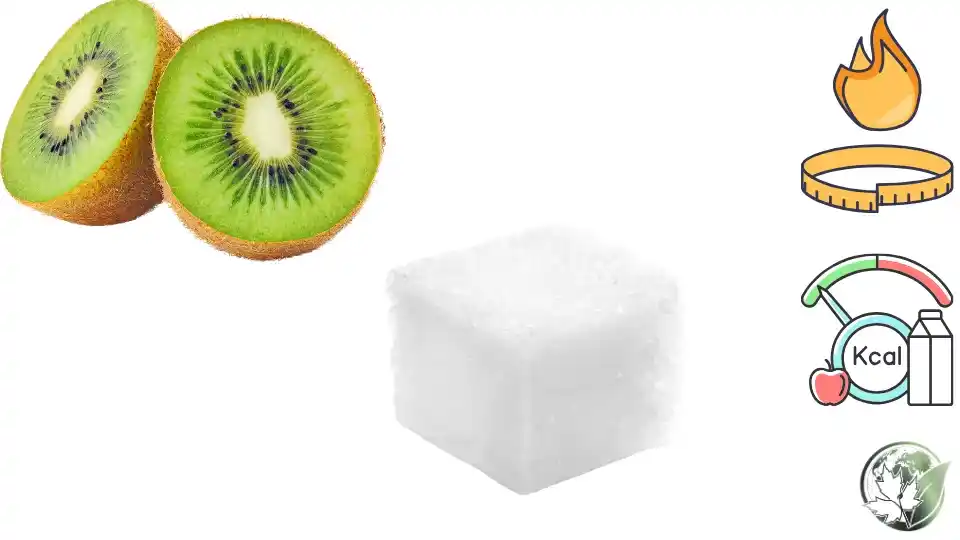
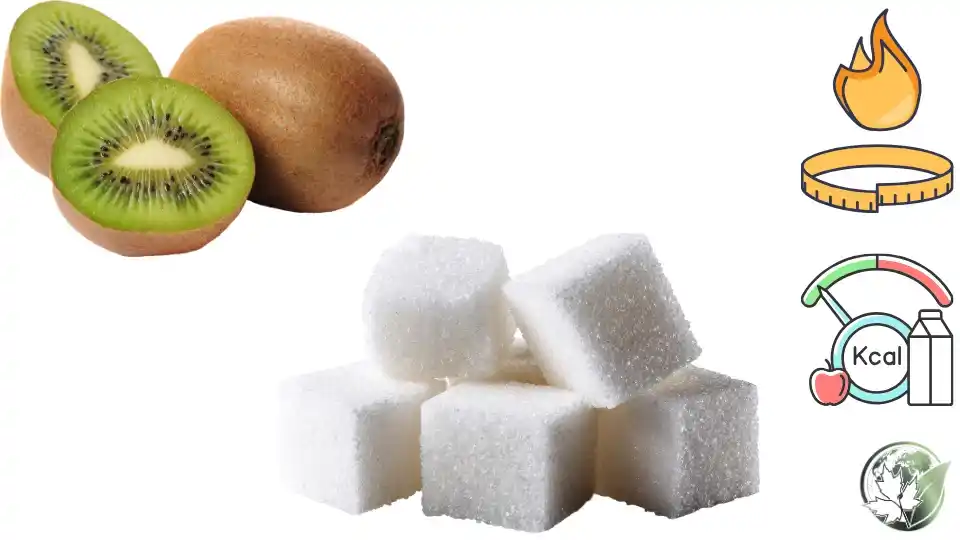
One kiwi has about 6 grams of sugar, equal to 1.5 sugar cubes, and a lot of vitamin C
How Many Calories Are in a Kiwi?
| Kiwi | Weight | Calories | Sugar | Fiber |
|---|---|---|---|---|
| 1 small kiwi | 50 g | 31 kcal | 4.5 g | 1.5 g |
| 1 medium kiwi | 69 g | 42 kcal | 6.2 g | 2.1 g |
| 1 large kiwi | 91 g | 55 kcal | 8.2 g | 2.7 g |
| 2 medium kiwis | 138 g | 84 kcal | 12.4 g | 4.2 g |
| 1 cup, sliced | 180 g | 110 kcal | 16 g | 5.4 g |
| 3 kiwis | 207 g | 126 kcal | 18.6 g | 6.3 g |
| 100 g | 100 g | 61 kcal | 9 g | 3 g |
| Gold kiwi, 1 medium | 76 g | 46 kcal | 9.4 g | 1.4 g |
| Dried kiwi, 30 g | 30 g | 100 kcal | 20 g | 2 g |
| Kiwi with skin, 1 medium | 80 g | 49 kcal | 7.2 g | 3.5 g |
How Many Calories Are in a Sugar Cube?
| Sugar | Weight | Calories | Sugar |
|---|---|---|---|
| 1 sugar cube (standard) | 4 g | 16 kcal | 4 g |
| 1 sugar cube (small) | 3 g | 12 kcal | 3 g |
| 1 sugar cube (large) | 5 g | 19 kcal | 5 g |
| 2 cubes | 8 g | 31 kcal | 8 g |
| 4 cubes | 16 g | 62 kcal | 16 g |
| 10 cubes | 40 g | 155 kcal | 40 g |
| 100 g | 100 g | 387 kcal | 100 g |
Kiwi vs Sugar Cube: Calories Compared
| Amount | Kiwi | Sugar cube | Difference |
|---|---|---|---|
| 1 piece | 42 kcal (medium kiwi) | 16 kcal (1 cube) | Kiwi +26 |
| 10 g | 6 kcal | 39 kcal | Kiwi -33 |
| 50 g | 31 kcal | 194 kcal | Kiwi -163 |
| 100 g | 61 kcal | 387 kcal | Kiwi -326 |
| 100 calories | 164 g (2.4 kiwis) | 26 g (6.5 cubes) | - |
| Sugar in 100 kcal | 14.8 g | 26 g | Kiwi lower |
| Cubes of sugar per kiwi | 1.5 | 1 | - |
One kiwi has more calories than one cube, but the fruit weighs 17 times more. Weight for weight, sugar has more than six times the calories of kiwi. For the same 100 calories, a kiwi eater consumes 2.4 fruits with 15 grams of sugar, while the cube eater has 6.5 cubes and 26 grams.
Kiwi vs Sugar Cube: Nutrition Compared
| Per 100 g | Green kiwi | Gold kiwi | White sugar |
|---|---|---|---|
| Calories | 61 kcal | 60 kcal | 387 kcal |
| Carbohydrate | 15 g | 14.2 g | 100 g |
| Sugar | 9 g | 12.3 g | 100 g |
| Fiber | 3 g | 1.4 g | 0 g |
| Water | 83 g | 82 g | 0 g |
| Vitamin C | 93 mg | 161 mg | 0 mg |
| Vitamin K | 40 mcg | 6 mcg | 0 mcg |
| Vitamin E | 1.5 mg | 1.5 mg | 0 mg |
| Potassium | 312 mg | 316 mg | 2 mg |
| Folate | 25 mcg | 31 mcg | 0 mcg |
| Glycemic index | 50 | 48 | 65 |
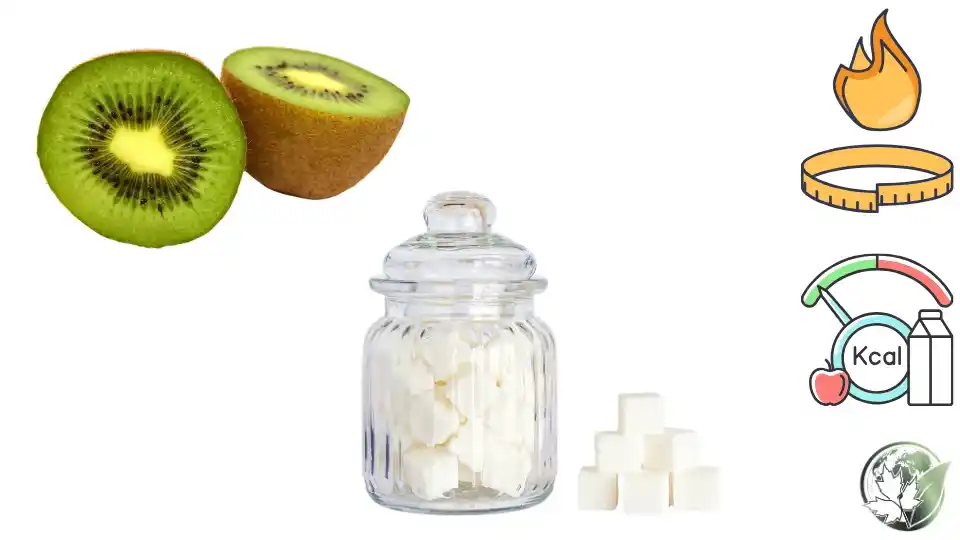
Kiwi flesh is 83 percent water and contains edible seeds that add fiber and omega-3 fats
Which Has More Calories: Kiwi or a Sugar Cube?
A whole kiwi has more calories than a cube (42 against 16), but that's because the fruit weighs much more. Gram for gram, kiwi has 61 calories per 100 grams and sugar 387. A fair comparison is by the same sugar content: 4 grams of sugar comes from 44 grams of kiwi (27 calories), compared to 16 calories from a cube. The kiwi adds vitamin C, fiber and water, which fill you up.
| Comparison | Kiwi | Sugar cube | Verdict |
|---|---|---|---|
| 1 piece | 42 kcal | 16 kcal | Cube lower |
| Per 100 g | 61 kcal | 387 kcal | Kiwi lower |
| Sugar | 6.2 g per kiwi | 4 g per cube | Kiwi 1.5 cubes |
| Vitamin C | 64 mg | 0 mg | Kiwi |
| Fiber | 2.1 g | 0 g | Kiwi |
| Satiety | High | None | Kiwi |
How Many Sugar Cubes Are in a Kiwi?
A medium kiwi has 6.2 grams of sugar, which equals 1.5 cubes. A large kiwi has 8.2 grams, or 2 cubes. Two kiwis (12.4 grams) are 3.1 cubes, and a cup of slices (16 grams) 4 cubes. Gold kiwi is sweeter, with 9.4 grams in a medium fruit, 2.4 cubes. These are modest amounts compared with a can of soda (35 grams, 9 cubes) or a banana (14 grams, 3.5 cubes). The sugar in kiwi is accompanied by fiber and acids, so it tastes tart and satisfying.
| Kiwi portion | Sugar | Sugar cubes |
|---|---|---|
| 1 small | 4.5 g | 1.1 |
| 1 medium | 6.2 g | 1.5 |
| 1 large | 8.2 g | 2 |
| 2 medium | 12.4 g | 3.1 |
| 1 cup sliced | 16 g | 4 |
| 1 medium gold | 9.4 g | 2.4 |
Is the Sugar in Kiwi Different From Sugar Cubes?
Kiwi contains glucose, fructose and a smaller amount of sucrose in a ratio of roughly 1:1:0.2, so its sugar is chemically similar to table sugar, which is sucrose, half glucose and half fructose. The difference is the package. Kiwi sugar is dissolved in water, with fiber, acids and enzymes, so it is absorbed more slowly and is hard to overeat. Studies show that whole kiwis have a low glycemic response, and eating two a day improves vitamin C levels and may support regular bowel movements.
| Feature | Kiwi sugar | Sugar cube |
|---|---|---|
| Form | Glucose, fructose, little sucrose | Sucrose |
| Fiber present | Yes (2.1 g) | No |
| Water | 83% | 0% |
| Acids | Citric, quinic | None |
| Glycemic index | 50 | 65 |
| Fullness | High | None |
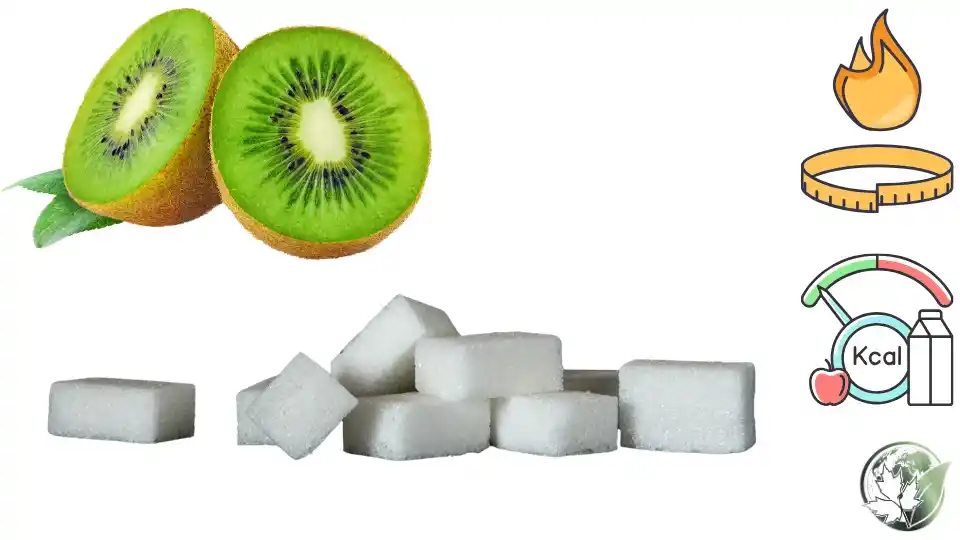
A kiwi eaten with a spoon provides a sweet and tart breakfast for about 42 calories
Is Kiwi a Good Choice for Vitamin C?
Yes, kiwi is among the best fruit sources of vitamin C. A single medium green kiwi has 64 milligrams, 71 percent of the adult daily value of 90 milligrams, and a gold kiwi 106 milligrams, more than a full day's supply. A medium orange has 70 milligrams. Vitamin C supports immune function, collagen formation, iron absorption and acts as an antioxidant. A sugar cube provides none. Kiwi also provides vitamin K for blood clotting and bone health, potassium and folate.
| Fruit (medium) | Calories | Vitamin C | Vitamin C % DV |
|---|---|---|---|
| Green kiwi | 42 kcal | 64 mg | 71% |
| Gold kiwi | 46 kcal | 106 mg | 118% |
| Orange | 62 kcal | 70 mg | 78% |
| Strawberries (1 cup) | 49 kcal | 89 mg | 99% |
| Apple | 95 kcal | 8 mg | 9% |
| Banana | 105 kcal | 10 mg | 11% |
| Sugar cube | 16 kcal | 0 mg | 0% |
What Does Fiber in Kiwi Do for Digestion?
A medium kiwi has about 2 grams of fiber, mostly soluble and insoluble in similar amounts, and the enzyme actinidin that helps break down protein. Clinical trials show that eating two kiwis a day increases stool frequency and softness in people with constipation, with results comparable to prunes or psyllium. It's a gentle option for those with irritable bowel syndrome constipation. Kiwi can be eaten with the skin, which has 50 percent more fiber, but some dislike the fuzzy texture.
| Fruit (medium) | Fiber | Notes |
|---|---|---|
| Kiwi | 2.1 g | Actinidin enzyme, helps constipation |
| Kiwi with skin | 3.5 g | Fuzzy texture |
| Apple with skin | 4.4 g | High in pectin |
| Orange | 3.1 g | Segments and membranes |
| Banana | 3.1 g | Resistant starch when green |
| Sugar cube | 0 g | None |
Which Kiwi Variety Is Best?
Green kiwi (Hayward) is the common variety: tart, firm, high in fiber and vitamin K. Gold kiwi (Zespri SunGold) is sweeter, smoother, with less fuzz, edible skin in some types, and even more vitamin C. Red kiwi is rarer and sweet. Kiwi berries are grape-sized, with edible skin, similar in calories per weight. Choose based on taste: if you want a tart, fibrous kiwi, choose green, and if you want sweet and juicy, choose gold.
| Variety | Calories per 100 g | Sugar | Vitamin C | Taste |
|---|---|---|---|---|
| Green kiwi | 61 kcal | 9 g | 93 mg | Tart-sweet |
| Gold kiwi | 60 kcal | 12.3 g | 161 mg | Sweet, tropical |
| Red kiwi | 62 kcal | 11 g | 100 mg | Very sweet |
| Kiwi berry | 55 kcal | 8 g | 85 mg | Mild, grape-like |
| Dried kiwi | 333 kcal | 67 g | 40 mg | Chewy, very sweet |
How Can You Use Kiwi Instead of Sugar and Sweets?
Slice kiwi into plain yogurt or oatmeal for sweetness, or blend it into smoothies. Frozen kiwi slices make a good ice lolly replacement at 42 calories each. Top a plain pancake with kiwi and a sprinkle of nuts instead of syrup, which saves about 100 calories per tablespoon. A kiwi can satisfy an afternoon sugar craving for much less sugar than gummies (14 grams in 30 grams) or a cookie. Eat the whole fruit, as juice removes the fiber.
| Swap | Original | Calories | Replacement | Calories |
|---|---|---|---|---|
| Dessert | Ice cream, 1/2 cup | 137 kcal | 2 kiwis | 84 kcal |
| Candy | 30 g gummies | 100 kcal | 2 kiwis | 84 kcal |
| Pancake topping | 2 tbsp syrup | 104 kcal | 1 kiwi | 42 kcal |
| Tea sweetener | 2 cubes | 31 kcal | Kiwi slice on the side | 10 kcal |
| Afternoon cookie | 1 cookie | 140 kcal | 1 kiwi + 10 almonds | 112 kcal |
How Does Kiwi Affect Blood Sugar Compared With Sugar?
Kiwi has a glycemic index of about 50, meaning a low-to-moderate effect, and a glycemic load of about 5 for a medium fruit, which is low. Five sugar cubes would have a glycemic load of 13. Studies in people with type 2 diabetes show that eating one to two kiwis a day does not worsen blood glucose and may improve fasting insulin. Gold kiwi has a slightly higher sugar content, but the glycemic index is similar. The fiber and acids slow stomach emptying. People who need to count carbohydrates can treat one medium kiwi as about 11 grams of carbohydrate.
| Food | Carbohydrate | Glycemic index | Glycemic load |
|---|---|---|---|
| 1 medium kiwi | 10.1 g | 50 | 5 |
| 2 kiwis | 20 g | 50 | 10 |
| 1 cup sliced kiwi | 27 g | 50 | 13 |
| 5 sugar cubes | 20 g | 65 | 13 |
| 1 banana | 27 g | 51 | 14 |
| 1 apple | 25 g | 38 | 9.5 |
How Do Kiwis Compare With Other Fruits in Sugar and Calories?
Kiwi sits at the lower end for sugar among common fruits. Berries and melons have less, while bananas, mangoes and grapes have more. Per 100 grams, kiwi has 9 grams of sugar against 14 for apple, 12 for banana and 15.5 for grapes. In terms of vitamin C, kiwi outperforms almost all of them. For anyone cutting down on sugar but wanting fruit, kiwi and berries are a smart choice.
| Fruit (100 g) | Calories | Sugar | Sugar cubes |
|---|---|---|---|
| Strawberries | 32 kcal | 4.9 g | 1.2 |
| Watermelon | 30 kcal | 6.2 g | 1.5 |
| Kiwi | 61 kcal | 9 g | 2.3 |
| Orange | 47 kcal | 9.4 g | 2.4 |
| Apple | 52 kcal | 10.4 g | 2.6 |
| Pineapple | 50 kcal | 9.9 g | 2.5 |
| Banana | 89 kcal | 12.2 g | 3 |
| Grapes | 69 kcal | 15.5 g | 3.9 |
| Mango | 60 kcal | 13.7 g | 3.4 |
How Many Kiwis Should You Eat a Day?
Nutrition guidelines recommend about two cups of fruit a day for a 2,000 calorie diet. Two kiwis supply about 84 calories and satisfy the vitamin C requirement of an adult, and trials on constipation and sleep quality used two to four kiwis a day. For most people one or two kiwis is enough. Eating more than four daily is unnecessary, and some people with a sensitive stomach may find the acid irritating. Variety with other fruit ensures a range of nutrients.
| Intake | Calories | Vitamin C | Fiber |
|---|---|---|---|
| 1 kiwi | 42 kcal | 64 mg | 2.1 g |
| 2 kiwis | 84 kcal | 128 mg | 4.2 g |
| 3 kiwis | 126 kcal | 192 mg | 6.3 g |
| 4 kiwis | 168 kcal | 256 mg | 8.4 g |
| Recommended vitamin C | - | 75-90 mg | - |
Who Should Be Careful With Kiwi?
Kiwi allergy is relatively common, especially among people allergic to latex, birch pollen or bananas, and can cause an itchy mouth, hives or, rarely, severe reactions. The actinidin enzyme may cause a tingling sensation or irritate the tongue in sensitive people. People on blood thinners such as warfarin should keep vitamin K intake consistent, as green kiwi has some. Those with kidney stones who must restrict oxalates should limit portions. Kiwi acids can aggravate reflux in some people.
| Group | Concern | Advice |
|---|---|---|
| Latex or birch allergy | Cross-reaction | Test carefully |
| Kiwi allergy | Itching, hives, anaphylaxis | Avoid |
| Warfarin users | Vitamin K | Keep intake steady |
| Oxalate kidney stones | Oxalate | Limit portions |
| Acid reflux | Acidity | Smaller portions |
| Infants | Allergy, choking | Introduce carefully, mashed |
How Should You Choose, Ripen and Store Kiwi?
Choose kiwis that give slightly when pressed gently and have no soft spots or wrinkles. Hard kiwis ripen at room temperature in three to five days, faster next to a banana or apple. Once ripe, store them in the fridge for up to a week. Cut kiwi should be eaten within two days. Avoid mixing with raw dairy for long periods in a bowl, because actinidin can break down milk proteins and cause bitterness, a feature useful for tenderizing meat but not desserts. Freeze slices for smoothies.
| Stage | Storage | Time |
|---|---|---|
| Hard, unripe | Counter, with banana | 3-5 days to ripen |
| Ripe | Refrigerator | Up to 1 week |
| Cut | Sealed container, fridge | 2 days |
| Frozen slices | Freezer | 6 months |
| Dried | Pantry | 6 months |
Can Kiwi Help With Weight Loss?
Kiwi is a good fruit for weight control. It has few calories (42 for a medium fruit), plenty of water and fiber, and takes time to eat. Eating a kiwi before a meal or as a dessert can reduce the appetite for more caloric foods. There is no evidence that it burns fat, but swapping sugary desserts for kiwi reduces total intake. A cup of sliced kiwi has 110 calories, equal to about 7 sugar cubes' worth of energy but with 5 grams of fiber. Pair with Greek yogurt for a protein-rich snack.
| Snack | Calories | Fiber | Protein |
|---|---|---|---|
| 2 kiwis | 84 kcal | 4.2 g | 1.6 g |
| 2 kiwis + 100 g Greek yogurt | 143 kcal | 4.2 g | 11 g |
| Kiwi + 10 almonds | 112 kcal | 3.4 g | 3 g |
| Chocolate bar (45 g) | 230 kcal | 1.5 g | 3 g |
| Cookie | 140 kcal | 0.5 g | 1.5 g |
What Are Easy Ways to Eat Kiwi?
Cut a kiwi in half and scoop out the flesh with a spoon. Slice it onto salads with spinach and feta, mix into salsa with lime and cilantro for fish, or blend with banana and spinach for a smoothie. Freeze slices and dip in dark chocolate for a treat of about 55 calories. Add diced kiwi to overnight oats. Because the acidity brightens flavors, a few slices can replace a sugary dressing on a fruit salad.
| Idea | Ingredients | Calories |
|---|---|---|
| Kiwi and yogurt bowl | 2 kiwis, 150 g yogurt | 170 kcal |
| Green smoothie | 1 kiwi, 1/2 banana, spinach, water | 100 kcal |
| Kiwi salsa | 2 kiwis, lime, cilantro | 90 kcal |
| Frozen kiwi chocolate | 3 slices, 10 g dark chocolate | 85 kcal |
| Spinach feta salad | 1 kiwi, 30 g feta | 105 kcal |
What Is the Verdict?
A kiwi is a nutritious, low-sugar fruit that delivers vitamin C, fiber and potassium for about 42 calories. A sugar cube delivers 16 calories of sugar and nothing else. If you are choosing between a sweet snack and kiwi, kiwi gives more food for fewer calories per gram, plus health benefits. The sugar in two kiwis, about 3 cubes, is modest and comes packaged with fiber, so it is not a concern for most people.
| Goal | Better choice | Reason |
|---|---|---|
| Fewest calories per gram | Kiwi | 61 vs 387 per 100 g |
| Vitamin C | Kiwi | 64 mg vs 0 |
| Lower sugar than other fruit | Kiwi | 9 g per 100 g |
| Quick energy during exercise | Sugar or banana | Fast carbohydrate |
| Sweetening tea | Sugar cube | Dissolves |
| Satisfying a craving | Kiwi | Fiber, water |
Is Dried Kiwi Different From Fresh Kiwi?
Drying removes water and concentrates sugar. Dried kiwi slices, often sweetened, have about 330 calories per 100 grams, and a 30 gram serving has 100 calories and 20 grams of sugar, which equals 5 sugar cubes, over three times the sugar in a fresh kiwi. Vitamin C falls sharply during drying. If you buy dried kiwi, look for unsweetened versions and keep to a small handful. Fresh or frozen kiwi is a better choice for a low-calorie snack.
| Form | Amount | Calories | Sugar | Sugar cubes |
|---|---|---|---|---|
| Fresh kiwi | 1 medium (69 g) | 42 kcal | 6.2 g | 1.5 |
| Frozen kiwi | 1 cup (180 g) | 110 kcal | 16 g | 4 |
| Dried kiwi, unsweetened | 30 g | 94 kcal | 17 g | 4.3 |
| Dried kiwi, sweetened | 30 g | 100 kcal | 20 g | 5 |
| Kiwi juice | 250 ml | 120 kcal | 24 g | 6 |
What About Kiwi for Children and Older Adults?
Kiwi is a convenient fruit for children over six months, mashed or in thin slices, and gives vitamin C that supports iron absorption from cereals and beans. For toddlers, cut rounds into quarters to avoid choking. Older adults benefit from the fiber for regularity and the soft texture, which is easy to eat. A single kiwi supplies more than half of the daily vitamin C requirement at either age, so one a day is plenty for children, and two for adults.
| Group | Suggested amount | Calories | Benefit |
|---|---|---|---|
| Toddler (1-3 years) | 1/2 kiwi | 21 kcal | Vitamin C, fiber |
| Child (4-8 years) | 1 kiwi | 42 kcal | Immune support |
| Adult | 1-2 kiwis | 42-84 kcal | Fiber, vitamin C |
| Older adult | 1-2 kiwis | 42-84 kcal | Regularity, easy to chew |
| Athlete | 2 kiwis after training | 84 kcal | Carbohydrate and vitamin C |
Key Takeaways: Kiwi vs Sugar Cube Calories
One medium kiwi has about 42 calories and 6 grams of sugar, equal to 1.5 sugar cubes, compared with a cube's 16 calories and 4 grams. The kiwi brings 64 milligrams of vitamin C and 2 grams of fiber and contains far fewer calories per 100 grams (61 against 387).
Frequently Asked Questions
6 questions answered
Does a kiwi have more calories than a sugar cube?
One kiwi does (42 vs 16), but per gram sugar is far higher.
How many sugar cubes are in a kiwi?
About 1.5.
How many calories are in 2 kiwis?
About 84.
Is gold kiwi sweeter?
Yes, 12 grams of sugar per 100 grams against 9.
Is kiwi good for constipation?
Studies suggest two a day helps.
Can I eat the skin?
Yes, it adds fiber, though it is fuzzy.