How Many Calories Are in Sunflower Oil vs Coconut Oil? The Quick Answer
One tablespoon (13.6 grams) of sunflower oil has about 120 calories, and one tablespoon of coconut oil has about 121. Per 100 grams, sunflower oil has 884 calories and coconut oil 862 (the figure for refined coconut oil; some sources round it to 892). A teaspoon of either has about 40. So the two oils are essentially identical in energy: all fats and oils contain about 9 calories per gram, and the small difference comes from a few percent of non-fat components such as water and traces of other compounds. Neither oil can be called a "low-calorie" option.
What does differ is the type of fat. Coconut oil is about 82 percent saturated fat, 11 grams per tablespoon, mostly medium-chain lauric acid. Sunflower oil is about 10 percent saturated fat, 1.4 grams per tablespoon, and rich in polyunsaturated linoleic acid (in standard varieties) or monounsaturated oleic acid (in high-oleic varieties). Sunflower oil is also a major source of vitamin E. This guide compares both oils per teaspoon, per tablespoon and per 100 grams, looks at their fats, vitamins, smoke points and cooking uses, and shows how to use less oil, with three comparison tables and an FAQ.
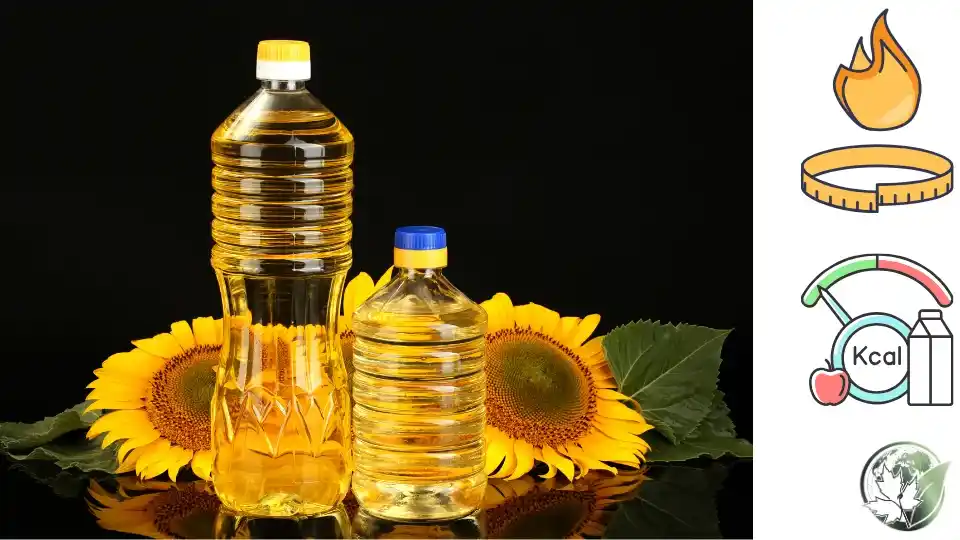
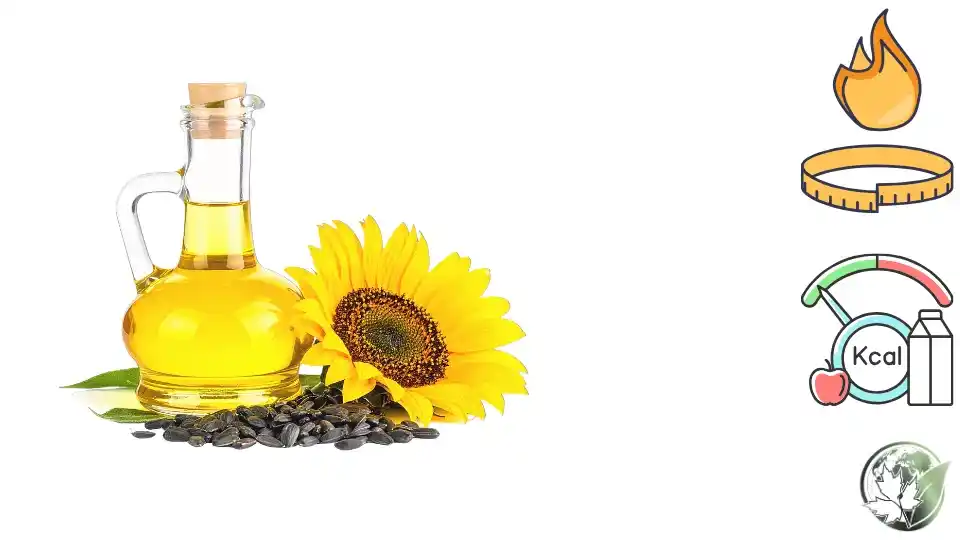
Sunflower oil is liquid at room temperature while coconut oil is solid below about 24 degrees Celsius
How Many Calories Are in Sunflower Oil?
| Sunflower oil | Weight | Calories | Fat | Saturated fat |
|---|---|---|---|---|
| 1 teaspoon | 4.5 g | 40 kcal | 4.5 g | 0.5 g |
| 1 tablespoon | 13.6 g | 120 kcal | 13.6 g | 1.4 g |
| 2 tablespoons | 27 g | 240 kcal | 27 g | 2.8 g |
| 1/4 cup | 54 g | 477 kcal | 54 g | 5.6 g |
| 1/2 cup | 109 g | 964 kcal | 109 g | 11.2 g |
| 1 cup | 218 g | 1,927 kcal | 218 g | 22.5 g |
| 100 ml | 92 g | 813 kcal | 92 g | 9.5 g |
| 100 g | 100 g | 884 kcal | 100 g | 10.3 g |
| Spray, 1 second | 0.25 g | 2 kcal | 0.25 g | 0.03 g |
How Many Calories Are in Coconut Oil?
| Coconut oil | Weight | Calories | Fat | Saturated fat |
|---|---|---|---|---|
| 1 teaspoon | 4.5 g | 39 kcal | 4.5 g | 3.7 g |
| 1 tablespoon | 13.6 g | 121 kcal | 13.5 g | 11.2 g |
| 2 tablespoons | 27 g | 235 kcal | 27 g | 22.3 g |
| 1/4 cup | 54 g | 470 kcal | 54 g | 45 g |
| 1/2 cup | 109 g | 940 kcal | 108 g | 89 g |
| 1 cup | 218 g | 1,879 kcal | 216 g | 178 g |
| 100 ml | 92 g | 793 kcal | 91 g | 75 g |
| 100 g | 100 g | 862 kcal | 99 g | 82 g |
| Coconut oil spray, 1 second | 0.25 g | 2 kcal | 0.25 g | 0.2 g |
Sunflower Oil vs Coconut Oil: Calories Compared
| Amount | Sunflower oil | Coconut oil | Difference |
|---|---|---|---|
| 1 teaspoon | 40 kcal | 39 kcal | Coconut -1 |
| 1 tablespoon | 120 kcal | 121 kcal | About equal |
| 2 tablespoons | 240 kcal | 235 kcal | Coconut -5 |
| 1/4 cup | 477 kcal | 470 kcal | Coconut -7 |
| 100 g | 884 kcal | 862 kcal | Coconut -22 |
| 100 ml | 813 kcal | 793 kcal | Coconut -20 |
| 100 calories | 11.3 g (2.5 tsp) | 11.6 g (2.6 tsp) | - |
| Saturated fat per tbsp | 1.4 g | 11.2 g | Sunflower 8x lower |
Per spoon, the oils are within one calorie of each other. The meaningful difference is in saturated fat: a tablespoon of coconut oil has eight times as much as one of sunflower oil.
Sunflower Oil vs Coconut Oil: Nutrition Compared
| Per 100 g | Sunflower oil (standard) | High-oleic sunflower | Coconut oil (refined) |
|---|---|---|---|
| Calories | 884 kcal | 884 kcal | 862 kcal |
| Total fat | 100 g | 100 g | 99 g |
| Saturated fat | 10.3 g | 9 g | 82 g |
| Monounsaturated fat | 19.5 g | 83 g | 6 g |
| Polyunsaturated fat | 65.7 g | 4 g | 1.7 g |
| Omega-6 (linoleic) | 65 g | 4 g | 1.7 g |
| Omega-3 | 0.2 g | 0 g | 0 g |
| Vitamin E | 41 mg | 41 mg | 0.1 mg |
| Vitamin K | 5.4 mcg | 5.4 mcg | 0.5 mcg |
| Cholesterol | 0 mg | 0 mg | 0 mg |
| Smoke point | 227 C (refined) | 232 C | 204 C (refined) |
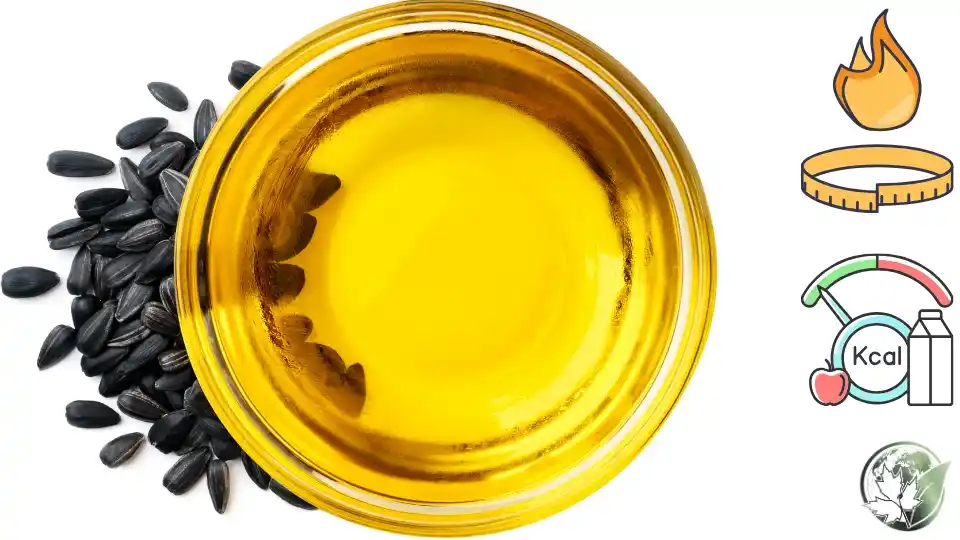
Sunflower oil is pressed from sunflower seeds, and coconut oil is extracted from the white flesh of coconuts
Which Has More Calories: Sunflower Oil or Coconut Oil?
Sunflower oil has marginally more, 884 versus 862 per 100 grams, but per tablespoon they are equal at 120 to 121. The difference is irrelevant for any practical purpose, and what matters more is how much you use. Pouring oil into a pan without measuring usually adds 1.5 to 2 tablespoons, or 180 to 240 calories. Measure oil by the teaspoon when you cook, or use spray or a brush.
| Comparison | Sunflower oil | Coconut oil | Verdict |
|---|---|---|---|
| Calories per tbsp | 120 | 121 | Equal |
| Calories per 100 g | 884 | 862 | Coconut slightly lower |
| Saturated fat per tbsp | 1.4 g | 11.2 g | Sunflower lower |
| Vitamin E per tbsp | 5.6 mg | 0.01 mg | Sunflower higher |
| Liquid at room temperature | Yes | No (below 24 C) | - |
Why Is Oil So High in Calories?
Oil is pure fat, which gives 9 calories per gram, more than twice the 4 calories of protein or carbohydrate. There is no water or fiber to dilute it. A tablespoon of oil weighs 13.6 grams and thus provides 120 calories, as much as a medium banana plus a small cookie. Even refined oils, which are cleaned of free fatty acids and impurities, contain the same energy as virgin versions. That is why a "light" oil, which refers to color and flavor, is not lower in calories.
| Food | Calories per 100 g | Why |
|---|---|---|
| Sunflower oil | 884 | 100% fat |
| Coconut oil | 862 | 99% fat |
| Butter | 717 | 81% fat, 16% water |
| Mayonnaise | 680 | 75% fat |
| Avocado | 160 | 15% fat, 73% water |
| Sugar | 387 | 100% carbohydrate |
| Lean chicken breast | 120 | Protein and water |
Is Coconut Oil Healthier Than Sunflower Oil?
For heart health, most dietitians and guidelines favor sunflower oil. Coconut oil raises LDL cholesterol more than unsaturated oils, and major reviews, including the American Heart Association advisory, advise limiting it. Lauric acid, the dominant fat in coconut oil, also raises HDL, but the net effect on cardiovascular risk is not favorable compared with vegetable oils. Sunflower oil, replacing saturated fat, lowers LDL and provides vitamin E. High-linoleic sunflower oil is rich in omega-6, which is essential but should be balanced with omega-3. High-oleic varieties are more stable for frying.
| Factor | Sunflower oil | Coconut oil |
|---|---|---|
| LDL cholesterol effect | Lowers (replacing saturated fat) | Raises |
| Vitamin E | High | Negligible |
| Saturated fat | Low | Very high |
| Medium-chain fats | No | Yes (about 60% of fat) |
| Guideline recommendation | Preferred | Limit |
| Flavor | Neutral | Coconut |

A teaspoon of oil is usually enough to cook a pan of vegetables when using a non-stick pan
What Are the Smoke Points and Best Uses?
Refined sunflower oil has a high smoke point of about 227 degrees Celsius (440 Fahrenheit) and a neutral flavor, making it suitable for frying, roasting and baking. Cold-pressed unrefined sunflower oil has a lower smoke point near 107 degrees and is best for dressings. Refined coconut oil smokes at about 204 degrees and has a neutral taste, whereas virgin coconut oil smokes near 175 degrees and tastes like coconut, which suits curries, baking and sautéing. Heating any oil above its smoke point produces acrid fumes and harmful compounds.
| Oil | Smoke point | Best uses |
|---|---|---|
| Refined sunflower | 227 C | Frying, roasting, baking |
| Unrefined sunflower | 107 C | Dressings, drizzling |
| High-oleic sunflower | 232 C | Deep frying, high heat |
| Refined coconut | 204 C | Sauteing, baking, frying |
| Virgin coconut | 175 C | Curries, baking, sautéing |
Does Coconut Oil Help With Weight Loss?
Claims that medium-chain triglycerides in coconut oil boost metabolism or reduce fat have limited support. Pure MCT oil, made from caprylic and capric acids, has been shown to slightly increase energy expenditure in short trials, but coconut oil is mostly lauric acid, which behaves more like a long-chain fat. At 121 calories per tablespoon, coconut oil can easily add to a calorie surplus. No oil is a weight-loss food. Reducing total oil use is more effective than switching types.
| Claim | Evidence | Reality |
|---|---|---|
| Boosts metabolism | Small effects with pure MCT | Not with coconut oil |
| Reduces belly fat | Weak, inconsistent | Calories still count |
| More filling | Slight in short studies | Not reliable |
| Fewer calories | No | 862 vs 884 per 100 g |
How Can You Use Less Oil When Cooking?
Use non-stick pans and a teaspoon of oil rather than a tablespoon. Spray oil in a fine mist, brush it onto food before roasting, or use a splash of water or broth to saute onions. Roast vegetables on parchment with a light coating, bake instead of frying, and use air fryers, which need only a teaspoon. Measure oil in a spoon before it goes in the pan. These simple habits can cut 100 or more calories per meal without sacrificing flavor.
| Method | Oil used | Calories |
|---|---|---|
| Free pour into pan | 2 tbsp | 240 kcal |
| Measured tablespoon | 1 tbsp | 120 kcal |
| Teaspoon in non-stick pan | 1 tsp | 40 kcal |
| Oil spray (3 seconds) | 0.75 g | 7 kcal |
| Water saute | 0 | 0 kcal |
| Air fryer, roasted potatoes | 1 tsp | 40 kcal |
What Are the Different Types of Sunflower Oil?
Sunflower oil comes in three main forms. Standard or high-linoleic oil is rich in omega-6 polyunsaturated fat and is the most common in supermarkets. Mid-oleic (NuSun) oil has about 65 percent oleic acid and balances stability with a lower omega-6 level. High-oleic oil is over 80 percent monounsaturated, similar to olive oil, and is more stable for frying and storage. Calories are the same in all of them. If you want more heart-friendly fat and better heat tolerance, look for "high oleic" on the label.
| Type | Main fat | Smoke point | Stability | Calories per tbsp |
|---|---|---|---|---|
| High-linoleic (standard) | Polyunsaturated (65%) | 227 C refined | Moderate | 120 kcal |
| Mid-oleic (NuSun) | Monounsaturated (65%) | 230 C | Good | 120 kcal |
| High-oleic | Monounsaturated (82%) | 232 C | Excellent | 120 kcal |
| Cold-pressed unrefined | Polyunsaturated | 107 C | Low | 120 kcal |
What Are the Different Types of Coconut Oil?
Virgin or extra virgin coconut oil is made from fresh coconut meat, by cold pressing or fermentation, and retains the coconut flavor and aroma. Refined coconut oil is made from dried copra, bleached and deodorized, giving a neutral taste and higher smoke point. Fractionated coconut oil (MCT oil) removes long-chain fats and stays liquid; it contains caprylic and capric acids and about 115 calories per tablespoon because medium-chain fats have slightly fewer calories per gram (8.3). Hydrogenated coconut oil is solid at higher temperatures and used in confectionery.
| Type | Flavor | Smoke point | Calories per tbsp |
|---|---|---|---|
| Virgin coconut oil | Coconut | 175 C | 121 kcal |
| Refined coconut oil | Neutral | 204 C | 121 kcal |
| Fractionated (MCT) oil | Neutral | 160 C | 115 kcal |
| Hydrogenated coconut oil | Neutral | 232 C | 121 kcal |
| Coconut cream (for comparison) | Coconut | Not applicable | 50 kcal per tbsp |
How Do the Fats in These Oils Affect Cholesterol and Heart Health?
Replacing saturated fat with polyunsaturated or monounsaturated fat lowers LDL cholesterol and reduces cardiovascular events. Coconut oil raises LDL by around 10 to 15 percent relative to vegetable oils in controlled trials, with a smaller increase in HDL. Sunflower oil lowers LDL when it replaces butter or coconut oil. The American Heart Association recommends keeping saturated fat below 6 percent of calories, which for a 2,000 calorie diet is about 13 grams, equal to little more than a tablespoon of coconut oil. A tablespoon of sunflower oil uses only 11 percent of that limit.
| Daily saturated fat limit | 13 g (6% of 2,000 kcal) |
|---|---|
| 1 tbsp coconut oil | 11.2 g (86% of limit) |
| 1 tbsp sunflower oil | 1.4 g (11% of limit) |
| 1 tbsp butter | 7.3 g (56% of limit) |
| 1 tbsp olive oil | 1.9 g (15% of limit) |
| 1 tbsp palm oil | 6.7 g (52% of limit) |
How Do Sunflower and Coconut Oil Compare With Other Cooking Fats?
Both oils sit in the middle of a range that contains vegetable oils, animal fats and spreads. Olive and canola oils offer more monounsaturated fat and omega-3. Butter has 102 calories per tablespoon because it contains water, ghee 123, lard 115 and margarine 100. Choose oils for the type of fat and for the cooking method, not because of calories, since they are all within a few calories of each other.
| Fat | Calories per tbsp | Saturated fat | Best for |
|---|---|---|---|
| Sunflower oil | 120 kcal | 1.4 g | General cooking |
| Coconut oil | 121 kcal | 11.2 g | Baking, curries |
| Olive oil | 119 kcal | 1.9 g | Dressings, sauteing |
| Canola oil | 124 kcal | 1 g | General cooking |
| Butter | 102 kcal | 7.3 g | Baking, flavor |
| Ghee | 123 kcal | 7.9 g | High heat |
| Lard | 115 kcal | 5 g | Frying, pastry |
| Margarine | 100 kcal | 1.8 g | Spreading |
How Many Calories Does Cooking Oil Add to Everyday Meals?
Oil quietly raises the energy of food. Frying an egg in a tablespoon of oil adds 120 calories, doubling the egg's own 72. A tablespoon of oil for roasted vegetables contributes 120 calories, and a deep-fried dish may absorb 10 to 25 percent of its weight in oil. French fries have 312 calories per 100 grams, against 77 for boiled potatoes. Measuring the oil and using the right-size pan prevent hidden calories.
| Dish | Oil used | Calories added |
|---|---|---|
| Fried egg | 1 tsp (non-stick) | 40 kcal |
| Stir-fry for 2 | 1 tbsp | 120 kcal |
| Roasted vegetables | 1 tbsp per tray | 120 kcal |
| Pan-fried chicken | 2 tbsp | 240 kcal |
| Shallow-fried fish | 3 tbsp, half absorbed | 180 kcal |
| Deep-fried fries (150 g) | Absorbed oil 15 g | 135 kcal |
| Popcorn on stove | 1 tbsp | 120 kcal |
Which Oil Is Better for Baking?
Coconut oil is solid at room temperature, so it can replace butter in pastry, cookies and vegan baking, giving a flaky texture and a faint coconut flavor in the virgin form. Sunflower oil is liquid and works well in cakes, muffins and quick breads, where it creates a moist crumb. Swapping butter (102 calories per tablespoon) for oil (120) slightly raises calories since butter contains about 16 percent water. Use three-quarters of the amount of oil called for in place of butter and reduce the liquid slightly.
| Recipe | Butter | Sunflower oil | Coconut oil |
|---|---|---|---|
| Muffins (12), fat per batch | 1/2 cup: 810 kcal | 1/3 cup: 640 kcal | 1/2 cup: 940 kcal |
| Pastry crust | 1/2 cup: 810 kcal | Not suitable | 1/2 cup: 940 kcal |
| Chocolate cake | 1/2 cup: 810 kcal | 1/2 cup: 964 kcal | 1/2 cup: 940 kcal |
| Cookies | 1/2 cup: 810 kcal | Spreads too much | 1/2 cup: 940 kcal |
| Calories per muffin from fat | 68 kcal | 53 kcal | 78 kcal |
How Should You Store Sunflower and Coconut Oil?
Keep sunflower oil in a cool, dark cupboard in a tightly closed bottle, ideally dark glass or tin, as light and air make it rancid. An unopened bottle lasts about a year, and an opened one about six months. Polyunsaturated oils oxidize faster than saturated ones. Coconut oil, being saturated, is more stable and keeps for 18 to 24 months at room temperature, and virgin coconut oil often longer. It melts at around 24 degrees Celsius, so it may be liquid in summer and solid in winter, which does not affect quality. Discard any oil that smells sharp, bitter or like old paint.
| Oil | Unopened | Opened | Storage tip |
|---|---|---|---|
| Sunflower oil | 12 months | 6 months | Dark, cool, closed |
| High-oleic sunflower | 18 months | 9 months | More stable |
| Refined coconut oil | 24 months | 18 months | Room temperature |
| Virgin coconut oil | 24+ months | 18-24 months | Away from water |
| Used frying oil | Not applicable | 1-3 uses | Strain and refrigerate |
Who Should Be Careful With Each Oil?
People with high LDL cholesterol or heart disease should limit coconut oil and prefer unsaturated oils. Those who consume a lot of omega-6, such as in processed foods fried in sunflower oil, may want to balance with omega-3 from fish, flax or walnuts. Sunflower allergy is rare but exists; people allergic to ragweed or daisy family pollen may react. Coconut is classed as a tree nut by some authorities but is botanically a fruit, and reactions are uncommon. Reusing frying oil many times creates harmful compounds, so discard it when dark or smoking.
| Group | Concern | Advice |
|---|---|---|
| High LDL cholesterol | Saturated fat in coconut oil | Prefer sunflower or olive oil |
| High omega-6 intake | Imbalance with omega-3 | Add fish, flax, walnuts |
| Ragweed pollen allergy | Possible sunflower reaction | Test cautiously |
| Coconut allergy | Rare | Avoid |
| Frequent frying | Oxidized oil | Do not reuse more than 2-3 times |
What Is the Verdict for Daily Cooking?
For daily cooking, sunflower oil, especially high-oleic, is the more heart-healthy and versatile choice, with a neutral flavor and vitamin E. Coconut oil is a fine occasional ingredient for flavor in curries, desserts and baking, but it is not a health food. Whichever oil you choose, remember the calories are the same: 120 per tablespoon. The best approach is to use less, measure it and choose the oil that matches the dish.
| Goal | Better choice | Reason |
|---|---|---|
| Heart health | Sunflower (high-oleic) | Low saturated fat |
| High-heat frying | Refined or high-oleic sunflower | Smoke point 227-232 C |
| Vegan pastry | Coconut oil | Solid fat |
| Coconut flavor | Virgin coconut oil | Aroma |
| Lowest calories | Neither | Use less oil |
| Vitamin E | Sunflower oil | 5.6 mg per tbsp |
How Do You Read an Oil Label?
Check the type (refined, virgin, cold-pressed), the fat breakdown per tablespoon, and the processing note. For sunflower oil look for "high oleic" if you want stability. For coconut oil, "virgin" or "extra virgin" signals flavor, while "refined" or "RBD" signals neutral taste. The nutrition panel lists 120 calories and 14 grams of fat per tablespoon for both. Ignore claims like "light", "pure" or "cholesterol free": all vegetable oils are free of cholesterol, and "light" refers to color or flavor.
| Label claim | Meaning | Effect on calories |
|---|---|---|
| Cold-pressed | Mechanical extraction | None |
| Refined | Bleached, deodorized | None |
| Virgin | Unrefined from fresh coconut | None |
| High oleic | Mostly monounsaturated | None |
| Light | Lighter color, taste | None |
| Cholesterol free | True of all plant oils | None |
Key Takeaways: Sunflower Oil vs Coconut Oil Calories
Sunflower oil has about 120 calories per tablespoon and coconut oil 121, so the energy is the same. Coconut oil is far higher in saturated fat, while sunflower oil is rich in vitamin E and unsaturated fat. Choose sunflower oil for everyday cooking, use coconut oil occasionally for flavor, and measure either.
Frequently Asked Questions
6 questions answered
Does sunflower oil have more calories than coconut oil?
Barely, 884 against 862 per 100 grams.
How many calories are in a tablespoon of sunflower oil?
About 120.
Which oil has more saturated fat?
Coconut oil, 82 percent against 10.
Is coconut oil good for weight loss?
No, it has the same calories as other oils.
Which oil is better for frying?
Refined sunflower oil, with its high smoke point.
Is sunflower oil healthy?
In moderation, it provides vitamin E and unsaturated fat.