How Many Calories Are in Sugar vs Milk Chocolate? The Quick Answer
Granulated sugar has about 387 calories per 100 grams, or 16 calories per teaspoon (4.2 grams). Milk chocolate has about 535 calories per 100 grams, which means a 10-gram square contains about 53 calories and a 44-gram bar about 235. By weight, milk chocolate has roughly 38 percent more calories than sugar. The reason is fat: milk chocolate is about 30 percent fat (cocoa butter and milk fat), which supplies 9 calories per gram, while sugar has none. But the two are closely related, because more than half of milk chocolate by weight is sugar: about 52 grams of every 100.
So when you eat a 44-gram milk chocolate bar, you eat about 23 grams of sugar, roughly 5.7 sugar cubes, along with 13 grams of fat. This guide compares sugar and milk chocolate by teaspoon, by square, by bar and by 100 grams, shows how much sugar is hiding in popular chocolate portions, and compares milk, dark and white chocolate. It covers glycemic index, satisfaction, weight control and the best ways to enjoy chocolate with fewer calories. It includes three comparison tables and an FAQ.
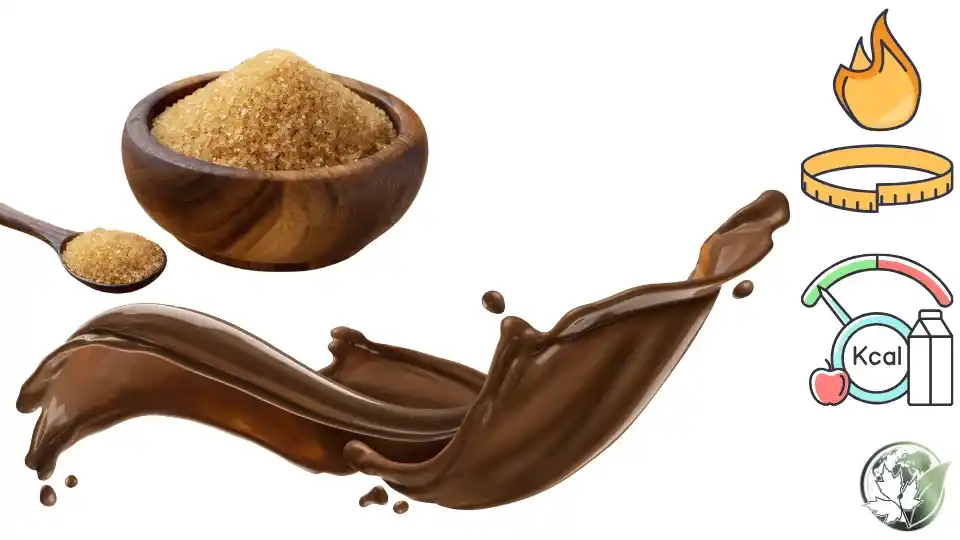
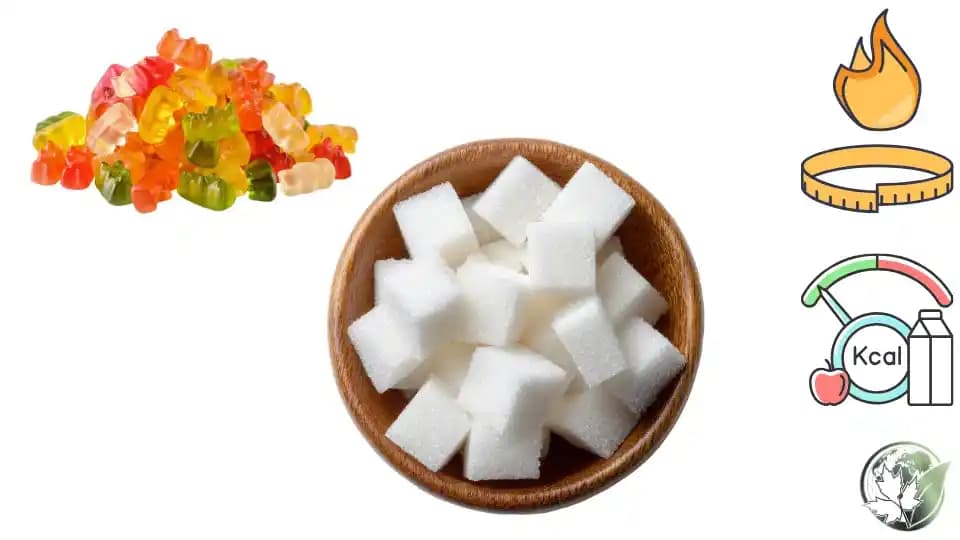
A 44-gram milk chocolate bar contains about the sugar of six sugar cubes plus 13 grams of fat
How Many Calories Are in Sugar?
Table sugar is pure sucrose. It has no fat, protein or water, and about 3.87 calories per gram.
| Sugar | Weight | Calories | Sugar cubes |
|---|---|---|---|
| 1 sugar cube | 4 g | 16 kcal | 1 |
| 1 teaspoon | 4.2 g | 16 kcal | 1 |
| 2 teaspoons | 8.4 g | 32 kcal | 2 |
| 1 tablespoon | 12.5 g | 48 kcal | 3 |
| 1/4 cup | 50 g | 194 kcal | 12.5 |
| 1/2 cup | 100 g | 387 kcal | 25 |
| 1 cup | 200 g | 774 kcal | 50 |
| 100 g | 100 g | 387 kcal | 25 |
How Many Calories Are in Milk Chocolate?
Milk chocolate is made from cocoa mass, cocoa butter, sugar, milk powder and emulsifiers. Its composition varies a little by brand and country. Commonly cited values are 535 calories per 100 grams, with 52 grams of sugar, 30 grams of fat (18 grams saturated), 7.7 grams of protein and 3.4 grams of fiber.
| Milk chocolate | Weight | Calories | Sugar | Fat |
|---|---|---|---|---|
| 1 small square | 5 g | 27 kcal | 2.6 g | 1.5 g |
| 1 square | 10 g | 53 kcal | 5.2 g | 3 g |
| 2 squares | 20 g | 107 kcal | 10.4 g | 6 g |
| 1 ounce | 28 g | 150 kcal | 14.6 g | 8.4 g |
| 1 small bar | 44 g | 235 kcal | 23 g | 13 g |
| 1 standard bar | 100 g | 535 kcal | 52 g | 30 g |
| 1 chocolate kiss | 4.5 g | 24 kcal | 2.3 g | 1.4 g |
| 6 chocolate kisses | 27 g | 144 kcal | 14 g | 8 g |
| 1 fun-size piece | 17 g | 91 kcal | 9 g | 5 g |
Sugar vs Milk Chocolate: Calories Compared
| Amount | Sugar | Milk chocolate | Difference |
|---|---|---|---|
| 100 g | 387 kcal | 535 kcal | Sugar -148 |
| 10 g | 39 kcal | 53 kcal | Sugar -14 |
| 28 g (1 oz) | 108 kcal | 150 kcal | Sugar -42 |
| 44 g (small bar) | 170 kcal | 235 kcal | Sugar -65 |
| 1 teaspoon vs 1 square | 16 kcal | 53 kcal | Sugar -37 |
| Same calories (150 kcal) | 39 g (9 tsp) | 28 g (1 oz) | Sugar 11 g more |
| Sugar content per 100 g | 100 g | 52 g | Chocolate half |
| Fat per 100 g | 0 g | 30 g | Chocolate +30 g |
If you eat a square of chocolate instead of a teaspoon of sugar, you take in about 37 more calories, but you also get the satisfaction of fat and cocoa, which is not true of a teaspoon of sugar.
Why Does Milk Chocolate Have More Calories Than Sugar?
Fat is the answer. Sugar is 100 percent carbohydrate at 4 calories per gram. Milk chocolate contains about 52 grams of sugar, adding 208 calories, plus 30 grams of fat, adding 270 calories, plus 7.7 grams of protein and about 15 grams of other carbohydrates (including cocoa starch and milk sugar lactose). The total is about 535. Chocolate is therefore half sugar by weight and more than half of its calories (about 52 percent) come from fat.
| Source (per 100 g milk chocolate) | Grams | Calories | Share |
|---|---|---|---|
| Sugar | 52 g | 208 | 39% |
| Fat | 30 g | 270 | 50% |
| Protein | 7.7 g | 31 | 6% |
| Other carbohydrate and fiber | 8 g | 26 | 5% |
| Total | 100 g | 535 | 100% |
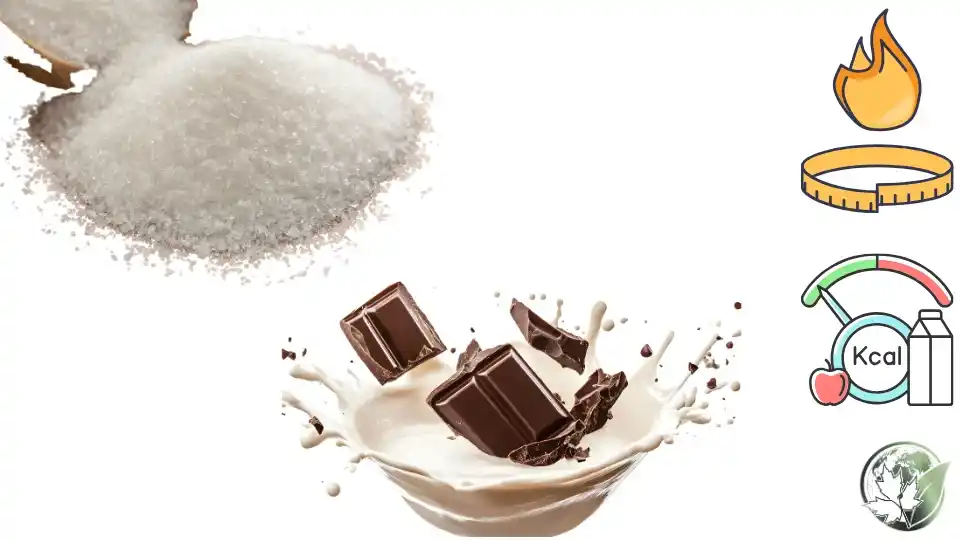
Cocoa butter and milk fat give milk chocolate about 30 percent fat, the main reason it has more calories than sugar
How Much Sugar Is Hidden in Milk Chocolate?
Because chocolate is about 52 percent sugar, even small portions contain a surprising amount. A standard 44-gram bar has about 23 grams, which is 5.7 sugar cubes or about 5.5 teaspoons. That is nearly the entire daily limit of 25 grams recommended by some health authorities for ideal intake of added sugar, and almost half of the 50-gram limit for adults. Smaller portions are easier to fit into a diet.
| Chocolate portion | Sugar | Sugar cubes | Share of 50 g daily limit |
|---|---|---|---|
| 1 square (10 g) | 5.2 g | 1.3 | 10% |
| 2 squares (20 g) | 10.4 g | 2.6 | 21% |
| 1 ounce (28 g) | 14.6 g | 3.6 | 29% |
| Small bar (44 g) | 23 g | 5.7 | 46% |
| Standard bar (100 g) | 52 g | 13 | 104% |
| 6 kisses (27 g) | 14 g | 3.5 | 28% |
| Hot chocolate (1 mug, 250 ml) | 24 g | 6 | 48% |
A bar of chocolate therefore delivers several times the sugar of a sweetened cup of tea, plus fat. Treat it as an occasional dessert rather than a daily snack, and count it toward your added-sugar budget for the day.
Sugar vs Milk Chocolate: Nutrition Compared
| Per 100 g | Sugar | Milk chocolate | Dark chocolate (70-85%) | White chocolate |
|---|---|---|---|---|
| Calories | 387 kcal | 535 kcal | 598 kcal | 539 kcal |
| Sugar | 100 g | 52 g | 24 g | 59 g |
| Fat | 0 g | 30 g | 43 g | 32 g |
| Saturated fat | 0 g | 18 g | 25 g | 19 g |
| Protein | 0 g | 7.7 g | 7.8 g | 5.9 g |
| Fiber | 0 g | 3.4 g | 10.9 g | 0.2 g |
| Iron | 0.05 mg | 2.3 mg | 11.9 mg | 0.2 mg |
| Magnesium | 0 mg | 63 mg | 228 mg | 12 mg |
| Potassium | 2 mg | 372 mg | 715 mg | 286 mg |
| Caffeine | 0 mg | 20 mg | 80 mg | 0 mg |
| Antioxidants (flavanols) | None | Low | High | None |
Dark chocolate is more calorie dense than milk chocolate because it has more cocoa butter, but it has less than half the sugar and far more fiber, magnesium and antioxidants. That is why a small amount of dark chocolate may satisfy you more than the same weight of milk chocolate.
Which Has More Calories: Sugar or Milk Chocolate?
Milk chocolate has more calories per gram, about 38 percent more than sugar. Per portion, a square of chocolate (53 calories) has more than three times a teaspoon of sugar (16). But chocolate also provides fat, protein, minerals and cocoa, which sugar does not. In terms of nutrition per calorie, milk chocolate is a better food than pure sugar, though neither is a nutritious choice. The relevant comparison for most people is not eating sugar by the spoon, but how much chocolate to enjoy and how it fits into added-sugar limits.
| Comparison | Sugar | Milk chocolate | Result |
|---|---|---|---|
| Calories per gram | 3.87 | 5.35 | Sugar lower |
| Calories per serving | 16 (1 tsp) | 150 (1 oz) | Sugar lower |
| Sugar per 100 kcal | 25.8 g | 9.7 g | Chocolate lower |
| Protein per 100 kcal | 0 g | 1.4 g | Chocolate higher |
| Fiber per 100 kcal | 0 g | 0.6 g | Chocolate higher |
| Satisfaction per calorie | Low | Higher | Chocolate |
| Food volume for 150 kcal | 39 g | 28 g | Sugar |
Interestingly, per 100 calories, milk chocolate contains only 9.7 grams of sugar, while sugar contains 25.8 grams. In this sense, chocolate delivers less sugar per calorie than the sugar bowl, but it delivers more total energy per bite.
Does Milk Chocolate Raise Blood Sugar Like Sugar?
Milk chocolate has a lower glycemic index (about 40 to 45) than table sugar (65), because its fat and protein slow digestion. The glycemic load of a 28-gram portion is about 6 to 7, while a tablespoon of sugar is about 8. This does not make chocolate a "diabetic-friendly" food, since it still adds sugar and many calories, but it explains why some people feel a less abrupt rise than after pure sugar or sweets without fat. Dark chocolate (GI around 23) has the lowest effect.
| Food | Portion | Carbohydrate | Glycemic index | Glycemic load |
|---|---|---|---|---|
| Table sugar | 1 tbsp (12.5 g) | 12.5 g | 65 | 8 |
| Milk chocolate | 28 g | 16 g | 40-45 | 6-7 |
| Dark chocolate (70%) | 28 g | 12 g | 23 | 3 |
| White chocolate | 28 g | 16.5 g | 44 | 7 |
| Chocolate candy bar with caramel | 50 g | 33 g | 62 | 20 |
| Hot chocolate mix | 1 mug | 24 g | 50-60 | 12-14 |
How Do Popular Chocolate Products Compare With Sugar?
Chocolate is often served in forms that add extra sugar, caramel, wafers or nuts. Filled bars, wafer chocolates, chocolate-coated nuts and chocolate with biscuits vary widely. A chocolate wafer bar of 40 grams has about 210 calories, and a chocolate-coated almond portion (30 grams) around 160. Hot chocolate and chocolate milk also carry a lot of sugar. Looking at the full product helps you place it in your day.
| Product | Serving | Calories | Sugar |
|---|---|---|---|
| Milk chocolate square | 10 g | 53 | 5.2 g |
| Milk chocolate bar | 44 g | 235 | 23 g |
| Chocolate wafer bar | 40 g | 210 | 17 g |
| Chocolate-coated almonds | 30 g | 160 | 11 g |
| Chocolate with caramel and nougat | 50 g | 240 | 30 g |
| Chocolate milk (low fat) | 1 cup | 190 | 28 g |
| Hot chocolate (with milk, mix) | 1 mug | 190 | 24 g |
| Chocolate chip cookie | 1 medium (30 g) | 140 | 11 g |
| Dark chocolate 70% | 1 square (10 g) | 60 | 2.4 g |

A small portion of dark chocolate with nuts satisfies chocolate cravings with less sugar
Is Milk Chocolate Better Than Sugar Candy?
If you choose between milk chocolate and hard candy or gummies, chocolate generally gives more satisfaction per gram of sugar. A 28-gram portion of milk chocolate has 150 calories and 14.6 grams of sugar. A 28-gram portion of gummy candy has 100 calories and 17 grams of sugar. Hard candy has 110 calories and 25 grams of sugar. The candy has fewer calories, but more sugar per portion and almost no nutrients. For those who care mainly about calories, candy is lighter. For those who care mainly about sugar and satisfaction, a square or two of chocolate often wins.
| Treat (28 g) | Calories | Sugar | Fat |
|---|---|---|---|
| Milk chocolate | 150 | 14.6 g | 8.4 g |
| Dark chocolate 70% | 168 | 6.7 g | 12 g |
| Gummy candy | 100 | 17 g | 0 g |
| Hard candy | 110 | 25 g | 0 g |
| Chocolate-coated peanuts | 140 | 10 g | 7 g |
| Marshmallow | 90 | 14 g | 0 g |
| Caramel | 110 | 15 g | 3 g |
Weight Loss: How Much Chocolate Fits?
A small daily piece of chocolate can fit in almost any calorie plan. The key is to choose the amount before you start. One or two squares (53 to 107 calories) are a reasonable treat. A bar or more at a time adds 235 to 535 calories, roughly one meal's worth for someone on a weight-loss diet. Eating slowly, pairing chocolate with tea or fruit and choosing high-cocoa varieties help many people feel satisfied with less.
| Daily allowance | Calories | Fits in a diet of |
|---|---|---|
| 1 square milk chocolate | 53 | 1,200-2,500 kcal |
| 2 squares | 107 | 1,400-2,500 kcal |
| 1 ounce | 150 | 1,600-2,500 kcal |
| 1 small bar | 235 | 2,000-2,500 kcal |
| 1 standard bar | 535 | Rarely |
| 1 square of 70% dark chocolate | 60 | 1,200-2,500 kcal |
Sugar and Chocolate in Persian Treats
In Iran, chocolate is eaten as plain bars, chocolate-coated nuts, wafers, and a spread for breakfast bread. It is also eaten with tea together with sugar cubes, dates or rock candy. Sweets such as sohan, gaz, baklava and halva contain sugar and fat in various combinations. Comparing them helps put chocolate into context.
| Treat | Serving | Calories | Sugar |
|---|---|---|---|
| Milk chocolate | 28 g | 150 | 14.6 g |
| Sohan | 1 piece (15 g) | 80 | 8 g |
| Gaz | 1 piece (20 g) | 80 | 11 g |
| Baklava (Yazdi) | 1 piece (25 g) | 120 | 10 g |
| Halva | 30 g | 130 | 14 g |
| Sugar cube | 4 g | 16 | 4 g |
| Date | 1 date (8 g) | 23 | 5.4 g |
| Chocolate-covered date | 1 date | 55 | 8 g |
How Does Cocoa Percentage Change Calories and Sugar?
The percentage on a chocolate label refers to the share of ingredients that come from the cacao bean, including cocoa solids and cocoa butter. Milk chocolate usually has 10 to 40 percent, dark chocolate 50 to 90 percent. As the percentage rises, sugar falls, fiber and minerals rise, and calories climb slightly because cocoa butter is dense. Most people find that a small portion of 70 percent chocolate satisfies as much as a larger portion of milk chocolate, which may offset the higher calories per gram.
| Chocolate type | Cocoa | Calories per 100 g | Sugar per 100 g | Calories per 10 g square |
|---|---|---|---|---|
| Milk chocolate | 30% | 535 | 52 g | 53 |
| Semi-sweet | 50% | 500 | 47 g | 50 |
| Dark | 60% | 546 | 38 g | 55 |
| Dark | 70% | 598 | 24 g | 60 |
| Dark | 85% | 579 | 14 g | 58 |
| Very dark | 90% | 590 | 7 g | 59 |
| Unsweetened baking chocolate | 100% | 501 | 7 g | 50 |
| White chocolate | 0% cocoa solids | 539 | 59 g | 54 |
White chocolate contains cocoa butter, but no cocoa solids, so it lacks the antioxidants of dark chocolate and has the most sugar. Nutritionally it is the closest of the chocolates to plain sugar, since it is mostly sugar, cocoa butter and milk solids. If you are choosing chocolate to limit sugar, white chocolate is the least helpful option, and a dark bar of 70 percent or more is the best. Reading the ingredient list is a quick check: the shorter the list and the nearer the top cocoa appears, the less sugar the bar usually contains.
How to Enjoy Chocolate With Less Sugar and Fewer Calories
You can keep chocolate in your life without making it a calorie problem. Choose a smaller square size and unwrap pieces one at a time. Pick a darker chocolate so that a smaller amount satisfies you. Eat it after a meal rather than on an empty stomach, when you may eat more. Pair it with fruit such as strawberries or orange segments, which add fiber and volume. Melt a small piece into warm milk instead of buying powdered hot chocolate mixes, which are often mostly sugar. Store chocolate out of sight to reduce impulse eating.
| Strategy | Example | Calories saved |
|---|---|---|
| Smaller piece | 1 square instead of a 44 g bar | 182 |
| Darker chocolate | 2 squares of 85% instead of 4 squares of milk | 99 |
| Pair with fruit | 1 square + 5 strawberries instead of 2 squares | 25 |
| Homemade hot chocolate | 1 tsp cocoa + 1 tsp sugar in milk vs mix | 60 |
| Cocoa nibs on yogurt | 1 tsp nibs vs 1 square | 40 |
| Share a bar | Half instead of whole | 117 |
| Skip the wafer or caramel filling | Plain square vs filled bar | 50 |
What Happens If You Add Sugar to Chocolate Drinks?
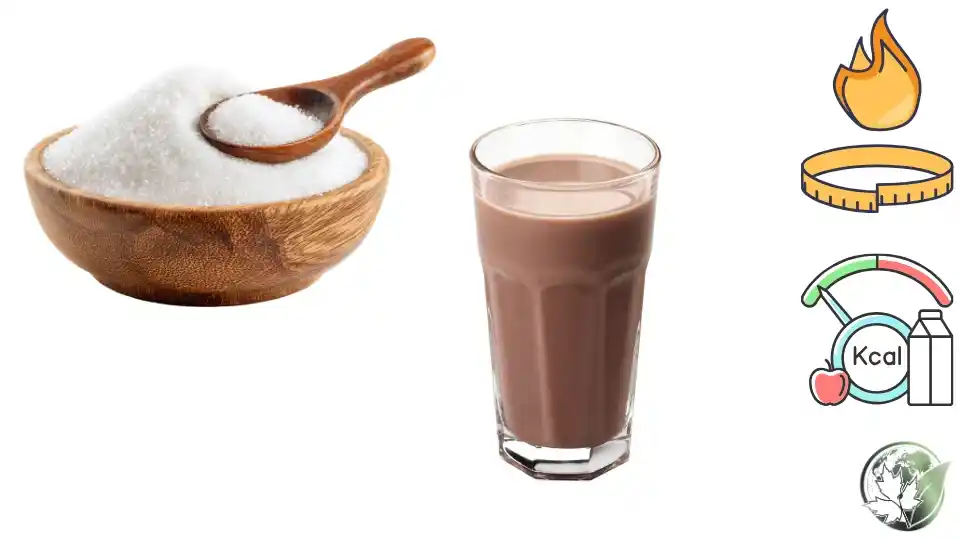
Hot chocolate is where sugar and chocolate meet. A mug of homemade hot chocolate made from a tablespoon of cocoa powder (12 calories), a cup of 2 percent milk (122 calories) and a teaspoon of sugar (16) has about 150 calories and 17 grams of sugar (mostly lactose from the milk). Instant mixes, which are mostly sugar, reach 190 to 250 for a mug, and café versions with whipped cream and syrup go beyond 400. Making it yourself, with a small amount of sugar or a sweetener, saves a lot.
| Chocolate drink | Calories | Sugar |
|---|---|---|
| Homemade: milk, 1 tbsp cocoa, 1 tsp sugar | 150 | 17 g |
| Homemade: milk, 1 tbsp cocoa, 1 tbsp sugar | 182 | 25 g |
| Instant mix prepared with water | 110 | 20 g |
| Instant mix prepared with milk | 230 | 36 g |
| Café mocha, medium | 360 | 42 g |
| Café hot chocolate with whipped cream | 430 | 52 g |
| Chocolate milk, low fat, 1 cup | 190 | 28 g |
| Cocoa with sweetener and skim milk | 100 | 12 g |
Even without added sugar, milk contains about 12 grams of natural lactose per cup, so a small amount of sweetener or none at all can be enough.
Are Chocolate and Sugar Safe for Pets and Children?
Chocolate is toxic to dogs and cats because of theobromine, and even small amounts of dark chocolate can be dangerous for small dogs. Keep it out of reach. Xylitol, a sweetener sometimes used in sugar-free chocolate and gum, is also highly toxic to dogs. Children can eat milk chocolate in small amounts, but should limit it because of sugar, caffeine and fat. For children under two, health agencies advise avoiding added sugars altogether. Chocolate also contains small amounts of caffeine, about 20 milligrams in 100 grams of milk chocolate, much less than coffee.
| Group | Guidance |
|---|---|
| Dogs and cats | Never give chocolate or xylitol |
| Children under 2 | Avoid added sugar and chocolate |
| Children 2-12 | Small portions, occasionally |
| Teenagers | Limit sweets, favor dark chocolate in small amounts |
| Pregnancy | Moderate chocolate; watch caffeine |
| People with migraines | Chocolate can be a trigger for some |
| People with reflux | Chocolate may worsen symptoms |
Key Takeaways: Sugar vs Milk Chocolate Calories
Sugar has 387 calories per 100 grams (16 per teaspoon), and milk chocolate has 535 (53 per 10-gram square). Chocolate is about half sugar and 30 percent fat. A small bar of 44 grams contains about 235 calories and the sugar of nearly six cubes. Milk chocolate has a lower glycemic index than sugar and offers some protein, minerals and cocoa, but it is easy to overeat. Stick to a square or two, or switch to dark chocolate for less sugar and more fiber.
Frequently Asked Questions
6 questions answered
How many calories are in a square of milk chocolate?
About 53 for a 10-gram square.
How much sugar is in a milk chocolate bar?
About 23 g in a 44-gram bar, almost six sugar cubes.
Does chocolate have more calories than sugar?
Yes, 535 against 387 per 100 g.
Is dark chocolate lower in calories?
No, it is higher (about 598), but has less sugar.
Is chocolate worse than sugar?
It has more calories but more nutrients and a lower glycemic index.
How much chocolate can I eat on a diet?
One or two squares a day usually fit comfortably.