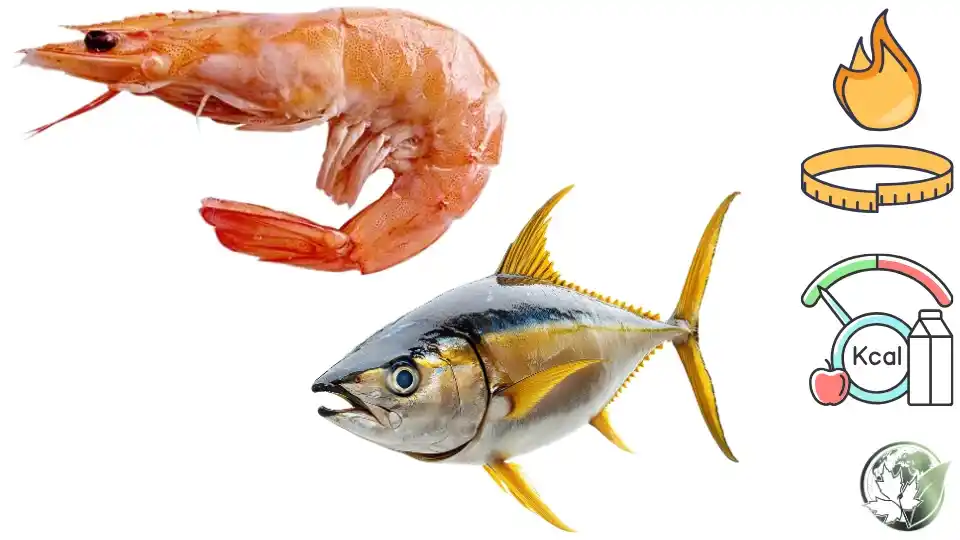
How Many Calories Are in Shrimp vs Tuna? The Quick Answer
Cooked shrimp has about 99 calories per 100 grams. Canned light tuna packed in water has about 116 calories per 100 grams, and canned albacore (white) tuna in water about 128. A standard three-ounce serving (85 grams) has about 84 calories of shrimp and 99 calories of light tuna, so shrimp is roughly 15 percent lighter. Both are lean, high-protein seafood with almost no carbohydrate, and the choice between them depends less on calories than on how they are prepared. Tuna packed in oil, for example, jumps to about 198 calories per 100 grams, and fried or buttery shrimp easily doubles in calories.
Shrimp and tuna are two of the most popular seafoods in the world, and both are common in diet plans because of their protein content. People compare them when planning high-protein, low-calorie meals, packing lunches, choosing sushi or deciding between a can of tuna and a bag of frozen shrimp. This guide compares shrimp and tuna by 100 grams, by serving and by piece, and looks at protein, fat, cholesterol, omega-3, sodium, mercury and cooking methods. It includes three comparison tables and an FAQ.
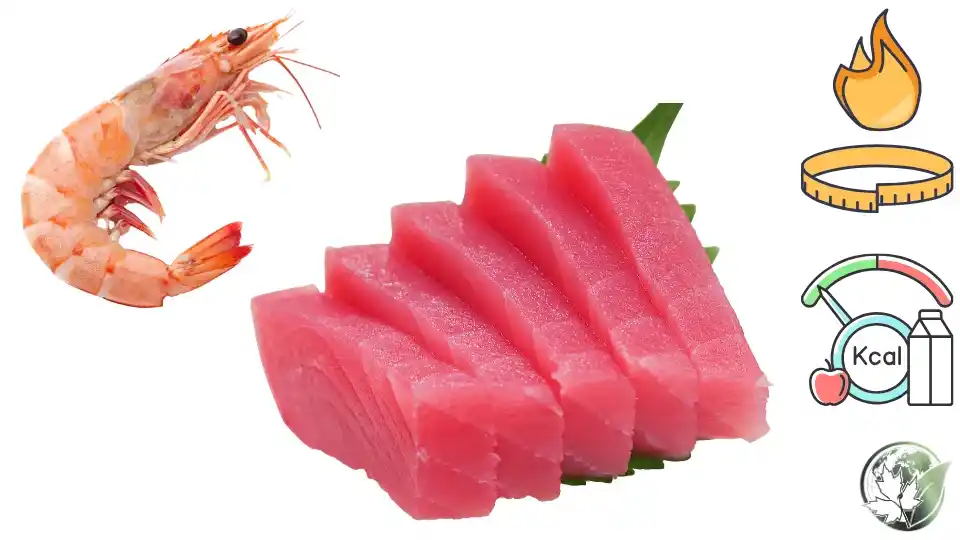
Three ounces of cooked shrimp have about 84 calories, three ounces of light tuna about 99
How Many Calories Are in Shrimp?
Shrimp is very low in fat and has almost no carbohydrate. Almost all of its calories come from protein. Calories depend on whether the shrimp is raw or cooked, since cooking removes water and makes the shrimp denser per gram, though the total for the whole shrimp stays about the same. The table uses typical values for peeled, deveined shrimp.
| Shrimp | Weight | Calories | Protein | Fat |
|---|---|---|---|---|
| 1 medium shrimp, cooked | 5 g | 5 kcal | 1.2 g | 0.02 g |
| 1 large shrimp, cooked | 7 g | 7 kcal | 1.7 g | 0.02 g |
| 1 jumbo shrimp, cooked | 14 g | 14 kcal | 3.4 g | 0.04 g |
| 6 large shrimp, cooked | 42 g | 42 kcal | 10 g | 0.1 g |
| 3 oz cooked | 85 g | 84 kcal | 20.4 g | 0.2 g |
| 100 g cooked | 100 g | 99 kcal | 24 g | 0.3 g |
| 100 g raw | 100 g | 85 kcal | 20.1 g | 0.5 g |
| 1 cup cooked | 145 g | 143 kcal | 35 g | 0.4 g |
How Many Calories Are in Tuna?
Tuna varies more than shrimp, because it comes in many forms. Canned light tuna (usually skipjack) is the lightest, albacore is a bit richer, and tuna in oil has far more calories. Fresh tuna steaks, used for grilling or sushi, differ by species: yellowfin is lean, and bluefin is fatty.
| Tuna | Weight | Calories | Protein | Fat |
|---|---|---|---|---|
| Canned light in water, drained | 85 g (3 oz) | 99 kcal | 21.7 g | 0.7 g |
| Canned light in water, drained | 100 g | 116 kcal | 25.5 g | 0.8 g |
| Canned albacore in water, drained | 85 g | 109 kcal | 20 g | 2.5 g |
| Canned albacore in water, drained | 100 g | 128 kcal | 23.6 g | 3 g |
| Canned light in oil, drained | 85 g | 168 kcal | 24.8 g | 7 g |
| Canned light in oil, drained | 100 g | 198 kcal | 29.1 g | 8.2 g |
| 1 can (5 oz, 142 g total, 113 g drained) in water | 113 g | 131 kcal | 28.8 g | 0.9 g |
| Fresh yellowfin, raw | 100 g | 109 kcal | 24.4 g | 0.5 g |
| Fresh yellowfin, cooked | 100 g | 139 kcal | 30 g | 1 g |
| Fresh bluefin, raw | 100 g | 144 kcal | 23.3 g | 4.9 g |
Shrimp vs Tuna: Calories Compared
| Amount | Cooked shrimp | Canned light tuna (water) | Difference |
|---|---|---|---|
| 100 g | 99 kcal | 116 kcal | Shrimp -17 |
| 85 g (3 oz) | 84 kcal | 99 kcal | Shrimp -15 |
| 113 g (1 can drained) | 112 kcal | 131 kcal | Shrimp -19 |
| 150 g | 149 kcal | 174 kcal | Shrimp -25 |
| 200 g | 198 kcal | 232 kcal | Shrimp -34 |
| Protein per 100 kcal | 24.2 g | 22 g | Shrimp higher |
| Weight for 200 kcal | 202 g | 172 g | Shrimp 30 g more |
| Shrimp vs tuna in oil, 100 g | 99 kcal | 198 kcal | Shrimp half |
Per calorie, shrimp gives slightly more protein and a bit more weight on the plate. The differences are small, and either one fits easily in a calorie plan.
Shrimp vs Tuna: Nutrition Compared
| Per 100 g | Cooked shrimp | Canned light tuna (water) | Canned albacore (water) | Fresh yellowfin, cooked |
|---|---|---|---|---|
| Calories | 99 kcal | 116 kcal | 128 kcal | 139 kcal |
| Protein | 24 g | 25.5 g | 23.6 g | 30 g |
| Fat | 0.3 g | 0.8 g | 3 g | 1 g |
| Saturated fat | 0.1 g | 0.2 g | 0.8 g | 0.3 g |
| Omega-3 (EPA + DHA) | 0.3 g | 0.27 g | 0.86 g | 0.25 g |
| Cholesterol | 189 mg | 42 mg | 42 mg | 49 mg |
| Sodium | 111 mg | 247 mg | 377 mg | 50 mg |
| Selenium | 38 mcg | 80 mcg | 76 mcg | 108 mcg |
| Vitamin B12 | 1.4 mcg | 2.5 mcg | 1.9 mcg | 2.7 mcg |
| Iodine | 35 mcg | 17 mcg | 14 mcg | Varies |
| Mercury | Very low | Low | Moderate | Moderate |
Shrimp is higher in cholesterol, but dietary cholesterol has less effect on blood cholesterol for most people than saturated fat, which shrimp has almost none of. Tuna provides more selenium and B12, and albacore provides the most omega-3. Canned tuna has more sodium, which matters for blood pressure.
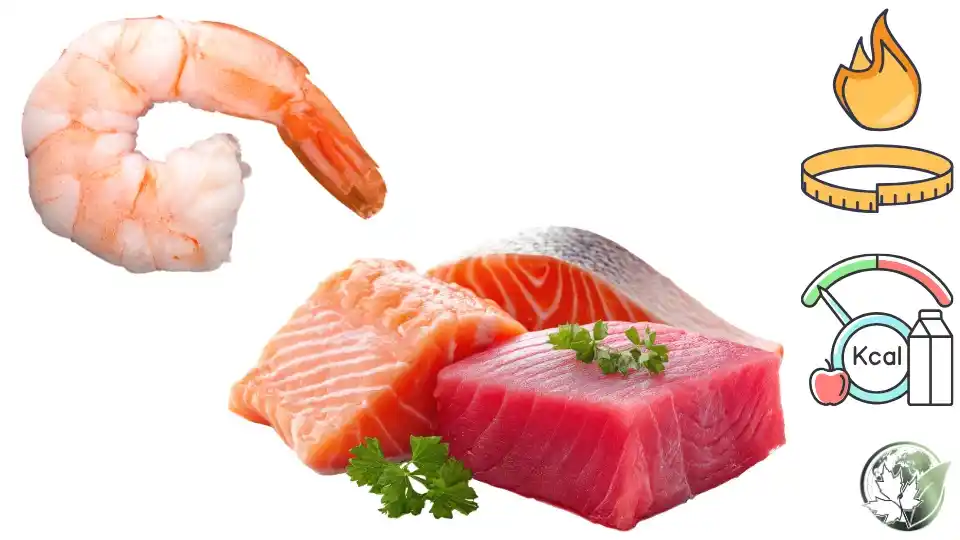
Fresh tuna steak and raw shrimp are both lean sources of protein
Which Has More Calories: Shrimp or Tuna?
Tuna has more calories than shrimp in nearly every form: light tuna in water by 17 per 100 grams, albacore by 29, tuna in oil by 99, and fresh tuna by 10 to 45. The difference per portion is only 15 to 30 calories. Whether the food is boiled, grilled, fried or in a salad matters more. A bowl of shrimp tossed in garlic butter contains much more energy than a tuna and lettuce salad. If your goal is the lowest calories per bite, plain shrimp is hard to beat.
| Comparison | Shrimp | Tuna | Winner for fewer calories |
|---|---|---|---|
| Plain, per 100 g | 99 | 116 (canned light) | Shrimp |
| Plain, per 3 oz | 84 | 99 | Shrimp |
| Preserved in oil | - | 198 | Shrimp |
| Fried or breaded, per 100 g | 242 | - | - |
| Protein per calorie | 0.24 g | 0.22 g | Shrimp |
| Fat per 100 g | 0.3 g | 0.8-3 g | Shrimp |
| Cholesterol | 189 mg | 42 mg | Tuna |
| Omega-3 | 0.3 g | 0.27-0.86 g | Tuna (albacore) |
Is Shrimp or Tuna Better for Weight Loss?
Both are excellent for weight loss. They are high in protein, low in fat and low in calories, so they promote fullness. Shrimp has slightly fewer calories per serving. Tuna in water is cheaper, more portable and easier to include in lunches. The risks lie in the extras: mayonnaise in tuna salad adds 94 calories per tablespoon, oil adds 119, breading and frying can double the calories of shrimp, and buttery sauces add 100 or more per serving. Choose water-packed tuna, grill or steam shrimp, and flavor with lemon, herbs, garlic, mustard or a yogurt dressing.
| Meal idea | Calories |
|---|---|
| 100 g steamed shrimp with lemon and herbs | 99 |
| 100 g shrimp sauteed in 1 tsp olive oil | 139 |
| 1 can tuna in water on salad with lemon | 135 |
| 1 can tuna in water with 1 tbsp mayo | 225 |
| 1 can tuna in oil, drained | 224 |
| 100 g shrimp, battered and fried | 242 |
| Shrimp cocktail, 6 shrimp with sauce | 80 |
| Tuna salad sandwich (2 slices bread) | 330 |
How Do Cooking Methods Change Shrimp Calories?
Boiling, steaming and grilling keep shrimp at 85 to 110 calories per 100 grams. Sauteing with a teaspoon of oil adds about 40. Scampi style with butter and garlic reaches 170 to 200 per 100 grams. Breading and deep frying can raise it to 240 or more, and tempura shrimp can reach 270. Shrimp in Iranian dishes such as maygoo polo (shrimp with herbed rice) or khoresh-e maygoo (shrimp stew) depends on oil and rice, but the shrimp itself stays light.
| Preparation (100 g shrimp) | Calories |
|---|---|
| Raw | 85 |
| Boiled or steamed | 99 |
| Grilled with lemon | 105 |
| Sauteed in 1 tsp oil | 139 |
| Garlic butter | 190 |
| Breaded and fried | 242 |
| Tempura | 270 |
| In coconut curry | 160 |
A tuna salad made with lemon and olive oil is lighter than one made with mayonnaise
How Do Cooking Methods Change Tuna Calories?
Canned tuna is already cooked, so the main variable is the packing liquid and what you mix it with. Water-packed tuna drained well has 116 calories per 100 grams. Oil-packed tuna, even drained, has about 198, because the oil is absorbed into the flesh. Fresh tuna seared in a pan or grilled keeps near 139 calories per 100 grams, plus any oil used. Raw tuna, as in sushi, has about 109 for lean cuts and over 140 for fatty bluefin. Spicy tuna rolls are far higher due to mayonnaise and rice.
| Preparation (100 g) | Calories |
|---|---|
| Canned light in water, drained | 116 |
| Canned albacore in water, drained | 128 |
| Canned in oil, drained | 198 |
| Canned in oil, with the oil | 230 |
| Fresh yellowfin, seared | 139 |
| Tuna sashimi (lean) | 109 |
| Tuna sashimi (fatty bluefin) | 190 |
| Tuna salad with mayo | 190 |
Mercury, Cholesterol and Sodium: What Else Matters?
Calories are only one part of the choice. Tuna, being a large predatory fish, accumulates more mercury than shrimp. Light tuna is lower in mercury than albacore, and health agencies generally recommend limiting albacore and avoiding frequent servings of big-eye or bluefin, particularly for pregnant women and young children. Shrimp is among the lowest-mercury seafoods. Shrimp is higher in cholesterol but low in saturated fat. Canned tuna contains more sodium, especially in brined or flavored varieties, so rinse it or choose low-sodium cans if you watch blood pressure.
| Consideration | Shrimp | Tuna |
|---|---|---|
| Mercury | Very low | Low (light) to moderate (albacore) |
| Cholesterol per 100 g | 189 mg | 42 mg |
| Saturated fat per 100 g | 0.1 g | 0.2-0.8 g |
| Sodium per 100 g | 111 mg | 247-377 mg (canned) |
| Omega-3 | Modest | Higher in albacore |
| Allergy risk | Shellfish allergy | Fish allergy |
| Typical weekly guidance | Several servings | 1-3 servings, less for albacore |
People with a shellfish allergy must avoid shrimp, and those with a fish allergy must avoid tuna. People with high cholesterol or heart disease should discuss shrimp portions with a doctor, though most guidelines treat it as a heart-healthy food when prepared without added fat.
Shrimp vs Tuna Per Dollar and Convenience
Canned tuna is shelf-stable, inexpensive and ready to eat, which makes it a favorite for quick lunches and travel. Shrimp usually costs more per kilogram, needs refrigeration or freezing and requires cooking, though frozen peeled shrimp cooks in three minutes. Fresh tuna steaks are the most expensive. Both give a lot of protein per calorie, and their value depends on local prices.
| Factor | Shrimp | Canned tuna | Fresh tuna |
|---|---|---|---|
| Typical cost level | Medium to high | Low | High |
| Storage | Frozen | Pantry | Refrigerated |
| Preparation time | 3-5 min | 0 min | 5-10 min |
| Protein per 100 kcal | 24 g | 22 g | 22 g |
| Best use | Stir-fry, rice, salad | Sandwiches, salads | Grilled steaks |
How Many Shrimp Equal One Can of Tuna?
A drained can of light tuna in water (113 grams) has about 131 calories. That equals about 19 large cooked shrimp or 13 jumbo. Shrimp sizes are usually labeled by the number of pieces per pound: for example 31/40 means 31 to 40 shrimp per pound, which corresponds to a large size of about 12 to 15 grams raw. Cooked and peeled, they weigh around 7 to 10 grams each. The label size helps you estimate calories quickly.
| Shrimp size label | Pieces per pound (raw, shell on) | Cooked, peeled weight each | Calories each |
|---|---|---|---|
| Colossal | Under 15 | 25 g | 25 kcal |
| Jumbo | 21/25 | 14 g | 14 kcal |
| Extra large | 26/30 | 11 g | 11 kcal |
| Large | 31/40 | 8 g | 8 kcal |
| Medium | 41/50 | 5.5 g | 5.5 kcal |
| Small | 51/60 | 4 g | 4 kcal |
| Salad shrimp | 100+ | 1.5 g | 1.5 kcal |
| Portion | Calories | Shrimp (large) | Tuna equivalent |
|---|---|---|---|
| 6 shrimp | 48 | 6 | About 40 g tuna |
| 12 shrimp | 96 | 12 | About 83 g tuna |
| 19 shrimp | 152 | 19 | 1 can drained (131) |
| 25 shrimp | 200 | 25 | About 172 g tuna |
How Do Canned Tuna Types Compare?
Not all canned tuna is the same. Chunk light is usually skipjack or yellowfin and is lowest in mercury. Solid white is albacore, firmer and milder, with more fat and omega-3. Packed in oil, the fish absorbs oil, and flavored pouches add sauces that change calories. Reading the label helps because the drained weight, which you actually eat, is smaller than the can weight.
| Product (per 85 g drained) | Calories | Protein | Fat | Sodium |
|---|---|---|---|---|
| Chunk light in water | 99 | 21.7 g | 0.7 g | 287 mg |
| Solid white (albacore) in water | 109 | 20 g | 2.5 g | 320 mg |
| Chunk light in olive oil | 168 | 24.8 g | 7 g | 300 mg |
| Tuna pouch, lemon pepper | 90 | 19 g | 1 g | 380 mg |
| Tuna pouch, sweet chili | 120 | 17 g | 1 g | 410 mg |
| Tuna salad kit with mayo | 190 | 15 g | 10 g | 450 mg |
| No-salt-added light in water | 90 | 20 g | 0.8 g | 40 mg |
The cheapest way to keep tuna light is to buy chunk light in water with no added salt and flavor it yourself with lemon, black pepper, onion and herbs.
Shrimp and Tuna in Persian Cooking
Both seafoods appear in Iranian home cooking and in restaurants, mostly in the south and along the coast. Maygoo polo, a rice dish with shrimp, herbs and tamarind, is a classic of Bushehr and Hormozgan. Khoresh-e maygoo is a spicy tomato-based shrimp stew. Tuna is more common as a canned ingredient in salads, sandwiches, pasta and savory pastries. A rice-based meal with shrimp has more calories from rice and oil than from the shrimp itself.
| Dish | Serving | Estimated calories |
|---|---|---|
| Maygoo polo (shrimp and herb rice) | 1 plate (300 g) | 480 |
| Khoresh-e maygoo (shrimp stew) | 1 bowl (200 g) | 220 |
| Grilled shrimp with lemon | 100 g | 105 |
| Fried shrimp (breaded) | 100 g | 242 |
| Tuna salad (salad-e tonfish) with oil and lemon | 1 bowl (200 g) | 250 |
| Tuna sandwich with mayonnaise | 1 sandwich | 380 |
| Tuna pasta | 1 plate (250 g) | 420 |
| Canned tuna with lemon and cucumber | 1 can drained + vegetables | 160 |
To keep these meals light, use less oil in the pan, add more vegetables or herbs, and measure the rice portion.
Shrimp vs Tuna in Sushi and Restaurant Meals
At a Japanese restaurant, tuna appears as sashimi, nigiri and rolls, and shrimp as ebi nigiri or tempura. A piece of tuna nigiri has about 40 to 50 calories, mostly from the rice. A shrimp (ebi) nigiri has about 40 to 45. A shrimp tempura roll, however, can have 400 to 500 calories per roll. A spicy tuna roll with mayonnaise has around 290 to 350. Choosing sashimi or nigiri over fried or creamy rolls cuts calories sharply.
| Sushi item | Pieces | Calories |
|---|---|---|
| Tuna sashimi | 3 slices (60 g) | 70 |
| Tuna nigiri | 1 piece | 45 |
| Ebi (shrimp) nigiri | 1 piece | 41 |
| Tuna roll (tekka maki) | 6 pieces | 180 |
| Spicy tuna roll | 6 pieces | 290 |
| Shrimp tempura roll | 6 pieces | 420 |
| California roll (imitation crab) | 6 pieces | 255 |
| Poke bowl with tuna | 1 bowl | 480 |
How Often Can You Eat Shrimp and Tuna?
Health agencies suggest eating seafood two or more times a week for heart and brain benefits. Shrimp is low in mercury and can be eaten frequently as part of this. Light canned tuna is also considered low in mercury and suitable for several servings a week, whereas albacore and fresh tuna should be limited to about one serving a week for sensitive groups. Pregnant women, breastfeeding mothers and young children should follow local advice. Variety is useful: rotate shrimp, tuna, salmon, sardines, white fish and other options.
| Group | Shrimp | Light canned tuna | Albacore or fresh tuna |
|---|---|---|---|
| General adult | 2-3 servings a week | 2-3 servings a week | 1 serving a week |
| Pregnant or breastfeeding | 2-3 servings a week | Up to 2 servings a week | Limit to 1 a week or less |
| Young children | Age-appropriate portions | 1-2 small portions a week | Avoid frequent servings |
| People with high blood pressure | Rinse, avoid salted | Choose low-sodium | Limit |
| People with gout | Moderate | Moderate | Moderate |
Quick Ideas for Light Shrimp and Tuna Meals
A few reliable recipes keep calories low while delivering protein. For shrimp, try a lemon and herb skewer, a stir-fry with vegetables and a teaspoon of oil, or a cold shrimp salad with cucumber and yogurt dressing. For tuna, mix a drained can with diced celery, onion and lemon juice, spoon it onto lettuce leaves, or stuff it into a tomato. Add a boiled egg or beans for more protein if needed. These meals fall between 150 and 300 calories and take under ten minutes. Pair them with a salad or steamed vegetables and a measured portion of rice, bread or potatoes to complete the plate without raising calories too much.
| Meal | Main ingredients | Calories |
|---|---|---|
| Lemon herb shrimp skewers | 150 g shrimp, lemon, herbs | 150 |
| Shrimp and vegetable stir-fry | 150 g shrimp, 1 tsp oil, vegetables | 230 |
| Shrimp salad with yogurt dressing | 100 g shrimp, cucumber, 2 tbsp yogurt | 140 |
| Tuna lettuce wraps | 1 can tuna, lemon, onion, lettuce | 150 |
| Tuna stuffed tomato | 1 can tuna, 1 tomato, herbs | 160 |
| Tuna and white bean salad | 1 can tuna, 1/2 cup beans, olive oil | 340 |
| Tuna and egg plate | 1 can tuna, 1 egg, cucumber | 215 |
Key Takeaways: Shrimp vs Tuna Calories
Cooked shrimp has about 99 calories per 100 grams, and canned light tuna in water about 116. A three-ounce serving has 84 calories of shrimp and 99 of tuna. Tuna in oil climbs to 198 calories per 100 grams, and fried shrimp to 242. Both are lean, high-protein choices. Shrimp has less mercury and fewer calories but more cholesterol, while tuna offers more selenium, B12 and, for albacore, omega-3. Keep both away from heavy sauces and enjoy them grilled, steamed or in salads.
Frequently Asked Questions
6 questions answered
How many calories are in a large shrimp?
About 7 calories when cooked.
How many calories are in a can of tuna?
About 130 for a drained can in water, and 224 in oil.
Is shrimp lower in calories than tuna?
Yes, slightly, 99 against 116 per 100 g.
Which has more protein?
Canned light tuna by a little, 25.5 g against 24 g per 100 g.
Is shrimp high in cholesterol?
Yes, 189 mg per 100 g, but it is very low in saturated fat.
Which is safer in terms of mercury?
Shrimp, which is among the lowest in mercury.