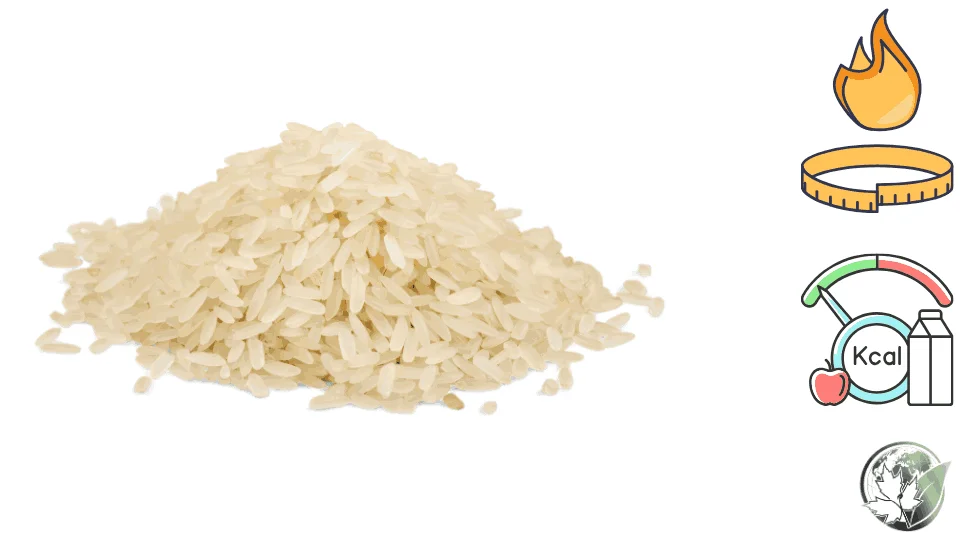
Rice calories make more sense when the number is tied to a real portion. For cooked white rice, a practical working reference is about 130 calories per 100 g. The serving people actually eat can be much smaller or larger, and the final total can move further when cooking, draining, added oil, sugar, coating, or recipe style changes the food. This guide uses rounded reference values, shows the math for realistic servings, and compares rice with pasta and bread so the number has context instead of standing alone.
That distinction matters because a nutrition database is a reference point, not a photograph of every product sold under the same name. Cooked grains absorb water. That simple fact explains why cooked and dry calorie values look so different and why cup measurements vary with packing and hydration. The goal is not to make every bite look mathematically exact. It is to make the estimate reproducible: identify the form of the food, identify the weight or volume, use the matching reference, and then adjust when a label or recipe gives better information.
The quick answer is that 1/2 cup cooked, about 79 g is about 103 calories, while 150 g cooked is about 195 calories. Those figures are deliberately rounded. Natural foods vary, and manufactured foods can vary even more by brand. If a package is available, the package label should take priority over a generic database figure.
Rice Calories: Quick Answer
For the reference used in this article, cooked white rice provides about 130 kcal per 100 g. Using 130 kcal per 100 g as the working reference, a simple estimate is made by multiplying the portion weight by 1.30. A 30 g portion would be about 39 kcal, while a 50 g portion would be about 65 kcal. That calculation is useful when your portion is not one of the standard sizes in the table. It also prevents a common mistake: borrowing a calorie number from a serving that weighs very differently from the amount on your plate.
| Serving | Approx. amount | Approx. calories |
|---|---|---|
| 100 g cooked white rice | 100 g | 130 kcal |
| 1/2 cup cooked, about 79 g | 79 g | 103 kcal |
| 1 cup cooked, about 158 g | 158 g | 205 kcal |
| 150 g cooked | 150 g | 195 kcal |
The table answers the practical part of rice calories without implying that every product is identical. Rice variety, cooked water absorption, oil or butter, pilaf ingredients and cup packing can all shift the number. The smaller the serving, the less meaningful a one- or two-calorie difference becomes, which is why rounded estimates are generally more honest than decimals.
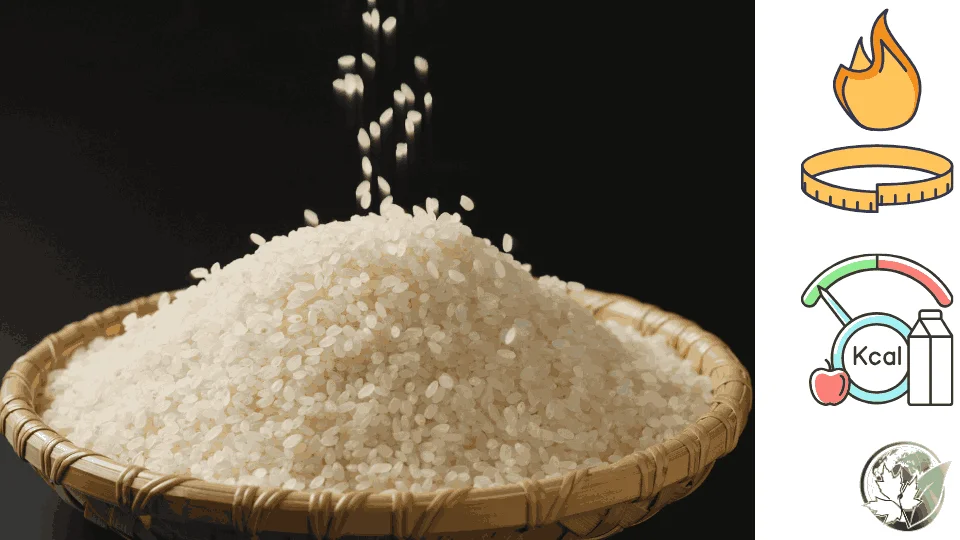
rice calorie serving sizes
How Serving Size Changes Rice Calories
Serving size is the main reason two calorie answers can both be correct. One source may use 100 grams, another may use a household measure, and a third may describe one piece. For rice, the 100-gram/ml reference gives you a stable comparison point, but the everyday serving is usually more useful. 1/2 cup cooked, about 79 g at about 79 g works out to roughly 103 kcal. If the portion doubles, the calories roughly double as well, provided the food form stays the same.
Piece counts deserve extra caution. A “piece” can change with size, brand, trimming, bone, thickness, or manufacturing. Volume measures also have limits: a tablespoon can be level or rounded, a cup can be loosely or tightly packed, and a glass can hold anywhere from 150 to well over 300 milliliters. When precision matters, grams or milliliters are the cleaner choice. When convenience matters, use the household measure and accept a sensible margin of error. This point is especially relevant to rice.
It also helps to separate edible weight from purchase weight. This is especially important for foods with bones, peels, packaging liquid, or large amounts of cooking loss. If the reference is for edible cooked food, weighing the edible cooked portion gives the best match. If all you have is a product label, use the serving definition on that label rather than forcing the generic 100-gram figure onto a different form. This point is especially relevant to rice.
Rice Nutrition per 100g
Calories are only one line in a nutrition profile. The table below gives a rounded reference for cooked white rice so readers can see where the energy is coming from. This matters for interpretation. A food dominated by fat can be calorie-dense in a small spoonful; a water-rich fruit can occupy a large bowl for a similar calorie total; a dried fruit or syrup can concentrate carbohydrate into a small volume.
| Nutrient | Approx. amount per 100 g |
|---|---|
| Calories | 130 kcal |
| Carbohydrate | 28.2 g |
| Total sugars | 0.1 g |
| Fiber | 0.4 g |
| Protein | 2.7 g |
| Fat | 0.3 g |
In this reference, fat is about 0.3 g, carbohydrate about 28.2 g, and protein about 2.7 g per 100 g. Those three macronutrients explain most of the calorie pattern. Fiber and water influence volume and texture, while sugars are included within total carbohydrate rather than being extra calories on top of it. For natural foods, cultivar and ripeness can move the values slightly; for recipes, the ingredient proportions can move them much more.
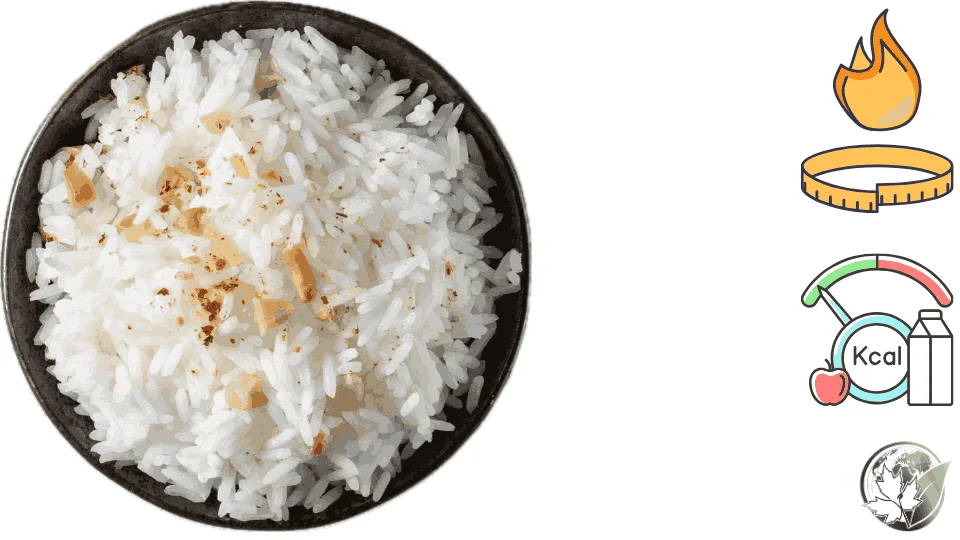
rice nutrition and calories
Why rice calories Can Vary
The biggest source of confusion is usually not bad arithmetic; it is a mismatch between foods. Dry rice and cooked rice must never be compared gram for gram. Cooking adds water and increases weight, so cooked rice has fewer calories per 100 g than dry rice. A reference value for one form should not be copied onto another form simply because the food name looks similar. The same principle applies to raw versus cooked weights, drained versus undrained canned foods, and plain versus coated or sweetened versions.
Another source of variation is water. Cooking can remove water, grains can absorb it, fruit can lose it during drying, and sauces can be concentrated or diluted. Because calories are measured against the final weight, changing water content changes calories per 100 grams even when no calorie-containing ingredient has been added. This is why cooked and raw entries can look different and why dried products are much denser than their fresh counterparts. This point is especially relevant to rice.
Finally, brand formulation matters. Manufacturers can use different amounts of oil, sugar, starch, dairy, nuts, fruit solids, or water. A small label difference per serving becomes meaningful only when the serving itself is large or frequent. For normal food decisions, matching the correct product and serving is more valuable than arguing over a five-calorie difference between databases. This point is especially relevant to rice.
Rice vs Pasta And Bread: Calorie Comparison
The comparison requested in the content plan is rice versus pasta and bread. On a standardized basis, rice is about 130 kcal per 100 g. Cooked pasta is often around 150-160 kcal per 100 g; bread is much drier and commonly around 250-270 kcal per 100 g. Rice and cooked pasta are relatively close because both contain a lot of absorbed water. Bread is much more concentrated because it contains less water.
| Food | Approx. calories per 100 g | What drives the difference |
|---|---|---|
| Rice | 130 kcal | grain staple reference; portion and preparation matter |
| Pasta And Bread | About 157 kcal* | Different water, fat, carbohydrate and recipe profile |
The asterisk matters: the comparator is a rounded reference, not a promise about every recipe. For a fair comparison, use the same basis. Per 100 grams is useful for energy density; per tablespoon, piece, glass or typical serving is better for what people actually eat. A food can be higher per 100 grams yet lower per serving simply because its normal serving is smaller. This point is especially relevant to rice.
This is also where search intent matters. Someone asking rice calories usually wants to decide between portions, not perform a laboratory comparison. The most practical takeaway is therefore to compare the serving you would realistically choose. If one option is normally eaten in a 15-gram spoonful and the other in a 150-gram bowl, a 100-gram table alone does not answer the real question.
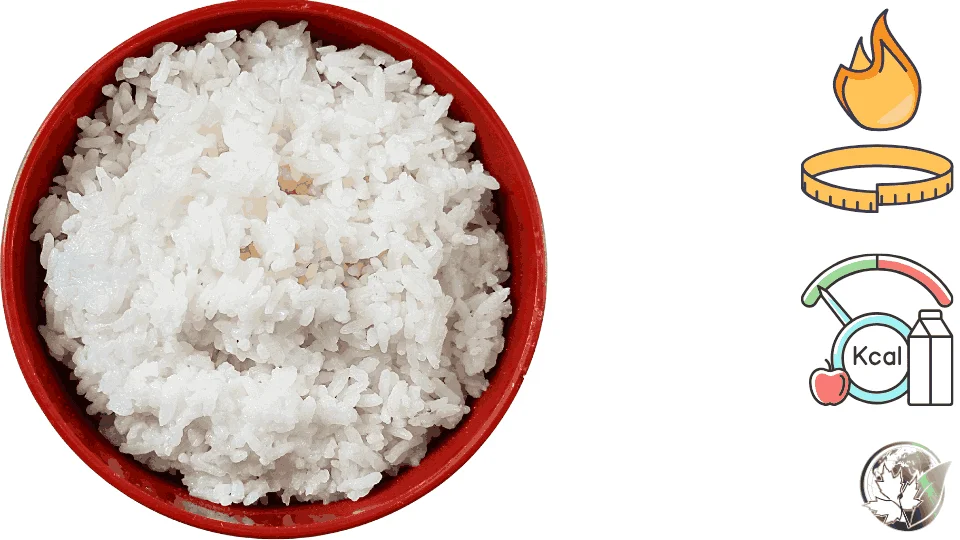
rice versus pasta and bread calorie comparison
How to Estimate Rice Calories Without Guessing
A repeatable method is more useful than memorizing one calorie number. First, identify the exact food form: cooked white rice is the reference in this guide. Second, measure the amount in grams or milliliters when possible. Third, multiply that amount by 1.30 kcal per gram/ml. Fourth, switch to the product label if you are dealing with a branded item whose ingredients or preparation differ from the reference.
For example, 30 g of this reference is about 39 kcal, 50 g is about 65 kcal, and 75 g is about 98 kcal. These calculated examples are not suggested serving targets; they are simply a way to make the math transparent. Once you know the weight, the estimate becomes easy to reproduce.
When a scale is not available, use the closest household serving from the table and resist false precision. A tablespoon estimate is better than pretending an unmeasured spoonful is exactly 15 grams. A “medium” piece is useful for casual tracking but less precise than weight. The purpose of rice calories is to support a realistic food estimate, not to turn an ordinary meal into a chemistry exercise.
Rice Labels, Recipes and Preparation: What to Check
If rice comes in a package, start with three label details: serving size, calories per serving, and servings per container. Then check whether the stated serving is given in grams or milliliters. That weight lets you compare the package with the generic reference in this article. A brand can look “lower calorie” simply because its labeled serving is smaller, so equal-weight comparison is the safest way to judge two products.
If the food is homemade, recipe arithmetic is more reliable. Add the calories from all meaningful ingredients, determine the cooked yield, then divide by total grams or number of equal portions. This matters especially when oil, butter, syrup, nuts, cheese, cream, breading or sugar enters the recipe. Those ingredients can change the final total far more than natural variation in the base food. This point is especially relevant to rice.
Preparation can also change how much food fits into a cup or onto a spoon. Chopping, packing, melting, draining and cooking all affect density. That is why the article keeps returning to weight. Weight does not solve every issue, but it removes much of the ambiguity from cup size, piece size and visual estimates. This point is especially relevant to rice.
Real-World Portion Examples for Rice Calories
Imagine you are building a plate or snack and want a quick estimate. A 25 g amount of rice is about 32 kcal. A 60 g amount is about 78 kcal. A 120 g amount is about 156 kcal. Those three examples show why portion size should be written next to every calorie number. Without the weight, “low” or “high” is mostly a description of the food category rather than your actual serving.
Now consider the opposite problem: you know the calories you want to estimate but not the weight. At this reference density, roughly 100 kcal corresponds to about 77 g of rice. That number can be useful as a visual anchor, but it should not be treated as a recommended portion. It simply translates energy into weight so the size of the food becomes easier to picture.
The most human way to use these numbers is to keep them proportional. If your portion looks about half the listed serving, use roughly half the calories. If it is clearly twice as large, double the estimate. Save exact weighing for situations where accuracy genuinely matters. For routine eating, consistency and a sensible range are usually more useful than chasing single-calorie precision. This point is especially relevant to rice.
Common Mistakes When Searching rice calories
One common mistake is comparing a raw entry with a cooked serving. Another is treating a branded product as though it were identical to a generic reference. A third is forgetting added oil, sauce, filling or sugar. A fourth is using purchase weight when only part of the food is edible. Each mistake can produce a larger error than the small differences people often notice between nutrition databases. This point is especially relevant to rice.
Another mistake is to assume that a lower calorie value automatically makes one food “better.” This article is deliberately limited to calories, serving size and basic nutrition context. Foods differ in protein, fat, carbohydrate, fiber, vitamins, minerals, taste, price, convenience and how they are used in a meal. A calorie comparison answers one question, not every nutrition question. This point is especially relevant to rice.
Finally, avoid keyword-driven overstatement. rice calories should be answered clearly near the top, but repeating the phrase unnaturally does not improve the information. The most useful page is one that gives the direct answer, explains why the number changes, and leaves the reader able to calculate their own portion.
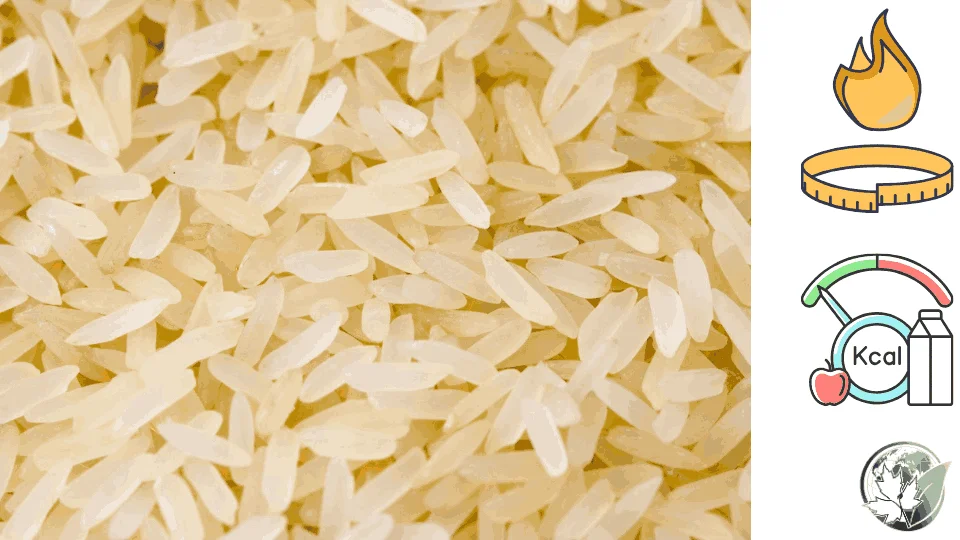
rice portion and calorie guide
FAQ About Rice Calories
5 questions answered
What is the best quick answer for rice calories?
Use about 130 kcal per 100 g for cooked white rice as the working reference. 1/2 cup cooked, about 79 g is about 103 kcal. If you have a branded package, use its label because formulation and serving size may differ.
How many calories are in 100g of rice?
About 130 calories in the cooked white rice reference used here. The exact number can move with rice variety, cooked water absorption, oil or butter, pilaf ingredients and cup packing.
Does cooking or preparation change rice calories?
It can. Dry rice and cooked rice must never be compared gram for gram. Cooking adds water and increases weight, so cooked rice has fewer calories per 100 g than dry rice. Water loss, absorbed water and added ingredients can all change calories per 100 grams or per serving.
Is rice higher in calories than pasta and bread?
Using the rounded references in this guide, rice is about 130 kcal per 100 g, while cooked pasta is often around 150-160 kcal per 100 g; bread is much drier and commonly around 250-270 kcal per 100 g. Compare equal weights first, then compare the portions you would actually eat.
What is the most accurate way to track rice calories?
Match the exact food form, weigh the edible portion when possible, and use the product label for branded foods. If you use the generic reference here, multiply the portion weight by 1.30 to estimate calories.
Conclusion: Rice Calories
rice calories comes down to matching the right number to the right portion. For cooked white rice, the working reference is about 130 kcal per 100 g, while 1/2 cup cooked, about 79 g is about 103 kcal. The comparison with pasta and bread is useful only when the serving basis is clear. Rice and cooked pasta are relatively close because both contain a lot of absorbed water. Bread is much more concentrated because it contains less water.
Use the table for quick estimates, grams or milliliters for better precision, and the package label when a brand or recipe is known. Values in this article are rounded food-composition estimates; they can vary with rice variety, cooked water absorption, oil or butter, pilaf ingredients and cup packing. This content is general nutrition information and does not make treatment, disease, or weight-loss claims.
Understanding the 100g Reference for Rice
The 100-gram figure is not a serving recommendation. It is a common comparison unit that lets very different foods sit on the same scale. For rice, 100 g/ml is about 130 kcal in the reference used here. If your normal serving is only 10 or 20 grams, the 100-gram number can look more dramatic than what lands on the plate. If your normal serving is a 250-milliliter glass or a large bowl, the opposite can happen: the everyday portion can contain much more than the headline 100-gram value.
This is especially important when comparing foods with very different water content. Water adds weight and volume without adding calories. Foods that are dried, fried, aged or concentrated often pack more calories into 100 grams because there is less water left. Foods that absorb water during cooking may show fewer calories per 100 grams than the dry ingredient. Neither result means calories appeared or disappeared; the denominator changed. This point is especially relevant to rice.
For readers using rice calories as a search term, the practical rule is simple: use 100 grams to understand calorie density, then switch back to the serving you actually eat. That two-step approach is clearer than trying to decide whether a food is “high” or “low” from one standardized number.
How to Read Conflicting Rice Calorie Numbers Online
Seeing two different values online does not automatically mean one source is wrong. One entry may describe raw food and another cooked food. One may include skin or packing liquid; another may use drained edible weight. A manufacturer may report a recipe with more or less oil, sugar, water or solids than a generic database. Even rounding rules can create a small gap between two otherwise similar entries. This point is especially relevant to rice.
When numbers conflict, compare the descriptors before the calories. Look for words such as raw, cooked, drained, roasted, sweetened, reduced-fat, prepared or ready-to-eat. Then compare the serving weight. If one source says 80 calories for 20 grams and another says 100 calories for 25 grams, the energy density may be nearly identical even though the headline values look different. This point is especially relevant to rice.
This is another reason the rice calories guide uses rounded values. A precise-looking number attached to the wrong food form is less accurate than a rounded number attached to the correct form. Choose the best match, document the portion, and keep the estimate consistent.
Why Portion Weight Matters for Rice
Visual size can be deceptive. Foods can be airy, dense, watery, compact, bone-in, hollow, layered or heavily coated. Two portions that occupy the same space on a plate can weigh very different amounts. For rice, that means a visual guess should be treated as a range unless you already know what the usual piece, spoon or cup weighs.
A useful one-time exercise is to measure your typical serving, note the weight, and remember what it looks like. After that, future estimates become much easier. This approach keeps calorie tracking practical without requiring a scale at every meal. It also reduces the temptation to use arbitrary “small,” “medium” and “large” labels that can mean different things to different people. This point is especially relevant to rice.
For rice calories, the strongest estimate is therefore not the one with the most decimal places. It is the one that describes the actual food and actual portion closely enough to be useful.