How Many Calories Are in a Potato vs Cooked Rice? The Quick Answer
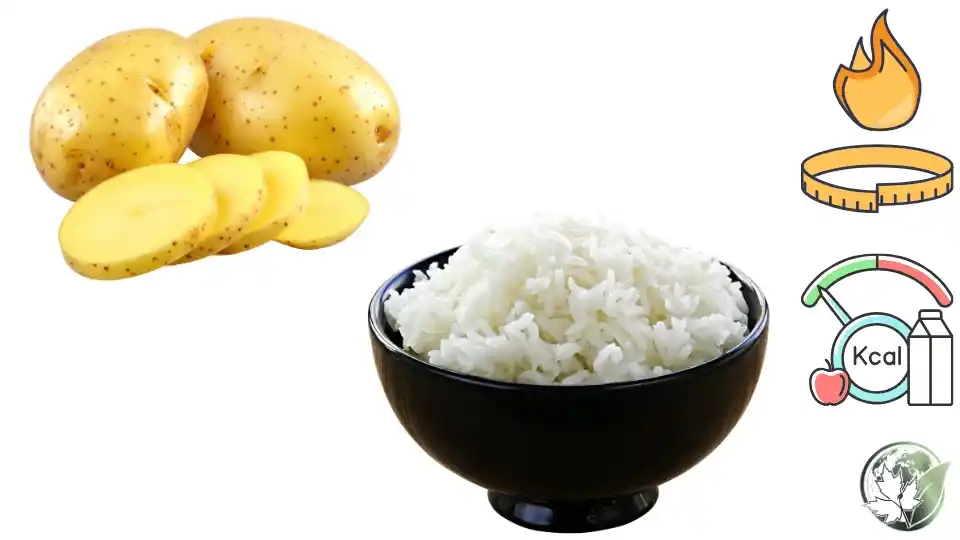
A medium boiled potato with its skin (170 grams) has about 148 calories. A cup of cooked white rice (158 grams) has about 205. Per 100 grams, boiled potato has 87 calories and cooked white rice 130, so the potato is about one third lower in calories by weight. A medium baked potato with skin (173 grams) has about 161 calories, or 93 per 100 grams. Even though raw rice is much more calorie dense than raw potato, once cooked, both are mostly water, and potato remains lighter.
People weigh these two staples because they are the most common starchy sides worldwide, and often interchangeable at dinner. The potato is a vegetable (a tuber) with vitamin C, potassium and fiber in the skin. Rice is a grain with fewer minerals but a neutral taste. The numbers shift when oil, butter or frying enter the picture. This guide compares potatoes and cooked rice by medium potato, by cup and by 100 grams, looks at fiber, potassium, vitamins and glycemic index, and covers boiled, baked, mashed and fried forms. It includes three comparison tables and an FAQ.
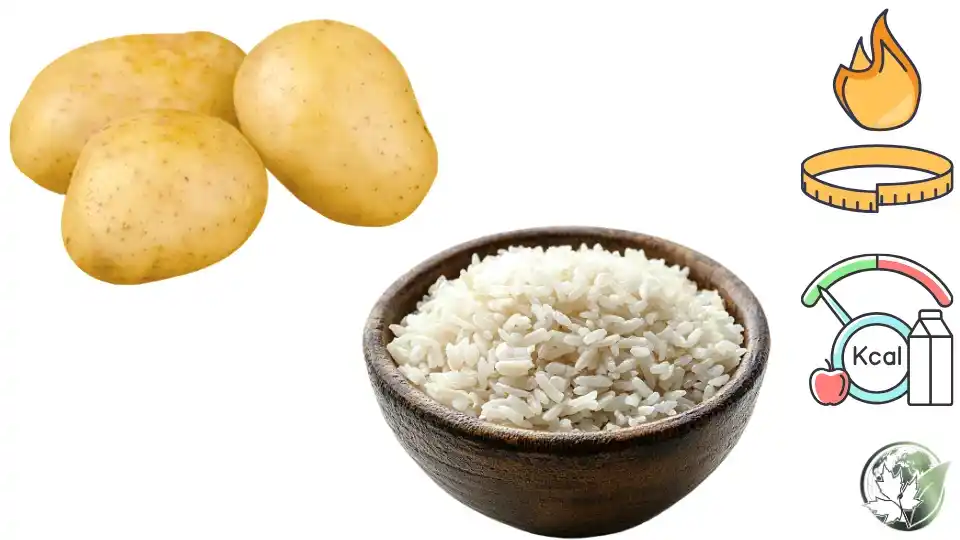
A medium baked potato has about 161 calories, less than a cup of white rice at 205
How Many Calories Are in a Potato?
| Potato | Weight | Calories | Carbohydrate | Fiber |
|---|---|---|---|---|
| Small boiled, with skin | 100 g | 87 kcal | 20 g | 1.8 g |
| Medium boiled, with skin | 170 g | 148 kcal | 34 g | 3 g |
| Large boiled, with skin | 250 g | 218 kcal | 50 g | 4.5 g |
| Small baked, with skin | 130 g | 121 kcal | 28 g | 2.6 g |
| Medium baked, with skin | 173 g | 161 kcal | 37 g | 3.8 g |
| Large baked, with skin | 299 g | 278 kcal | 64 g | 6.6 g |
| 1 cup cubed, boiled | 156 g | 136 kcal | 31 g | 2.8 g |
| 100 g raw | 100 g | 77 kcal | 17.5 g | 2.1 g |
How Many Calories Are in Cooked Rice?
| Cooked white rice | Weight | Calories | Carbohydrate | Fiber |
|---|---|---|---|---|
| 1/2 cup | 79 g | 103 kcal | 22.3 g | 0.3 g |
| 3/4 cup | 118 g | 153 kcal | 33.4 g | 0.4 g |
| 1 cup | 158 g | 205 kcal | 44.5 g | 0.6 g |
| 1.5 cups | 237 g | 308 kcal | 67 g | 0.9 g |
| 2 cups | 316 g | 410 kcal | 89 g | 1.3 g |
| 100 g | 100 g | 130 kcal | 28 g | 0.4 g |
| 1 cup brown rice | 195 g | 216 kcal | 44.8 g | 3.5 g |
| 1 cup basmati | 163 g | 197 kcal | 43.6 g | 0.7 g |
Potato vs Cooked Rice: Calories Compared
| Amount | Boiled potato | Cooked white rice | Difference |
|---|---|---|---|
| 100 g | 87 kcal | 130 kcal | Potato -43 |
| 150 g | 131 kcal | 195 kcal | Potato -64 |
| 200 g | 174 kcal | 260 kcal | Potato -86 |
| 250 g | 218 kcal | 325 kcal | Potato -107 |
| 1 medium potato vs 1 cup rice | 148 kcal | 205 kcal | Potato -57 |
| 1 large baked potato vs 1.5 cups rice | 278 kcal | 308 kcal | Potato -30 |
| Weight for 200 kcal | 230 g | 154 g | Potato 1.5x more |
| Carbohydrate per 100 kcal | 23 g | 21.5 g | About equal |
Per 100 calories, you can eat 115 grams of boiled potato but only 77 grams of cooked white rice. That extra volume is one reason potatoes tend to be more filling.
Potato vs Cooked Rice: Nutrition Compared
| Per 100 g cooked | Boiled potato (with skin) | White rice | Brown rice |
|---|---|---|---|
| Calories | 87 kcal | 130 kcal | 123 kcal |
| Carbohydrate | 20 g | 28 g | 25.6 g |
| Fiber | 1.8 g | 0.4 g | 1.6 g |
| Protein | 1.9 g | 2.7 g | 2.7 g |
| Fat | 0.1 g | 0.3 g | 1 g |
| Potassium | 379 mg | 35 mg | 86 mg |
| Vitamin C | 13 mg | 0 mg | 0 mg |
| Vitamin B6 | 0.3 mg | 0.1 mg | 0.15 mg |
| Magnesium | 22 mg | 12 mg | 44 mg |
| Iron | 0.3 mg | 0.2 mg | 0.5 mg |
| Water | 77 g | 68 g | 70 g |
| Glycemic index | 78 (boiled) | 65-73 | 50-55 |
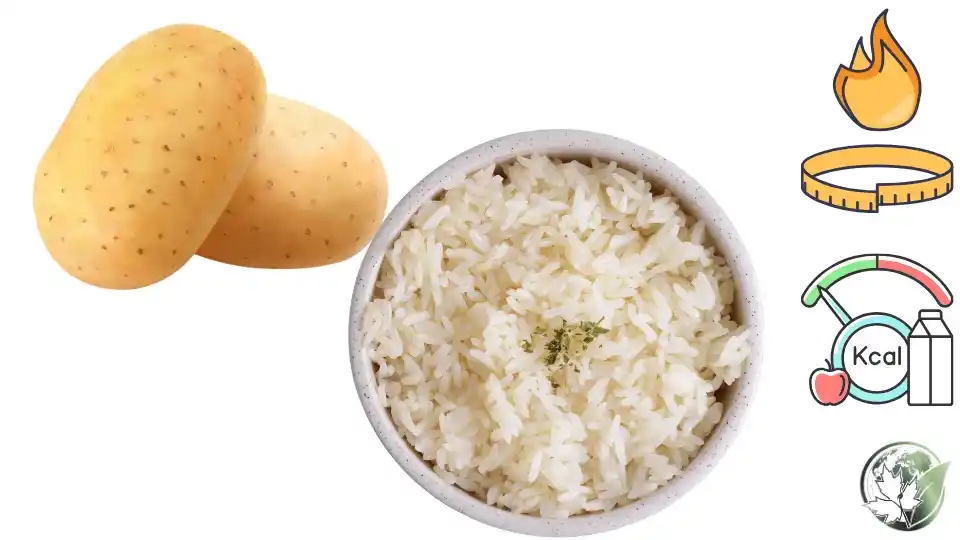
Boiled potatoes keep potassium and vitamin C when cooked with the skin on
Which Has More Calories: Potato or Cooked Rice?
Cooked rice has more calories, by about 50 percent per 100 grams, and by about 38 percent per typical serving (a cup of rice against a medium potato). The potato also provides more potassium, vitamin C and fiber. Rice has slightly more protein per 100 grams. Both are mostly carbohydrate. For weight control, potatoes have the edge in calorie density and in fullness, as shown in satiety studies. Preparation matters most: fries have 312 calories per 100 grams, while rice with oil may reach 160.
| Comparison | Potato (boiled) | Cooked rice | Verdict |
|---|---|---|---|
| Per 100 g | 87 | 130 | Potato lower |
| Per typical serving | 148 (1 medium) | 205 (1 cup) | Potato lower |
| Potassium | 379 mg | 35 mg | Potato |
| Vitamin C | 13 mg | 0 | Potato |
| Protein | 1.9 g | 2.7 g | Rice |
| Glycemic index | 78 | 65-73 | Rice slightly lower |
Why Are Potatoes So Filling?
An often-cited Australian study ranked 38 foods by how filling they were relative to white bread. Boiled potatoes scored 323 percent, the highest of all, nearly three times as filling as white bread, and much more than rice at 138 percent for white rice. The reason is the high water content, bulk, fiber in the skin, and a protein called proteinase inhibitor II that may slow stomach emptying and trigger fullness hormones. This helps people eat fewer calories at the next meal.
| Food | Satiety index (white bread = 100) |
|---|---|
| Boiled potatoes | 323 |
| Fish | 225 |
| Oatmeal porridge | 209 |
| Oranges | 202 |
| Apples | 197 |
| Beef | 176 |
| Brown rice | 132 |
| White rice | 138 |
| White bread | 100 |
| Croissant | 47 |
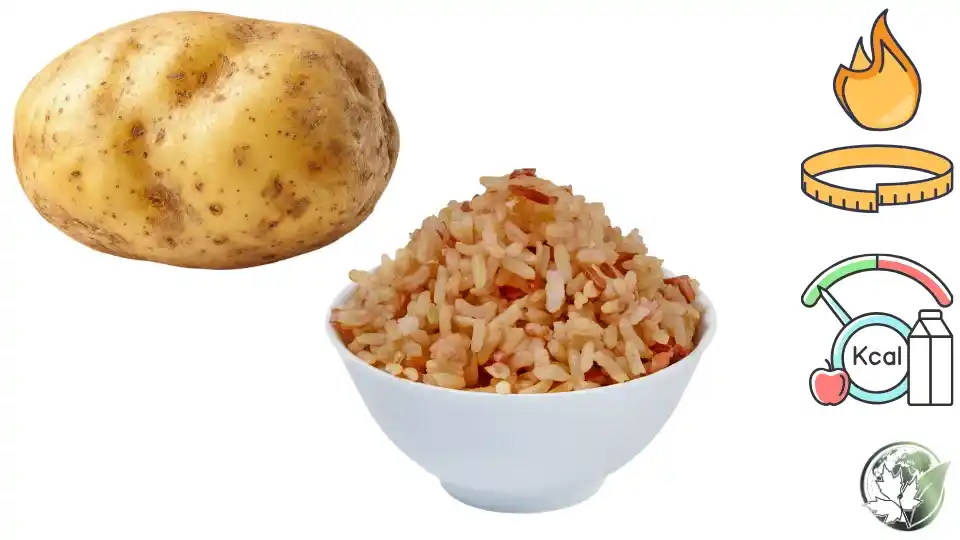
Rice absorbs water as it cooks and is served in larger portions than a potato on many plates
How Do Cooking Methods Change Potato Calories?
Boiling and baking keep potatoes at 87 to 93 calories per 100 grams. Mashing with milk and butter rises to 110 to 130. Roasting with oil goes to 140 to 170. French fries reach 312 calories per 100 grams, and potato chips 536, due to oil absorption. Rice has the same issue when fried, but it rarely reaches as high. The healthiest potato dishes are boiled, baked or steamed, with the skin, topped with yogurt, herbs or a little olive oil.
| Method (100 g) | Potato calories | Rice equivalent |
|---|---|---|
| Boiled, with skin | 87 | 130 (steamed) |
| Baked, with skin | 93 | - |
| Mashed with milk and butter | 113 | - |
| Roasted with oil | 150 | - |
| French fries | 312 | Fried rice 163 |
| Hash browns | 265 | - |
| Potato chips | 536 | Rice crackers 392 |
| Tahdig with potato slices | 200 | Tahdig rice 280 |
How Do Potatoes and Rice Affect Blood Sugar?
Both are high-glycemic starches when eaten alone. Boiled white potatoes have a glycemic index of about 78 and baked potatoes up to 85, whereas white rice ranges from 65 to 73 for long grain and higher for jasmine. Cooling cooked potatoes in the refrigerator for 12 to 24 hours increases resistant starch and lowers the glycemic index to about 56. The same trick works for rice. Eating either with protein, vegetables, vinegar or healthy fat reduces the blood sugar rise.
| Measure | Boiled potato (medium) | Cooked white rice (1 cup) |
|---|---|---|
| Carbohydrate | 34 g | 44.5 g |
| Glycemic index | 78 | 65-73 |
| Glycemic load | About 26 | About 30 |
| After cooling | GI 56-60 | GI 55-60 |
| With protein and veg | Lower | Lower |
Are Potatoes or Rice Better for Weight Loss?
Potatoes are generally better for weight loss because of their lower calorie density and higher satiety. A meal of a medium boiled potato (148 calories) with vegetables and lean protein is lighter than the same meal with a cup of rice (205), and tends to leave you fuller. But rice is perfectly acceptable in portions of 3/4 cup. The danger is in additions: butter, sour cream, fried forms and large restaurant servings.
| Dinner base | Calories | Fullness |
|---|---|---|
| 1 medium boiled potato | 148 | High |
| 1 medium baked potato + 2 tbsp yogurt | 187 | High |
| 3/4 cup white rice | 153 | Moderate |
| 1 cup white rice | 205 | Moderate |
| 1 large baked potato with butter and sour cream | 450 | High |
| Fries, medium portion (117 g) | 365 | Moderate |
What About Potatoes and Rice in Persian Cooking?
Rice is central to Iranian food: chelow, polo, tahdig and kateh. A plate of saffron chelow with a kabab has 600 to 800 calories. Potatoes appear in stews, tahdig with potato slices, kuku sibzamini (potato omelet) and in tahchin variants. A typical plate of potato stew with meat has about 400 calories. A potato kuku slice has around 150 calories. Replacing part of the rice with potato or vegetables in a meal lowers calories without losing the traditional flavors.
| Dish | Serving | Calories |
|---|---|---|
| Chelow (plain rice, saffron) | 1 plate (250 g) | 330 |
| Kateh | 1 plate | 310 |
| Tahdig (rice) | 50 g | 140 |
| Tahdig with potato slices | 50 g | 100 |
| Kuku sibzamini | 1 slice | 150 |
| Potato and meat stew | 1 bowl | 400 |
| Boiled potato with salt | 1 medium | 148 |
How Do Different Potato and Rice Varieties Compare?
Not every potato or every grain of rice has the same calorie count. Russet, red, yellow and sweet potatoes differ slightly in starch and water, while basmati, jasmine, brown and parboiled rice differ in processing and fiber. The spread inside each group is small compared with the gap between the two foods, so the headline conclusion holds: boiled potato of any variety is lighter than cooked rice of any variety by weight. The table below lists common varieties per 100 grams cooked.
| Variety (100 g cooked) | Calories | Carbohydrate | Fiber | Notes |
|---|---|---|---|---|
| Russet potato, baked with skin | 93 kcal | 21 g | 2.1 g | Fluffy, high starch |
| Red potato, boiled with skin | 89 kcal | 20 g | 1.7 g | Waxy, holds shape |
| Yellow (Yukon) potato, boiled | 87 kcal | 20 g | 1.8 g | Creamy texture |
| Sweet potato, baked with skin | 90 kcal | 21 g | 3.3 g | Rich in beta-carotene |
| White rice, long grain | 130 kcal | 28 g | 0.4 g | Most common |
| Basmati rice | 121 kcal | 25 g | 0.4 g | Lower GI than most white rice |
| Jasmine rice | 129 kcal | 28 g | 0.4 g | Sticky, higher GI |
| Parboiled rice | 123 kcal | 26 g | 0.5 g | Keeps some minerals |
| Brown rice | 123 kcal | 25.6 g | 1.6 g | Whole grain |
| Wild rice | 101 kcal | 21 g | 1.8 g | Technically a grass seed |
Sweet potato is almost identical to white potato in calories, but with more fiber and beta-carotene. Wild rice is the lightest rice option, close to potato. Brown rice is not much lower in calories than white rice, and its main advantage is fiber and minerals, not calorie savings.
Does Cooling Change the Calories in Potatoes and Rice?
When cooked starch cools, part of it turns into resistant starch, which your small intestine cannot digest. Resistant starch ferments in the large intestine and feeds gut bacteria. Estimates suggest that cooling potatoes or rice overnight can raise resistant starch severalfold, though the calorie reduction is modest, usually 5 to 10 percent of the available energy in the portion. The bigger benefit is a lower blood sugar response. Reheating does not fully reverse the effect.
| Preparation | Estimated resistant starch (per 100 g) | Effect on glycemic response |
|---|---|---|
| Hot boiled potato | About 1 g | Highest |
| Potato cooled 24 hours | About 3-4 g | Noticeably lower |
| Cooled then reheated potato | About 2-3 g | Moderately lower |
| Hot white rice | About 0.5 g | Highest |
| Rice cooled 24 hours | About 1.5-2 g | Lower |
| Rice cooked with a little coconut oil, then cooled | Higher still in some studies | Lower |
This explains why potato salad, made with cooled boiled potatoes, can be gentler on blood sugar than fresh mashed potatoes. The dressing still matters, though. Mayonnaise adds 94 calories per tablespoon, so a creamy potato salad can match the calories of fries.
How Big Should a Portion of Potato or Rice Be?
Portion size is where most people go wrong. A restaurant side of rice often holds two to three cups, which is 410 to 615 calories before sauce. A large baked potato at a steakhouse can weigh 300 to 400 grams, or 280 to 370 calories, and then comes loaded with butter. A practical guide is to fill one quarter of the plate with starch, one quarter with protein and half with vegetables.
| Portion | Potato | Rice |
|---|---|---|
| Small (about 120 kcal) | 1 small boiled (140 g) | 1/2 cup (79 g) is 103 kcal |
| Moderate (about 150-200 kcal) | 1 medium boiled (170 g) | 3/4 to 1 cup (118-158 g) |
| Large (about 300 kcal) | 1 large baked (299 g, 278 kcal) | 1.5 cups (237 g, 308 kcal) |
| Restaurant side (400+ kcal) | 400 g baked (370 kcal) | 2 cups (316 g, 410 kcal) |
| Visual guide | A computer mouse | A tennis ball or cupped hand |
A fist-sized potato is roughly the medium size used in the tables. A cupped hand of cooked rice is about one cup. If you measure once and then eyeball afterward, you will stay accurate without weighing every meal.
What Do Toppings and Add-ins Do to the Comparison?
On their own, both foods are low in fat. The calories that decide the winner are the toppings. A medium baked potato (161 calories) with a tablespoon of butter (102 calories) and two tablespoons of sour cream (46 calories) reaches 309 calories. A cup of rice (205) stirred with a tablespoon of butter reaches 307. So the toppings can erase the advantage, in either direction.
| Add-in | Calories | Added to potato | Added to rice |
|---|---|---|---|
| Butter, 1 tbsp | 102 kcal | 161 + 102 = 263 | 205 + 102 = 307 |
| Olive oil, 1 tbsp | 119 kcal | 161 + 119 = 280 | 205 + 119 = 324 |
| Sour cream, 2 tbsp | 46 kcal | 161 + 46 = 207 | 205 + 46 = 251 |
| Plain nonfat Greek yogurt, 2 tbsp | 18 kcal | 161 + 18 = 179 | 205 + 18 = 223 |
| Shredded cheddar, 2 tbsp | 56 kcal | 161 + 56 = 217 | 205 + 56 = 261 |
| Fresh herbs and lemon | 2-5 kcal | About 165 | About 208 |
If you want a creamy potato with fewer calories, use Greek yogurt or kefir instead of sour cream. If you want flavorful rice with fewer calories, cook it with saffron, turmeric, cinnamon or herbs rather than extra butter.
Which Is Better for Specific Health Goals?
Different goals call for different choices. The right answer depends on whether you want to lose weight, manage blood sugar, build muscle, protect your kidneys or simply enjoy a balanced meal. There is no universal winner, and most healthy diets include both foods at different times.
| Goal | Better pick | Reason |
|---|---|---|
| Weight loss | Boiled potato | Lower calorie density, higher fullness |
| Lowering blood sugar | Cooled potato or basmati/brown rice | Lower GI, more resistant starch |
| Muscle gain, high calories | White rice | Compact calories, easy to eat in volume |
| Endurance sports before a race | White rice | Easy to digest, low fiber |
| Raising potassium (normal kidneys) | Potato with skin | 379 mg vs 35 mg per 100 g |
| Kidney disease with potassium limits | Rice | Much lower potassium; potatoes can be leached |
| Gluten-free diet | Either | Both are naturally gluten free |
| Feeding small children | Either, mashed or soft | Both are gentle on digestion |
People with diabetes can eat both, but should watch portion size and pair them with protein, fiber and vinegar or lemon. People with chronic kidney disease should ask a dietitian before relying on potatoes, since potassium is high, though boiling cubed potatoes in plenty of water and discarding it can lower potassium noticeably.
How Does a Day With Potatoes Compare to a Day With Rice?
To see how the difference adds up, imagine two simple dinner plates. Plate A has a medium boiled potato, grilled chicken and a large salad. Plate B has a cup of white rice, grilled chicken and the same salad. The only change is the starch. Plate A comes to roughly 148 + 165 + 90 = 403 calories, and plate B to 205 + 165 + 90 = 460 calories. If you swap rice for potato at dinner five nights a week, you save about 285 calories a week, or around 14,800 calories a year. That is not a dramatic change, but it is a painless one.
| Weekly swap | Calories saved per meal | Meals per week | Weekly saving | Yearly saving |
|---|---|---|---|---|
| Cup of rice to medium boiled potato | 57 | 3 | 171 | About 8,900 |
| Cup of rice to medium boiled potato | 57 | 5 | 285 | About 14,800 |
| Cup of rice to medium boiled potato | 57 | 7 | 399 | About 20,700 |
| Fries to baked potato (same weight) | 219 per 100 g | 1 | 219 per 100 g | About 11,400 per 100 g |
One pound of body fat is roughly 3,500 calories, so a yearly saving of 14,800 calories is about four pounds if nothing else changes. The real benefit often comes from fullness, since you tend to eat less later.
Common Mistakes When Comparing Potatoes and Rice
The first mistake is comparing raw rice with cooked potato, or dry rice with boiled potato. Dry rice has about 365 calories per 100 grams, while cooked rice has 130, because it absorbs water and roughly triples in weight. Always compare cooked with cooked. The second mistake is ignoring the skin, which holds much of the fiber and potassium. The third is assuming that baked, mashed and fried potatoes have the same calories. The fourth is forgetting that restaurants add oil and butter to rice. The fifth is thinking brown rice is far lighter than white rice, when the difference is only 7 calories per 100 grams.
| Mistake | Why it misleads | Correct approach |
|---|---|---|
| Comparing dry rice and boiled potato | Dry rice is 365 kcal/100 g | Compare cooked to cooked |
| Peeling potatoes | Loses fiber and potassium | Scrub and cook with the skin |
| Treating all potato dishes as equal | Fries are 312 vs boiled 87 | Check the method |
| Ignoring added fat | Butter and oil add 100+ kcal | Measure toppings |
| Assuming brown rice is much lighter | Only 7 kcal difference per 100 g | Choose it for fiber, not calories |
| Eating huge portions of "healthy" starch | Calories still add up | Use the plate method |
Key Takeaways: Potato vs Cooked Rice Calories
A medium boiled potato has about 148 calories, and a cup of cooked white rice about 205. Per 100 grams, potato has 87 and rice 130. Potatoes provide more potassium and vitamin C and are more filling. The calorie advantage disappears with fries, chips, butter or sour cream, so keep them boiled or baked.
Frequently Asked Questions
6 questions answered
How many calories are in a medium potato?
About 148 boiled, 161 baked.
How many calories are in a cup of cooked rice?
About 205 for white rice.
Which is more filling?
Boiled potatoes, according to the satiety index.
Is potato lower in calories than rice?
Yes, 87 against 130 per 100 g.
Should I eat the potato skin?
Yes, for fiber and potassium.
Do fries have more calories than rice?
Yes, 312 against 130 per 100 g.