How Many Calories Are in Pomegranate Arils vs Blueberries? The Quick Answer
Half a cup (87 grams) of pomegranate arils, the juicy seed sacs inside the fruit, has about 72 calories, and a full cup (174 grams) has about 144. Half a cup (74 grams) of blueberries has about 42 calories and a cup (148 grams) has 84. Per 100 grams, pomegranate arils have 83 calories and blueberries 57, which makes arils about 45 percent higher in calories by weight. Arils also contain about 13.7 grams of sugar per 100 grams against 10 for blueberries, and more fiber, 4 grams versus 2.4, because the crunchy seed inside each aril is edible.
Both are small, deep-colored fruits famous for antioxidants, and both are popular on yogurt, in salads and in smoothies. In Persian cuisine, pomegranate is central, appearing in fresh arils, juice, molasses and in dishes like fesenjan and ash-e anar. Blueberries are a cold-climate fruit, widely sold fresh or frozen. This guide compares pomegranate arils and blueberries by the half cup, the cup and 100 grams, looks at sugar, fiber, vitamins and polyphenols, and explains how to fit each into a daily diet, with three comparison tables and an FAQ.
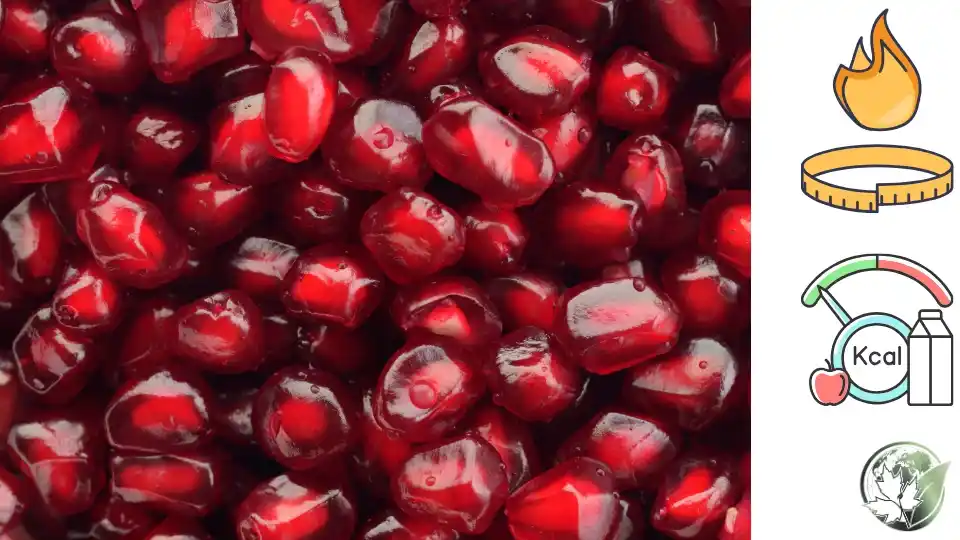
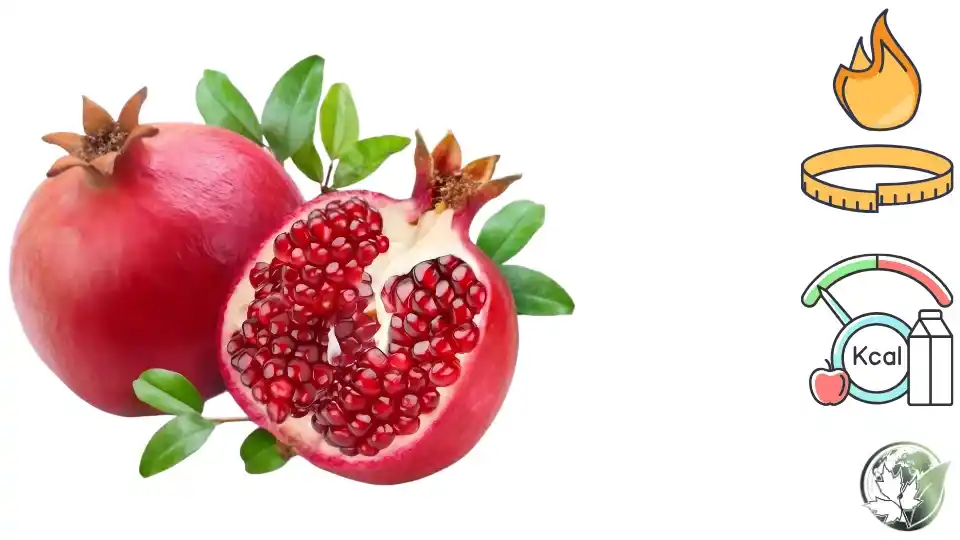
Half a cup of pomegranate arils has about 72 calories and half a cup of blueberries about 42
How Many Calories Are in Pomegranate Arils?
| Pomegranate arils | Weight | Calories | Sugar | Fiber |
|---|---|---|---|---|
| 1 tablespoon | 11 g | 9 kcal | 1.5 g | 0.4 g |
| 1/4 cup | 43 g | 36 kcal | 5.9 g | 1.7 g |
| 1/2 cup | 87 g | 72 kcal | 11.9 g | 3.5 g |
| 3/4 cup | 130 g | 108 kcal | 17.8 g | 5.2 g |
| 1 cup | 174 g | 144 kcal | 23.8 g | 7 g |
| 1 medium pomegranate (arils) | About 174 g | 144 kcal | 23.8 g | 7 g |
| 100 g | 100 g | 83 kcal | 13.7 g | 4 g |
| 1 cup pomegranate juice | 248 g | 134 kcal | 32 g | 0.3 g |
How Many Calories Are in Blueberries?
| Blueberries | Weight | Calories | Sugar | Fiber |
|---|---|---|---|---|
| 10 berries | 15 g | 9 kcal | 1.5 g | 0.4 g |
| 1/4 cup | 37 g | 21 kcal | 3.7 g | 0.9 g |
| 1/2 cup | 74 g | 42 kcal | 7.4 g | 1.8 g |
| 3/4 cup | 111 g | 63 kcal | 11 g | 2.7 g |
| 1 cup | 148 g | 84 kcal | 15 g | 3.6 g |
| 1 pint (container) | 290 g | 165 kcal | 29 g | 7 g |
| 100 g | 100 g | 57 kcal | 10 g | 2.4 g |
| Dried, 1/4 cup | 40 g | 128 kcal | 28 g | 3 g |
Pomegranate Arils vs Blueberries: Calories Compared
| Amount | Pomegranate arils | Blueberries | Difference |
|---|---|---|---|
| 1 tablespoon | 9 kcal | 5 kcal | Blueberries -4 |
| 1/4 cup | 36 kcal | 21 kcal | Blueberries -15 |
| 1/2 cup | 72 kcal | 42 kcal | Blueberries -30 |
| 1 cup | 144 kcal | 84 kcal | Blueberries -60 |
| 100 g | 83 kcal | 57 kcal | Blueberries -26 |
| Sugar per cup | 23.8 g | 15 g | Blueberries -8.8 g |
| Fiber per cup | 7 g | 3.6 g | Arils +3.4 g |
| Cups for 100 kcal | 0.7 cup | 1.2 cups | - |
By volume, pomegranate arils have about 70 percent more calories than blueberries, because arils are juicier and denser. For the same 100 calories, you eat a bit more than a cup of blueberries or about two-thirds of a cup of arils.
Pomegranate Arils vs Blueberries: Nutrition Compared
| Per 100 g | Pomegranate arils | Blueberries |
|---|---|---|
| Calories | 83 kcal | 57 kcal |
| Carbohydrate | 18.7 g | 14.5 g |
| Sugar | 13.7 g | 10 g |
| Fiber | 4 g | 2.4 g |
| Protein | 1.7 g | 0.7 g |
| Fat | 1.2 g | 0.3 g |
| Vitamin C | 10.2 mg | 9.7 mg |
| Vitamin K | 16.4 mcg | 19.3 mcg |
| Folate | 38 mcg | 6 mcg |
| Potassium | 236 mg | 77 mg |
| Antioxidants | Punicalagins, anthocyanins | Anthocyanins |
| Glycemic index | 35 | 53 |
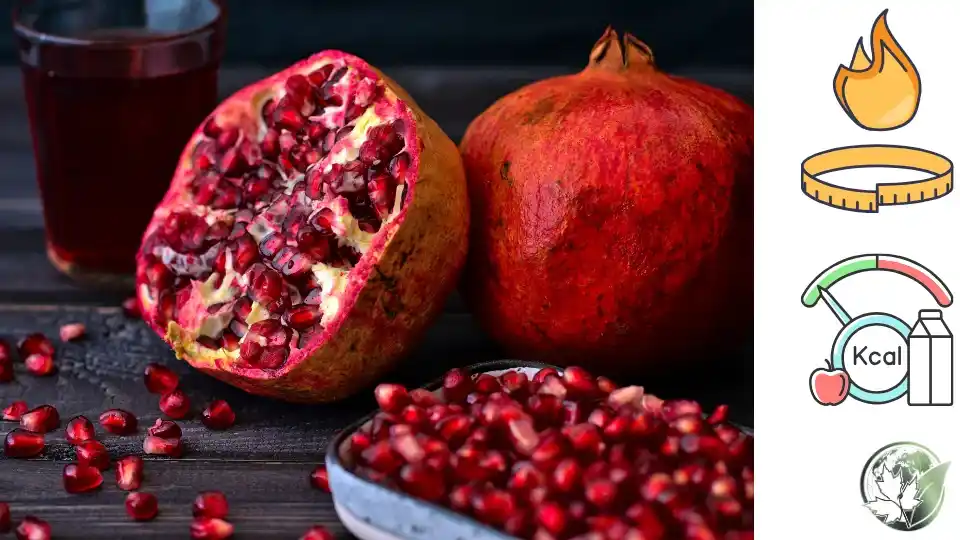
Blueberries are low in calories and rich in anthocyanins, with 84 calories per cup
Which Has More Calories: Pomegranate Arils or Blueberries?
Pomegranate arils have more calories per 100 grams and per cup. A cup of arils at 144 calories is equal to about 1.7 cups of blueberries. Arils are also higher in sugar and slightly higher in fat, due to the oil inside the seeds. But arils bring more fiber, protein, folate and potassium, and have a lower glycemic index. If your priority is the fewest calories for the largest volume, blueberries win. If you want more fiber, potassium and a crunchy texture, arils offer more.
| Comparison | Arils | Blueberries | Verdict |
|---|---|---|---|
| Per 100 g | 83 | 57 | Blueberries lower |
| Per cup | 144 | 84 | Blueberries lower |
| Sugar per cup | 23.8 g | 15 g | Blueberries lower |
| Fiber per cup | 7 g | 3.6 g | Arils higher |
| Potassium per cup | 410 mg | 114 mg | Arils higher |
| Glycemic index | 35 | 53 | Arils lower |
What Is Inside a Pomegranate and How Much Do You Get?
A medium pomegranate weighs around 280 to 350 grams, but only about half of that is edible arils. The leathery skin and white pith are discarded. A medium fruit yields roughly 1 cup (174 grams) of arils, providing about 144 calories. Each aril contains juice and a small, soft, edible seed, which gives fiber and crunch. Seeds can be spat out, but eating them adds fiber and a bit of healthy fat, including punicic acid.
| Pomegranate size | Fruit weight | Edible arils | Calories |
|---|---|---|---|
| Small | 200 g | 100 g | 83 kcal |
| Medium | 282 g | 174 g | 144 kcal |
| Large | 400 g | 250 g | 208 kcal |
| Extra large | 500 g | 320 g | 266 kcal |
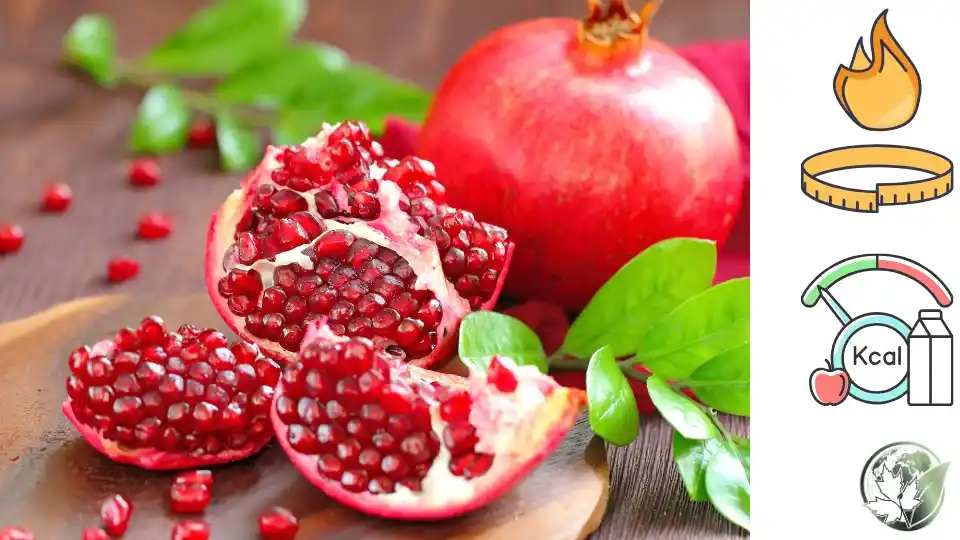
A medium pomegranate gives about one cup of arils, roughly 144 calories
Are Pomegranate Arils or Blueberries Healthier?
Both are excellent. Blueberries are among the most studied fruits for brain health, with evidence that regular intake improves memory and slows age-related decline. They are low in calories and sugar. Pomegranates contain punicalagins and ellagic acid, which have been studied for heart health, blood pressure and anti-inflammatory effects. Arils give more fiber and potassium. Pomegranate juice has been studied for blood pressure reduction, but the juice lacks fiber and is higher in sugar per cup than the whole arils.
| Factor | Pomegranate arils | Blueberries |
|---|---|---|
| Brain health | Some evidence | Strong evidence |
| Heart and blood pressure | Studied | Studied |
| Fiber | Higher | Moderate |
| Potassium | Higher | Lower |
| Sugar | Higher | Lower |
| Antioxidant type | Punicalagins, ellagic acid | Anthocyanins |
How Do They Affect Blood Sugar?
Pomegranate arils have a glycemic index of around 35 and a glycemic load of about 4 for a half cup, which is low. Blueberries have a glycemic index of about 53 and a load of about 4 per half cup, which is low as well. Both fruits come with fiber and polyphenols that moderate blood sugar. People with diabetes can eat a half cup of either as part of a meal. Juice, in contrast, raises blood sugar faster.
| Measure (1/2 cup) | Pomegranate arils | Blueberries |
|---|---|---|
| Carbohydrate | 16 g | 10.7 g |
| Sugar | 11.9 g | 7.4 g |
| Fiber | 3.5 g | 1.8 g |
| Glycemic index | About 35 | About 53 |
| Glycemic load | About 4 | About 4 |
Which Is Better for Weight Loss?
Both are fine for weight loss, since they are low in calories for their volume and high in water and fiber. Blueberries have fewer calories per cup, so you can eat a bigger portion. Pomegranate arils are slower to eat and crunchy, which helps you feel full. A good plan is to use a half cup of either as a snack or topping. Avoid dried, sweetened or juice forms, which are much higher in calories.
| Portion | Arils | Blueberries |
|---|---|---|
| Snack (1/2 cup) | 72 kcal | 42 kcal |
| Yogurt topping (1/4 cup) | 36 kcal | 21 kcal |
| Salad (2 tbsp) | 18 kcal | 10 kcal |
| Smoothie (1/2 cup) | 72 kcal | 42 kcal |
| Weight loss idea | Crunch on salads | Volume snack |
How Many Sugar Cubes Are in Pomegranate Arils and Blueberries?
Dividing sugar grams by 4 turns the numbers into cubes. A half cup of pomegranate arils has 11.9 grams of sugar, about 3 cubes, and a full cup has about 6 cubes. A half cup of blueberries has 7.4 grams, 1.9 cubes, and a cup has 3.8. A cup of pomegranate juice has 32 grams, 8 cubes, with no fiber to slow it down. The sugar in whole fruit comes with fiber and polyphenols, but the cube comparison still helps you keep portions in check.
| Portion | Sugar | Cubes | Calories |
|---|---|---|---|
| 1/4 cup arils | 5.9 g | 1.5 | 36 kcal |
| 1/2 cup arils | 11.9 g | 3 | 72 kcal |
| 1 cup arils | 23.8 g | 6 | 144 kcal |
| 1/4 cup blueberries | 3.7 g | 0.9 | 21 kcal |
| 1/2 cup blueberries | 7.4 g | 1.9 | 42 kcal |
| 1 cup blueberries | 15 g | 3.8 | 84 kcal |
| 1 cup pomegranate juice | 32 g | 8 | 134 kcal |
| 1 cup blueberry juice (cocktail) | 28 g | 7 | 120 kcal |
How Many Calories Are in Pomegranate Foods Used in Persian Cooking?
Pomegranate is a pillar of Persian cuisine. Fesenjan, a stew of walnuts and pomegranate molasses with chicken or duck, has about 450 to 550 calories per serving, most of them from walnuts and meat. Ash-e anar, a thick pomegranate soup with herbs and beans, has roughly 250 calories per bowl. Pomegranate molasses (rob-e anar) has about 60 calories per tablespoon and 14 grams of sugar. Fresh arils sprinkled on rice or salads add only 18 to 36 calories per serving.
| Food | Serving | Calories | Notes |
|---|---|---|---|
| Fresh arils on salad | 2 tbsp | 18 kcal | Crunch and color |
| Arils on yogurt | 1/4 cup | 36 kcal | With 100 kcal yogurt |
| Pomegranate molasses | 1 tbsp (20 g) | 60 kcal | 14 g sugar |
| Pomegranate juice | 1 cup | 134 kcal | 32 g sugar |
| Ash-e anar | 1 bowl (350 g) | 250 kcal | Herbs, beans, rice |
| Fesenjan with chicken | 1 serving | 500 kcal | Walnuts, molasses |
| Pomegranate paste (nardoon) | 1 tbsp | 55 kcal | Concentrated |
How Do You Remove Pomegranate Arils Easily?
Cut off the crown, score the skin in sections, and break the fruit open under a bowl of water. The arils sink while the white pith floats, and you can skim it off. Alternatively, cut the pomegranate in half and tap the skin with a wooden spoon over a bowl. The whole process takes about 5 minutes. Arils keep in the refrigerator for five days or in the freezer for six months.
| Method | Time | Result |
|---|---|---|
| Under water bowl | 5 minutes | Clean arils, no stains |
| Tapping with a spoon | 3-4 minutes | Fast, some stains |
| Cut and peel by hand | 8 minutes | Slower, intact arils |
| Buy ready-to-eat tub | 0 minutes | Higher price |
How Do Fresh, Frozen and Dried Blueberries Compare?
Frozen blueberries are picked ripe and frozen quickly, so they have the same calories and often more anthocyanins than out-of-season fresh berries. A cup of frozen unsweetened blueberries has about 80 calories. Dried blueberries are concentrated: a quarter cup (40 grams) has about 128 calories and 28 grams of sugar, and sweetened dried versions have more. Wild blueberries are smaller and have more antioxidants per gram, with about 80 calories per cup.
| Form | Amount | Calories | Sugar |
|---|---|---|---|
| Fresh | 1 cup (148 g) | 84 kcal | 15 g |
| Frozen, unsweetened | 1 cup (155 g) | 80 kcal | 13 g |
| Wild blueberries | 1 cup (140 g) | 80 kcal | 14 g |
| Dried, sweetened | 1/4 cup (40 g) | 128 kcal | 28 g |
| Blueberry jam | 1 tbsp (20 g) | 50 kcal | 12 g |
| Blueberry muffin | 1 medium (113 g) | 340 kcal | 28 g |
What Are the Special Antioxidants in Each Berry?
Pomegranate's deep red color comes from anthocyanins, but its distinctive compounds are the ellagitannins, especially punicalagin, which the gut converts into urolithins, molecules studied for their role in cell health. Blueberries are rich in anthocyanins such as malvidin and delphinidin, which give the blue color and are linked to improved memory and blood vessel function. Laboratory tests rank pomegranate juice among the highest antioxidant drinks, but antioxidant scores do not translate directly to health benefits in people.
| Compound | Pomegranate arils | Blueberries |
|---|---|---|
| Anthocyanins | Present | Very high |
| Punicalagins | High | None |
| Ellagic acid | High | Trace |
| Quercetin | Trace | Present |
| Resveratrol | Trace | Present |
| Main studied benefit | Blood pressure, inflammation | Memory, vascular health |
Do Pomegranate Arils or Blueberries Help With Blood Pressure and Heart Health?
Several small trials show that pomegranate juice may lower systolic blood pressure by 3 to 5 millimeters of mercury after several weeks. Eating blueberries daily, about a cup, was associated in some trials with improved arterial function and small reductions in blood pressure. Both fruits contain potassium, though arils contain more. These effects are modest, and fruit should complement, not replace, medication and other lifestyle changes. People taking blood pressure medicine should talk to their doctor before drinking large amounts of pomegranate juice, because it can interact with some drugs.
| Heart factor | Arils | Blueberries |
|---|---|---|
| Blood pressure | Studied reduction with juice | Small reduction |
| Potassium per cup | 410 mg | 114 mg |
| Fiber per cup | 7 g | 3.6 g |
| Artery function | Improved in trials | Improved in trials |
| Drug interaction | Possible with juice | Rare |
How Can You Use Pomegranate Arils and Blueberries in Meals?
Both add color and flavor to breakfast, salads and desserts. Sprinkle a quarter cup of arils over oatmeal or yogurt for crunch, toss them into rice or couscous, or stir them into guacamole. Blueberries fit smoothies, pancakes, muffins, salads with goat cheese, and cereal. A mix of half a cup of arils and half a cup of blueberries over Greek yogurt makes a colorful bowl of about 260 calories with yogurt included.
| Meal idea | Fruit | Calories |
|---|---|---|
| Yogurt bowl | 1/4 cup arils + 1/4 cup blueberries + 3/4 cup yogurt | 160 kcal |
| Oatmeal | 1/2 cup blueberries | 150 + 42 = 192 kcal |
| Salad | 2 tbsp arils | Adds 18 kcal |
| Rice | 1/4 cup arils | Adds 36 kcal |
| Smoothie | 1/2 cup blueberries + banana + milk | 265 kcal |
| Pancakes | 1/4 cup blueberries | Adds 21 kcal |
| Dessert | 1/2 cup arils + 1 tsp honey | 93 kcal |
How Do You Choose and Store Each?
Choose pomegranates that feel heavy, with firm, glossy skin that is slightly angular, which signals ripeness. Skin color varies from deep red to pinkish. Whole pomegranates last a month at cool room temperature or two months in the refrigerator. Blueberries should be plump, firm and dusty blue, with no wrinkles or mold; refrigerate unwashed for up to ten days and wash just before eating. Freeze both on a tray, then bag them, for six to twelve months.
| Item | Room temperature | Refrigerator | Freezer |
|---|---|---|---|
| Whole pomegranate | 2-4 weeks | 6-8 weeks | Not advised |
| Pomegranate arils | 2 hours | 5 days | 6 months |
| Fresh blueberries | 1 day | 7-10 days | 12 months |
| Frozen blueberries | - | - | 12 months |
| Pomegranate juice | 2 hours | 5-7 days | 3 months |
What Should Parents and Older Adults Know About These Berries?
Children can enjoy both fruits, but whole blueberries and arils can be a choking hazard for toddlers; halve or lightly mash blueberries and offer arils only when children can chew well. A quarter to half a cup is a good snack for kids at 36 to 72 calories. Older adults benefit from the fiber, vitamin K and antioxidants, although blueberries are easier to eat for those with dental problems. Because pomegranate juice may interact with medicines such as warfarin and some statins, anyone on these should ask a doctor first.
| Group | Suggested portion | Calories | Note |
|---|---|---|---|
| Toddler | 2 tbsp mashed blueberries | 10 kcal | Avoid whole |
| Child | 1/4 cup arils | 36 kcal | Supervise |
| Adult | 1/2 cup | 42-72 kcal | Daily serving |
| Older adult | 1/2 cup blueberries | 42 kcal | Easy to eat |
| On warfarin or statins | Ask doctor before pomegranate juice | - | Interaction |
Can You Eat Too Many Pomegranate Arils or Blueberries?
It is hard to overeat berries, but very large quantities can cause digestive upset from the fiber and natural sugars. Two cups of arils would give 288 calories and 47 grams of sugar. Pomegranate seeds are high in fiber and in rare cases can cause constipation if eaten in large amounts without fluids. Blueberries contain oxalates in modest amounts and are rarely a problem for kidney stone formers. Moderation, about one to two cups of mixed fruit a day, is a good guide.
| Quantity | Arils | Blueberries |
|---|---|---|
| 1 cup | 144 kcal, 7 g fiber | 84 kcal, 3.6 g fiber |
| 2 cups | 288 kcal, 14 g fiber | 168 kcal, 7.2 g fiber |
| Potential effect | Loose stools or constipation | Mild stomach upset |
| Sugar at 2 cups | 47.6 g | 30 g |
How Do Pomegranate Arils and Blueberries Compare With Other Berries and Fruits?
Berries are among the lowest-calorie fruits per volume. Strawberries have only 49 calories per cup, raspberries 64, blackberries 62 and blueberries 84. Pomegranate arils at 144 calories per cup are closer to grapes (104) and cherries (97). Knowing where each fruit sits helps you mix them in a bowl. For maximum fiber, raspberries top the list with 8 grams per cup, slightly higher than arils.
| Fruit (1 cup) | Calories | Sugar | Fiber |
|---|---|---|---|
| Strawberries | 49 | 7.4 g | 3 g |
| Blackberries | 62 | 7 g | 7.6 g |
| Raspberries | 64 | 5.4 g | 8 g |
| Blueberries | 84 | 15 g | 3.6 g |
| Cherries | 97 | 20 g | 3.2 g |
| Grapes | 104 | 23 g | 1.4 g |
| Pomegranate arils | 144 | 23.8 g | 7 g |
| Mango | 99 | 22.5 g | 2.6 g |
What Is the Bottom Line on Servings?
A half cup is a good daily serving of either fruit: 72 calories for arils or 42 for blueberries. Count it as one of your two to five daily fruit servings. Use arils as a flavorful, crunchy topping in small amounts, and blueberries as a larger volume snack. Mixing both gives a range of antioxidants, and choosing fresh or frozen over juice or dried keeps sugar and calories low.
| Goal | Better pick | Portion |
|---|---|---|
| Lowest calories | Blueberries | 1 cup, 84 kcal |
| Most potassium and fiber | Arils | 1/2 cup, 72 kcal |
| Lowest sugar | Blueberries | 1/2 cup, 7.4 g |
| Crunch and decoration | Arils | 2 tbsp, 18 kcal |
| Brain health focus | Blueberries | 1/2-1 cup |
| Persian dishes | Arils | As recipe |
Final Comparison at a Glance
| Question | Pomegranate arils | Blueberries |
|---|---|---|
| Calories per 100 g | 83 | 57 |
| Calories per cup | 144 | 84 |
| Sugar per cup | 23.8 g | 15 g |
| Fiber per cup | 7 g | 3.6 g |
| Potassium per cup | 410 mg | 114 mg |
| Glycemic index | 35 | 53 |
| Best for | Crunch, potassium, Persian dishes | Low calories, brain health, volume |
Key Takeaways: Pomegranate Arils vs Blueberries Calories
Half a cup of pomegranate arils has about 72 calories and half a cup of blueberries about 42. Per 100 grams, arils have 83 calories and blueberries 57. Arils have more fiber and potassium, while blueberries have fewer calories and sugar. Choose either fresh, in half-cup portions.
Frequently Asked Questions
6 questions answered
How many calories are in a cup of pomegranate arils?
About 144.
How many calories are in a cup of blueberries?
About 84.
Do arils have more sugar than blueberries?
Yes, 23.8 g against 15 g per cup.
Should I eat the pomegranate seeds?
Yes, they add fiber.
Which is better for weight loss?
Blueberries have fewer calories per cup.
How much arils does one pomegranate give?
About one cup, 144 calories.