How Many Calories Are in Pistachios vs Peanuts? The Quick Answer
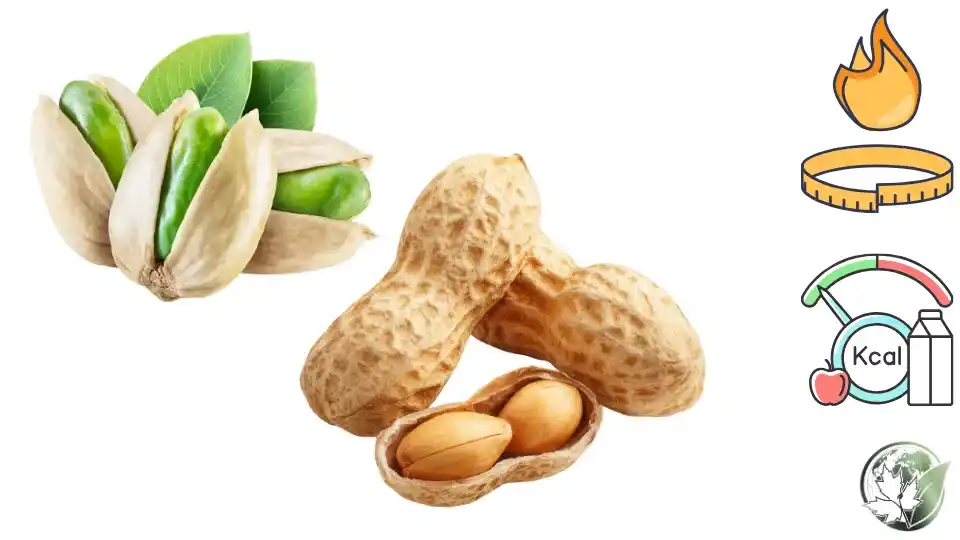
An ounce (28 grams) of shelled pistachios, about 49 kernels, has roughly 159 calories. An ounce of peanuts, about 28 kernels, has about 161 calories. Per 100 grams, pistachios have 562 calories and raw peanuts 567, a difference of less than 1 percent. Dry roasted peanuts are slightly higher at 585 calories per 100 grams. In calorie terms, the two are interchangeable by weight. Per nut, a pistachio kernel has about 3.2 calories, while a peanut kernel has about 5.7, so a handful of 25 pistachios (80 calories) is smaller in calories than a handful of 25 peanuts (144).
Botanically, pistachios are tree nuts (seeds of a drupe), while peanuts are legumes that grow underground, related to beans and lentils. Their nutrition is similar: both are rich in protein, unsaturated fat and fiber. Peanuts are cheaper and more widely eaten, while pistachios are valued for flavor and a lower calorie count per piece. This guide compares pistachios and peanuts per nut, per ounce and per 100 grams, looks at protein, fat, vitamins and minerals, discusses price and allergy differences, and advises on portions. Three comparison tables and an FAQ are included.
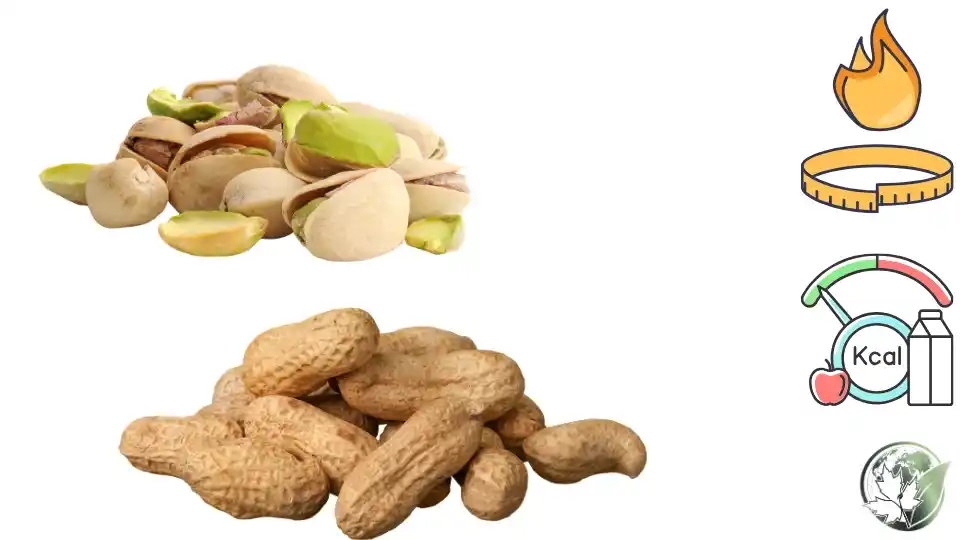
An ounce of pistachios has about 159 calories and an ounce of peanuts about 161
How Many Calories Are in Pistachios?
| Pistachios (shelled) | Weight | Calories | Fat | Protein |
|---|---|---|---|---|
| 1 kernel | 0.57 g | 3.2 kcal | 0.26 g | 0.11 g |
| 10 kernels | 5.7 g | 32 kcal | 2.6 g | 1.1 g |
| 25 kernels | 14 g | 79 kcal | 6.3 g | 2.8 g |
| 49 kernels (1 ounce) | 28 g | 159 kcal | 12.9 g | 5.7 g |
| 1/4 cup | 31 g | 174 kcal | 14 g | 6.2 g |
| 1/2 cup | 62 g | 348 kcal | 28 g | 12.4 g |
| 1 cup | 123 g | 689 kcal | 55 g | 25 g |
| 100 g | 100 g | 562 kcal | 45 g | 20 g |
How Many Calories Are in Peanuts?
| Peanuts (raw or dry roasted) | Weight | Calories | Fat | Protein |
|---|---|---|---|---|
| 1 kernel | 1 g | 5.7 kcal | 0.5 g | 0.26 g |
| 10 kernels | 10 g | 57 kcal | 4.9 g | 2.6 g |
| 25 kernels | 25 g | 142 kcal | 12.3 g | 6.5 g |
| 28 kernels (1 ounce) | 28 g | 161 kcal | 14 g | 7.3 g |
| 1/4 cup | 36 g | 207 kcal | 18 g | 9.3 g |
| 1/2 cup | 73 g | 414 kcal | 36 g | 19 g |
| 1 cup | 146 g | 828 kcal | 72 g | 38 g |
| 100 g (raw) | 100 g | 567 kcal | 49 g | 26 g |
Pistachios vs Peanuts: Calories Compared
| Amount | Pistachios | Peanuts | Difference |
|---|---|---|---|
| 1 nut | 3.2 kcal | 5.7 kcal | Pistachio -2.5 |
| 10 nuts | 32 kcal | 57 kcal | Pistachios -25 |
| 25 nuts | 79 kcal | 142 kcal | Pistachios -63 |
| 1 ounce (28 g) | 159 kcal | 161 kcal | Pistachios -2 |
| 50 g | 281 kcal | 284 kcal | Pistachios -3 |
| 100 g | 562 kcal | 567 kcal | Pistachios -5 |
| Nuts for 100 kcal | 31 | 17 | Pistachios 1.8x more |
| Protein per ounce | 5.7 g | 7.3 g | Peanuts +1.6 g |
The nuts are equal by weight. If you count pieces, the smaller pistachio gives fewer calories per piece, so a pile of pistachios looks bigger for the same calories.
Pistachios vs Peanuts: Nutrition Compared
| Per 100 g | Pistachios | Raw peanuts |
|---|---|---|
| Calories | 562 kcal | 567 kcal |
| Total fat | 45 g | 49 g |
| Saturated fat | 5.5 g | 6.8 g |
| Monounsaturated fat | 24 g | 24 g |
| Polyunsaturated fat | 14 g | 15.6 g |
| Carbohydrate | 28 g | 16 g |
| Sugar | 7.7 g | 4.7 g |
| Fiber | 10.3 g | 8.5 g |
| Protein | 20 g | 26 g |
| Potassium | 1,025 mg | 705 mg |
| Magnesium | 121 mg | 168 mg |
| Folate | 51 mcg | 240 mcg |
| Niacin | 1.3 mg | 12 mg |
| Vitamin B6 | 1.7 mg | 0.35 mg |
| Resveratrol | Trace | Present |
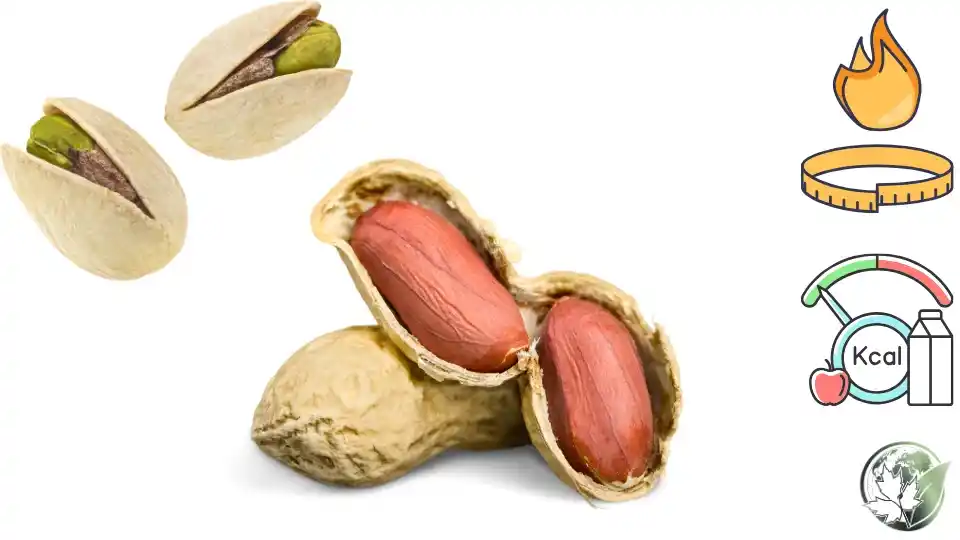
Peanuts in the shell are a popular snack, and the shells can be a helpful portion cue like pistachio shells
Which Has More Calories: Pistachios or Peanuts?
The two are equal for practical purposes. Roasted peanuts add a few calories, around 585 per 100 grams, and peanut brittle and candied peanuts add many more. Pistachios hold a small advantage in having more nuts per ounce, which makes a serving feel larger. Peanuts have more protein, folate and niacin per ounce, while pistachios have more fiber, potassium and vitamin B6. If you choose by calories only, the choice does not matter.
| Comparison | Pistachios | Peanuts | Verdict |
|---|---|---|---|
| Per 100 g | 562 | 567 | Equal |
| Per ounce | 159 | 161 | Equal |
| Per nut | 3.2 | 5.7 | Pistachios lower |
| Pieces per ounce | 49 | 28 | Pistachios more |
| Protein | 20 g | 26 g | Peanuts |
| Fiber | 10.3 g | 8.5 g | Pistachios |
| Price | Higher | Lower | Peanuts |
What Is the Difference Between a Tree Nut and a Legume?
Pistachios grow on trees and are botanically seeds of a fruit, while peanuts grow in pods underground and belong to the pea and bean family. As legumes, peanuts contain more protein and folate, and have a different fatty-acid pattern. They also contain lectins and phytic acid, as beans do, which are reduced by roasting or boiling. The distinction matters for allergies: peanut allergy and tree nut allergy are separate conditions, though some people have both, and cross-contamination in factories is common.
| Feature | Pistachios | Peanuts |
|---|---|---|
| Botanical group | Tree nut (drupe seed) | Legume |
| Grows | On trees | Underground pods |
| Protein | 20 g per 100 g | 26 g per 100 g |
| Allergen | Tree nut | Peanut |
| Related foods | Cashew, mango | Beans, lentils, soy |
| Growing cost | High (tree orchards) | Low (annual crop) |
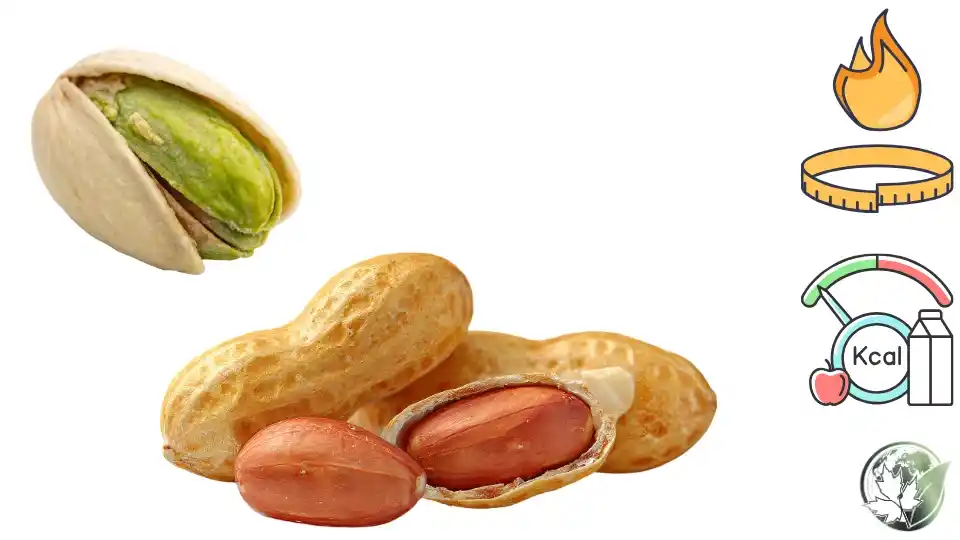
Boiled peanuts are lower in calories than roasted because of the water they absorb
Do Roasting, Boiling and Salting Change Calories?
Boiled peanuts, popular in some countries, hold water and have only about 200 calories per 100 grams, since they are swollen with brine, but contain a lot of sodium. Dry roasting concentrates them to 585. Oil roasting adds a few calories. Flavored and coated peanuts, such as honey roasted or chocolate covered, can reach 600 to 650. Salted pistachios and peanuts have similar sodium of 100 to 190 milligrams per ounce.
| Form (100 g) | Pistachios | Peanuts |
|---|---|---|
| Raw | 562 kcal | 567 kcal |
| Dry roasted | 574 kcal | 585 kcal |
| Oil roasted | 580 kcal | 599 kcal |
| Boiled (in shell, shelled weight) | - | 200 kcal |
| Honey roasted | 560 kcal | 590 kcal |
| Chocolate coated | 540 kcal | 550 kcal |
| Salted (sodium per ounce) | 120 mg | 90-190 mg |
Are Pistachios or Peanuts Healthier?
Both are linked with better heart health, lower LDL cholesterol and reduced risk of cardiovascular disease. Peanuts are rich in protein, folate, niacin and resveratrol, a polyphenol also found in red wine. Pistachios are high in potassium, vitamin B6, lutein and plant sterols. Studies on peanuts and peanut butter show benefits for blood sugar and satiety. Pistachios show benefits for blood pressure and gut bacteria in small studies. The healthiest option is unsalted, raw or dry roasted nuts.
| Factor | Pistachios | Peanuts |
|---|---|---|
| Protein | Good | Higher |
| Folate | Moderate | Very high |
| Niacin | Low | High |
| Potassium | Very high | High |
| Vitamin B6 | Very high | Low |
| LDL cholesterol | Lowers | Lowers |
| Allergy risk | Tree nut | Peanut (more common) |
Which Is Better for Weight Loss?
Both are filling, with protein and fiber, and both are linked to lower body weight in observational studies. Pistachios in the shell make it harder to overeat. Peanuts are cheap and easy to overeat, particularly salted and flavored versions, but unsalted peanuts in a measured portion work too. Choose the one you enjoy and measure an ounce.
| Factor | Pistachios | Peanuts |
|---|---|---|
| Calories per ounce | 159 | 161 |
| Pieces per ounce | 49 | 28 |
| Shell cue | Yes | Yes if in shell |
| Fiber | 2.9 g | 2.4 g |
| Protein | 5.7 g | 7.3 g |
| Overeating risk | Moderate | Higher (cheap bulk bags) |
How Do Allergies Compare?
Peanut allergy is one of the most common and serious food allergies, especially in children, and can cause life-threatening reactions. Tree nut allergy, including pistachio, is also common and can be severe. Many people allergic to pistachios also react to cashews and mangoes. People with either allergy should read labels, as peanuts and tree nuts are frequently processed in the same facility. Early introduction of peanut-containing foods in infancy, under medical advice, can reduce the risk of peanut allergy.
| Aspect | Pistachios | Peanuts |
|---|---|---|
| Allergy group | Tree nut | Legume |
| Cross-reactions | Cashew, mango | Lupin, tree nuts (some) |
| Severity | Can be severe | Can be severe |
| Infant introduction | Per doctor | Early introduction advised for high-risk |
| Label rule | Must declare | Must declare |
What Is the Price Difference?
Peanuts are usually the cheapest nut, costing a fraction of pistachios per kilogram. The cost per 100 calories is often 3 to 6 times lower. Pistachios cost more because they come from trees that take years to bear fruit and require hand harvesting and processing. If you are on a budget, peanuts offer similar calories and more protein. If you value flavor and pieces per ounce, pistachios are worth the occasional splurge.
| Nut | Relative price per kg | Cost per 100 kcal |
|---|---|---|
| Peanuts | 1x | 1x |
| Almonds | 3-4x | 3-4x |
| Cashews | 4-5x | 4-5x |
| Pistachios (shelled) | 5-7x | 5-7x |
| Pistachios (in shell) | 3-4x | 3-5x |
How Many Calories Are in Peanut Butter and Pistachio Paste Compared With the Whole Nuts?
Nut butters are concentrated, but nothing is added if they are 100 percent nuts, so the calories per 100 grams stay close to the whole nut. The practical difference is serving size: a tablespoon of peanut butter (16 grams) has 94 calories, and it takes only seconds to eat. The same weight of whole peanuts takes a minute and a lot of chewing. Choose whole nuts when you want to slow down, and butters when you want flavor and spreadability.
| Form | Serving | Calories | Eating time |
|---|---|---|---|
| Whole peanuts | 16 g (16 nuts) | 91 kcal | About 1 minute |
| Peanut butter | 1 tbsp (16 g) | 94 kcal | 10 seconds |
| Shelled pistachios | 16 g (28 nuts) | 90 kcal | About 1 minute |
| Pistachio paste | 1 tbsp (16 g) | 93 kcal | 10 seconds |
| Pistachios in shell | 30 g | 89 kcal | 3-4 minutes |
| Peanuts in shell | 30 g | 119 kcal | 2-3 minutes |
How Do the Fats in Pistachios and Peanuts Compare?
Both nuts are about 80 percent unsaturated fat. Peanuts have slightly more polyunsaturated fat, including linoleic acid, while pistachios have more monounsaturated and a small amount of omega-3 alpha-linolenic acid. Saturated fat per ounce is 1.6 grams in pistachios and 1.9 in peanuts. Neither contains cholesterol or trans fat unless hydrogenated oil is added, as in some commercial peanut butter. The fats in nuts are associated with lower LDL cholesterol when they replace saturated fats in the diet.
| Fat type (per ounce) | Pistachios | Peanuts |
|---|---|---|
| Total fat | 12.9 g | 14 g |
| Saturated | 1.6 g | 1.9 g |
| Monounsaturated | 6.8 g | 6.9 g |
| Polyunsaturated | 3.9 g | 4.4 g |
| Cholesterol | 0 mg | 0 mg |
| Trans fat | 0 g | 0 g |
What Are the Best Ways to Eat Each?
Pistachios are best raw or lightly roasted, eaten alone, or added to salads, rice, yogurt and desserts. Peanuts are eaten roasted, boiled or as peanut butter, and added to stir-fries, satay sauces, salads and trail mix. In Iranian cooking, pistachios appear in sweets and rice, while peanuts are served salted at gatherings and used in some sauces. For healthy snacking, unsalted dry-roasted peanuts or raw pistachios are the best bets.
| Use | Pistachios | Peanuts |
|---|---|---|
| Snack | Raw or lightly roasted | Dry roasted, unsalted |
| Salad topping | 1 tbsp chopped, 45 kcal | 1 tbsp chopped, 52 kcal |
| Stir-fry | Rare | 2 tbsp, 104 kcal |
| Dessert | Common | Occasional |
| Sauce | Pesto variations | Satay, peanut sauce |
| Rice | Traditional garnish | Rare |
How Do They Fit in Different Diets?
On a Mediterranean diet, both are encouraged. On a low-carb diet, peanuts have 4.6 grams of net carbohydrate per ounce and pistachios 4.7, so both are moderate. On a vegan diet, they are a major source of protein and fat. People with gout can eat them in moderation, as nuts are low in purines. Those on a low-FODMAP diet should limit pistachios to 15 nuts, since they contain fructans and GOS, but peanuts are allowed in portions of 32 grams.
| Diet | Pistachios | Peanuts |
|---|---|---|
| Mediterranean | Encouraged | Encouraged |
| Low-carb | Moderate | Moderate |
| Vegan | Good protein | Excellent protein |
| Low-FODMAP | Limit to 15 nuts | Up to 32 g |
| Gluten-free | Naturally free | Naturally free |
| Gout | Moderate | Moderate |
How Many Calories Do You Save by Choosing In-Shell Nuts?
When nuts are sold in the shell, the shell weight is not edible, so the calories per 100 grams of the package are lower. In-shell pistachios have about 298 calories per 100 grams and in-shell peanuts about 397, because peanut shells are only about 30 percent of the weight while pistachio shells are nearly half. Cracking shells takes time, so people eat fewer. A study found that people who shelled their own pistachios ate 41 percent fewer calories than those given shelled nuts, as the pile of empty shells served as a visual cue.
| Form | Pistachios | Peanuts |
|---|---|---|
| In-shell weight to kernel | 53% kernel | 70% kernel |
| Calories per 100 g in shell | 298 | 397 |
| 100 g in shell: kernels | 53 g | 70 g |
| Time to eat 100 kcal | About 3 minutes | About 2 minutes |
| Calories eaten (study) | 41% fewer when shelling | Likely similar effect |
What Mistakes Do People Make When Counting Nut Calories?
The most common errors are counting nuts by the handful, ignoring the difference between in-shell and shelled weight, and forgetting that roasted, salted or flavored nuts have more calories. A scoop from a large bag can be double the intended portion. Weighing nuts a few times builds a feel for the right amount. Another mistake is thinking small nuts have fewer calories overall; the number of pieces matters little if you eat many of them.
| Mistake | Effect | Fix |
|---|---|---|
| Counting a handful as 1 ounce | Can be 2 ounces | Weigh once |
| Weighing in-shell as shelled | Overestimates by 1.4-1.9x | Use kernel weight |
| Ignoring coatings | +20-60 kcal per ounce | Read the label |
| Eating from the bag | +100-300 kcal | Portion into a bowl |
| Assuming small nuts are light | Same per gram | Count by weight |
How Do Pistachios and Peanuts Affect Blood Sugar and Cholesterol?
Both have a low glycemic index, around 15 for pistachios and 14 for peanuts, and both reduce the blood sugar response of a meal when eaten with carbohydrate foods. Trials show that a daily ounce of peanuts or pistachios lowers LDL cholesterol modestly and improves the ratio of total to HDL cholesterol. Peanuts are especially well studied in large cohorts, where regular intake was linked to lower mortality from heart disease. Pistachios have the strongest evidence of the tree nuts for improving blood vessel function and lowering post-meal glucose.
| Measure (1 ounce) | Pistachios | Peanuts |
|---|---|---|
| Net carbohydrate | 4.7 g | 2.3 g |
| Glycemic index | About 15 | About 14 |
| Glycemic load | About 1 | About 1 |
| LDL cholesterol | Lowers | Lowers |
| Blood vessel function | Improves in trials | Improves in trials |
| Post-meal glucose | Reduces | Reduces |
What Is the Bottom Line on Servings?
For most adults, an ounce of nuts a day, about 49 pistachios or 28 peanuts, is a balanced portion at 159 to 161 calories. Eat them unsalted, as a replacement for chips or cookies. Children over four can have half an ounce, with care about choking and allergies. If you are very active, up to two ounces is acceptable. Rotate nuts through the week for variety.
| Group | Daily nuts | Pistachios | Peanuts |
|---|---|---|---|
| Child 4-8 | 14 g | 25 nuts, 79 kcal | 14 nuts, 79 kcal |
| Weight loss | 20 g | 35 nuts, 112 kcal | 20 nuts, 113 kcal |
| Maintenance | 28 g | 49 nuts, 159 kcal | 28 nuts, 161 kcal |
| Active adult | 42 g | 74 nuts, 236 kcal | 42 nuts, 238 kcal |
Are Pistachios or Peanuts Better for Athletes and Active People?
Peanuts offer slightly more protein per ounce and are very affordable, making peanut butter sandwiches and roasted peanuts popular among athletes. Pistachios provide potassium, which helps with muscle function and fluid balance, and vitamin B6, which supports energy metabolism. They also supply all nine essential amino acids, making them a high-quality plant protein among nuts. For endurance sports, a mix of salted nuts and dried fruit supplies sodium, carbohydrate and fat to keep going.
| Need | Better choice | Why |
|---|---|---|
| Cheap protein | Peanuts | 7.3 g per ounce |
| Potassium | Pistachios | 291 mg per ounce |
| Vitamin B6 | Pistachios | Much higher |
| Folate and niacin | Peanuts | Much higher |
| Portable fuel | Either | Dense calories |
| Recovery snack | Either with fruit | Carbs and protein |
How Do You Choose Good Quality Pistachios and Peanuts?
Choose pistachios with a partly open shell, a bright green to yellow-green kernel, and a clean smell. Avoid nuts that look shriveled, dark or moldy. For peanuts, choose firm, plump kernels with intact skins and no musty smell. Buy from stores with high turnover. Check the date, and if buying in bulk, store them in the freezer. Raw peanuts should be cooked or roasted before eating in some regions.
| Check | Pistachios | Peanuts |
|---|---|---|
| Appearance | Green kernel, open shell | Plump, uniform kernels |
| Smell | Fresh, sweet | Nutty, not musty |
| Avoid | Shriveled, dark spots | Moldy, discolored |
| Shelf life (pantry) | 3-6 months | 4-6 months |
| Shelf life (freezer) | 12-18 months | 12 months |
What Do Children and Older Adults Need to Know?
Children can eat both nuts once they can chew well, usually after age four, to avoid choking; younger children can have smooth nut butter spread thinly. Early introduction of peanut products in infancy, under pediatric guidance, can lower the chance of peanut allergy. Older adults benefit from the protein and healthy fats of nuts, and from their soft texture in the form of butters or ground nuts if teeth are a problem. Both groups should avoid heavily salted nuts.
| Group | Advice | Portion | Calories |
|---|---|---|---|
| Toddler (1-3) | Smooth nut butter only, thin layer | 1 tsp | 29-32 |
| Child (4-8) | Nuts if chewing well | 14 g | 79 |
| Teen | Normal portion | 28 g | 159-161 |
| Older adult | Ground or butter if needed | 20-28 g | 112-161 |
Final Comparison at a Glance
| Question | Pistachios | Peanuts |
|---|---|---|
| Calories per nut | 3.2 | 5.7 |
| Calories per ounce | 159 | 161 |
| Calories per 100 g | 562 | 567 |
| Protein per ounce | 5.7 g | 7.3 g |
| Fiber per ounce | 2.9 g | 2.4 g |
| Folate | Moderate | Very high |
| Potassium | Very high | High |
| Price | High | Low |
| Best for | Slow snacking, desserts | Budget protein, spreads |
Key Takeaways: Pistachios vs Peanuts Calories
An ounce of shelled pistachios has about 159 calories and an ounce of peanuts about 161, so they are equal by weight. Per piece, pistachios have 3.2 calories and peanuts 5.7. Peanuts have more protein and folate, pistachios more potassium and fiber. Choose unsalted, measure 28 grams, and consider allergies.
Frequently Asked Questions
6 questions answered
How many calories are in 10 pistachios?
About 32.
How many calories are in 10 peanuts?
About 57.
Are pistachios lower in calories than peanuts?
Per nut yes, per ounce about equal.
Which has more protein?
Peanuts, 26 g against 20 g per 100 g.
Are peanuts really nuts?
No, they are legumes.
Which is cheaper?
Peanuts, by a large margin.