How Many Calories Are in a Serving of Pistachio Paste vs Peanut Butter? The Quick Answer
A serving of pistachio paste is usually 2 tablespoons, about 32 grams. Pure pistachio paste, made of 100 percent ground pistachios, has about 185 calories per serving, or 93 per tablespoon, and roughly 580 calories per 100 grams. Peanut butter has 94 calories per tablespoon (16 grams) and 188 per 2 tablespoon serving, or about 588 calories per 100 grams. So the two are almost identical in calories. Differences emerge in sweetened pistachio spreads, which add sugar, oil and milk powder, giving about 540 to 560 calories per 100 grams and 12 to 20 grams of sugar per serving.
Pistachio paste is a confectioner's ingredient used in ice cream, macarons, cakes, baklava and spreads. It is now also eaten like nut butter on toast and in yogurt. Peanut butter is a familiar breakfast and snack spread. People compare them because both are rich in protein and healthy fats. Pistachio paste has more potassium, vitamin B6 and a little more carbohydrate, while peanut butter has more protein per spoon. This guide compares pistachio paste and peanut butter by tablespoon, serving and 100 grams, separates pure paste from sweetened spreads, looks at protein, fat, sugar and minerals, and shows how to use each in portions that fit your calorie goals. Three comparison tables and an FAQ are included.
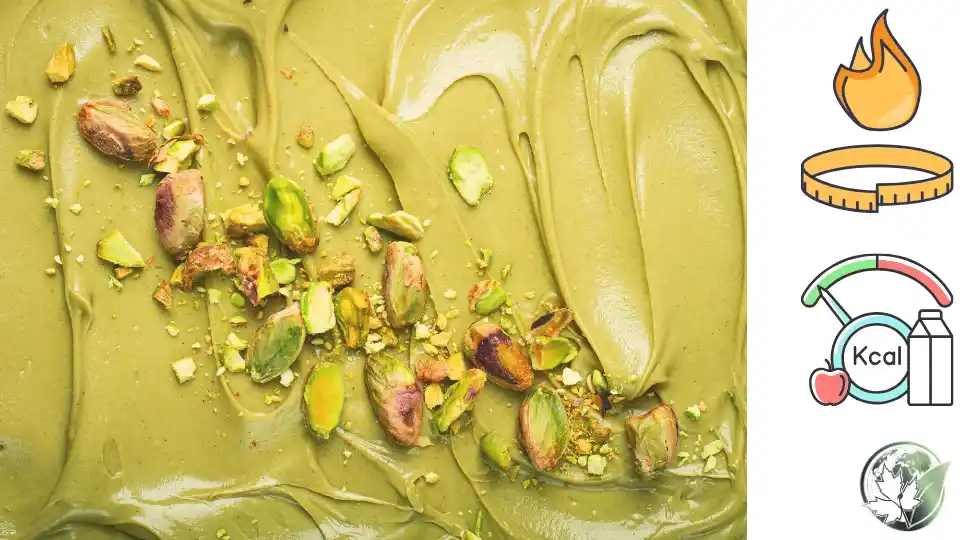
Two tablespoons of pure pistachio paste have about 185 calories and two tablespoons of peanut butter about 188
How Many Calories Are in Pistachio Paste?
| Pistachio paste | Weight | Calories | Fat | Sugar |
|---|---|---|---|---|
| 1 teaspoon (pure) | 5 g | 29 kcal | 2.4 g | 0.4 g |
| 1 tablespoon (pure) | 16 g | 93 kcal | 7.6 g | 1.2 g |
| 2 tablespoons (pure) | 32 g | 185 kcal | 15 g | 2.5 g |
| 1/4 cup (pure) | 64 g | 371 kcal | 30 g | 5 g |
| 100 g (pure) | 100 g | 580 kcal | 47 g | 7.8 g |
| 1 tablespoon (sweetened spread) | 15 g | 82 kcal | 5.3 g | 7.5 g |
| 2 tablespoons (sweetened spread) | 30 g | 165 kcal | 10.6 g | 15 g |
| 100 g (sweetened spread) | 100 g | 545 kcal | 35 g | 50 g |
How Many Calories Are in Peanut Butter?
| Peanut butter | Weight | Calories | Fat | Sugar |
|---|---|---|---|---|
| 1 teaspoon | 5.4 g | 32 kcal | 2.7 g | 0.7 g |
| 1 tablespoon | 16 g | 94 kcal | 8 g | 1.5 g |
| 2 tablespoons | 32 g | 188 kcal | 16 g | 3 g |
| 1/4 cup | 64 g | 376 kcal | 32 g | 6 g |
| 100 g | 100 g | 588 kcal | 50 g | 9.2 g |
| Natural (no sugar), 2 tbsp | 32 g | 190 kcal | 16 g | 1.5 g |
| Reduced-fat, 2 tbsp | 36 g | 187 kcal | 12 g | 7 g |
| Powdered peanut butter, 2 tbsp | 12 g | 60 kcal | 1.5 g | 1 g |
Pistachio Paste vs Peanut Butter: Calories Compared
| Amount | Pure pistachio paste | Sweetened pistachio spread | Peanut butter |
|---|---|---|---|
| 1 teaspoon | 29 kcal | 27 kcal | 32 kcal |
| 1 tablespoon | 93 kcal | 82 kcal | 94 kcal |
| 2 tablespoons | 185 kcal | 165 kcal | 188 kcal |
| 100 g | 580 kcal | 545 kcal | 588 kcal |
| Protein per 2 tbsp | 6.4 g | 3 g | 8 g |
| Sugar per 2 tbsp | 2.5 g | 15 g | 3 g |
| Fat per 2 tbsp | 15 g | 10.6 g | 16 g |
| Cost tier | High | Medium-high | Low |
Pure pistachio paste and peanut butter are within 2 percent of each other. Sweetened pistachio spreads can look lower in calories per spoon, but they contain a lot of sugar, around 15 grams per two tablespoons, or nearly four sugar cubes.
Pistachio Paste vs Peanut Butter: Nutrition Compared
| Per 100 g | Pure pistachio paste | Peanut butter |
|---|---|---|
| Calories | 580 kcal | 588 kcal |
| Total fat | 47 g | 50 g |
| Saturated fat | 5.7 g | 10 g |
| Monounsaturated fat | 25 g | 24 g |
| Carbohydrate | 25 g | 20 g |
| Sugar | 7.8 g | 9.2 g |
| Fiber | 9.6 g | 6 g |
| Protein | 20 g | 25 g |
| Potassium | 960 mg | 649 mg |
| Magnesium | 112 mg | 168 mg |
| Vitamin B6 | 1.6 mg | 0.5 mg |
| Sodium | 3 mg | 17 mg (more if salted) |
| Added ingredients | None | Often salt, oil, sugar |
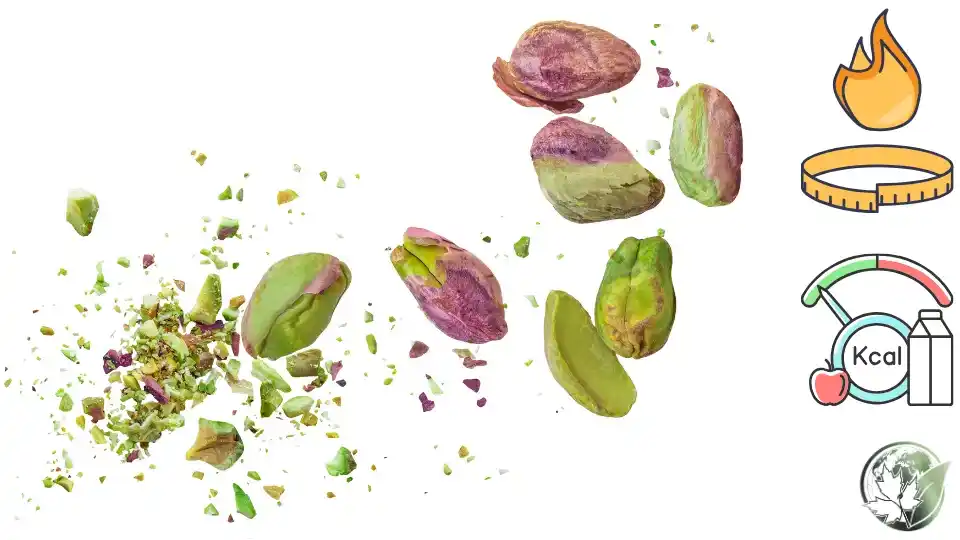
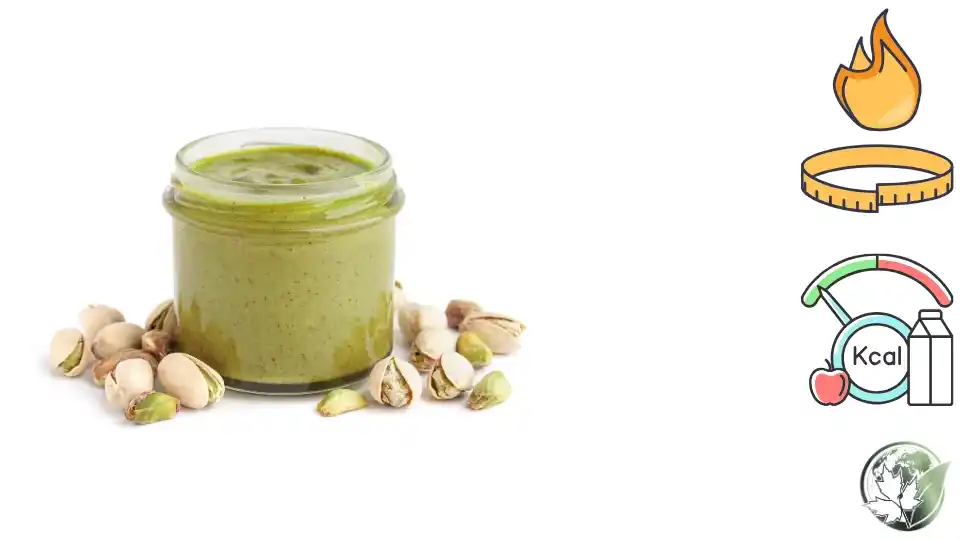
Pistachio paste on toast is a rich spread with a distinct green color and sweet nutty flavor
Which Has More Calories: Pistachio Paste or Peanut Butter?
Per tablespoon, they are the same: 93 calories for pure pistachio paste and 94 for peanut butter. Because both are nearly pure nut fat and protein, and fat has 9 calories per gram, nothing makes one meaningfully lighter. Where you might see a difference is in processed pistachio cream, which contains sugar and palm oil; it can have slightly fewer calories per spoon but far more sugar. Peanut butter is cheaper and easier to find, so many people use more of it, while the high price of pistachio paste tends to limit portions.
| Comparison | Pistachio paste | Peanut butter | Verdict |
|---|---|---|---|
| Per tablespoon | 93 | 94 | Equal |
| Per 100 g | 580 | 588 | Equal |
| Protein | 20 g | 25 g | Peanut butter |
| Fiber | 9.6 g | 6 g | Pistachio |
| Potassium | 960 mg | 649 mg | Pistachio |
| Saturated fat | 5.7 g | 10 g | Pistachio lower |
| Price | High | Low | Peanut butter |
What Is the Difference Between Pure Pistachio Paste and Pistachio Spread?
Pure pistachio paste is made of ground pistachios only, sometimes with a little oil, and is unsweetened and slightly bitter. It is sold to bakers and chefs. Pistachio spread or cream, sold in jars like chocolate hazelnut spread, contains sugar (often the first ingredient), vegetable oil, milk powder and only 20 to 40 percent pistachios. Some products are marketed as pistachio butter and contain 90 to 100 percent nuts. The difference in sugar and price is large, so check the ingredient list.
| Type | Pistachio content | Sugar per 100 g | Calories per 100 g |
|---|---|---|---|
| Pure pistachio paste | 100% | 7.8 g | 580 kcal |
| Pistachio butter (natural) | 95-100% | 8 g | 575 kcal |
| Baker's paste (with sugar) | 50-70% | 25-35 g | 520 kcal |
| Pistachio cream or spread | 20-40% | 45-55 g | 540 kcal |
| Chocolate hazelnut spread (for comparison) | 13% hazelnut | 56 g | 540 kcal |
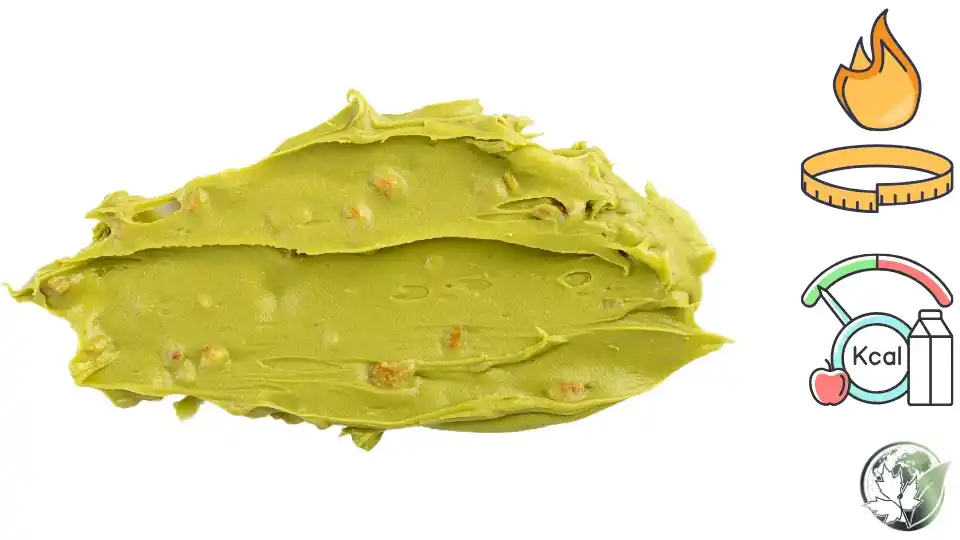
Peanut butter has slightly more protein than pistachio paste, with a similar calorie count
How Many Calories Are in a Serving on Toast, Yogurt and Desserts?
Spread and portion are more important than the type. A slice of whole wheat toast has 80 calories, so with 2 tablespoons of paste, it reaches around 265. A bowl of Greek yogurt with 1 tablespoon of pistachio paste is 93 plus 100 for the yogurt. In baking, pistachio paste is typically used in amounts of 100 to 200 grams per recipe, spreading the calories over many servings.
| Use | Pistachio paste (pure) | Peanut butter |
|---|---|---|
| Toast with 1 tbsp | 173 kcal | 174 kcal |
| Toast with 2 tbsp | 265 kcal | 268 kcal |
| Greek yogurt with 1 tbsp | 193 kcal | 194 kcal |
| Banana with 1 tbsp | 198 kcal | 199 kcal |
| Oatmeal with 1 tbsp | 243 kcal | 244 kcal |
| Smoothie with 1 tbsp | Adds 93 kcal | Adds 94 kcal |
Is Pistachio Paste or Peanut Butter Healthier?
Both are nutritious, with unsaturated fats, protein, fiber and minerals. Pure pistachio paste has less saturated fat, more fiber and more potassium and vitamin B6, along with lutein and gamma-tocopherol. Peanut butter has more protein, magnesium and niacin, is cheaper, and is better studied for satiety. Peanuts are legumes, and peanut allergy is common and serious, whereas pistachio allergy is a tree nut allergy; both are major allergens. The healthiest choice is a pure product without added sugar or hydrogenated oil.
| Factor | Pistachio paste | Peanut butter |
|---|---|---|
| Protein | Good | Higher |
| Fiber | Higher | Good |
| Potassium | Higher | Moderate |
| Saturated fat | Lower | Higher |
| Allergy | Tree nut | Peanut |
| Price | High | Low |
| Best form | 100% pistachio | Natural, no added sugar |
Which Is Better for Weight Loss?
Neither is a low-calorie food, but both can fit in a weight-loss plan when portions are measured. A tablespoon (93 to 94 calories) is a useful topping. Protein and fat help fullness, and studies suggest regular nut consumption does not increase weight in most people. The danger is scooping straight from the jar, where a heaped spoon can easily double the portion. Measure with a spoon and level it off.
| Habit | Calories | Comment |
|---|---|---|
| 1 level tbsp | 93-94 | Good portion |
| 1 heaped tbsp | 140-150 | Common mistake |
| 2 tbsp | 185-188 | Maximum for most |
| Direct from the jar (3 tbsp) | 280 | Easy to overeat |
| Powdered peanut butter, 2 tbsp | 60 | Low-calorie option |
How Is Pistachio Paste Made and Why Is It Expensive?
Pistachio paste is produced by shelling, blanching and peeling pistachios, roasting them lightly and grinding them into a smooth paste in a stone or steel mill. It takes about 1 kilogram of raw nuts to make 600 to 700 grams of paste, depending on the grade and the amount of skin removed. Green, high-quality paste uses peeled kernels from Sicily, Iran or Turkey, and the labor-intensive peeling raises the price. Peanut butter, on the other hand, is made from cheap, abundant peanuts that are roasted and ground with little preparation.
| Step | Pistachio paste | Peanut butter |
|---|---|---|
| Shelling | Yes, labor-intensive | Machine |
| Peeling skins | Often, for green color | Rarely |
| Roasting | Light | Medium to dark |
| Grinding | Slow, fine | Fast |
| Additives | None in pure paste | Salt, sugar, oil |
| Yield from raw nuts | 60-70% | 85-90% |
| Retail price (relative) | 8-12x | 1x |
How Many Calories Are in Pistachio-Based Foods and Desserts?
Pistachio paste is the base of many desserts, and the calorie count depends mainly on the other ingredients. A scoop of pistachio ice cream contains about 210 calories per half cup. A macaron with pistachio filling is about 90 to 100 calories. A slice of pistachio cake can reach 400. A teaspoon of paste stirred into milk or yogurt adds only 29 calories but a lot of flavor.
| Food | Serving | Calories | Notes |
|---|---|---|---|
| Pistachio ice cream | 1/2 cup | 210 kcal | Contains cream and sugar |
| Pistachio macaron | 1 piece | 95 kcal | Almond and sugar shell |
| Pistachio baklava | 1 piece | 230 kcal | Phyllo and syrup |
| Pistachio cake | 1 slice | 400 kcal | Butter, sugar |
| Pistachio latte | 1 cup | 260 kcal | Milk and syrup |
| Pistachio paste in milk | 1 tsp in 1 cup | 151 kcal | Milk 122 + paste 29 |
| Pistachio gelato | 1/2 cup | 180 kcal | Milk based |
What Are the Healthiest Ways to Use Pistachio Paste?
Use it as a swap for butter or cream cheese on toast, in place of sugar-laden spreads, or stirred into oatmeal and yogurt. A small amount, 1 teaspoon, gives lots of flavor to smoothies, sauces and salad dressings. Blend with a little water and lemon for a creamy dressing, or whisk with olive oil and vinegar. When baking, replace some of the butter with pistachio paste to add protein and fiber.
| Use | Amount | Calories | Benefit |
|---|---|---|---|
| Toast spread | 1 tbsp | 93 | Protein and fiber |
| Oatmeal swirl | 1 tsp | 29 | Flavor |
| Smoothie | 1 tbsp | 93 | Creamy texture |
| Salad dressing | 1 tsp | 29 | Nutty, creamy |
| Baking swap for butter | 2 tbsp for 2 tbsp butter | 185 vs 204 | Less saturated fat |
| Energy balls | 1 tsp each | 29 | Natural binder |
How Do Pistachio Paste and Peanut Butter Compare With Other Nut Butters?
All nut butters have around 580 to 650 calories per 100 grams. Almond butter has 614, cashew butter 587, tahini 595, hazelnut butter 628 and macadamia butter 718. Pistachio paste at 580 is among the lighter ones. The practical calorie difference per tablespoon is under 10.
| Nut butter | Calories per tbsp | Calories per 100 g | Protein per tbsp |
|---|---|---|---|
| Pistachio paste | 93 | 580 | 3.2 g |
| Peanut butter | 94 | 588 | 4 g |
| Cashew butter | 94 | 587 | 3 g |
| Tahini | 89 | 595 | 2.6 g |
| Almond butter | 98 | 614 | 3.4 g |
| Hazelnut butter | 100 | 628 | 2.4 g |
| Macadamia butter | 115 | 718 | 1.4 g |
How Does Pistachio Paste Affect Blood Sugar and Cholesterol?
Pure pistachio paste has a very low glycemic index of around 15, because of its fat, protein and fiber. A tablespoon has about 4 grams of carbohydrate and 1.5 grams of fiber, so the effect on blood sugar is small. Studies on whole pistachios show reduced post-meal blood sugar and modest reductions in LDL cholesterol when about 1.5 ounces are eaten daily. Peanut butter shows similar benefits in studies of peanut consumption. Sweetened pistachio spreads behave differently: with 50 percent sugar, they raise blood sugar like any dessert spread.
| Measure (2 tbsp, 32 g) | Pure pistachio paste | Sweetened spread | Peanut butter |
|---|---|---|---|
| Carbohydrate | 8 g | 17 g | 6.4 g |
| Sugar | 2.5 g | 15 g | 3 g |
| Fiber | 3 g | 1 g | 1.9 g |
| Glycemic index | About 15 | 45-55 | About 14 |
| LDL effect | Lowers | Neutral to negative | Lowers |
Who Should Be Careful With Pistachio Paste or Peanut Butter?
People with tree nut allergy must avoid pistachio paste and peanut butter should be avoided by those with peanut allergy; many people allergic to one are also allergic to the other, so ask an allergist. Both spreads are calorie dense and can contribute to weight gain if overeaten. Choking is a risk for young children if a thick spoonful is eaten alone. Aflatoxin contamination can affect poorly stored peanuts and pistachios, so buy from reputable brands. People with kidney disease on a low-potassium diet should limit pistachio paste, which is high in potassium.
| Group | Concern | Advice |
|---|---|---|
| Nut allergy | Anaphylaxis | Avoid, consult allergist |
| Toddlers | Choking | Thin layer on bread |
| Weight watchers | Calorie density | Measure 1 tbsp |
| Kidney disease | Potassium | Ask a doctor |
| Sodium-restricted diets | Salted peanut butter | Choose unsalted |
How Should You Store Pistachio Paste and Peanut Butter?
Store pure pistachio paste in a closed jar in the refrigerator after opening, because it has no preservatives and the oils can go rancid. It lasts three to six months. Natural peanut butter, which separates, should also be refrigerated after opening and stirred. Commercial peanut butter with stabilizers lasts two to three months in the pantry after opening. Always use a clean spoon to prevent mold.
| Product | Unopened | Opened pantry | Opened fridge |
|---|---|---|---|
| Pure pistachio paste | 6-12 months | 1 month | 3-6 months |
| Pistachio spread | 12 months | 2-3 months | 6 months |
| Natural peanut butter | 6-9 months | 1 month | 3-6 months |
| Commercial peanut butter | 12 months | 2-3 months | 6 months |
How Should Athletes and Active People Use Nut Spreads?
For athletes, nut spreads provide dense energy, healthy fats and some protein, making them ideal before long training days or as a calorie boost when gaining weight. A tablespoon on a banana or rice cake gives about 190 calories and fits in a pocket. For endurance events, nut butter is usually combined with honey for fast carbohydrate. Pistachio paste adds potassium, which supports muscles, and vitamin B6, involved in energy metabolism. In a cutting phase, powdered peanut butter or a thin layer of paste keeps calories in check.
| Goal | Option | Calories | Notes |
|---|---|---|---|
| Pre-workout | Rice cake + 1 tbsp peanut butter | 190 | Carbs and fat |
| Calorie boost | Smoothie + 2 tbsp pistachio paste | 185 added | Dense calories |
| Endurance fuel | Honey and nut butter sandwich | 300 | Long events |
| Cutting | Powdered peanut butter, 2 tbsp | 60 | Lower fat |
| Recovery | Greek yogurt + 1 tbsp paste | 193 | Protein and fat |
How Can You Read the Label on Pistachio Spreads and Nut Butters?
Check the ingredient list first. The best products list only pistachios, or peanuts and salt. If sugar, palm oil, glucose syrup or skimmed milk powder come before the nuts, the product is a dessert spread. Look at sugar per 100 grams: under 10 grams is a natural nut butter, above 30 grams is a sweet spread. Note the serving size, as some labels use 15 grams and others 30. Palm oil is high in saturated fat, which raises LDL cholesterol more than nut oils.
| Label item | Natural product | Dessert spread |
|---|---|---|
| First ingredient | Pistachios or peanuts | Sugar or oil |
| Nut content | 90-100% | 20-50% |
| Sugar per 100 g | Under 10 g | 30-55 g |
| Saturated fat per 100 g | 6-10 g | 12-20 g |
| Added oil | None or little | Palm oil common |
| Typical serving | 32 g | 15-30 g |
Do Pistachio Paste and Peanut Butter Have Environmental or Ethical Differences?
Pistachio orchards in dry regions use a lot of water, and large-scale peanut farming has its own footprint, but peanuts fix nitrogen in the soil and need less irrigation. Palm oil in sweet spreads is linked to deforestation. Buying certified products, choosing brands with traceable sources and using smaller portions are practical steps. For most readers the key issue is price and availability rather than environmental impact.
| Factor | Pistachio paste | Peanut butter |
|---|---|---|
| Water use | High | Moderate |
| Soil effect | Perennial trees | Fixes nitrogen |
| Palm oil | In sweet spreads | In some brands |
| Price | High | Low |
| Availability | Specialty | Everywhere |
Can You Make Pistachio Paste at Home and What Does It Cost in Calories?
Homemade pistachio paste is easy: blend 200 grams of shelled, unsalted pistachios in a food processor for 8 to 12 minutes, scraping the sides, until smooth. Add a teaspoon of neutral oil if needed. The result has the same 580 calories per 100 grams as commercial pure paste. Sweetening with honey (64 calories per tablespoon) or a few dates adds calories and sugar. Soak and peel the nuts for a green color. Store in the refrigerator and use within a month.
| Homemade version | Per 2 tbsp | Calories | Sugar |
|---|---|---|---|
| Pure, no additions | 32 g | 185 | 2.5 g |
| With 1 tsp oil per 200 g | 32 g | 190 | 2.5 g |
| With 1 tbsp honey per 200 g | 34 g | 195 | 5 g |
| With 2 dates per 200 g | 34 g | 190 | 4.5 g |
| Commercial sweetened spread | 30 g | 165 | 15 g |
What Is the Best Serving Size?
One tablespoon (about 16 grams) is a reasonable daily serving for people watching calories, and two tablespoons for those who are active or need more energy. Spread thinly, a tablespoon covers a slice of bread. If using as a dessert ingredient, count the paste in the recipe and divide by the number of servings.
| Person | Serving | Calories |
|---|---|---|
| Weight loss | 1 level tbsp | 93-94 |
| Maintenance | 1-2 tbsp | 93-188 |
| Active adult | 2 tbsp | 185-188 |
| Child 4-8 | 1 tsp-1 tbsp | 29-94 |
| Athlete bulking | 2-3 tbsp | 185-282 |
Final Comparison at a Glance
| Question | Pistachio paste | Peanut butter |
|---|---|---|
| Calories per tbsp | 93 | 94 |
| Calories per 2 tbsp | 185 | 188 |
| Calories per 100 g | 580 | 588 |
| Protein per 2 tbsp | 6.4 g | 8 g |
| Fiber per 2 tbsp | 3 g | 1.9 g |
| Saturated fat per 2 tbsp | 1.8 g | 3.2 g |
| Price | High | Low |
| Best for | Desserts, premium toast | Everyday spread |
Key Takeaways: Pistachio Paste vs Peanut Butter Calories
Two tablespoons of pure pistachio paste have about 185 calories and two tablespoons of peanut butter about 188. They are nearly the same in calories, but sweetened pistachio spreads contain much more sugar. Choose 100 percent paste or natural peanut butter and measure with a spoon.
Frequently Asked Questions
6 questions answered
How many calories are in a tablespoon of pistachio paste?
About 93 for pure paste.
How many calories are in a tablespoon of peanut butter?
About 94.
Does pistachio paste have more sugar?
Pure paste no, but sweetened spreads yes.
Which has more protein?
Peanut butter, 8 g against 6.4 g per 2 tbsp.
Is pistachio paste healthier?
It has more fiber and potassium.
How much should I eat a day?
One to two tablespoons.