How Many Calories Are in an Orange vs a Sugar Cube? The Quick Answer
One medium orange (131 grams) has about 62 calories, 12.2 grams of sugar, 3.1 grams of fiber and 70 milligrams of vitamin C. One standard sugar cube (4 grams) has 16 calories and 4 grams of sugar. So an orange is equal to about four cubes in calories (62 divided by 16) and three cubes in sugar (12.2 divided by 4). By weight, though, a cube has 387 calories per 100 grams while an orange has 47, which means the cube has 8 times the calorie density. An orange is mostly water (87 percent), which is why you must eat a lot of it to reach the same calories as a small pile of cubes.
People ask this because they are comparing a healthy snack with a bad habit and want to know the numbers. The answer is useful: an orange is not sugar-free, but its sugar comes with fiber, vitamin C, potassium and flavonoids, and it fills you up. A single segment has only about 6 calories. This guide compares oranges and sugar cubes per piece, per segment and per 100 grams, shows how many cubes each orange size equals, compares nutrients and glycemic index, and explains why fruit sugar is treated differently from added sugar. It includes three comparison tables and an FAQ.
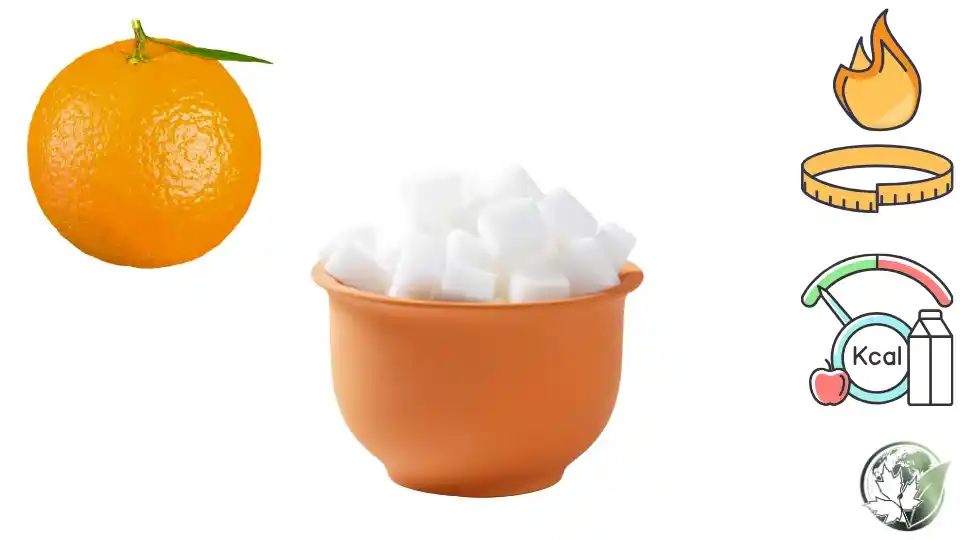
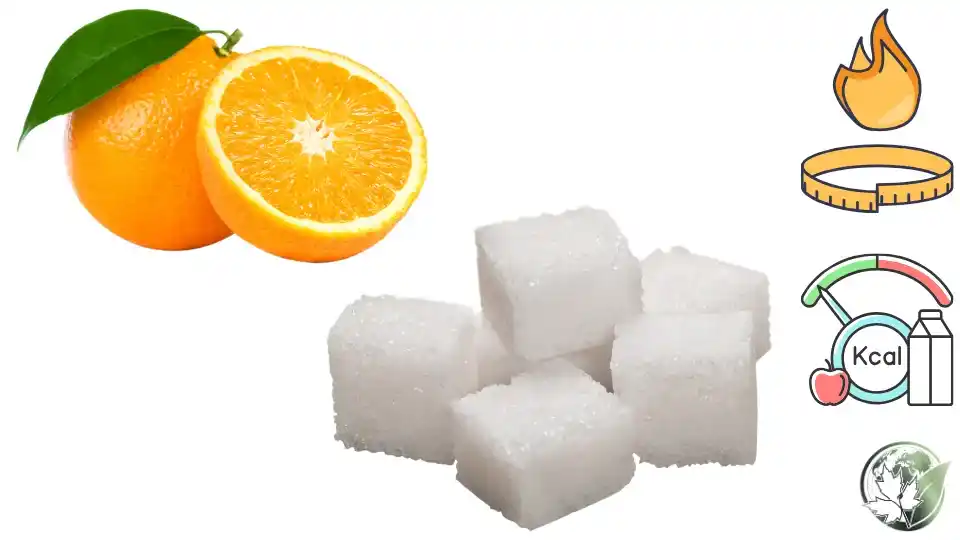
A medium orange has the sugar of about three cubes, but with fiber and vitamin C
How Many Calories Are in an Orange?
| Orange | Weight | Calories | Sugar | Fiber |
|---|---|---|---|---|
| 1 segment | 12 g | 6 kcal | 1.1 g | 0.3 g |
| 4 segments | 48 g | 23 kcal | 4.5 g | 1.1 g |
| Half an orange | 65 g | 31 kcal | 6.1 g | 1.5 g |
| Small orange | 96 g | 45 kcal | 9 g | 2.3 g |
| Medium orange | 131 g | 62 kcal | 12.2 g | 3.1 g |
| Large orange | 184 g | 87 kcal | 17.2 g | 4.4 g |
| 1 cup segments | 180 g | 85 kcal | 17 g | 4.3 g |
| 100 g | 100 g | 47 kcal | 9.4 g | 2.4 g |
How Many Calories Are in a Sugar Cube?
| Sugar cubes | Weight | Calories | Sugar |
|---|---|---|---|
| 1 cube | 4 g | 16 kcal | 4 g |
| 2 cubes | 8 g | 31 kcal | 8 g |
| 3 cubes | 12 g | 47 kcal | 12 g |
| 4 cubes | 16 g | 62 kcal | 16 g |
| 5 cubes | 20 g | 77 kcal | 20 g |
| 10 cubes | 40 g | 155 kcal | 40 g |
| 25 cubes | 100 g | 387 kcal | 100 g |
| Teaspoon (loose) | 4 g | 16 kcal | 4 g |
Orange vs Sugar Cube: Calories Compared
| Amount | Orange | Sugar cubes | Equivalent |
|---|---|---|---|
| 100 g | 47 kcal | 387 kcal | Orange 88% lower |
| 1 segment | 6 kcal | 0.4 cube | - |
| 1 medium orange | 62 kcal | 3.9 cubes | In calories |
| 1 medium orange | 12.2 g sugar | 3 cubes | In sugar |
| 1 large orange | 87 kcal | 5.4 cubes | In calories |
| 1 cube | 16 kcal | 34 g orange | 3 segments |
| Weight to eat for 62 kcal | 131 g | 16 g | 8x heavier |
| Fiber | 3.1 g | 0 g | Orange |
Because the orange is mostly water, you eat eight times the weight for the same calories. That volume is what makes oranges filling and sugar cubes empty.
Orange vs Sugar Cube: Nutrition Compared
| Per 100 g | Orange | Sugar cubes |
|---|---|---|
| Calories | 47 kcal | 387 kcal |
| Carbohydrate | 11.8 g | 100 g |
| Sugar | 9.4 g | 100 g |
| Fiber | 2.4 g | 0 g |
| Water | 87 g | 0 g |
| Protein | 0.9 g | 0 g |
| Vitamin C | 53 mg | 0 mg |
| Potassium | 181 mg | 2 mg |
| Calcium | 40 mg | 1 mg |
| Folate | 30 mcg | 0 mcg |
| Antioxidants | Flavonoids, carotenoids | None |
| Glycemic index | 40-45 | 65 |
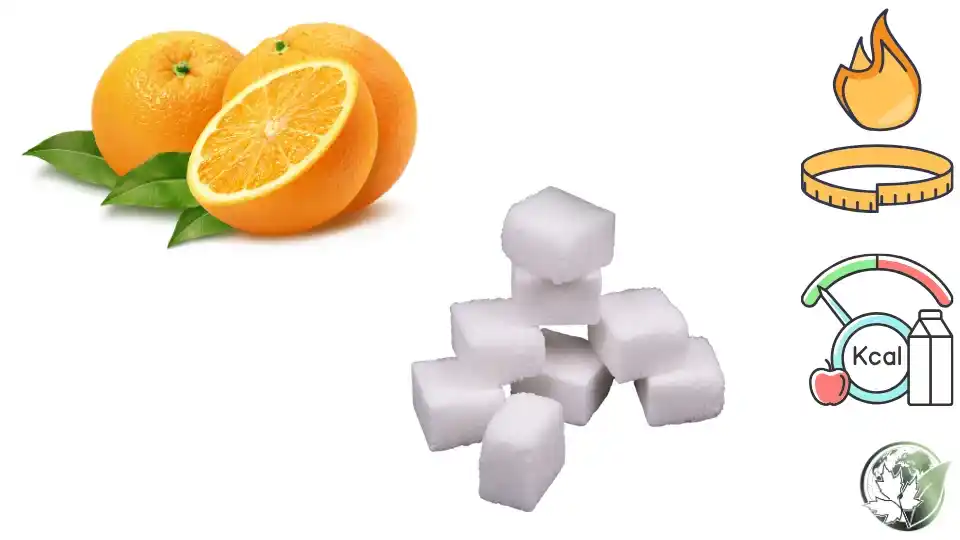
Orange segments are a naturally sweet snack that includes fiber and vitamins
Which Has More Calories: an Orange or a Sugar Cube?
A whole orange has more calories than a single cube, 62 against 16, but far fewer per gram. Four cubes equal an orange in calories, and no one would call four cubes a nutritious snack. The orange gives fiber, vitamin C and water, so it fills you up, while cubes do not. If you are choosing between sweeteners for tea, the cube is the lower-calorie choice per unit (16 versus 6 for one segment, which is not a sweetener at all).
| Comparison | Orange | Sugar cube | Verdict |
|---|---|---|---|
| Per 100 g | 47 | 387 | Orange lower |
| Per piece | 62 (whole) | 16 (cube) | Cube lower |
| Per segment | 6 | 16 | Segment lower |
| Sugar | 12.2 g | 4 g | Cube lower |
| Nutrition | High | None | Orange |
| Fullness | High | None | Orange |
Why Is the Sugar in an Orange Treated Differently From Sugar Cubes?
Sugar in whole fruit is bound within cell walls and fiber, which slows its absorption and requires chewing, so the body gets the glucose more gradually. In health guidelines, sugar inside whole fruit is not counted as free sugar, whereas sugar cubes are counted as added sugar. This is why dietitians encourage fruit and warn against sugary drinks and sweets. Eating an orange with 12 grams of sugar has a different metabolic effect than eating three cubes. Studies link whole fruit with lower risk of type 2 diabetes and heart disease.
| Feature | Orange sugar | Sugar cube |
|---|---|---|
| Matrix | Cell walls, fiber | None |
| Absorption | Gradual | Fast |
| Chewing needed | Yes | No |
| Counted as free sugar | No | Yes |
| Glycemic index | 40-45 | 65 |
| Nutrients | Vitamin C, potassium | None |
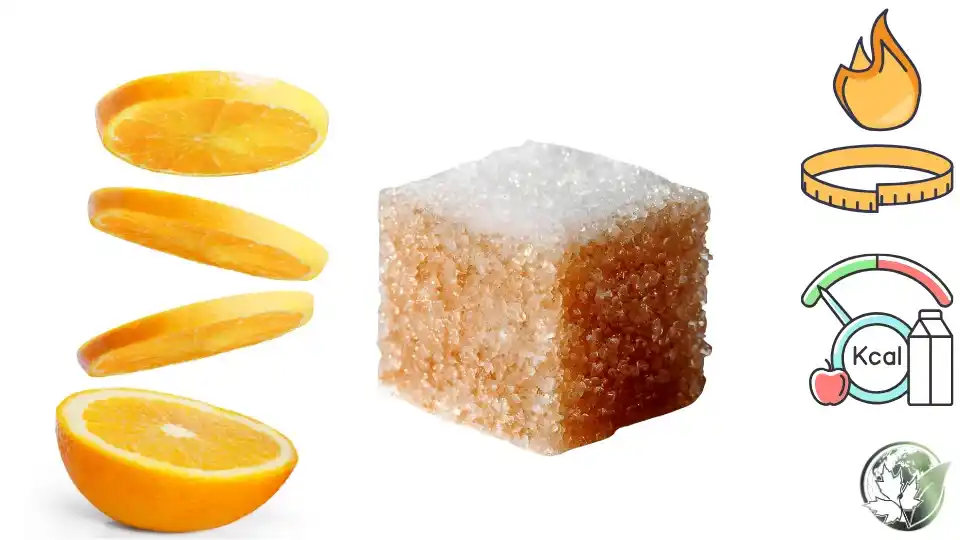
Peeling and eating an orange takes minutes and gives fiber that cubes lack
How Many Sugar Cubes Are in Different Oranges and Segments?
To convert, divide sugar grams by 4. A small orange has 2.3 cubes, a medium 3, a large 4.3 and a cup of segments 4.3. A single segment has 0.3 cube. A glass of juice made from two oranges has 5.2 cubes. This shows that whole fruit has less sugar per serving than juice.
| Item | Sugar | Cubes | Calories |
|---|---|---|---|
| 1 segment | 1.1 g | 0.3 | 6 kcal |
| Half orange | 6.1 g | 1.5 | 31 kcal |
| Small orange | 9 g | 2.3 | 45 kcal |
| Medium orange | 12.2 g | 3 | 62 kcal |
| Large orange | 17.2 g | 4.3 | 87 kcal |
| Glass of juice (2 oranges) | 20.8 g | 5.2 | 112 kcal |
How Does an Orange Affect Blood Sugar Compared With Sugar Cubes?
An orange has a glycemic index of 40 to 45 and a glycemic load of about 5 for a medium fruit. Four sugar cubes (16 grams) have a glycemic index of 65 and a glycemic load of 10. So the orange gives roughly half the blood sugar impact of the same calories in cubes, and it comes with 3 grams of fiber. People with diabetes can usually include one orange as part of a meal or snack, counting about 15 grams of carbohydrate.
| Measure | Medium orange | 4 sugar cubes |
|---|---|---|
| Calories | 62 | 62 |
| Carbohydrate | 15.4 g | 16 g |
| Glycemic index | 40-45 | 65 |
| Glycemic load | About 5 | About 10 |
| Fiber | 3.1 g | 0 g |
| Blood sugar rise | Gradual | Quick |
Can an Orange Replace Sugar Cubes in Tea?
Orange slices or zest can flavor tea without the sugar. A slice of orange in black tea adds about 10 calories and a fruity note, while a cube adds 16 and only sweetness. Squeezing a wedge into hot tea gives 2.5 calories of juice. Some people use orange peel with cinnamon and cloves for a spiced tea that needs no sugar. For sweetness, eating a segment alongside the tea works better than adding to the cup.
| Tea addition | Calories | Sugar | Notes |
|---|---|---|---|
| 1 sugar cube | 16 kcal | 4 g | Pure sweetness |
| 1 thin orange slice | 5 kcal | 0.9 g | Aroma and flavor |
| 1 orange wedge, squeezed | 8 kcal | 1.5 g | Light citrus |
| 1 tsp orange zest | 6 kcal | 0.1 g | Strong aroma |
| 1 segment on the side | 6 kcal | 1.1 g | Sweet bite |
Which Should You Choose?
For a snack, choose the orange, which provides 62 calories, fiber, vitamin C and fullness. For sweetening a drink, a cube gives pure sweetness at 16 calories, but try to reduce them. In terms of health, an orange is clearly better than cubes. If your goal is to cut calories, an orange in place of a sweet snack helps. Eat one or two oranges a day as part of two to three servings of fruit.
| Goal | Better choice | Why |
|---|---|---|
| Healthy snack | Orange | Fiber, vitamins |
| Fullness | Orange | Volume and fiber |
| Lowest calories per piece | Cube (16) or segment (6) | Small |
| Blood sugar control | Orange | Lower GI |
| Sweetening tea | Reduce cubes | Both sweeten |
| Vitamin C | Orange | 70 mg |
How Does an Orange Compare With Other Citrus Fruits?
Citrus fruits are all low in calories and rich in vitamin C. Mandarins and clementines are slightly sweeter per 100 grams, grapefruit is the lowest in sugar, and lemons and limes hardly contain any. Choosing among them depends on taste and use, but the sugar in each is far below what you would get from the same calories in sugar cubes.
| Fruit (1 medium) | Weight | Calories | Sugar | Cubes of sugar |
|---|---|---|---|---|
| Orange | 131 g | 62 | 12.2 g | 3 |
| Mandarin | 88 g | 47 | 9.3 g | 2.3 |
| Clementine | 74 g | 35 | 6.9 g | 1.7 |
| Grapefruit (half) | 123 g | 52 | 8.5 g | 2.1 |
| Pomelo (1 cup) | 190 g | 72 | 10 g | 2.5 |
| Lemon | 58 g | 17 | 1.5 g | 0.4 |
| Lime | 67 g | 20 | 1.1 g | 0.3 |
| Tangerine | 109 g | 50 | 10.4 g | 2.6 |
How Many Calories Does Orange Peel and Zest Add?
Orange zest is the colored outer layer of the peel and is used to flavor cakes, teas, sauces and desserts. A teaspoon (2 grams) has about 6 calories and little sugar, but a strong aroma. The white pith contains fiber and flavonoids, and some people eat it with segments. Candied orange peel, popular in sweets, is a different story: it is boiled in sugar syrup and can contain 300 calories per 100 grams, 6 times the fresh fruit.
| Part or product | Amount | Calories | Sugar |
|---|---|---|---|
| Fresh zest | 1 tsp (2 g) | 6 kcal | 0.1 g |
| Fresh peel | 10 g | 9 kcal | 1.7 g |
| Dried peel | 5 g | 15 kcal | 2 g |
| Candied peel | 30 g | 90 kcal | 21 g |
| Orange marmalade | 1 tbsp (20 g) | 49 kcal | 12.7 g |
| Orange blossom water | 1 tbsp | 0 kcal | 0 g |
What Is the Best Time of Day to Eat an Orange?
An orange can be eaten any time. In the morning it provides vitamin C and hydration with breakfast, with oats or yogurt. As a mid-afternoon snack, it prevents a sweet craving and gives about 60 calories. After dinner, a few segments can replace dessert. Eating oranges close to bedtime is fine for most people, though the acid may bother those with reflux. Pairing with nuts or cheese adds protein and slows sugar absorption.
| Time | Serving | Calories | Pairing |
|---|---|---|---|
| Breakfast | 1 medium orange | 62 | Oats or yogurt |
| Mid-morning | 1 small orange | 45 | Handful of almonds |
| Afternoon | 1 medium orange | 62 | Cheese or nuts |
| After dinner | 4 segments | 23 | Tea |
| Before exercise | 1 medium orange | 62 | Water |
How Many Oranges Equal Common Sugary Foods in Calories?
It helps to compare the calorie cost of sweet snacks with oranges. A single chocolate bar of 45 grams has 235 calories, which is nearly four oranges. A can of soda at 140 calories is more than two. A slice of cake at 350 calories equals five and a half oranges. Seeing sweets in orange equivalents makes the portion more tangible.
| Food | Calories | Oranges equivalent | Sugar cubes (sugar) |
|---|---|---|---|
| Chocolate bar (45 g) | 235 | 3.8 | 6 |
| Can of soda (330 ml) | 139 | 2.2 | 8.8 |
| Slice of cake | 350 | 5.6 | 7.5 |
| Glazed doughnut | 260 | 4.2 | 6 |
| Handful of candies (30 g) | 115 | 1.9 | 6.5 |
| Cookie | 75 | 1.2 | 2 |
| Orange | 62 | 1 | 3 |
What Nutrients Do You Get From One Orange?
One medium orange meets most of the daily need for vitamin C and provides a good share of folate, thiamin and potassium. It also has hesperidin and naringenin, flavonoids studied for their effect on blood vessels, and beta-cryptoxanthin, a carotenoid the body converts to vitamin A. The 3 grams of fiber include pectin, which helps lower cholesterol and feeds gut bacteria. None of these are in a sugar cube.
| Nutrient | 1 medium orange | Daily value | In 4 sugar cubes |
|---|---|---|---|
| Vitamin C | 70 mg | 78% | 0 |
| Folate | 40 mcg | 10% | 0 |
| Thiamin | 0.1 mg | 8% | 0 |
| Potassium | 237 mg | 5% | 0.3 mg |
| Calcium | 52 mg | 4% | 0.2 mg |
| Fiber | 3.1 g | 11% | 0 |
| Vitamin A | 14 mcg | 2% | 0 |
How Does an Orange Help With Weight Management?
Oranges have a low energy density, about 0.47 calories per gram, which means a large volume of food for few calories. The fiber and water slow eating and increase fullness. Studies show that people who eat fruit before a meal tend to eat fewer calories in the meal. Replacing a 235 calorie chocolate bar with an orange saves 173 calories. Doing this five times a week saves 865 calories, about 0.11 kilogram of fat weekly.
| Swap | Calories saved | Per week (5 times) | Per year |
|---|---|---|---|
| Orange instead of chocolate bar | 173 | 865 | 45,000 |
| Orange instead of cookie (2) | 88 | 440 | 22,900 |
| Orange instead of 4 cubes in tea | 0 | 0 | 0 |
| Orange instead of a doughnut | 198 | 990 | 51,500 |
| Orange instead of a soda | 77 | 385 | 20,000 |
What Is the Difference Between Natural Sugar and Added Sugar in Practice?
Natural sugar in oranges comes with fiber and nutrients, while added sugar is just calories. When you eat an orange you also drink the juice inside, chew the pulp and spend time on it. The sugar reaches the blood slowly. With added sugar, such as cubes, the body absorbs it quickly and you may still feel hungry. Over time, a diet high in added sugar is linked to weight gain, tooth decay, fatty liver and type 2 diabetes, while fruit intake is linked to health benefits.
| Aspect | Natural (orange) | Added (cubes) |
|---|---|---|
| Fiber | Yes | None |
| Water | 87% | 0% |
| Vitamins | Yes | None |
| Absorption speed | Slow | Fast |
| Health links | Lower disease risk | Higher disease risk |
| Daily guideline | 2 servings of fruit | Under 25-36 g |
How Should You Choose and Store Oranges?
Pick oranges that feel heavy for their size, with firm skin and no soft spots or mold. Color is not always an indicator of ripeness, as some varieties stay green in warm climates. Store at room temperature for up to a week, or in the refrigerator crisper for three to four weeks. Cut orange should be wrapped and eaten within two days. Wash the peel before zesting or cutting to avoid transferring dirt into the flesh.
| Tip | Detail |
|---|---|
| Choosing | Heavy, firm, smooth skin |
| Avoid | Soft spots, mold, dry skin |
| Room temperature | 5-7 days |
| Refrigerator | 3-4 weeks |
| Cut orange | 2 days, covered |
| Washing | Before cutting |
Can Children Eat Oranges Instead of Sweets?
Yes. Oranges are a good choice for children over one year, cut into small segments with seeds removed. A small orange (45 calories, 9 grams of sugar) is a snack, and replaces cookies and candies. Peeling and eating is also a good fine-motor activity. Offer an orange after school instead of a juice box or sweets. Keep in mind that acidic fruit can irritate diaper rash or mouth sores in some children.
| Age | Serving | Calories | Notes |
|---|---|---|---|
| 1-3 years | 1/2 small orange, segments cut | 23 | Remove seeds |
| 4-8 years | 1 small orange | 45 | Snack |
| 9-13 years | 1 medium orange | 62 | With meal |
| Teen | 1-2 medium oranges | 62-124 | Active diet |
How Many Calories Are in Oranges Prepared in Different Ways?
Preparation changes the numbers. Fresh segments are the lowest. Orange salad with olive oil and nuts adds fat. Dried orange slices are concentrated, with about 320 calories per 100 grams. Canned mandarin segments in syrup have about 70 calories per 100 grams, and in juice about 45. Knowing the form helps you count correctly.
| Form | Amount | Calories | Sugar |
|---|---|---|---|
| Fresh segments | 100 g | 47 kcal | 9.4 g |
| Orange salad with 1 tsp oil and nuts | 1 serving | 140 kcal | 14 g |
| Dried orange slices | 30 g | 96 kcal | 22 g |
| Canned in syrup | 100 g | 70 kcal | 16 g |
| Canned in juice | 100 g | 45 kcal | 10 g |
| Orange sorbet | 1/2 cup | 130 kcal | 30 g |
| Orange cake slice | 1 slice | 330 kcal | 28 g |
| Fresh orange wedge | 1 wedge (20 g) | 9 kcal | 1.9 g |
What Do Common Myths About Oranges and Sugar Get Wrong?
One myth is that fruit sugar is as harmful as table sugar, but whole fruit comes with fiber and has a different effect. Another is that eating fruit at night causes weight gain, but total daily calories matter, not timing. A third is that oranges should be avoided on a diabetic diet, when in fact one orange is a reasonable carbohydrate portion. The reverse myth, that sugar cubes are harmless in small amounts, is also misleading, since they add up quickly in tea.
| Myth | Reality |
|---|---|
| Fruit sugar is as bad as table sugar | Whole fruit has fiber and a gentler effect |
| Oranges make you fat | 62 kcal each, filling |
| Diabetics cannot eat oranges | One orange is acceptable |
| A cube here and there does not matter | 2 cubes x 5 cups = 155 kcal |
| Juice equals fruit | Juice has less fiber, more calories per glass |
How Many Oranges Should You Eat Per Day?
Most health guidelines advise two servings of fruit a day, and one medium orange counts as one. Eating one to two oranges daily gives 62 to 124 calories and meets vitamin C needs. More than three a day is unnecessary and can cause stomach upset in sensitive people because of acidity and fiber.
| Intake | Calories | Vitamin C | Sugar |
|---|---|---|---|
| 1 orange | 62 | 70 mg | 12.2 g |
| 2 oranges | 124 | 140 mg | 24.4 g |
| 3 oranges | 186 | 210 mg | 36.6 g |
Final Comparison at a Glance
| Question | Orange | Sugar cube |
|---|---|---|
| Calories per 100 g | 47 | 387 |
| Calories per piece | 62 (medium) | 16 (cube) |
| Sugar | 12.2 g | 4 g |
| Fiber | 3.1 g | 0 g |
| Vitamin C | 70 mg | 0 |
| Fullness | High | None |
| Best use | Daily snack | Occasional sweetener |
Key Takeaways: Orange vs Sugar Cube Calories
One medium orange has about 62 calories and 12 grams of sugar, equal to about four cubes in calories and three in sugar. An orange has fewer calories per 100 grams, 47 versus 387, and provides fiber and vitamin C. Choose the orange for a snack and cut back on cubes.
Frequently Asked Questions
6 questions answered
How many calories are in one orange?
About 62 for a medium orange.
How many sugar cubes are in an orange?
About three in sugar.
Is orange sugar bad for you?
Not in whole fruit, thanks to fiber.
How many calories are in an orange segment?
About 6.
Is an orange better than sugar?
Yes, for nutrition and fullness.
Can diabetics eat oranges?
Usually one at a time, with a meal.