How Many Calories Are in Orange Juice vs a Sugar Cube? The Quick Answer
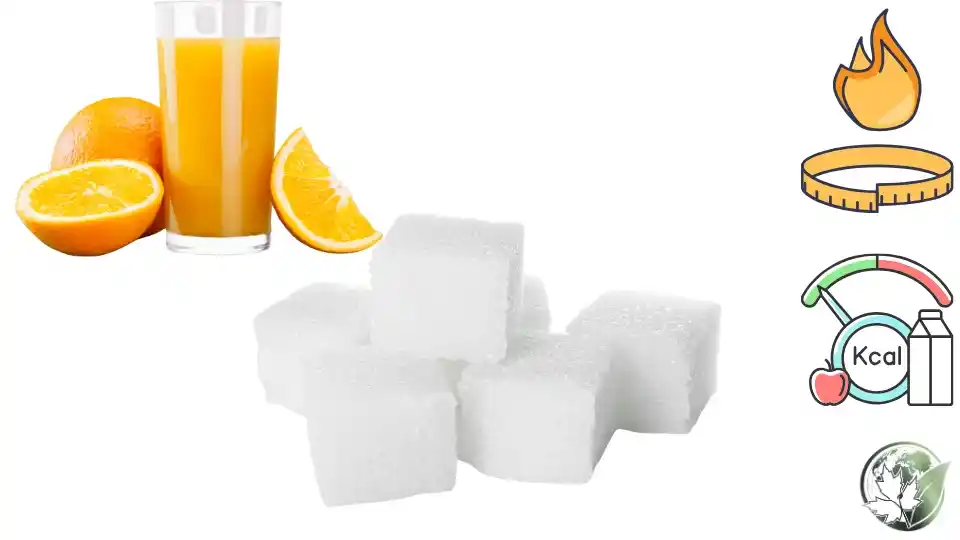
A cup (248 grams) of orange juice has about 112 calories and 21 grams of sugar. A standard sugar cube weighs 4 grams and has 16 calories, all of it sugar. So one glass of juice is equal in calories to seven sugar cubes (112 divided by 16), and in sugar content to about five cubes (21 divided by 4). Per 100 grams, juice has about 45 calories, whereas sugar cubes have 387, nearly nine times as much, because juice is 88 percent water. A single cube is a tiny piece compared with a glass of juice, but it is pure, concentrated sugar.
The comparison helps visualize what is in a drink. Many people see orange juice as a healthy morning drink and cubes as junk, yet the sugar load of one glass is similar to putting five cubes in a cup of tea. The difference is that juice also provides vitamin C, potassium and folate, which cubes lack. This guide compares orange juice and sugar cubes by the glass, by the cube and by 100 grams, converts different juice sizes into cubes, compares nutrients and glycemic index, and offers tips for lowering sugar. Three comparison tables and an FAQ are included.
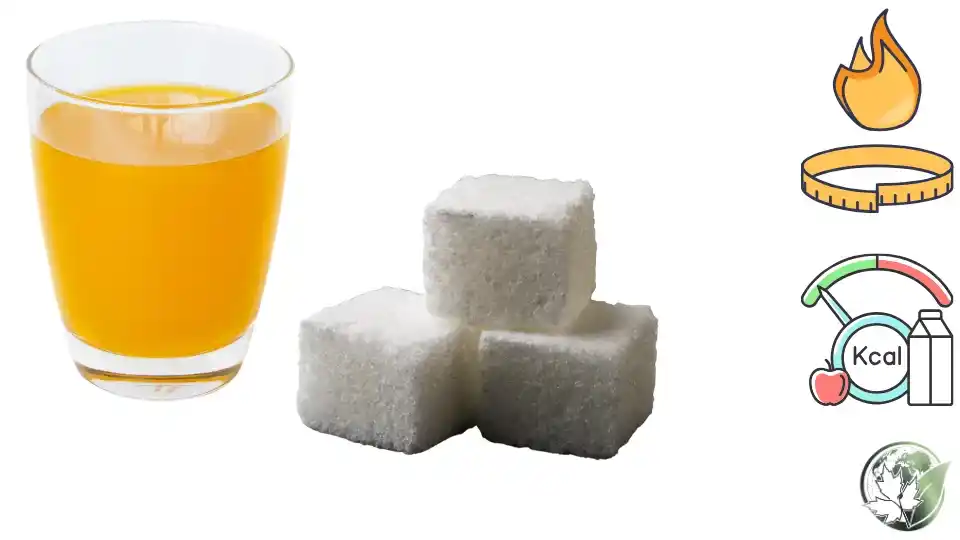
A cup of orange juice contains the sugar of about five cubes
How Many Calories Are in Orange Juice?
| Orange juice | Amount | Calories | Sugar |
|---|---|---|---|
| 100 ml | 100 ml | 45 kcal | 8.4 g |
| Small glass | 150 ml | 68 kcal | 12.6 g |
| 1 cup | 248 g | 112 kcal | 20.8 g |
| Large glass | 350 ml | 157 kcal | 29 g |
| Juice carton | 200 ml | 90 kcal | 17 g |
| Bottle | 500 ml | 225 kcal | 42 g |
| Liter | 1,000 ml | 450 kcal | 84 g |
| Juice shot | 30 ml | 14 kcal | 2.5 g |
How Many Calories Are in Sugar Cubes?
| Sugar cubes | Weight | Calories | Sugar |
|---|---|---|---|
| 1 cube | 4 g | 16 kcal | 4 g |
| 2 cubes | 8 g | 31 kcal | 8 g |
| 3 cubes | 12 g | 47 kcal | 12 g |
| 5 cubes | 20 g | 77 kcal | 20 g |
| 7 cubes | 28 g | 108 kcal | 28 g |
| 10 cubes | 40 g | 155 kcal | 40 g |
| 25 cubes | 100 g | 387 kcal | 100 g |
| Box of 500 g | 500 g | 1,935 kcal | 500 g |
Orange Juice vs Sugar Cube: Calories Compared
| Amount | Orange juice | Sugar cubes | Equivalent |
|---|---|---|---|
| 100 g | 45 kcal | 387 kcal | Juice 88% lower |
| 150 ml glass | 68 kcal | 4.3 cubes | In calories |
| 1 cup | 112 kcal | 7 cubes | In calories |
| 1 cup | 20.8 g sugar | 5.2 cubes | In sugar |
| 350 ml | 157 kcal | 9.8 cubes | In calories |
| 1 liter | 450 kcal | 28 cubes | In calories |
| 1 cube | 16 kcal | 36 ml of juice | Same calories |
| Daily 25 g sugar limit | 300 ml juice | 6 cubes | Equal |
By weight, a cube has nine times more calories than juice. But a glass is 62 times heavier than a cube, so the glass wins in total calories. Calories are 7 cubes, sugar is 5, because juice also has small amounts of protein and other carbohydrates.
Orange Juice vs Sugar Cube: Nutrition Compared
| Per 100 g | Orange juice | Sugar cubes |
|---|---|---|
| Calories | 45 kcal | 387 kcal |
| Carbohydrate | 10.4 g | 100 g |
| Sugar | 8.4 g | 100 g |
| Water | 88 g | 0 g |
| Protein | 0.7 g | 0 g |
| Vitamin C | 50 mg | 0 mg |
| Potassium | 200 mg | 2 mg |
| Folate | 30 mcg | 0 mcg |
| Antioxidants | Hesperidin, carotenoids | None |
| Glycemic index | 50-55 | 65 |
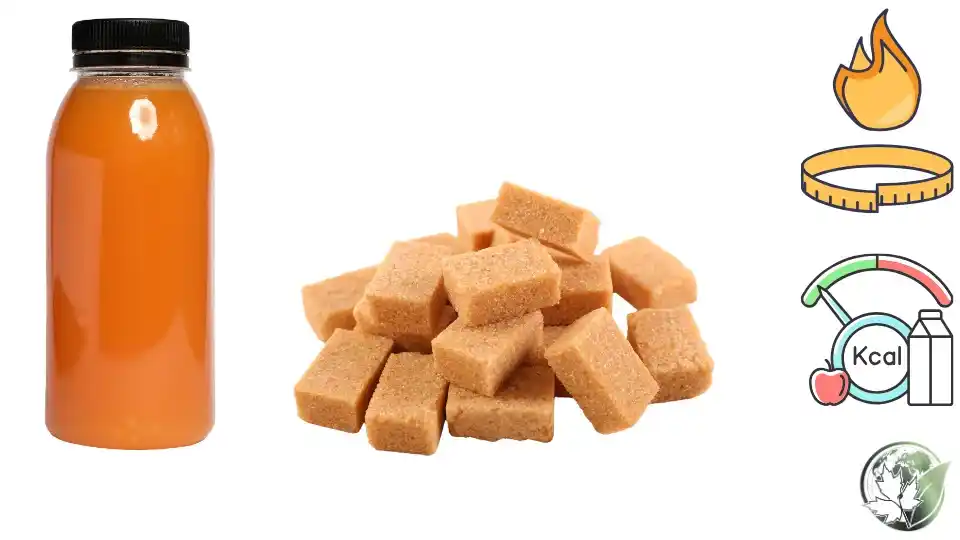
Orange juice provides vitamin C, potassium and folate along with its sugar
Which Has More Calories: Orange Juice or a Sugar Cube?
Per gram, a sugar cube has far more calories. Per serving, a glass of orange juice has far more. For calorie awareness, the cube equivalent is helpful: a 200 milliliter juice carton (90 calories) is the same as 5.6 cubes in calories and 4.3 cubes in sugar. Because juice also gives vitamin C and potassium, it is more nutritious than the same sugar from cubes, but it is not low in sugar.
| Comparison | Orange juice | Sugar cube | Verdict |
|---|---|---|---|
| Per 100 g | 45 | 387 | Juice lower |
| Per typical serving | 112 (glass) | 16 (cube) | Cube lower |
| Sugar per serving | 20.8 g | 4 g | Cube lower |
| Nutrients | Yes | None | Juice |
| Fiber | 0.5 g | 0 g | Both low |
| Fullness | Low | None | Both low |
How Many Sugar Cubes Are in Different Sizes of Juice?
To visualize the sugar, divide the grams of sugar by 4. A shot of 30 milliliters has 0.6 cubes, a small 150 milliliter glass has 3.2, a cup 5.2 and a 500 milliliter bottle 10.5. People who drink two glasses a day take in about 10 cubes of sugar from juice alone, equal to 42 grams, more than the 36 grams advised as a limit of added sugar for men.
| Serving | Sugar | Cubes | Calories |
|---|---|---|---|
| 30 ml shot | 2.5 g | 0.6 | 14 kcal |
| 150 ml small glass | 12.6 g | 3.2 | 68 kcal |
| 200 ml carton | 17 g | 4.2 | 90 kcal |
| 248 ml cup | 20.8 g | 5.2 | 112 kcal |
| 350 ml large glass | 29 g | 7.3 | 157 kcal |
| 500 ml bottle | 42 g | 10.5 | 225 kcal |
| 1 liter | 84 g | 21 | 450 kcal |
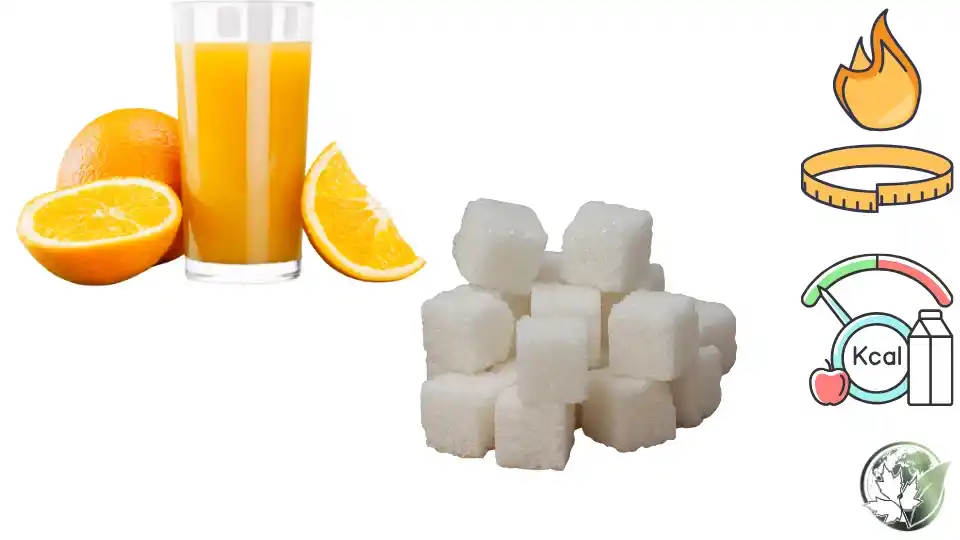
Five sugar cubes next to a glass show the sugar in one cup of orange juice
Is the Sugar in Orange Juice Different From Sugar Cubes?
Orange juice sugar is made up of sucrose, fructose and glucose in nearly equal parts, much like the sucrose in cubes, which splits into glucose and fructose in digestion. The body handles them in a similar way. The difference is the package: juice comes with vitamin C, potassium and plant compounds, and the sugar is naturally part of the fruit, so it is classed as free sugar by the World Health Organization but not as added sugar on US labels. Sugar cubes provide nothing besides energy.
| Sugar type | Orange juice | Sugar cubes |
|---|---|---|
| Sucrose | 4.3 g per 100 ml | 100% |
| Fructose | 2.1 g | 50% as sucrose |
| Glucose | 2.0 g | 50% as sucrose |
| Origin | Fruit | Cane or beet |
| Label category | Total sugar | Total and added sugar |
| WHO class | Free sugar | Free sugar |
How Does Each Affect Blood Sugar?
A glass of orange juice has a glycemic index of 50 to 55 and a glycemic load of about 12. Five sugar cubes (20 grams) have a glycemic index of 65 and a glycemic load of 13. So blood sugar effects are comparable. Juice is a medium-glycemic food, and this is why people with diabetes are advised to limit it. A small glass of 120 milliliters can be used to treat hypoglycemia, since it acts fast.
| Measure | 1 cup juice | 5 sugar cubes |
|---|---|---|
| Carbohydrate | 26 g | 20 g |
| Glycemic index | 50-55 | 65 |
| Glycemic load | About 12 | About 13 |
| Speed of rise | Fast | Fast |
| Extra nutrients | Vitamin C, potassium | None |
Which Should You Choose for Everyday Life?
If you are choosing between drinking a glass of juice and eating sugar cubes, juice is the more nutritious. But if you are choosing between juice and a whole orange or water, the better choices are the orange or water. A good rule is to treat a glass of juice as a sweet drink equal to five cubes of sugar and to count it as part of your daily sugar allowance. Limit it to a small glass, ideally with a meal.
| Choice | Calories | Sugar cubes | Verdict |
|---|---|---|---|
| Water | 0 | 0 | Best daily drink |
| Whole orange | 62 | 3 | Better than juice |
| Juice, 150 ml | 68 | 3.2 | Acceptable |
| Juice, 350 ml | 157 | 7.3 | Too much sugar |
| Soft drink, 330 ml | 139 | 8.8 | Avoid |
| 5 cubes | 77 | 5 | No nutrients |
How Do Orange Juice and Sugar Cubes Compare With Other Drinks?
A useful way to judge a drink is to count the cubes. Cola, sports drinks, flavored milk and fruit juices all hide sugar in liquid form. Orange juice has less sugar than cola per cup but more than milk, and it has more nutrients than either soda or sports drinks. Water, unsweetened tea and black coffee have none. The table shows common drinks in terms of cubes so you can compare at a glance.
| Drink (1 cup, 240 ml) | Calories | Sugar | Cubes |
|---|---|---|---|
| Water | 0 | 0 g | 0 |
| Unsweetened tea | 2 | 0 g | 0 |
| Skim milk | 83 | 12 g | 3 |
| Orange juice | 112 | 20.8 g | 5.2 |
| Apple juice | 114 | 24 g | 6 |
| Cola | 105 | 26 g | 6.5 |
| Sports drink | 60 | 14 g | 3.5 |
| Energy drink | 112 | 27 g | 6.8 |
| Grape juice | 152 | 36 g | 9 |
| Chocolate milk | 208 | 24 g | 6 |
How Many Calories Do You Save by Cutting Juice or Cubes?
If you drink one glass of orange juice every morning, you take in 112 calories, which is 40,900 a year. Replacing it with water saves all of them, around 5.3 kilograms of body fat if nothing else changes. Cutting the glass to 120 milliliters saves 20,400. Removing three cubes from daily tea saves 47 calories, or 17,000 a year. Both habits matter, and both are easy to change gradually.
| Change | Calories saved per day | Per year |
|---|---|---|
| Juice to water | 112 | 40,900 |
| Juice to half glass | 56 | 20,400 |
| Juice to whole orange | 50 | 18,300 |
| 3 cubes less in tea | 47 | 17,000 |
| Both: half juice and 3 fewer cubes | 103 | 37,600 |
Is Orange Juice Good for Colds?
Orange juice is a source of vitamin C, and people often drink it when ill. Research shows vitamin C does not prevent colds in most people, though it may shorten them slightly. Most people already get enough vitamin C from a varied diet, and the body excretes excess. A whole orange provides the same vitamin C, and fluids like water and soup are as important. Sugar in juice does not worsen a cold, but a sore throat may be irritated by the acid.
| Remedy | Calories | Vitamin C | Notes |
|---|---|---|---|
| Orange juice, 1 cup | 112 kcal | 124 mg | Acidic for sore throat |
| Orange, 1 medium | 62 kcal | 70 mg | Fiber too |
| Lemon in warm water | 5 kcal | 20 mg | Soothing |
| Chicken soup, 1 cup | 75 kcal | 0 mg | Fluids and salt |
| Tea with honey, 1 tsp | 23 kcal | 0 mg | Soothes cough |
How Can You Make Juice With Less Sugar?
Mix half orange juice with half water or sparkling water. Blend a whole orange with its pulp and add ice to keep the fiber. Add lemon or lime for tartness, which lowers the perceived sweetness. Combine with vegetable juices like carrot, which has 94 calories per cup. Use a small glass, a straw and drink with a meal. These approaches cut the sugar by a third to a half.
| Method | Calories per cup | Sugar | Cubes |
|---|---|---|---|
| Plain juice | 112 | 20.8 g | 5.2 |
| Half juice, half water | 56 | 10.4 g | 2.6 |
| Juice + sparkling water + lemon | 60 | 11 g | 2.8 |
| Blended whole orange | 85 | 17 g | 4.3 |
| Orange and carrot juice (1:1) | 103 | 15 g | 3.8 |
| Orange and cucumber (1:1) | 60 | 11 g | 2.8 |
What Do Health Guidelines Say About Juice and Added Sugar?
The World Health Organization advises that free sugars, including those in fruit juice, should be less than 10 percent of daily energy, with a further benefit if below 5 percent. For an adult eating 2,000 calories, 10 percent is 50 grams, or 12.5 cubes, and 5 percent is 25 grams, or 6 cubes. One cup of orange juice uses up to 42 percent of the 50 gram limit, and 83 percent of the 25 gram limit. The American Heart Association suggests 25 grams of added sugar for women and 36 for men, and notes that fruit juice does not count as added sugar if it is 100 percent juice, but advises limiting it.
| Daily energy | 10% limit | In cubes | 5% limit | In cubes |
|---|---|---|---|---|
| 1,500 kcal | 37.5 g | 9.4 | 18.8 g | 4.7 |
| 1,800 kcal | 45 g | 11.3 | 22.5 g | 5.6 |
| 2,000 kcal | 50 g | 12.5 | 25 g | 6.3 |
| 2,500 kcal | 62.5 g | 15.6 | 31.3 g | 7.8 |
| Share used by 1 cup juice (2,000 kcal) | 42% | - | 83% | - |
How Much Orange Juice Is Safe for Children?
Children are more affected by sugar because their daily limits are smaller and their teeth are developing. Pediatric groups recommend no juice for infants under one year, up to 120 milliliters for ages 1 to 3, up to 180 milliliters for ages 4 to 6, and up to 240 milliliters for ages 7 to 18. A child who drinks a 200 milliliter carton (4.2 cubes) every day and has other sweets can exceed the limit easily. Offering whole fruit and water is better.
| Age | Maximum juice per day | Calories | Cubes of sugar |
|---|---|---|---|
| Under 1 year | None | 0 | 0 |
| 1-3 years | 120 ml | 54 kcal | 2.5 |
| 4-6 years | 180 ml | 81 kcal | 3.8 |
| 7-18 years | 240 ml | 108 kcal | 5 |
| Adults | 150-240 ml | 68-108 kcal | 3.2-5 |
What Is Hidden in Juice Drinks and Concentrates?
Not everything labeled orange is 100 percent juice. Orange drinks, nectars and cocktails may contain 10 to 50 percent juice, with added sugar, water, flavorings and colorings. The sugar content of such drinks is often higher than that of real juice. Squash and cordial are concentrated and need dilution; when diluted according to the label, they have around 20 to 40 calories per cup. Always check the ingredient list for juice percentage and the sugar per 100 milliliters.
| Product | Juice content | Sugar per 100 ml | Calories per cup |
|---|---|---|---|
| 100% orange juice | 100% | 8.4 g | 112 |
| Orange nectar | 50% | 11 g | 135 |
| Orange juice drink | 10-25% | 10 g | 130 |
| Orange soda | 0-5% | 11 g | 150 |
| Orange squash (diluted 1:5) | 10% | 3 g | 35 |
| Sugar-free squash | 5-10% | 0.2 g | 5 |
How Does Orange Juice Compare to Eating Sugar Cubes in Tea?
In many homes, sugar cubes sweeten tea throughout the day. Drinking five cups of tea with two cubes each is ten cubes, 40 grams of sugar and 155 calories, which is about the sugar of two glasses of juice. People who drink both tea and juice may take in 15 or more cubes without realizing. Keeping a daily tally for a few days reveals where the sugar comes from.
| Habit | Cubes of sugar | Calories |
|---|---|---|
| 3 teas with 2 cubes | 6 | 93 kcal |
| 5 teas with 2 cubes | 10 | 155 kcal |
| 1 glass of juice | 5.2 | 112 kcal |
| 3 teas + 1 juice | 11.2 | 205 kcal |
| 5 teas + 2 juices | 20.4 | 379 kcal |
| WHO 5% limit | 6.3 | 100 kcal |
How Do Orange Juice and Sugar Cubes Affect Energy and Hunger?
Both give a fast rise in blood sugar, followed in some people by a dip. Because juice has no protein or fat and little fiber, the sugar from a glass is absorbed quickly, and hunger may return within an hour or two. Pairing juice with a meal that includes protein, such as eggs or yogurt, slows absorption. Sugar cubes taken alone cause a similar quick spike. For steady energy, whole oranges, nuts and yogurt work better than either.
| Pairing | Effect on absorption | Calories |
|---|---|---|
| Juice alone | Fast | 112 |
| Juice with eggs | Slower | 112 + 143 |
| Juice with yogurt | Slower | 112 + 100 |
| Whole orange | Moderate | 62 |
| Cubes in tea alone | Fast | 31 for 2 |
| Orange + handful of almonds | Slow | 62 + 80 |
How Do You Estimate the Sugar in Any Drink Using Cubes?
Look at the nutrition label for grams of sugar per serving, then divide by 4. A 330 milliliter bottle with 35 grams of sugar contains 8.75 cubes. If the label gives sugar per 100 milliliters, multiply by the volume in hundreds, then divide by 4. This simple habit makes sugar visible and helps you pick lower-sugar drinks. A drink with less than 5 grams per 100 milliliters is considered high sugar by UK traffic-light labels, and below 2.5 grams is low.
| Label sugar per 100 ml | Level | Cubes per 250 ml |
|---|---|---|
| 0 g | None | 0 |
| Under 2.5 g | Low | Under 1.6 |
| 2.5-6.3 g | Medium | 1.6-3.9 |
| Over 6.3 g | High | Over 3.9 |
| 8.4 g (orange juice) | High | 5.3 |
| 10.6 g (cola) | High | 6.6 |
Are There Any Advantages to Orange Juice Over Plain Sugar?
Yes, in several respects. Orange juice contains vitamin C, potassium, folate, thiamin and the flavonoid hesperidin, which has been linked to better blood vessel function in small studies. Fortified juices add calcium and vitamin D. People who struggle to eat fruit may reach their daily intake with a small glass. These benefits do not cancel the sugar, but they do mean juice is better than candy or soda when you want something sweet.
| Nutrient | Juice (1 cup) | 5 sugar cubes | Daily value in juice |
|---|---|---|---|
| Vitamin C | 124 mg | 0 | 138% |
| Potassium | 496 mg | 0.5 mg | 11% |
| Folate | 74 mcg | 0 | 19% |
| Thiamin | 0.2 mg | 0 | 17% |
| Magnesium | 27 mg | 0 | 6% |
| Hesperidin | 20-40 mg | 0 | - |
Final Comparison at a Glance
| Question | Orange juice | Sugar cube |
|---|---|---|
| Calories per 100 g | 45 | 387 |
| Calories per typical serving | 112 (cup) | 16 (cube) |
| Sugar per serving | 20.8 g | 4 g |
| Cubes in one cup | 5.2 | - |
| Vitamins | Yes | None |
| Best for | Occasional drink | Precise sweetening |
What Is the Bottom Line?
Think of a glass of orange juice as a drink that holds about five cubes of sugar, plus vitamins. If you enjoy it, keep to a small glass, drink it with food, and give priority to whole fruit. If you take sugar cubes in tea, reduce them gradually. The two together can add up to the daily limit before lunch.
| Rule | Action |
|---|---|
| Juice size | 120-150 ml |
| Juice frequency | A few times a week |
| Tea sweetener | 0-1 cube |
| Daily water | 6-8 glasses |
| Whole fruit | 2 servings a day |
Key Takeaways: Orange Juice vs Sugar Cube Calories
A cup of orange juice has about 112 calories and 21 grams of sugar, equal to about seven cubes in calories and five in sugar. Juice is lower in calories per 100 grams but delivers sugar quickly. Choose whole oranges, and keep juice to a small glass.
Frequently Asked Questions
6 questions answered
How many sugar cubes are in a glass of orange juice?
About five.
How many calories are in a sugar cube?
About 16.
Is orange juice healthier than sugar?
It has vitamins, but also lots of sugar.
How much orange juice equals one cube?
About 36 ml in calories.
Can diabetics drink orange juice?
Only in small amounts, after medical advice.
Is a whole orange better?
Yes, it has fiber and fewer calories.