How Many Calories Are in Orange Juice vs a Whole Orange? The Quick Answer
A cup (248 grams) of orange juice has about 112 calories, 21 grams of sugar, 2 grams of protein and 0.5 gram of fiber. One medium orange (131 grams) has about 62 calories, 12 grams of sugar and 3.1 grams of fiber. Per 100 grams the two are almost the same, 45 calories for juice and 47 for the fruit, because both are mostly water and natural fruit sugar. The reason a glass of juice has nearly twice the calories of one orange is the amount: a cup of fresh juice takes about two to three oranges to make, and you drink it in a minute or two.
This is the main difference between juice and fruit. The glass delivers the sugar of two or three oranges without the fiber that slows eating and fills you up. This guide compares orange juice and whole oranges by the glass, by the carton and by 100 grams, looks at vitamin C, potassium, folate and fiber, converts the sugar into sugar cubes, and explains who should choose which. Three comparison tables and an FAQ are included.
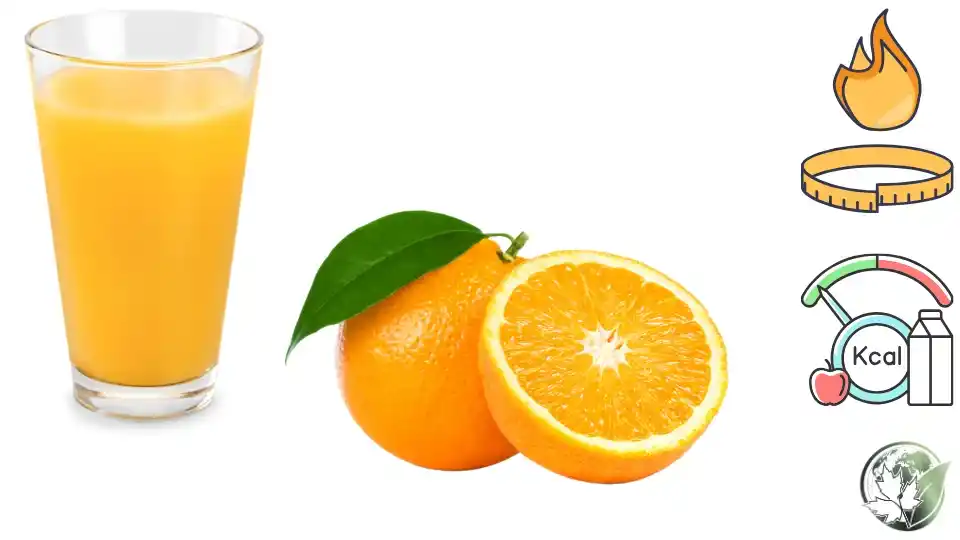
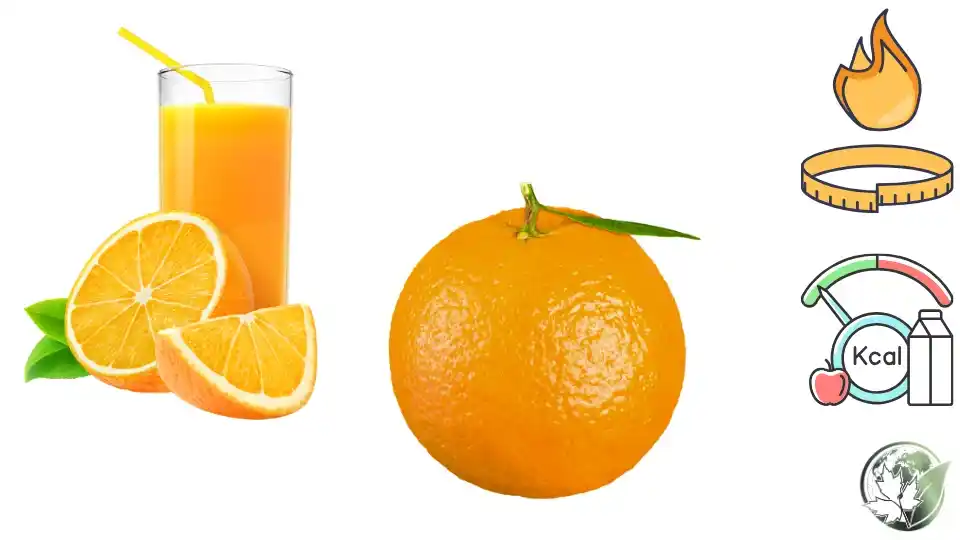
A cup of orange juice has 112 calories, while one medium orange has 62
How Many Calories Are in Orange Juice?
| Orange juice | Amount | Calories | Sugar |
|---|---|---|---|
| Fresh squeezed | 100 ml | 45 kcal | 8.4 g |
| Fresh squeezed | 1 small glass (150 ml) | 68 kcal | 12.6 g |
| Fresh squeezed | 1 cup (248 g) | 112 kcal | 20.8 g |
| Fresh squeezed | 1 large glass (350 ml) | 157 kcal | 29 g |
| Store-bought (not from concentrate) | 1 cup | 110 kcal | 21 g |
| From concentrate | 1 cup | 112 kcal | 21 g |
| Sweetened orange drink | 1 cup | 130 kcal | 28 g |
| Juice carton | 200 ml | 90 kcal | 17 g |
How Many Calories Are in a Whole Orange?
| Orange | Weight | Calories | Sugar | Fiber |
|---|---|---|---|---|
| Small orange | 96 g | 45 kcal | 9 g | 2.3 g |
| Medium orange | 131 g | 62 kcal | 12.2 g | 3.1 g |
| Large orange | 184 g | 87 kcal | 17.2 g | 4.4 g |
| 1 cup segments | 180 g | 85 kcal | 17 g | 4.3 g |
| Half an orange | 65 g | 31 kcal | 6 g | 1.5 g |
| One segment | 12 g | 6 kcal | 1.1 g | 0.3 g |
| Orange 100 g | 100 g | 47 kcal | 9.4 g | 2.4 g |
| Peeled, 2 oranges | 262 g | 124 kcal | 24.4 g | 6.2 g |
Orange Juice vs Orange: Calories Compared
| Amount | Orange juice | Whole orange | Difference |
|---|---|---|---|
| 100 g | 45 kcal | 47 kcal | About equal |
| 1 cup vs 1 medium orange | 112 kcal | 62 kcal | Juice +50 |
| 1 cup vs 2 oranges | 112 kcal | 124 kcal | Equal |
| Sugar: cup vs 1 orange | 21 g | 12 g | Juice +9 g |
| Fiber: cup vs 1 orange | 0.5 g | 3.1 g | Fruit +2.6 g |
| Oranges needed for 1 cup juice | 2-3 | - | - |
| Time to consume | 1-2 minutes | 5-10 minutes | - |
| Sugar cubes (cup vs orange) | 5.2 | 3 | Juice +2.2 |
If you compare the same amount of fruit, two oranges (124 calories) and a cup of juice (112) are about equal. The difference is practical: most people eat one orange but drink a full glass made from two or three, so the glass delivers about 80 percent more calories.
Orange Juice vs Orange: Nutrition Compared
| Per serving | Orange juice (1 cup) | Orange (1 medium) |
|---|---|---|
| Calories | 112 kcal | 62 kcal |
| Carbohydrate | 26 g | 15.4 g |
| Sugar | 20.8 g | 12.2 g |
| Fiber | 0.5 g | 3.1 g |
| Protein | 1.7 g | 1.2 g |
| Fat | 0.5 g | 0.2 g |
| Vitamin C | 124 mg | 70 mg |
| Potassium | 496 mg | 237 mg |
| Folate | 74 mcg | 40 mcg |
| Calcium | 27 mg | 52 mg |
| Glycemic index | 50-55 | 40-45 |
| Glycemic load | 12 | 5 |
It takes two to three oranges to make one glass of juice, but without the fiber of the fruit
Which Has More Calories: Orange Juice or an Orange?
A glass of juice has more calories than one orange, 112 versus 62, but a similar amount per 100 grams. What matters most for weight is fullness. Studies show that people feel less satisfied after drinking juice than after eating the same fruit, and tend to eat more later. Chewing, fiber and volume in a whole orange slow intake, so 62 calories of fruit often satisfy for longer than 112 calories of juice. If you drink juice, a small glass of 120 milliliters (54 calories) is a reasonable portion.
| Comparison | Juice | Orange | Verdict |
|---|---|---|---|
| Per 100 g | 45 | 47 | Equal |
| Per typical serving | 112 (cup) | 62 (1 fruit) | Orange lower |
| Fiber | 0.5 g | 3.1 g | Orange |
| Fullness | Low | High | Orange |
| Vitamin C | 124 mg | 70 mg | Juice per cup, equal per orange |
| Convenience | High | Medium | Juice |
Why Does Orange Juice Feel Like It Has Fewer Calories Than It Does?
Liquid calories do not trigger the same fullness signals as solid food. Drinking 250 milliliters of juice takes about a minute and requires no chewing, so it passes quickly through the stomach. Research suggests people do not compensate by eating less at the next meal. A whole orange takes five to ten minutes, and its fiber and volume expand in the stomach. For the same 112 calories, you could eat nearly two oranges and feel much fuller.
| Factor | Orange juice | Whole orange |
|---|---|---|
| Chewing | None | Yes |
| Fiber | 0.5 g per cup | 3.1 g each |
| Time to finish | 1-2 min | 5-10 min |
| Stomach emptying | Fast | Slower |
| Fullness hormones | Weak response | Stronger response |
| Typical intake | 250-350 ml | 1 fruit |
A whole orange supplies fiber and vitamin C for about 62 calories
How Much Vitamin C Do You Get From Each?
Both are excellent sources of vitamin C. One medium orange supplies about 70 milligrams, or 78 percent of the daily value for adults. A cup of juice has around 124 milligrams, or 138 percent, because it contains the vitamin C of several oranges. Most people need only 75 to 90 milligrams a day, so one orange covers the need. Fresh juice loses vitamin C in storage; a carton may lose 5 to 10 percent after opening, and many brands add vitamin C back.
| Source | Vitamin C | Daily value | Calories |
|---|---|---|---|
| 1 medium orange | 70 mg | 78% | 62 kcal |
| 1 cup orange juice | 124 mg | 138% | 112 kcal |
| 1/2 cup juice | 62 mg | 69% | 56 kcal |
| 1 cup strawberries | 89 mg | 99% | 49 kcal |
| 1 kiwi | 64 mg | 71% | 42 kcal |
| 1 red pepper (half) | 95 mg | 106% | 18 kcal |
How Many Sugar Cubes Are in Orange Juice?
Natural sugar in juice behaves much like added sugar in the body when you drink a lot of it. A cup of orange juice has 20.8 grams of sugar, equal to about 5.2 cubes of 4 grams each. A cup of cola has about 26 grams, or 6.5 cubes. A whole orange has 12.2 grams, or 3 cubes, but spread over 10 minutes with fiber. The World Health Organization counts the sugar in fruit juice as free sugar, and suggests limiting it.
| Drink or fruit | Sugar | Sugar cubes | Calories |
|---|---|---|---|
| 1 medium orange | 12.2 g | 3 | 62 kcal |
| 150 ml orange juice | 12.6 g | 3.2 | 68 kcal |
| 1 cup orange juice | 20.8 g | 5.2 | 112 kcal |
| 350 ml orange juice | 29 g | 7.3 | 157 kcal |
| 1 cup cola | 26 g | 6.5 | 105 kcal |
| 1 cup whole milk | 12 g | 3 | 149 kcal |
Is Orange Juice Healthy?
Orange juice has real nutrients, especially vitamin C, potassium and folate, and 100 percent juice is better than sugary soft drinks. Studies link small amounts of 100 percent juice to no major harm, but large daily amounts are tied to weight gain, especially in children. Health authorities suggest limiting juice to 120 milliliters a day for ages 1 to 3, 120 to 180 for ages 4 to 6, and 240 for ages 7 and over, and to prefer whole fruit. Juice drinks, cocktails and nectars often contain added sugar, and are not equal to 100 percent juice.
| Daily limit | Juice |
|---|---|
| Age 1-3 | 120 ml (54 kcal) |
| Age 4-6 | 120-180 ml (54-81 kcal) |
| Age 7-18 | 240 ml (108 kcal) |
| Adults | 150-240 ml (68-108 kcal) |
How Does Orange Juice Affect Blood Sugar?
Orange juice has a glycemic index of about 50 to 55, versus 40 to 45 for a whole orange. The glycemic load of a cup of juice is about 12, which is medium, and about 5 for one orange, which is low. Because juice lacks fiber, the sugar enters the blood faster, giving a quicker rise. People with diabetes are generally advised to eat the whole fruit, and to use juice only to treat low blood sugar, when its quick action is useful.
| Measure | Juice (1 cup) | Orange (1 medium) |
|---|---|---|
| Glycemic index | 50-55 | 40-45 |
| Glycemic load | About 12 | About 5 |
| Carbohydrate | 26 g | 15.4 g |
| Speed of absorption | Fast | Slower |
| Use for low blood sugar | Yes (120 ml) | Slow |
Which Is Better for Weight Loss?
The whole orange is better: it has fewer calories per serving, more fiber and more fullness. If you drink a cup of juice daily and swap it for an orange, you save 50 calories a day, around 18,000 calories a year, or 2.4 kilograms of fat. If you still want juice, dilute it half and half with water or sparkling water, which cuts the calories to 56 per cup. Choose pulp-rich juice, which has slightly more fiber.
| Option | Calories | Fiber | Fullness |
|---|---|---|---|
| 1 medium orange | 62 | 3.1 g | High |
| 1 cup juice | 112 | 0.5 g | Low |
| 1 cup juice with pulp | 110 | 1 g | Low-medium |
| Juice diluted 1:1 | 56 | 0.25 g | Low |
| 2 oranges | 124 | 6.2 g | Very high |
How Do Fresh, Store-Bought and Concentrate Juices Differ?
Fresh-squeezed juice contains only the juice of the fruit, with 45 calories per 100 milliliters and a little pulp. Not-from-concentrate cartons are pasteurized and stored, with a similar calorie count and often added vitamin C. Concentrate-based juices are rehydrated and can be sweeter. Juice drinks, cocktails and nectars add water and sugar, and may have 15 to 30 percent juice. Always read the label for the words 100 percent juice and check the sugar per 100 milliliters.
| Type (1 cup) | Calories | Sugar | Added sugar |
|---|---|---|---|
| Fresh-squeezed | 112 kcal | 20.8 g | 0 g |
| Not from concentrate | 110 kcal | 21 g | 0 g |
| From concentrate | 112 kcal | 21 g | 0 g |
| Reduced-sugar juice | 60 kcal | 11 g | 0 g |
| Orange nectar | 140 kcal | 32 g | 10 g |
| Orange soft drink | 150 kcal | 38 g | 38 g |
| Orange squash, diluted | 40 kcal | 9 g | 9 g |
How Many Calories Do You Take in From Juice Over a Year?
A daily cup of orange juice adds 112 calories, which is 40,900 calories a year. If it replaces nothing in the diet, that equals about 5.3 kilograms of body fat. Replacing it with a whole orange cuts the total to 22,600 calories, saving around 18,300. Drinking half a glass saves 20,400. These calculations assume the rest of the diet stays the same, but they show how small daily habits matter.
| Habit | Calories per day | Per year | Fat equivalent |
|---|---|---|---|
| 1 cup juice daily | 112 | 40,900 | 5.3 kg |
| 1/2 cup juice daily | 56 | 20,400 | 2.7 kg |
| 1 orange daily | 62 | 22,600 | 2.9 kg |
| 2 oranges daily | 124 | 45,300 | 5.9 kg |
| Juice diluted 1:1 daily | 56 | 20,400 | 2.7 kg |
What About Orange Peel, Pulp and Segments?
Orange pulp and the white pith contain most of the fiber and flavonoids such as hesperidin. Juicing removes much of these. Eating the segments with the membrane, not removing the white strands, adds fiber. Orange zest has very few calories (6 per teaspoon) and a lot of aroma. Some people blend a whole peeled orange into a smoothie to keep the fiber, which results in a drink with about 62 calories per orange.
| Part | Calories | What it provides |
|---|---|---|
| Segments (1 cup) | 85 kcal | Fiber, vitamin C |
| Pith (white) | Trace | Hesperidin, fiber |
| Zest (1 tsp) | 6 kcal | Aroma, flavonoids |
| Pulp (3 tbsp in juice) | 10 kcal | Some fiber |
| Blended whole orange | 62 kcal | Full fiber |
Which Is Better Before or After Exercise?
Juice offers quick carbohydrates, so a small glass (150 milliliters, 68 calories) can top up energy before a morning run or after hard exercise, along with potassium. The whole orange provides a gentler release and is easier on the stomach for some. During long events, athletes may drink diluted juice for fluid and sugar. For general fitness without long sessions, water is enough.
| Situation | Better choice | Serving | Calories |
|---|---|---|---|
| Before a short run | Orange | 1 medium | 62 kcal |
| After a long ride | Juice | 250 ml | 112 kcal |
| During a marathon | Diluted juice | 500 ml | 112 kcal |
| Daily snack | Orange | 1 medium | 62 kcal |
| Hot day, hydration | Water with orange slices | 1 glass | 5 kcal |
How Do Oranges and Orange Juice Compare With Other Fruits and Juices?
Orange juice sits in the middle of fruit juices in calories. Apple juice has a little more at 114 per cup, grape juice has 152, and tomato juice only 41. Whole fruits of equivalent weight have fewer calories than their juices per serving because you eat less. Oranges also contain more fiber than apples of the same weight.
| Item | Calories | Sugar | Fiber |
|---|---|---|---|
| Orange juice, 1 cup | 112 | 20.8 g | 0.5 g |
| Apple juice, 1 cup | 114 | 24 g | 0.5 g |
| Grape juice, 1 cup | 152 | 36 g | 0.3 g |
| Pomegranate juice, 1 cup | 134 | 32 g | 0.2 g |
| Tomato juice, 1 cup | 41 | 6 g | 1.0 g |
| Orange, 1 medium | 62 | 12.2 g | 3.1 g |
| Apple, 1 medium | 95 | 19 g | 4.4 g |
| Banana, 1 medium | 105 | 14 g | 3.1 g |
Does Orange Juice Affect Teeth and Medication?
Orange juice is acidic, with a pH around 3.5, and frequent sipping can wear tooth enamel. Drinking it with a meal, using a straw and rinsing the mouth with water afterward reduces the risk. Grapefruit juice interacts with many medicines, but orange juice does so far less. Even so, it can reduce the absorption of some drugs such as certain antibiotics and thyroid or cholesterol medicines when taken at the same time, and calcium-fortified juice can interfere with iron or thyroid tablets. Check the leaflet or ask a pharmacist.
| Issue | Orange juice | Whole orange |
|---|---|---|
| Acidity (pH) | About 3.5 | About 3.7 (but eaten, not sipped) |
| Enamel risk | Higher with sipping | Lower |
| Medication interaction | Possible with some drugs | Rare |
| Tip | Use a straw, rinse mouth | Brush after an hour |
| Potassium load | 496 mg per cup | 237 mg each |
How Can You Enjoy Orange Juice With Fewer Calories?
Mix half juice with sparkling water for a spritzer at 56 calories per cup. Freeze juice in ice cube trays and add one or two cubes to water for flavor. Use a half cup in a smoothie with a whole banana and Greek yogurt instead of a full cup. Squeeze a wedge of orange into water or tea. These tricks give the taste while keeping calories and sugar lower.
| Idea | Calories | Savings versus 1 cup juice |
|---|---|---|
| Spritzer, 1:1 | 56 | 56 |
| Water with 2 orange slices | 10 | 102 |
| 2 juice ice cubes in water | 15 | 97 |
| Smoothie with 1/2 cup juice | 56 + other ingredients | 56 |
| Whole orange | 62 | 50 |
How Do Children's Juice Boxes Compare With a Fresh Orange?
A standard juice box holds 200 milliliters and often lists 90 to 100 calories and 18 to 20 grams of sugar. A lunchbox orange has 62 calories and 12 grams of sugar, plus fiber. Many juice boxes are labeled juice drink and contain only 10 to 30 percent fruit juice with added sugar and flavor. Packing a peeled orange, or mandarin segments, is cheaper and more nutritious, and children usually enjoy them.
| Lunchbox item | Calories | Sugar | Fiber |
|---|---|---|---|
| 200 ml 100% juice box | 90 kcal | 17 g | 0.4 g |
| 200 ml juice drink | 100 kcal | 22 g | 0 g |
| 1 small orange | 45 kcal | 9 g | 2.3 g |
| 1 medium orange | 62 kcal | 12 g | 3.1 g |
| 2 mandarins | 74 kcal | 15 g | 3.2 g |
What Is the Difference Between Valencia, Navel and Blood Oranges?
Valencia oranges are juicy and sweet, and the main variety used for juice. Navel oranges are seedless with a firmer texture and are best for eating. Blood oranges are red inside from anthocyanins, with slightly more antioxidants and a berry-like taste. Calories are close for all three, around 45 to 50 per 100 grams, so choose by taste and use.
| Variety | Calories per 100 g | Best use | Notes |
|---|---|---|---|
| Valencia | 47 | Juice | Very juicy |
| Navel | 49 | Eating | Seedless |
| Blood orange | 50 | Eating, salads | Anthocyanins |
| Mandarin | 53 | Snacking | Easy to peel |
| Tangelo | 47 | Juice, eating | Sweet-tart |
How Should You Store Oranges and Juice?
Whole oranges last about a week at room temperature and three to four weeks in the refrigerator. Fresh juice should be drunk within 24 hours, as vitamin C and flavor decline quickly and bacteria can grow. Cartons of pasteurized juice keep for months unopened but should be used within seven to ten days of opening. Frozen juice cubes last up to six months.
| Item | Room temperature | Refrigerator | Freezer |
|---|---|---|---|
| Whole oranges | 5-7 days | 3-4 weeks | Not advised |
| Fresh juice | 2 hours | 24 hours | 3 months |
| Opened carton | 2 hours | 7-10 days | 3 months |
| Unopened carton | Months | Months | Not needed |
| Segments (peeled) | 2 hours | 2-3 days | 3 months |
What Is the Bottom Line on Servings?
Aim for whole oranges as the default, one or two a day, and treat juice as an occasional drink in a 150 milliliter glass. Count a cup of juice as two oranges worth of sugar. Children should drink no more than 120 to 240 milliliters a day depending on age. For anyone with diabetes, fatty liver or weight goals, the whole fruit is the safer choice.
| Person | Best daily choice | Calories |
|---|---|---|
| Adult, weight loss | 1-2 oranges | 62-124 kcal |
| Adult, active | 1 orange + 150 ml juice | 130 kcal |
| Child 4-6 | 1 orange or 120 ml juice | 54-62 kcal |
| Person with diabetes | 1 orange, no juice | 62 kcal |
| Hot weather | Water + orange slices | 10 kcal |
Key Takeaways: Orange Juice vs Orange Calories
A cup of orange juice has about 112 calories and 21 grams of sugar, while one medium orange has about 62 calories and 3 grams of fiber. Per 100 grams they are almost equal, but the glass holds two or three oranges. Choose the whole fruit for fullness, and keep juice to a small glass.
Frequently Asked Questions
6 questions answered
How many calories are in a glass of orange juice?
About 112 per cup.
How many calories are in one orange?
About 62 for a medium orange.
How many oranges make a glass of juice?
About two to three.
Does juice have more sugar than an orange?
Per glass yes, 21 g against 12 g.
Which is better for weight loss?
The whole orange.
Is store-bought juice as healthy as fresh?
100 percent juice is similar, but check for added sugar.