How Many Calories Are in Mustard vs Mayonnaise? The Quick Answer
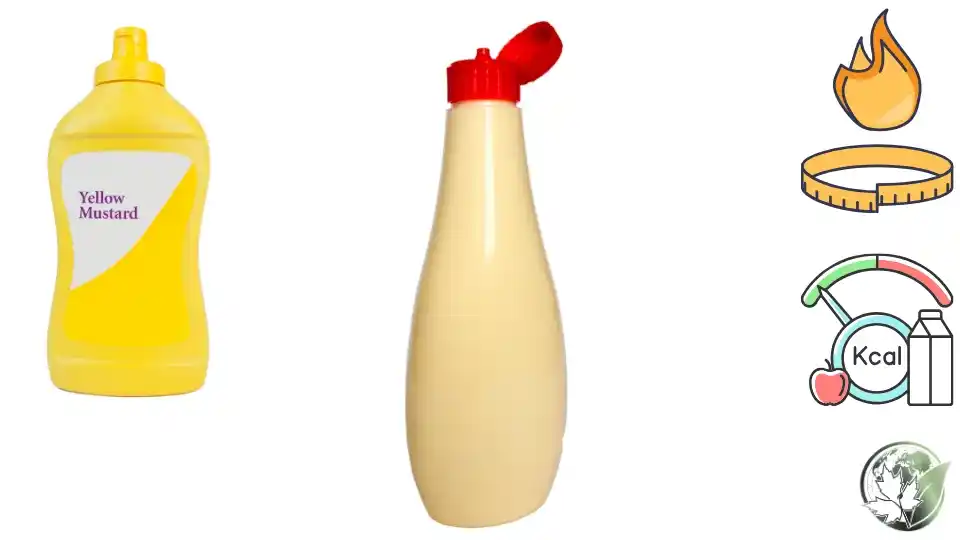
A tablespoon (15 grams) of yellow mustard has about 9 calories. A tablespoon (14 grams) of regular mayonnaise has about 94 calories, light mayonnaise about 35, and fat-free mayonnaise about 12. Per 100 grams, mustard has roughly 66 calories while mayonnaise has 680. That makes regular mayonnaise about 10 times higher in calories by the spoon and more than 10 times higher by weight. Almost all of the difference is fat: mayonnaise is about 75 percent oil, whereas mustard has less than 1 gram of fat per tablespoon.
The two are rivals on sandwiches, burgers, hot dogs, potato salad and dips, and they are often applied by the spoonful without a thought. A generous layer of mayonnaise on a sandwich can add 100 to 190 calories, more than the bread. Swapping to mustard saves most of that without losing moisture or flavor. This guide compares mustard and mayonnaise by the teaspoon, tablespoon and 100 grams, looks at light and fat-free mayonnaise, shows what each adds to everyday foods, and explains the differences in fat, sodium and ingredients. It includes three comparison tables and an FAQ.
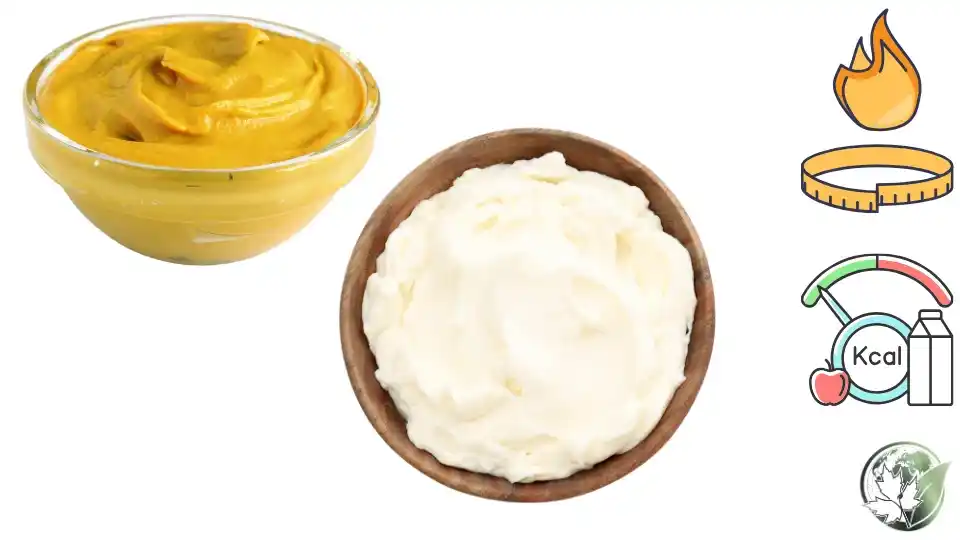
A thin layer of mustard adds about 9 calories, while mayonnaise adds about 94 per tablespoon
How Many Calories Are in Mustard?
| Mustard | Amount | Calories | Fat |
|---|---|---|---|
| Yellow | 1 teaspoon (5 g) | 3 kcal | 0.2 g |
| Yellow | 1 tablespoon (15 g) | 9 kcal | 0.6 g |
| Yellow | 100 g | 66 kcal | 4 g |
| Dijon | 1 tablespoon | 15 kcal | 1 g |
| Whole grain | 1 tablespoon | 17 kcal | 1.2 g |
| Spicy brown | 1 tablespoon | 14 kcal | 0.9 g |
| Honey mustard | 1 tablespoon | 50 kcal | 3 g |
| Mustard powder | 1 teaspoon (2 g) | 8 kcal | 0.5 g |
How Many Calories Are in Mayonnaise?
| Mayonnaise | Amount | Calories | Fat |
|---|---|---|---|
| Regular | 1 teaspoon (4.6 g) | 31 kcal | 3.4 g |
| Regular | 1 tablespoon (13.8 g) | 94 kcal | 10.3 g |
| Regular | 2 tablespoons | 188 kcal | 20.6 g |
| Regular | 100 g | 680 kcal | 75 g |
| Light | 1 tablespoon | 35 kcal | 3.5 g |
| Fat-free | 1 tablespoon | 12 kcal | 0 g |
| Olive oil mayo | 1 tablespoon | 70 kcal | 7.5 g |
| Vegan mayo | 1 tablespoon | 80 kcal | 8.5 g |
Mustard vs Mayonnaise: Calories Compared
| Amount | Yellow mustard | Regular mayo | Difference |
|---|---|---|---|
| 1 teaspoon | 3 kcal | 31 kcal | Mustard -28 |
| 1 tablespoon | 9 kcal | 94 kcal | Mustard -85 |
| 2 tablespoons | 18 kcal | 188 kcal | Mustard -170 |
| 1/4 cup | 36 kcal | 376 kcal | Mustard -340 |
| 100 g | 66 kcal | 680 kcal | Mustard -614 |
| Fat per tablespoon | 0.6 g | 10.3 g | Mustard -94% |
| Tablespoons of mustard = 1 tbsp mayo | 10.4 | 1 | - |
| Honey mustard vs mayo, per tbsp | 50 kcal | 94 kcal | Mustard -44 |
Even honey mustard, which contains sugar and oil, has about half the calories of regular mayonnaise. Plain mustard has around a tenth.
Mustard vs Mayonnaise: Nutrition Compared
| Per 100 g | Yellow mustard | Regular mayonnaise |
|---|---|---|
| Calories | 66 kcal | 680 kcal |
| Total fat | 4 g | 75 g |
| Saturated fat | 0.2 g | 11 g |
| Cholesterol | 0 mg | 42 mg |
| Carbohydrate | 5.8 g | 0.6 g |
| Protein | 4.4 g | 1 g |
| Sodium | 1,100 mg | 635 mg |
| Vitamin E | 0.4 mg | 5.8 mg |
| Vitamin K | 5 mcg | 41 mcg |
| Sugar | 0.9 g | 0.6 g |
| Main ingredients | Seed, vinegar, salt | Oil, egg yolk, vinegar |
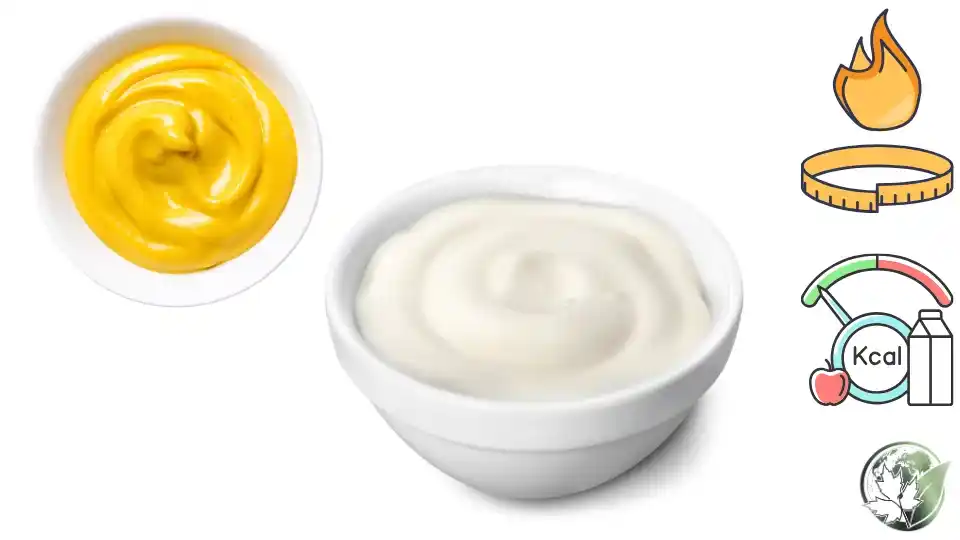
Mustard adds flavor to a hot dog or burger for only about 9 calories a tablespoon
Which Has More Calories: Mustard or Mayonnaise?
Mayonnaise has far more calories, about ten times as many in a tablespoon of regular mayo versus yellow mustard. Light mayonnaise at 35 calories is still almost four times higher than yellow mustard. Mustard does have more sodium by weight, 1,100 milligrams per 100 grams against 635, but because you use a similar amount by the spoon, a tablespoon of mustard has 165 milligrams and mayonnaise 88. People watching sodium should keep an eye on mustard portions, while those counting calories should limit mayonnaise.
| Comparison | Mustard | Mayonnaise | Verdict |
|---|---|---|---|
| Per tablespoon | 9 | 94 | Mustard lower |
| Versus light mayo | 9 | 35 | Mustard lower |
| Versus fat-free mayo | 9 | 12 | Mustard slightly lower |
| Fat | 0.6 g | 10.3 g | Mustard lower |
| Sodium per tbsp | 165 mg | 88 mg | Mayo lower |
| Creaminess | Low | High | Mayo |
| Protein | 0.7 g | 0.1 g | Mustard |
How Many Calories Do They Add to a Sandwich or Burger?
A sandwich made with two slices of bread, turkey, lettuce and tomato has about 280 calories. Add 2 tablespoons of mayonnaise and it reaches 468, while 2 tablespoons of mustard bring it to 298. On a burger, mayo adds 94 to 188 calories, the equivalent of a small side. Mustard, ketchup and pickles are the lower-calorie toppings.
| Food | With mustard | With regular mayo | Calories saved |
|---|---|---|---|
| Turkey sandwich, 1 tbsp | 289 kcal | 374 kcal | 85 |
| Turkey sandwich, 2 tbsp | 298 kcal | 468 kcal | 170 |
| Hamburger, 1 tbsp | 429 kcal | 514 kcal | 85 |
| Hot dog, 1 tbsp | 299 kcal | 384 kcal | 85 |
| Chicken wrap, 2 tbsp | 358 kcal | 528 kcal | 170 |
| Egg salad (2 tbsp binder) | 215 kcal | 385 kcal | 170 |
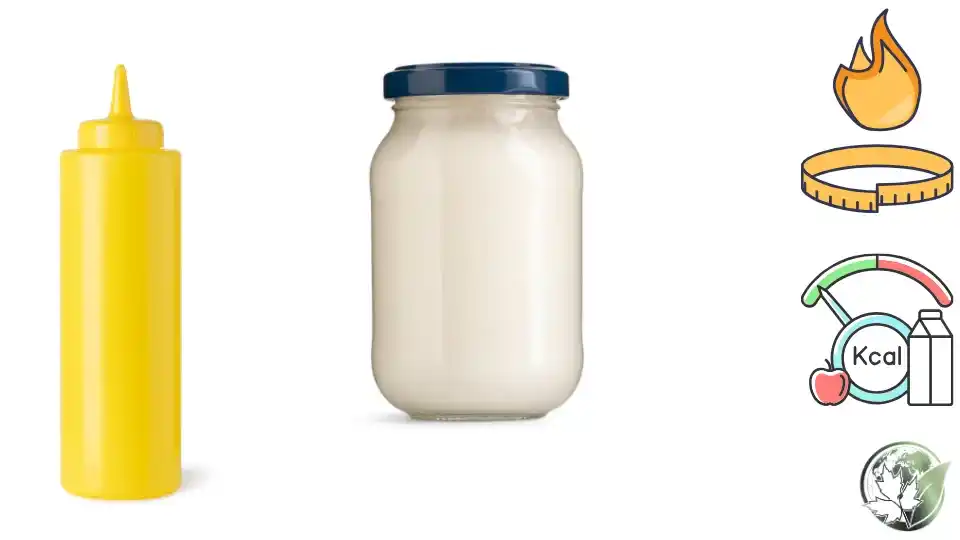
Replacing half the mayonnaise in potato salad with mustard saves about 45 calories per serving
How Do Light and Fat-Free Mayonnaise Compare With Mustard?
Light mayonnaise replaces some of the oil with water, starch and thickeners. It has about 35 calories per tablespoon, saving 59 compared with regular. Fat-free mayo has about 12 calories but often contains added sugar and starch. Neither tastes exactly like regular mayo. Mustard still has fewer calories than both. A blend of equal parts light mayo and mustard gives a creamy spread with about 22 calories per tablespoon.
| Spread (1 tbsp) | Calories | Fat | Sugar |
|---|---|---|---|
| Regular mayonnaise | 94 | 10.3 g | 0.1 g |
| Olive oil mayonnaise | 70 | 7.5 g | 0.1 g |
| Light mayonnaise | 35 | 3.5 g | 1 g |
| Fat-free mayonnaise | 12 | 0 g | 2 g |
| Yellow mustard | 9 | 0.6 g | 0.1 g |
| Mustard + light mayo (1:1) | 22 | 2 g | 0.5 g |
| Plain Greek yogurt | 9 | 0 g | 0.5 g |
Is Mayonnaise Unhealthy and Mustard Healthy?
Neither is a nutritional powerhouse. Mayonnaise is mostly oil and egg, supplying vitamin E and vitamin K and unsaturated fat if made with soybean, canola or olive oil. Its issue is calorie density. Mustard adds almost no calories and small amounts of minerals, but is salty. Used in moderation, both can fit in a balanced diet. Choosing mustard more often helps weight control, while an occasional teaspoon of mayo adds richness. Homemade mayonnaise made with raw eggs should be consumed quickly, and kept cold.
| Factor | Mustard | Mayonnaise |
|---|---|---|
| Calorie density | Very low | Very high |
| Unsaturated fat | Little | Yes |
| Sodium | Moderate | Moderate |
| Allergens | Mustard | Egg |
| Best role | Flavor | Moisture, creaminess |
| Risk | Excess salt | Overuse of calories |
How Much Weight Could You Lose by Choosing Mustard?
A person who eats a sandwich with 2 tablespoons of mayo (188 calories) five days a week and switches to mustard (18 calories) saves 170 calories a day on those days, or 850 a week. Over a year, that is about 44,000 calories, or roughly 5.7 kilograms of body fat if nothing else changes. Smaller swaps matter too. Even changing to light mayo cuts 118 calories per sandwich.
| Swap | Calories saved per sandwich | Per year (5 per week) |
|---|---|---|
| 2 tbsp mayo to 2 tbsp mustard | 170 | 44,200 kcal |
| 2 tbsp mayo to 2 tbsp light mayo | 118 | 30,700 kcal |
| 1 tbsp mayo to 1 tbsp mustard | 85 | 22,100 kcal |
| 2 tbsp mayo to 1 tbsp each, half and half | 85 | 22,100 kcal |
| 2 tbsp mayo to mustard + yogurt | 160 | 41,600 kcal |
Which Should You Choose?
Choose mustard when you want the lowest calories and a sharp flavor on sandwiches, burgers, hot dogs, pretzels and with meat. Choose mayonnaise when you need creaminess, such as in coleslaw, tuna salad and some dips, but use a measured spoon. Mix the two to get both. For the best health and flavor balance, use a teaspoon of mayo plus mustard and a creamy base such as yogurt.
| Goal | Better choice | Reason |
|---|---|---|
| Lowest calories | Mustard | 9 vs 94 per tbsp |
| Creamy texture | Mayonnaise | Fat and emulsion |
| Low sodium | Mayonnaise | 88 vs 165 mg per tbsp |
| Egg allergy | Mustard | Egg-free |
| Mustard allergy | Mayonnaise | Mustard-free |
| Salad binder | Mayo or yogurt | Stays smooth |
| Sandwich flavor | Mustard | Sharp and light |
How Many Calories Are in Homemade vs Store-Bought Mayonnaise?
Homemade mayonnaise made from an egg yolk, a cup of oil, lemon juice and mustard has about the same calories as store-bought: 90 to 100 per tablespoon, because oil is the main ingredient. The difference is in freshness and the type of oil. Using olive oil changes flavor and the monounsaturated fat share, but not the calories. Using a lighter base such as yogurt and egg yolk with only a few tablespoons of oil gives a mayo-like sauce with 35 to 50 calories per tablespoon.
| Version (1 tbsp) | Calories | Fat | Notes |
|---|---|---|---|
| Store-bought regular | 94 | 10.3 g | Pasteurized eggs |
| Homemade, canola oil | 98 | 10.8 g | Fresh, short shelf life |
| Homemade, olive oil | 100 | 11 g | Stronger flavor |
| Light, store-bought | 35 | 3.5 g | Starch thickened |
| Yogurt-based "mayo" | 25 | 1.5 g | Tangy |
| Avocado mash | 25 | 2.3 g | Creamy, green |
| Hummus | 25 | 1.4 g | Savory |
How Do Mustard and Mayonnaise Differ in Burgers, Wraps and Salads?
Each condiment suits particular foods. Mayonnaise adds a creamy layer that balances spicy or dry fillings such as fried chicken or tuna. Mustard cuts through rich meats like sausages, pastrami and burgers. For a healthy salad bowl, mix a teaspoon of mustard with lemon juice and a spoon of yogurt for a creamy dressing at 20 calories, rather than 94 or more per tablespoon of mayo. In egg salad or tuna salad, replacing half the mayonnaise with mustard and Greek yogurt keeps the texture with 40 percent fewer calories.
| Dish | Mayo version | Mustard-based version | Saved |
|---|---|---|---|
| Tuna salad (2 tbsp binder) | 188 kcal | 1 tbsp yogurt + 1 tbsp mustard = 18 kcal | 170 |
| Egg salad | 188 kcal | 1 tbsp mayo + 1 tbsp mustard = 103 kcal | 85 |
| Coleslaw dressing (1/4 cup) | 376 kcal | 2 tbsp mayo + 2 tbsp mustard = 206 kcal | 170 |
| Chicken sandwich | 188 kcal | 2 tbsp mustard = 18 kcal | 170 |
| Potato salad (1/4 cup) | 376 kcal | 2 tbsp mayo + 2 tbsp mustard = 206 kcal | 170 |
How Do Allergies and Diets Affect the Choice?
Mayonnaise contains egg, so it is unsuitable for people with an egg allergy or on a vegan diet unless it is plant-based. Mustard is a recognized allergen in the European Union, Canada and other countries, and people with a mustard allergy must avoid both mustard and products that contain it, including some mayonnaises and dressings. On a keto diet, regular mayonnaise is popular because it is high in fat and has almost no carbohydrate, while mustard also fits at 0.5 gram of carbohydrate per tablespoon.
| Diet or condition | Mustard | Mayonnaise |
|---|---|---|
| Egg allergy | Safe | Avoid |
| Mustard allergy | Avoid | Check label |
| Vegan | Yes | Only plant-based |
| Keto | Yes (0.5 g carbs) | Yes (0.1 g carbs) |
| Low sodium | Check label | Moderate |
| Low calorie | Excellent | Limit |
| Gluten-free | Usually | Usually |
How Do Mustard and Mayonnaise Compare With Other Sandwich Spreads?
Many people add several spreads without counting them. A sandwich with butter, mayonnaise and a slice of cheese can carry 250 calories before any filling. Lighter alternatives like mustard, hummus, mashed avocado or tomato slices give moisture for far fewer calories. The table lists common spreads per tablespoon so you can build a lighter sandwich.
| Spread (1 tbsp) | Calories | Fat | Comment |
|---|---|---|---|
| Butter | 102 | 11.5 g | Rich |
| Mayonnaise | 94 | 10.3 g | Creamy |
| Cream cheese | 50 | 5 g | Tangy |
| Peanut butter | 94 | 8 g | Protein |
| Pesto | 80 | 8 g | Herbal |
| Tahini | 89 | 8 g | Nutty |
| Hummus | 25 | 1.4 g | Savory |
| Avocado | 25 | 2.3 g | Creamy |
| Ketchup | 15 | 0 g | Sweet |
| Yellow mustard | 9 | 0.6 g | Sharp |
How Do You Cut Spread Calories Without Losing Flavor?
Measure with a spoon and spread thinly with a knife rather than squeezing from the bottle. Combine strong flavors like mustard, pickles and fresh herbs to make up for creaminess. Use half the usual amount of mayonnaise and add a teaspoon of mustard. Toast the bread for texture, and add tomato, cucumber or lettuce for moisture. These small changes cut 100 calories or more and are barely noticed.
| Step | Calories saved per sandwich |
|---|---|
| Spread thinly with a knife instead of piling | 50 |
| Replace mayo with mustard | 85 |
| Skip butter and use mustard | 93 |
| Add tomato and cucumber instead of extra spread | 60 |
| Use light mayo instead of regular | 59 |
How Do Dijon, Whole Grain and Yellow Mustard Differ?
All mustards are low in calories, but they differ in flavor and sodium. Yellow mustard is mild and tangy, with turmeric color, and is the classic hot dog topping. Dijon is smoother and sharper, made with white wine, and is good in dressings and sauces. Whole grain mustard has crunchy seeds and a milder bite, suited to sausages and cheese boards. Honey mustard is sweet and has more calories. Pick by taste, and watch the sodium in Dijon.
| Mustard | Calories per tbsp | Sodium per tbsp | Best use |
|---|---|---|---|
| Yellow | 9 | 165 mg | Hot dogs, burgers, pretzels |
| Dijon | 15 | 360 mg | Dressings, sauces, ham |
| Whole grain | 17 | 190 mg | Sausages, cheese, roast meats |
| Spicy brown | 14 | 190 mg | Deli sandwiches |
| Honey mustard | 50 | 130 mg | Dips, chicken, salads |
| English mustard | 12 | 150 mg | Roast beef, ham |
What Do Dietitians Recommend About These Spreads?
Dietitians generally recommend using condiments to add flavor without too many calories, and suggest measuring portions of high-calorie ones like mayonnaise. For heart health, they advise swapping creamy dressings for vinaigrettes made with olive oil and mustard, and watching sodium. A reasonable pattern is to use mustard freely, up to two tablespoons a day, and mayonnaise at one tablespoon or less per meal. Reading labels for added sugar and oils in sauces helps avoid hidden calories.
| Guideline | Mustard | Mayonnaise |
|---|---|---|
| Daily amount | Up to 2 tbsp | 1 tbsp or less per meal |
| Watch for | Sodium | Calories, saturated fat |
| Better versions | Reduced-sodium | Light or olive oil |
| Pair with | Lean proteins, vegetables | Fish, egg, chicken salad |
How Many Calories Do Mustard and Mayonnaise Add Up to Over a Week?
Condiments are easy to forget when tracking food. Using 1 tablespoon of mayonnaise on lunch and 1 on dinner adds 188 calories a day, 1,316 a week. Doing the same with mustard adds 18 a day, 126 a week. Over a month the gap is about 5,100 calories, which equals roughly 0.66 kilogram of body fat. For families, the difference multiplies with every sandwich, burger and salad prepared at home.
| Weekly pattern | Mustard | Regular mayo | Light mayo |
|---|---|---|---|
| 1 tbsp, once a day | 63 kcal | 658 kcal | 245 kcal |
| 1 tbsp, twice a day | 126 kcal | 1,316 kcal | 490 kcal |
| 2 tbsp, once a day | 126 kcal | 1,316 kcal | 490 kcal |
| 2 tbsp, twice a day | 252 kcal | 2,632 kcal | 980 kcal |
| Monthly (1 tbsp, twice a day) | 540 kcal | 5,640 kcal | 2,100 kcal |
How Should You Store Mustard and Mayonnaise?
Unopened mustard keeps for up to two years in the pantry, and opened jars last a year in the refrigerator. Commercial mayonnaise is shelf-stable until opened, then must be refrigerated and used within two to three months. Homemade mayonnaise made with raw egg yolks keeps for only three to four days in the refrigerator. Never leave mayonnaise-based salads out for more than two hours, or one hour in hot weather, since bacteria grow quickly in egg and dairy mixtures.
| Product | Unopened | Opened (fridge) | Warning |
|---|---|---|---|
| Mustard | 2 years | 12 months | Dry or separated is still safe |
| Store mayonnaise | 3-6 months | 2-3 months | Off smell, mold |
| Homemade mayonnaise | - | 3-4 days | Raw egg risk |
| Mayo-based salad | - | 3-5 days | Do not leave out over 2 hours |
What Are Some Easy Mustard Recipes Under 50 Calories?
A few quick ideas make mustard the star. Honey-free mustard dip: 1 tablespoon of Dijon with 2 tablespoons of plain Greek yogurt, 22 calories. Mustard glaze for chicken: 1 tablespoon of mustard with lemon and herbs, 12 calories per serving. Mustard slaw dressing: 1 tablespoon of mustard, 1 tablespoon of vinegar and a teaspoon of honey, 29 calories. Each can replace a mayonnaise-based sauce that would cost 94 or more per tablespoon.
| Recipe | Ingredients | Calories per serving |
|---|---|---|
| Yogurt mustard dip | 1 tbsp Dijon + 2 tbsp yogurt | 22 kcal |
| Mustard chicken glaze | 1 tbsp mustard + lemon | 12 kcal |
| Mustard slaw dressing | 1 tbsp mustard + vinegar + honey | 29 kcal |
| Mustard vinaigrette (per tbsp) | Mustard, 1 tsp oil, vinegar | 25 kcal |
| Mustard egg topping | 1 tsp mustard on egg | 3 kcal |
Quick Comparison Summary
| Question | Mustard | Mayonnaise |
|---|---|---|
| Calories per tablespoon | 9 | 94 |
| Calories per 100 g | 66 | 680 |
| Fat per tablespoon | 0.6 g | 10.3 g |
| Sodium per tablespoon | 165 mg | 88 mg |
| Allergen | Mustard | Egg |
| Texture | Sharp, thin | Creamy |
| Overall | Best for weight control | Best for creaminess |
What Is the Bottom Line?
Mustard has roughly one tenth of the calories of mayonnaise and none of the saturated fat issues, making it the better everyday spread for weight control. Mayonnaise is useful for creaminess, but keep it to a teaspoon or two or switch to a lighter version. A good habit is to use mustard on sandwiches and burgers and save mayonnaise for dishes where it matters.
| Serving guide | Mustard | Mayonnaise |
|---|---|---|
| Sandwich | 1 tsp-1 tbsp, 3-9 kcal | 1 tsp, 31 kcal |
| Burger | 1 tbsp, 9 kcal | 1 tbsp, 94 kcal |
| Salad for 4 | 1 tbsp, 9 kcal | 2 tbsp, 188 kcal |
| Dip | 1 tbsp, 9 kcal | 1/4 cup, 376 kcal |
Key Takeaways: Mustard vs Mayonnaise Calories
A tablespoon of yellow mustard has about 9 calories while regular mayonnaise has about 94. Mustard is roughly ten times lower in calories and fat, though it can be saltier. Use mustard to replace some or all of the mayonnaise on sandwiches and burgers.
Frequently Asked Questions
6 questions answered
How many calories are in a tablespoon of mayonnaise?
About 94 for regular.
How many calories are in a tablespoon of mustard?
About 9 for yellow mustard.
Is light mayo lower than mustard?
No, light mayo has about 35.
Which is healthier on a sandwich?
Mustard has far fewer calories.
Does mustard have more sodium?
Slightly more per tablespoon.
Can I mix mustard and mayonnaise?
Yes, a 1:1 blend has about 22 calories per tablespoon with light mayo.