How Many Calories Are in Mustard Sauce vs Olive Oil? The Quick Answer
A tablespoon (15 grams) of yellow prepared mustard sauce has about 9 calories, and a teaspoon (5 grams) has 3. A tablespoon of olive oil (13.5 grams) has about 119 calories, and a teaspoon 40. Per 100 grams, mustard has about 66 calories while olive oil has 884, which means olive oil has roughly 13 times more calories by weight and also by spoon. The reason is simple: mustard sauce is mostly water, vinegar and mustard seed, with almost no fat, while olive oil is 100 percent fat.
Mustard and olive oil often appear together, since mustard is the classic emulsifier in vinaigrettes and the base for many sandwich spreads. That makes the choice between them a decision about how much oil to use, not about replacing one with the other. This guide compares mustard sauce and olive oil by the teaspoon, tablespoon and 100 grams, looks at yellow, Dijon, whole grain and honey mustard varieties, shows how replacing oil with mustard cuts calories in dressings and marinades, and explains the sodium and health side of each. Three comparison tables and an FAQ are included.
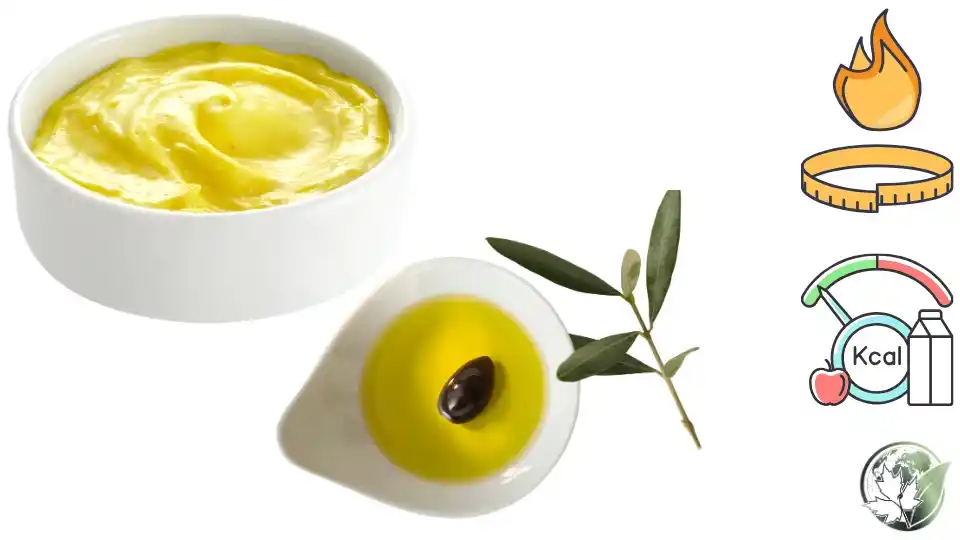
A tablespoon of mustard has 9 calories and a tablespoon of olive oil 119
How Many Calories Are in Mustard Sauce?
| Mustard sauce | Amount | Calories | Sodium |
|---|---|---|---|
| Yellow mustard | 1 teaspoon (5 g) | 3 kcal | 55 mg |
| Yellow mustard | 1 tablespoon (15 g) | 9 kcal | 165 mg |
| Yellow mustard | 100 g | 66 kcal | 1,100 mg |
| Dijon mustard | 1 teaspoon | 5 kcal | 120 mg |
| Dijon mustard | 1 tablespoon | 15 kcal | 360 mg |
| Whole grain mustard | 1 tablespoon | 17 kcal | 190 mg |
| Honey mustard sauce | 1 tablespoon | 50 kcal | 130 mg |
| Mustard-mayo sandwich sauce | 1 tablespoon | 60 kcal | 150 mg |
How Many Calories Are in Olive Oil?
| Olive oil | Amount | Calories | Fat |
|---|---|---|---|
| Teaspoon | 4.5 g | 40 kcal | 4.5 g |
| Tablespoon | 13.5 g | 119 kcal | 13.5 g |
| 2 tablespoons | 27 g | 238 kcal | 27 g |
| 1/4 cup | 54 g | 477 kcal | 54 g |
| 1/2 cup | 108 g | 955 kcal | 108 g |
| 1 cup | 216 g | 1,909 kcal | 216 g |
| 100 ml | 91 g | 806 kcal | 91 g |
| 100 g | 100 g | 884 kcal | 100 g |
Mustard Sauce vs Olive Oil: Calories Compared
| Amount | Yellow mustard | Olive oil | Difference |
|---|---|---|---|
| 1 teaspoon | 3 kcal | 40 kcal | Mustard -37 |
| 1 tablespoon | 9 kcal | 119 kcal | Mustard -110 |
| 2 tablespoons | 18 kcal | 238 kcal | Mustard -220 |
| 100 g | 66 kcal | 884 kcal | Mustard -818 |
| Fat per tablespoon | 0.6 g | 13.5 g | Mustard -95% |
| Fat per 100 g | 4 g | 100 g | Mustard -96% |
| Calories per teaspoon of flavor | 3 | 40 | 13x |
| Tablespoons to reach 119 kcal | 13 | 1 | - |
You would need to eat about 13 tablespoons of yellow mustard, nearly a cup, to equal the calories of one tablespoon of olive oil. That makes mustard one of the lowest-calorie condiments in the kitchen, while olive oil is one of the highest.
Mustard Sauce vs Olive Oil: Nutrition Compared
| Per 100 g | Yellow mustard | Olive oil |
|---|---|---|
| Calories | 66 kcal | 884 kcal |
| Total fat | 4 g | 100 g |
| Saturated fat | 0.2 g | 13.8 g |
| Monounsaturated fat | 2.3 g | 73 g |
| Carbohydrate | 5.8 g | 0 g |
| Sugar | 0.9 g | 0 g |
| Protein | 4.4 g | 0 g |
| Sodium | 1,100 mg | 2 mg |
| Vitamin E | 0.4 mg | 14 mg |
| Vitamin K | 5 mcg | 60 mcg |
| Polyphenols | Some | High in extra virgin |
A tablespoon of mustard helps emulsify oil and vinegar and lets you use less oil in a dressing
Which Has More Calories: Mustard Sauce or Olive Oil?
Olive oil has far more calories, about 13 times as many per tablespoon. Even honey mustard (50 calories per tablespoon) or mustard-based sandwich sauces (60) have less than half the calories of olive oil. Mustard is also very low in fat. The trade-off is sodium: a tablespoon of Dijon has 360 milligrams, about 16 percent of the daily limit, while olive oil has almost none. Olive oil, in turn, provides monounsaturated fat and vitamin E, which mustard does not.
| Comparison | Mustard sauce | Olive oil | Verdict |
|---|---|---|---|
| Per tablespoon | 9-17 kcal | 119 kcal | Mustard lower |
| Honey mustard, per tbsp | 50 kcal | 119 kcal | Mustard lower |
| Fat | Almost none | 13.5 g | Mustard lower |
| Sodium | 165-360 mg | 0 mg | Olive oil lower |
| Heart-healthy fat | None | Yes | Olive oil |
| Flavor strength | Strong | Mild to fruity | Mustard |
How Do the Types of Mustard Compare in Calories?
Plain yellow mustard, made with mustard seed, vinegar, turmeric and salt, is the lightest at 9 calories per tablespoon. Dijon, made with white wine or verjuice, is a little higher because of added seed solids. Whole grain mustard contains crushed seeds, which adds a bit more. Honey mustard and mustard-mayonnaise blends add sugar or fat, so their calorie counts are five to seven times higher than plain mustard.
| Type | Per tablespoon | Per 100 g | Main ingredients |
|---|---|---|---|
| Yellow mustard | 9 kcal | 66 kcal | Seed, vinegar, turmeric |
| Dijon | 15 kcal | 100 kcal | Brown seed, white wine |
| Whole grain | 17 kcal | 120 kcal | Seeds, vinegar |
| Spicy brown | 14 kcal | 90 kcal | Brown seed, spices |
| Honey mustard sauce | 50 kcal | 330 kcal | Mustard, honey, oil |
| Mustard vinaigrette | 70 kcal | 460 kcal | Mustard, oil, vinegar |
| Mustard mayo | 60 kcal | 400 kcal | Mustard, mayonnaise |
Replacing mayonnaise or oil on a sandwich with mustard saves about 90 to 110 calories per tablespoon
How Much Oil Can You Save by Using Mustard?
Mustard makes it easy to cut oil. In a basic vinaigrette, the standard ratio is three parts oil to one part vinegar, which means 3 tablespoons of oil (357 calories) in a dressing for a big salad. Adding a tablespoon of mustard lets you cut the oil to 2 tablespoons, and replace a third of it with water, giving a similar texture with 238 or fewer calories. On a sandwich, replacing a tablespoon of olive oil or mayonnaise with mustard saves 85 to 110 calories.
| Use | With oil | With mustard replacing part | Saved |
|---|---|---|---|
| Vinaigrette for 4 (3 tbsp oil) | 357 kcal | 2 tbsp oil + 1 tbsp mustard = 247 kcal | 110 |
| Salad dressing, light | 357 kcal | 1 tbsp oil + 2 tbsp mustard + water = 137 kcal | 220 |
| Sandwich (1 tbsp oil drizzle) | 119 kcal | 1 tbsp mustard = 9 kcal | 110 |
| Marinade for chicken (2 tbsp oil) | 238 kcal | 1 tbsp oil + 1 tbsp mustard = 128 kcal | 110 |
| Potato salad (1/4 cup oil) | 477 kcal | 2 tbsp oil + 2 tbsp mustard = 256 kcal | 221 |
Is Olive Oil Healthier Than Mustard?
Each plays a different role. Extra virgin olive oil is the cornerstone of the Mediterranean diet, linked to reduced heart disease risk, thanks to monounsaturated fat and polyphenols. Mustard brings flavor with very few calories and contains small amounts of selenium, magnesium and glucosinolate compounds from the seed. Neither is a replacement for the other: olive oil is a nutrient-rich fat, mustard a seasoning. The healthiest dishes use a measured amount of olive oil with a bold seasoning like mustard.
| Factor | Mustard sauce | Olive oil |
|---|---|---|
| Heart-healthy fats | None | High |
| Calories | Very low | Very high |
| Antioxidants | Some (seed) | High (polyphenols) |
| Sodium | Moderate to high | None |
| Best role | Seasoning, emulsifier | Cooking fat, dressing base |
| Satiety | Low | Moderate |
What About Sodium in Mustard Sauce?
Sodium is the main drawback of mustard. A tablespoon of yellow mustard has 165 milligrams, and Dijon up to 360. The daily recommended limit is 2,300 milligrams, with an ideal of 1,500 for people with high blood pressure. Two tablespoons of Dijon on a sandwich provide 720 milligrams, which is nearly a third of the limit. Look for reduced-sodium mustards, and measure rather than squeeze to stay in control. Olive oil has essentially no sodium, so using more oil and less mustard in a dressing is a reasonable choice for people on a low-salt diet.
| Condiment (1 tbsp) | Sodium | % of 2,300 mg limit |
|---|---|---|
| Yellow mustard | 165 mg | 7% |
| Dijon | 360 mg | 16% |
| Whole grain | 190 mg | 8% |
| Honey mustard | 130 mg | 6% |
| Ketchup | 154 mg | 7% |
| Mayonnaise | 88 mg | 4% |
| Olive oil | 0 mg | 0% |
Which Should You Choose?
Choose mustard when you want a strong flavor with almost no calories, as on sandwiches, grilled meat, sausages and in dressings. Choose olive oil for cooking and for salads where its fats and polyphenols are valuable, using a tablespoon or two, not a free pour. Use both together: a teaspoon of mustard with one tablespoon of oil and a splash of vinegar makes a flavorful dressing for 130 calories, much less than a cup of store-bought sauce.
| Goal | Better choice | Reason |
|---|---|---|
| Lowest calories | Mustard | 9 vs 119 per tbsp |
| Heart-healthy fat | Olive oil | Monounsaturated fat |
| Low sodium | Olive oil | 0 mg |
| Strong flavor | Mustard | Pungent |
| Emulsifying dressing | Mustard | Lecithin in seed |
| Cooking and frying | Olive oil | Stable fat |
| Sandwich spread | Mustard | 9 kcal |
How Do You Make a Low-Calorie Mustard Dressing?
A classic mustard vinaigrette combines one tablespoon of Dijon (15 calories), two tablespoons of olive oil (238), one tablespoon of vinegar (3) and a pinch of salt and pepper, for about 256 calories in the whole dressing, or 64 per serving when divided among four salads. To lighten it further, replace one tablespoon of oil with two tablespoons of water or lemon juice and whisk well, giving 137 calories in total, or 34 per serving. The mustard acts as an emulsifier, so the dressing stays smooth even with less oil.
| Dressing (serves 4) | Oil | Mustard | Total calories | Per serving |
|---|---|---|---|---|
| Classic vinaigrette | 3 tbsp | 1 tbsp | 372 kcal | 93 kcal |
| Standard mustard vinaigrette | 2 tbsp | 1 tbsp | 253 kcal | 63 kcal |
| Light mustard dressing | 1 tbsp | 1 tbsp + water | 134 kcal | 34 kcal |
| Honey mustard dressing | 2 tbsp | 1 tbsp + 1 tsp honey | 295 kcal | 74 kcal |
| Creamy yogurt mustard | 0 | 1 tbsp + 1/2 cup yogurt | 80 kcal | 20 kcal |
| Store-bought honey mustard | - | 4 tbsp | 200 kcal | 50 kcal |
How Many Calories Do Mustard and Olive Oil Add to a Sandwich?
A deli-style sandwich with a thin layer of mustard (1 teaspoon, 3 calories) is a very light addition. If you drizzle a tablespoon of olive oil, as in a Mediterranean-style sandwich, you add 119 calories, more than the bread slice. Replace the oil with mustard and tomato slices to cut the total by 100 calories. Using mustard in place of mayonnaise (94 calories per tablespoon) saves around 85 per tablespoon.
| Sandwich topping | Calories | Notes |
|---|---|---|
| 1 tsp yellow mustard | 3 kcal | Light |
| 1 tbsp yellow mustard | 9 kcal | Strong |
| 1 tbsp Dijon | 15 kcal | Sharp |
| 1 tbsp olive oil | 119 kcal | Rich |
| 1 tbsp mayonnaise | 94 kcal | Creamy |
| 1 tbsp honey mustard | 50 kcal | Sweet-tangy |
| 1 tbsp hummus | 25 kcal | Plant-based |
Can You Cook With Mustard Instead of Oil?
Mustard can replace part of the oil in marinades and roasting. Brush chicken or fish with a tablespoon of mustard instead of oil before baking; it keeps the surface moist and forms a crust. It cannot replace oil for frying, as it has no fat to conduct heat and may burn. For roasted vegetables, toss them with one teaspoon of olive oil and one tablespoon of mustard per two cups, which cuts about 80 calories compared with using two tablespoons of oil.
| Dish | With oil | With mustard | Saved |
|---|---|---|---|
| Baked chicken breast (marinade) | 2 tbsp oil = 238 kcal | 1 tbsp mustard + 1 tsp oil = 49 kcal | 189 |
| Roasted potatoes (4 servings) | 3 tbsp oil = 357 kcal | 1 tbsp oil + 2 tbsp mustard = 137 kcal | 220 |
| Baked salmon | 1 tbsp oil = 119 kcal | 1 tbsp Dijon = 15 kcal | 104 |
| Pan frying | 1 tbsp oil | Not suitable | - |
| Grilled sausages | Basting oil 1 tbsp | Mustard glaze 1 tbsp | 110 |
What Is the Difference Between Mustard Sauce and Mustard Oil?
Mustard sauce is a prepared condiment of ground mustard seed and vinegar. Mustard oil is pressed from the seeds and is pure fat with about 884 calories per 100 grams, the same as olive oil. It is used in Indian and Bangladeshi cooking and has a sharp pungent flavor. In some countries, mustard oil is restricted for food use because of its erucic acid content. If a recipe says mustard, check whether it means the sauce, the powder, the seed or the oil, since the calorie difference is enormous.
| Product | Calories per tablespoon | Fat | Use |
|---|---|---|---|
| Mustard sauce (yellow) | 9 kcal | 0.6 g | Condiment |
| Mustard powder | 25 kcal | 1.5 g | Seasoning |
| Mustard seeds | 30 kcal | 2.2 g | Spice, pickling |
| Mustard oil | 124 kcal | 14 g | Cooking oil |
| Olive oil | 119 kcal | 13.5 g | Cooking, dressing |
How Should You Store Mustard Sauce and Olive Oil?
Mustard sauce keeps well because of its vinegar. Unopened jars last up to two years at room temperature, and opened jars stay good for a year in the refrigerator, though the flavor weakens. Olive oil should be kept in a cool, dark cupboard in a dark glass bottle or tin. It stays fresh for 18 to 24 months from bottling, but extra virgin olive oil loses flavor and polyphenols once opened, so use it within three to six months.
| Storage | Mustard sauce | Olive oil |
|---|---|---|
| Unopened | 2 years | 18-24 months |
| Opened | 12 months in the fridge | 3-6 months |
| Light | Not sensitive | Keep dark |
| Spoilage sign | Dry, separated, off smell | Rancid, crayon-like smell |
| Refrigeration | Recommended after opening | Not necessary (it clouds) |
Which Is Better for Weight Loss?
Mustard is a useful tool for weight loss because it adds flavor with almost no calories. Using it in place of mayonnaise, creamy dressings or oil-based sauces can cut 100 calories or more per meal. Olive oil is healthy but dense, so measure it with a spoon. A reasonable approach is one to two tablespoons of olive oil a day for cooking and salad, and unlimited use of plain mustard as a seasoning, while watching sodium.
| Habit | Calories per day | Per year |
|---|---|---|
| 2 tbsp olive oil on salad and cooking | 238 kcal | 86,900 kcal |
| 1 tbsp oil + 1 tbsp mustard | 128 kcal | 46,700 kcal |
| Swap mayo for mustard on 1 sandwich | 85 kcal saved | 31,000 kcal saved |
| Swap oil dressing for mustard dressing | 220 kcal saved | 80,300 kcal saved |
What Role Does Mustard Play in Healthy Eating Beyond Calories?
Mustard seeds contain glucosinolates, sulfur compounds also found in broccoli and cabbage, which the body converts into isothiocyanates when the seed is crushed and mixed with water. These compounds are being studied for antioxidant and anti-inflammatory effects. Mustard also contains selenium, magnesium and small amounts of omega-3 fatty acids. A tablespoon is too small to be a major source, but it is a flavorful way to eat more of these compounds. Turmeric in yellow mustard adds curcumin in small amounts.
| Compound | Source in mustard | Possible role |
|---|---|---|
| Glucosinolates | Seeds | Antioxidant activity |
| Selenium | Seeds | Thyroid and immune function |
| Magnesium | Seeds | Muscle and nerve function |
| Curcumin | Turmeric in yellow mustard | Anti-inflammatory |
| Omega-3 | Seeds | Heart health, trace amounts |
How Do Mustard Sauce and Olive Oil Compare With Other Condiments?
Among common condiments, mustard is the lightest, with only vinegar-based hot sauce lower. Olive oil is the densest, together with other oils and butter. Knowing where each sits helps you choose toppings. A table of one-tablespoon calories makes the range clear.
| Condiment (1 tbsp) | Calories | Fat |
|---|---|---|
| Hot sauce | 1 | 0 g |
| Yellow mustard | 9 | 0.6 g |
| Dijon mustard | 15 | 1 g |
| Ketchup | 15 | 0 g |
| Soy sauce | 9 | 0 g |
| Balsamic vinegar | 14 | 0 g |
| Honey mustard | 50 | 3 g |
| Mayonnaise | 94 | 10 g |
| Ranch dressing | 73 | 7.7 g |
| Olive oil | 119 | 13.5 g |
| Butter | 102 | 11.5 g |
How Do You Read Labels on Mustard Sauces?
Plain mustard labels list water, mustard seed, vinegar, salt and spices, with 0 to 5 grams of sugar per 100 grams. Sauces called mustard sauce, honey mustard or mustard dressing often list sugar, oil, starch or mayonnaise high on the ingredient list, which pushes calories from 66 to 300 or more per 100 grams. Check the per 100 gram line and the serving size. A serving of 15 grams is common, but many people use 30 or more. Squeeze bottles make overuse easy.
| Label item | Plain mustard | Mustard sauce or dressing |
|---|---|---|
| Calories per 100 g | 60-100 | 250-460 |
| First ingredients | Water, seed, vinegar | Oil, sugar, mustard |
| Sugar per 100 g | 0-2 g | 10-30 g |
| Fat per 100 g | 3-6 g | 15-45 g |
| Sodium per 100 g | 1,000-2,400 mg | 800-1,500 mg |
| Typical serving | 5-15 g | 15-30 g |
How Many Calories Are in Mustard-Based Dishes?
Mustard appears in many dishes, from sausages and burgers to potato salad and chicken. The condiment is a small share of the calories, and the main ingredients decide the total. Still, creamy mustard sauces and honey mustard dips can add 100 to 200 calories to a dish. Choosing plain mustard on a hot dog adds 9 calories, while a honey mustard dip with chicken nuggets adds 100.
| Dish | Mustard component | Total calories |
|---|---|---|
| Hot dog with yellow mustard | 1 tbsp, 9 kcal | 290 kcal |
| Burger with mustard | 1 tbsp, 9 kcal | 420 kcal |
| Chicken nuggets (6) + honey mustard | 2 tbsp, 100 kcal | 380 kcal |
| Pretzel with mustard | 1 tbsp, 9 kcal | 390 kcal |
| Potato salad with mustard dressing | 2 tbsp, 30 kcal | 220 kcal |
| Grilled salmon with Dijon | 1 tbsp, 15 kcal | 255 kcal |
What Is the Bottom Line?
Mustard and olive oil are not competitors. Olive oil is the fat that carries flavor and nutrients, and mustard is the seasoning that stretches it. If you reduce oil by half and replace the lost flavor with mustard, vinegar and herbs, you save over 100 calories per tablespoon without losing satisfaction. Stay mindful of sodium, especially with Dijon, and measure oil with a spoon.
| Serving guide | Mustard | Olive oil |
|---|---|---|
| Sandwich | 1 tsp-1 tbsp (3-9 kcal) | Skip or 1 tsp (40 kcal) |
| Salad for one | 1 tsp (3 kcal) | 1 tbsp (119 kcal) |
| Cooking for four | 1 tbsp (9 kcal) | 1-2 tbsp (119-238 kcal) |
| Daily total | Up to 2 tbsp | 1-2 tbsp |
Key Takeaways: Mustard Sauce vs Olive Oil Calories
A tablespoon of yellow mustard sauce has about 9 calories while a tablespoon of olive oil has about 119. Mustard is much lower in calories but higher in sodium. Use mustard to replace some oil in dressings and sandwiches, and measure olive oil by the tablespoon.
Frequently Asked Questions
6 questions answered
How many calories are in a tablespoon of mustard sauce?
About 9 for yellow mustard.
How many calories are in a tablespoon of olive oil?
About 119.
Is mustard fattening?
Not plain mustard, but honey mustard has more.
Can mustard replace oil in a dressing?
Partly, it emulsifies and cuts calories.
Which has more sodium?
Mustard, olive oil has almost none.
Is Dijon higher in calories than yellow mustard?
Slightly, 15 against 9 per tablespoon.