How Many Calories Are in a Serving of Mountain Honey vs Agave Syrup? The Quick Answer
A teaspoon of mountain honey (about 7 grams) has roughly 21 calories, and a tablespoon (about 21 grams) has 64 calories. A teaspoon of agave syrup (7 grams) has about 20 calories and a tablespoon (21 grams) about 60. So honey has about 5 percent more calories than agave in the same spoon, a gap of 1 to 4 calories. Per 100 grams, honey has 304 calories and agave around 310, so by weight they are nearly equal. The real differences are in sweetness, glycemic index, fructose content and flavor.
The usual serving of mountain honey is one teaspoon in tea or on bread, and one tablespoon in yogurt, oatmeal or a drink. Because both honey and agave are liquid sweeteners sold in squeeze bottles, it is easy to pour more than you plan, and a heavy drizzle can be 2 tablespoons or 128 calories. This guide compares mountain honey and agave syrup by the spoon and by 100 grams, looks at sugar types, glycemic index, minerals and antioxidants, explains why mountain honey is prized, and gives tips for portions and substitutions. It includes three comparison tables and an FAQ.

A tablespoon of mountain honey has 64 calories and a tablespoon of agave syrup 60
How Many Calories Are in Mountain Honey?
| Mountain honey | Weight | Calories | Sugar |
|---|---|---|---|
| 1/2 teaspoon | 3.5 g | 11 kcal | 2.9 g |
| 1 teaspoon | 7 g | 21 kcal | 5.7 g |
| 1 tablespoon | 21 g | 64 kcal | 17.3 g |
| 2 tablespoons | 42 g | 128 kcal | 34.6 g |
| 1/4 cup | 85 g | 258 kcal | 70 g |
| 1/2 cup | 170 g | 517 kcal | 140 g |
| 1 cup | 340 g | 1,034 kcal | 280 g |
| 100 g | 100 g | 304 kcal | 82 g |
How Many Calories Are in Agave Syrup?
| Agave syrup | Weight | Calories | Sugar |
|---|---|---|---|
| 1/2 teaspoon | 3.5 g | 10 kcal | 2.7 g |
| 1 teaspoon | 7 g | 20 kcal | 5.3 g |
| 1 tablespoon | 21 g | 60 kcal | 16 g |
| 2 tablespoons | 42 g | 120 kcal | 32 g |
| 1/4 cup | 84 g | 240 kcal | 64 g |
| 1/2 cup | 168 g | 480 kcal | 128 g |
| 1 cup | 336 g | 960 kcal | 256 g |
| 100 g | 100 g | 310 kcal | 76 g |
Mountain Honey vs Agave Syrup: Calories Compared
| Amount | Mountain honey | Agave syrup | Difference |
|---|---|---|---|
| 1 teaspoon | 21 kcal | 20 kcal | Honey +1 |
| 1 tablespoon | 64 kcal | 60 kcal | Honey +4 |
| 2 tablespoons | 128 kcal | 120 kcal | Honey +8 |
| 1/4 cup | 258 kcal | 240 kcal | Honey +18 |
| 100 g | 304 kcal | 310 kcal | Agave +6 |
| Sugar per tablespoon | 17.3 g | 16 g | Honey +1.3 g |
| Sweetness vs sugar | 1.0-1.3x | 1.4-1.6x | Agave sweeter |
| Teaspoons to sweeten tea like 2 tsp sugar | 1.5 | 1.2 | Agave less needed |
By the spoon, honey has slightly more calories because it is denser, with a spoonful weighing about 21 grams. By weight, agave is slightly higher. Since agave is perceived as sweeter than sugar, you may use 25 percent less of it, which can lower the calories used in a recipe.
Mountain Honey vs Agave Syrup: Nutrition Compared
| Per 100 g | Mountain honey | Agave syrup |
|---|---|---|
| Calories | 304 kcal | 310 kcal |
| Carbohydrate | 82 g | 76 g |
| Sugar | 82 g | 68 g |
| Fructose | 38 g | 55-90 g |
| Glucose | 31 g | 10-20 g |
| Water | 17 g | 23 g |
| Protein | 0.3 g | 0.1 g |
| Fat | 0 g | 0.5 g |
| Potassium | 52 mg | 5 mg |
| Iron | 0.4 mg | 0.2 mg |
| Antioxidants | Phenolics, flavonoids | Trace |
| Glycemic index | 45-60 | 10-30 |
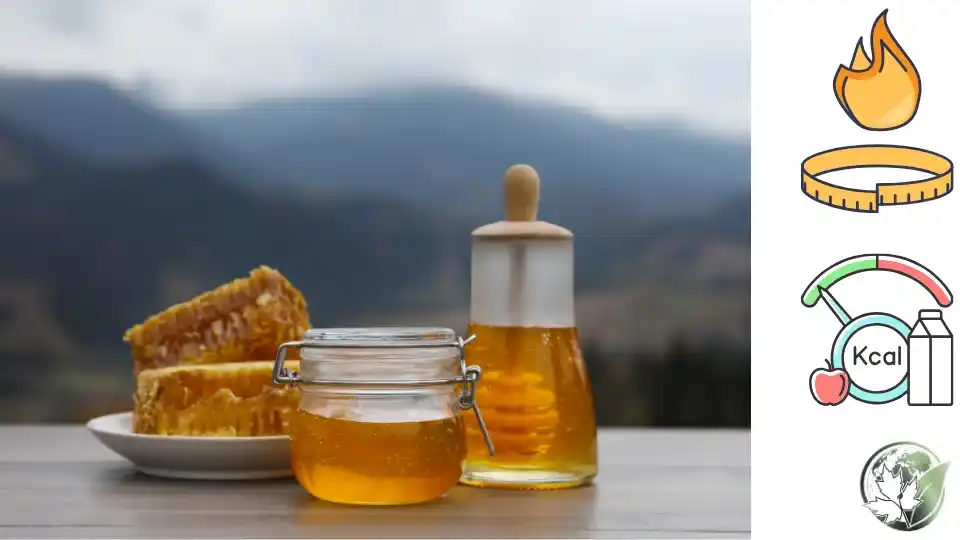
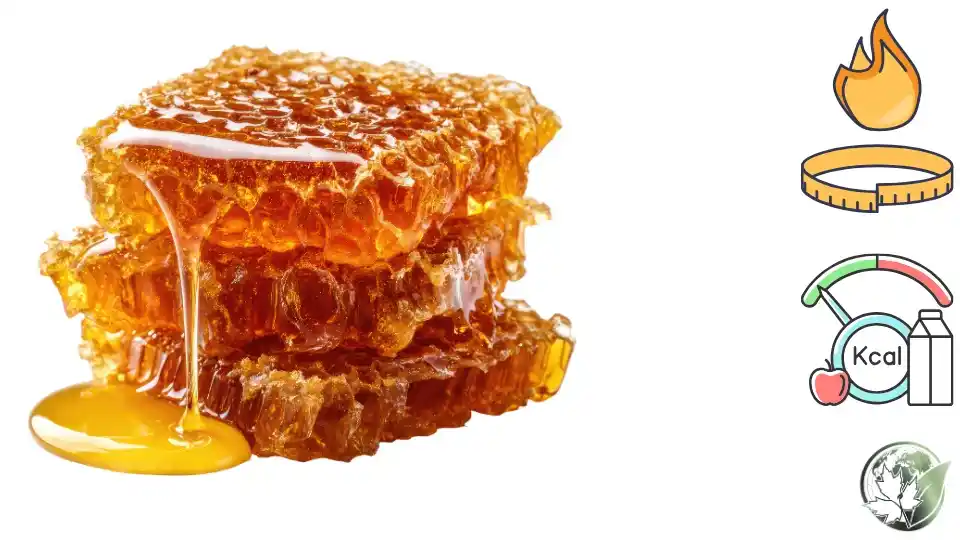
Raw mountain honey keeps pollen, enzymes and polyphenols that processed syrups lose
Which Has More Calories: Mountain Honey or Agave Syrup?
The two are almost identical, within 5 percent. Honey has a few more calories per teaspoon or tablespoon, while agave has a few more per 100 grams. Neither should be seen as a low-calorie choice, because both are around 60 calories per tablespoon, compared with 49 for granulated sugar. Sweetness is the practical factor: agave tastes 1.4 to 1.6 times sweeter than sugar, so it can be used in smaller amounts. Mountain honey has a strong flavor, so it is often used in smaller amounts on its own.
| Comparison | Honey | Agave | Verdict |
|---|---|---|---|
| Per tsp | 21 | 20 | About equal |
| Per tbsp | 64 | 60 | About equal |
| Per 100 g | 304 | 310 | About equal |
| Sweetness | Medium-high | Highest | Agave |
| Glycemic index | 45-60 | 10-30 | Agave lower |
| Fructose | 38% | 55-90% | Honey lower |
| Antioxidants | Yes | Little | Honey |
What Makes Mountain Honey Different?
Mountain honey is made by bees foraging on wild flowers, herbs and shrubs growing at altitude, in places such as the Zagros and Alborz ranges. The nectar is polyfloral, with thyme, astragalus (gavan), wild mint and sage among the sources, which gives dark amber color, a pronounced aroma and a more complex taste than mass-market honey. Raw mountain honey is unheated and unfiltered, so it keeps pollen, enzymes and phenolic compounds. It tends to crystallize with time, which is a natural sign of raw honey, not spoilage.
| Property | Mountain honey | Factory blended honey |
|---|---|---|
| Source | Wild highland flowers | Mixed, often lowland |
| Color | Amber to dark | Light to golden |
| Processing | Raw, often unfiltered | Heated, filtered |
| Crystallization | Common | Slow |
| Flavor | Herbal, floral, intense | Mild |
| Antioxidants | Higher | Lower |
| Calories | Same, 304 per 100 g | Same, 304 per 100 g |
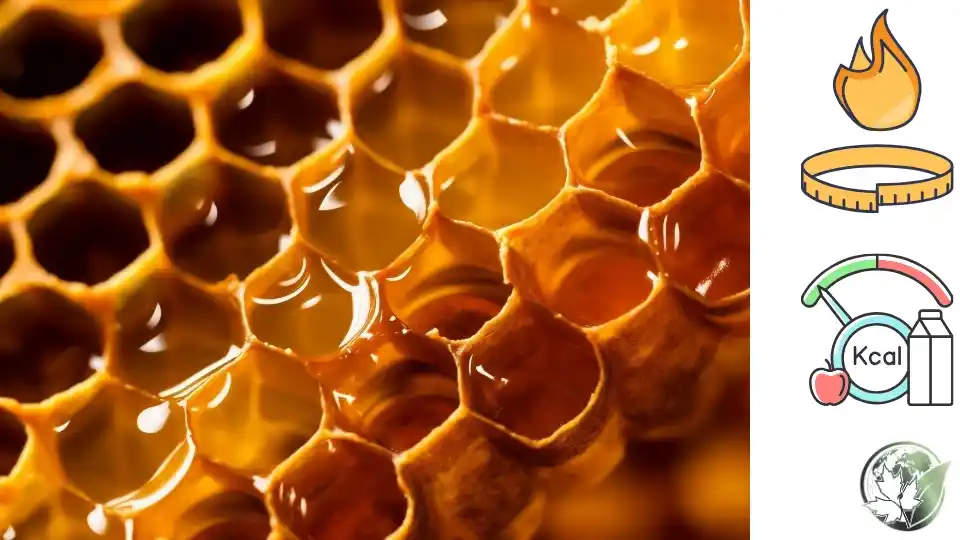
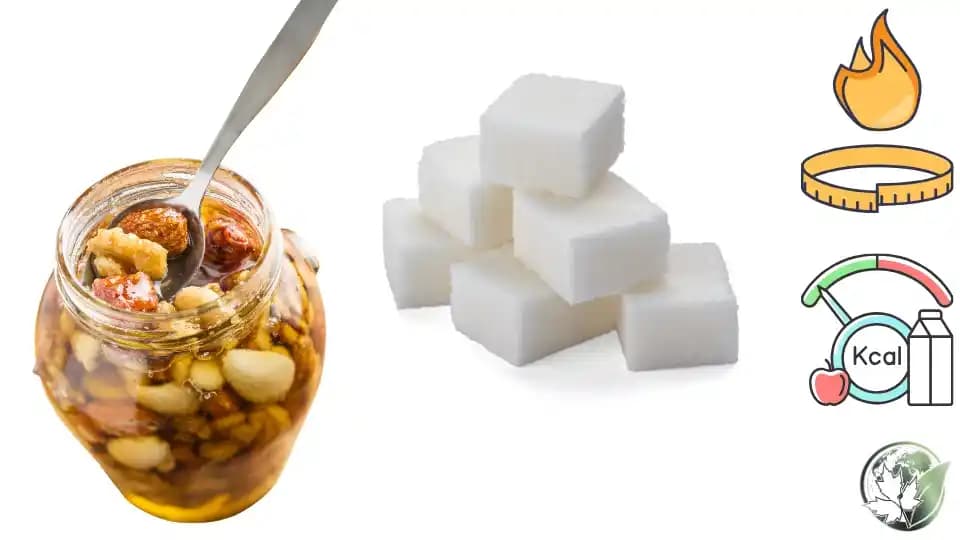
One teaspoon of honey in tea adds 21 calories, compared with 16 for a sugar cube
How Do Honey and Agave Affect Blood Sugar?
Agave syrup has a very low glycemic index, between 10 and 30, because it is mostly fructose, which does not directly raise blood glucose. Mountain honey is in the medium range at 45 to 60. But a low glycemic index does not make agave healthier, since high fructose intake is processed by the liver and, in large amounts, may contribute to fatty liver and raised triglycerides. People with diabetes should limit both to small amounts, and consult their doctor about sweeteners.
| Measure (1 tbsp) | Mountain honey | Agave syrup |
|---|---|---|
| Glycemic index | 45-60 | 10-30 |
| Glycemic load | About 9 | About 2-5 |
| Fructose | 8 g | 11-14 g |
| Glucose | 6.5 g | 2-3 g |
| Blood sugar rise | Moderate | Small |
| Liver impact | Moderate | Higher in excess |
Does Honey or Agave Have Health Benefits?
Raw honey contains small amounts of antioxidants, enzymes and antibacterial compounds, and has long been used for sore throats and coughs. Studies show a spoonful of honey may soothe coughs in children over one year better than some over-the-counter medicines. Agave syrup is processed from the sap of the agave plant, heated to convert inulin into fructose, and contains little else. Neither is a health food, but honey has the edge in bioactive compounds.
| Benefit | Honey | Agave |
|---|---|---|
| Antioxidants | Yes | Trace |
| Cough relief | Supported by studies | No evidence |
| Antibacterial effect | Yes (wound use) | No |
| Prebiotic fiber | Trace oligosaccharides | Inulin (traces after processing) |
| Safe for infants | No (botulism risk) | Not recommended |
How Many Servings Is Safe Per Day?
The American Heart Association recommends no more than 25 grams of added sugar (6 teaspoons) a day for women and 36 grams (9 teaspoons) for men. Honey and agave both count as added sugar. One tablespoon of honey has 17 grams, nearly three-quarters of a woman's daily limit. A single teaspoon in tea gives 5.7 grams. Spread out across the day, 1 to 2 teaspoons of honey is a sensible amount.
| Daily use | Honey | Calories | Sugar |
|---|---|---|---|
| 1 tsp in morning tea | 7 g | 21 kcal | 5.7 g |
| 2 tsp over the day | 14 g | 43 kcal | 11.5 g |
| 1 tbsp on yogurt | 21 g | 64 kcal | 17.3 g |
| 2 tbsp drizzle | 42 g | 128 kcal | 34.6 g |
| Limit for women | About 30 g | 91 kcal | 25 g |
What Are the Best Ways to Use Each?
Honey suits tea, warm milk, yogurt, cheese, toast, marinades and baking, where its flavor shines. Agave dissolves easily in cold drinks, cocktails and iced tea, where honey would clump, and has a neutral taste for dressings and vegan baking. As a substitute, use 3/4 cup of agave for each cup of sugar and reduce other liquids by a quarter. Replace honey and agave one-to-one in most recipes.
| Use | Better pick | Serving | Calories |
|---|---|---|---|
| Hot tea | Honey | 1 tsp | 21 kcal |
| Iced tea | Agave | 1 tsp | 20 kcal |
| Yogurt or oatmeal | Honey | 1 tbsp | 64 kcal |
| Salad dressing | Either | 1 tsp | 20-21 kcal |
| Cocktails | Agave | 2 tsp | 40 kcal |
| Cough remedy | Honey | 1 tsp | 21 kcal |
How Do You Measure a Serving of Honey Accurately?
Honey is dense, and the weight of a spoonful depends on how you fill it. A level teaspoon holds about 7 grams, but a rounded or dripping teaspoon can hold 10 to 12 grams, which is 30 to 36 calories. A tablespoon can hold 21 grams level, or up to 30 grams when heaped. Honey also clings to the spoon, so scraping it off with a finger can add to the total. For consistent counting, weigh it on a kitchen scale, or dip the spoon, level it with a knife and pour it. A good rule is that one tablespoon of honey equals about 64 calories and one tablespoon of agave about 60.
| Measure | Honey weight | Honey calories | Agave calories |
|---|---|---|---|
| Level teaspoon | 7 g | 21 kcal | 20 kcal |
| Heaped teaspoon | 10 g | 30 kcal | 29 kcal |
| Drizzle on toast | 12 g | 36 kcal | 35 kcal |
| Level tablespoon | 21 g | 64 kcal | 60 kcal |
| Heaped tablespoon | 30 g | 91 kcal | 86 kcal |
| Squeeze bottle, 1 second | 8 g | 24 kcal | 23 kcal |
| Honey dipper, one turn | 12 g | 36 kcal | 34 kcal |
How Many Calories Are in Honey Combinations We Eat Every Day?
Honey rarely appears alone. It sweetens tea and milk, sits on bread with butter or cheese, goes into granola and dressings, and is used in sweets. Knowing the total helps you compare with agave. A slice of bread with butter and a tablespoon of honey has about 190 calories, while a bowl of oatmeal with a tablespoon of agave has about 215. In most cases the topping is a small part of the total, but it carries a large share of the sugar.
| Everyday use | With honey | With agave | Notes |
|---|---|---|---|
| Tea (1 tsp) | 21 kcal | 20 kcal | Same |
| Toast with butter (1 tbsp honey) | 190 kcal | 186 kcal | Butter adds 36 |
| Greek yogurt (1 tbsp) | 152 kcal | 148 kcal | Plus 88 for yogurt |
| Oatmeal (1 tbsp) | 215 kcal | 211 kcal | Plus 150 for oats |
| Pancakes (2 tbsp) | 340 kcal | 332 kcal | Plus 212 |
| Salad dressing (1 tsp in 1 tbsp) | 100 kcal | 99 kcal | With oil |
| Honey lemon water | 21 kcal | 20 kcal | One teaspoon |
| Warm milk with honey (1 cup) | 143 kcal | 142 kcal | Plus 122 for milk |
Why Is Agave Syrup Sweeter Than Honey?
Agave syrup is mostly fructose, the sweetest natural sugar, while honey is roughly equal parts fructose and glucose, with a smaller share of other sugars. Fructose tastes about 1.7 times sweeter than sucrose, whereas glucose tastes about 0.7 times as sweet. This is why agave can taste sweeter than honey even though it has similar calories. Mountain honey's stronger flavor and slight acidity are perceived differently, so it may seem less sweet but more complex.
| Sugar | Relative sweetness (sugar = 1) | Where it is found |
|---|---|---|
| Fructose | 1.7 | Agave (55-90%), honey (38%) |
| Sucrose | 1.0 | Table sugar |
| Glucose | 0.7 | Honey (31%) |
| Maltose | 0.4 | Honey (7%) |
| Honey (overall) | 1.0-1.3 | - |
| Agave (overall) | 1.4-1.6 | - |
Is Agave Syrup Better for Weight Loss Than Honey?
No. Both have the same calories per tablespoon, and neither provides protein or fiber. Agave may allow you to use a bit less because of its sweetness, which saves a few calories. But its high fructose content can promote fat storage in the liver when eaten in large amounts, and it does not trigger the same fullness signals as glucose. For weight management, the key is the total amount of sweetener, not the type. Replacing a sugary drink with water saves far more calories than swapping honey for agave.
| Strategy | Calories saved per day |
|---|---|
| Swap honey for agave (1 tbsp) | 4 kcal |
| Use half the honey | 32 kcal |
| Remove sugar from 3 teas | 48 kcal |
| Replace one soda with water | 140 kcal |
| Choose unsweetened yogurt | 60 kcal |
How Do Honey and Agave Compare With Other Sweeteners?
Sugar, maple syrup, molasses and date syrup all land in a narrow range of 50 to 65 calories per tablespoon. Artificial sweeteners have almost none but do not provide the texture or flavor of honey. Stevia and monk fruit extracts have zero calories and no effect on blood sugar. If the goal is lower calories, these are the only real option. If the goal is flavor and some bioactive compounds, raw mountain honey is a good one.
| Sweetener | Calories per tbsp | Sugar per tbsp | Glycemic index |
|---|---|---|---|
| Mountain honey | 64 | 17.3 g | 45-60 |
| Agave syrup | 60 | 16 g | 10-30 |
| Granulated sugar | 49 | 12.6 g | 65 |
| Maple syrup | 52 | 12.1 g | 54 |
| Molasses | 58 | 14.9 g | 55 |
| Date syrup | 62 | 15 g | 50 |
| Stevia | 0 | 0 g | 0 |
| Monk fruit | 0 | 0 g | 0 |
How Should You Store Honey and Agave?
Honey has a very long shelf life because of its low water content and acidity. Store it at room temperature in a closed jar away from sunlight. If it crystallizes, set the jar in warm water and stir until it becomes liquid again; never heat it above 40 degrees Celsius, as high heat destroys enzymes. Agave syrup should also be kept in a cool, dark cupboard and used within a year of opening. Do not refrigerate honey, as it speeds crystallization.
| Storage | Honey | Agave |
|---|---|---|
| Place | Cupboard, closed jar | Cupboard, closed bottle |
| Shelf life | Years | 1-2 years |
| Crystallization | Normal for raw honey | Rare |
| Refrigeration | Not advised | Not needed |
| Warming | Warm water bath below 40 C | Not needed |
How Can You Tell Real Mountain Honey From a Fake?
Real mountain honey is sold with a clear origin, usually a named region and harvest season, and is often unfiltered with small bits of wax or pollen. It crystallizes in cold months and has a strong, slightly sharp aroma. Adulterated honey may be diluted with sugar syrup, rice syrup or corn syrup. Home tests such as dropping honey in water are unreliable. A trusted beekeeper, a lab test of the sugar profile or a product labeled raw with traceable origin is the best protection. The calorie count is almost the same for real and fake honey, but the health value is not.
| Sign | Genuine mountain honey | Possible adulteration |
|---|---|---|
| Origin on label | Region and season | Vague or none |
| Texture | Thick, may crystallize | Stays perfectly liquid in cold |
| Smell | Floral, herbal | Weak or sugary |
| Taste | Complex, slightly sharp | Flat, only sweet |
| Price | Higher | Suspiciously low |
| Lab test | Natural sugar profile | High sucrose or added syrup |
How Does Agave Syrup Get Made and Why Does It Matter?
Agave syrup comes from the sap of the blue agave plant, the same plant used for tequila. The sap contains inulin, a complex fiber, which is heated or treated with enzymes to break it into fructose. The syrup is then filtered and concentrated. Light agave is mild, while dark agave has a caramel flavor. Because the processing converts most of the inulin into fructose, little of the plant's fiber remains. Raw agave products exist, but they are heated at lower temperatures and are still mostly sugar.
| Stage | What happens | Effect |
|---|---|---|
| Harvest | Pina (heart) of the plant is cut | Source of sap |
| Extraction | Juice is pressed | Contains inulin |
| Heating | Inulin splits into fructose | Sweetness rises |
| Filtering | Removes solids | Clear syrup |
| Concentration | Water evaporates | 310 kcal per 100 g |
When Is Honey a Better Choice and When Is Agave?
Choose mountain honey for taste, for sore throats, for use on bread and yogurt, and when you want a minimally processed product. Choose agave for cold drinks, for dishes that need a neutral sweetener, and when you want a lower glycemic index, but keep portions small. For people with fructose malabsorption or fatty liver, both should be limited. The best approach is to treat either as a flavoring used by the teaspoon rather than as an everyday bulk sweetener.
| Situation | Honey | Agave |
|---|---|---|
| Hot tea | Better | Fine |
| Iced drinks | Clumps | Better |
| Sore throat | Better | No evidence |
| Vegan diet | Not vegan | Vegan |
| Strong flavor desired | Better | Neutral |
| Diabetes (small amounts) | Caution | Caution |
| Babies under 1 year | Never | Not advised |
What Is the Bottom Line on Servings?
For everyday eating, one teaspoon (21 calories) is a sensible serving of honey, and one tablespoon (64 calories) is a generous one. Agave is the same. Two teaspoons in the day for tea, a tablespoon on breakfast and nothing more will keep you within added-sugar guidelines. When cooking, use a measuring spoon rather than free pouring, and consider reducing the sweetener in a recipe by a quarter, which most people do not notice.
| Serving | Honey | Agave | Typical use |
|---|---|---|---|
| 1 tsp | 21 kcal | 20 kcal | Tea, lemon water |
| 2 tsp | 43 kcal | 40 kcal | Large mug, toast |
| 1 tbsp | 64 kcal | 60 kcal | Yogurt, oatmeal |
| 2 tbsp | 128 kcal | 120 kcal | Pancakes, marinade |
What Do Dietitians Say About Natural Sweeteners?
Most dietitians agree that honey and agave are still added sugars and should be used sparingly. The World Health Organization suggests keeping free sugars, which include honey and syrups, below 10 percent of daily calories, and ideally below 5 percent. For a 2,000 calorie diet, 5 percent is 100 calories, which is only about 1.5 tablespoons of honey. They advise choosing a sweetener for flavor, not because it seems healthier, and building the diet around whole fruits, vegetables and grains.
| Daily calories | 10% limit | 5% limit | Honey equivalent (5%) |
|---|---|---|---|
| 1,500 kcal | 150 kcal | 75 kcal | 1.2 tbsp |
| 1,800 kcal | 180 kcal | 90 kcal | 1.4 tbsp |
| 2,000 kcal | 200 kcal | 100 kcal | 1.6 tbsp |
| 2,500 kcal | 250 kcal | 125 kcal | 2 tbsp |
Key Takeaways: Mountain Honey vs Agave Syrup Calories
A teaspoon of mountain honey has about 21 calories and a tablespoon about 64, nearly equal to agave syrup at 20 and 60. Agave has a lower glycemic index, but honey has antioxidants and less fructose. Use 1 to 2 teaspoons a day.
Frequently Asked Questions
6 questions answered
How many calories are in a teaspoon of mountain honey?
About 21.
How many calories are in a tablespoon of agave syrup?
About 60.
Is agave lower in calories than honey?
Slightly per spoon, about equal by weight.
Which has the lower glycemic index?
Agave, 10-30 versus 45-60 for honey.
Is mountain honey healthier?
It has more antioxidants.
Can I give honey to a baby?
No, not before age one.