How Many Calories Are in Milk vs Greek Yogurt? The Quick Answer
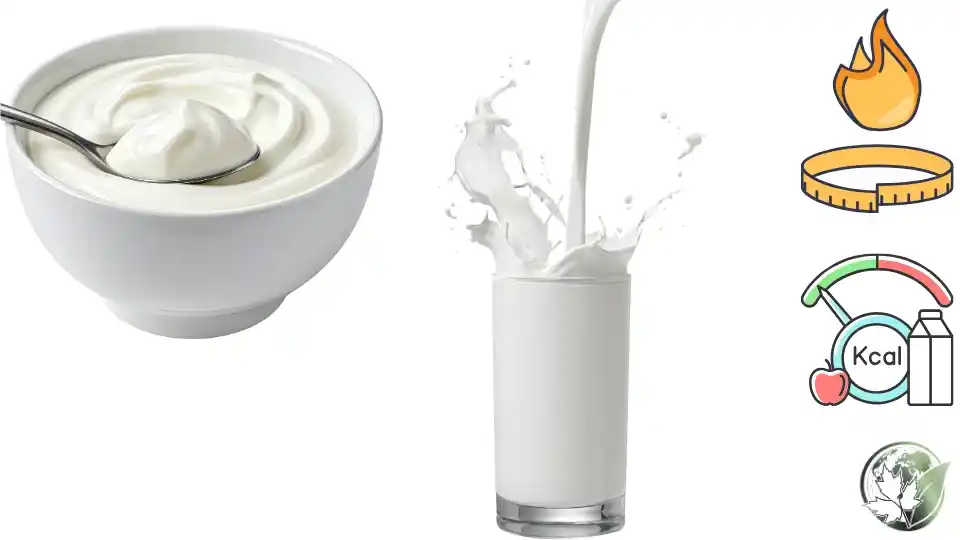
A cup (244 grams) of 2 percent milk has about 122 calories, 8 grams of protein and 12 grams of lactose sugar. A cup (245 grams) of plain nonfat Greek yogurt has about 130 calories, 23 grams of protein and 8 grams of sugar. Whole-milk Greek yogurt has about 220 calories per cup. Per 100 grams, milk has 50 calories while Greek yogurt has between 59 (nonfat) and 97 (whole). So by weight, Greek yogurt is higher in calories than milk, but it is far higher in protein, which makes it more filling per calorie.
The comparison is common because both are dairy staples, both are rich in calcium and both appear in breakfast and snack plans. Milk is a drink, so it is easy to take a full glass. Greek yogurt is strained, thick and eaten with a spoon, so its serving is smaller: a typical single-serve pot of 150 to 170 grams has 90 to 100 calories in the nonfat version. This guide compares milk and Greek yogurt by cup, by 100 grams and by typical serving, looks at protein, calcium, lactose and fat, and explains which suits weight loss, muscle building, cooking and sensitive stomachs. Three comparison tables and an FAQ are included.
A cup of nonfat Greek yogurt has about the same calories as a cup of 2 percent milk but nearly three times the protein
How Many Calories Are in Milk?
| Milk | Amount | Calories | Protein | Sugar |
|---|---|---|---|---|
| Skim (0%) | 1 cup (245 g) | 83 kcal | 8.3 g | 12 g |
| Low-fat (1%) | 1 cup (244 g) | 105 kcal | 8.2 g | 12.7 g |
| Reduced-fat (2%) | 1 cup (244 g) | 122 kcal | 8.1 g | 12.3 g |
| Whole (3.25%) | 1 cup (244 g) | 149 kcal | 7.7 g | 12.3 g |
| 2% milk | 100 ml | 50 kcal | 3.3 g | 5 g |
| 2% milk | 1/2 cup | 61 kcal | 4 g | 6 g |
| 2% milk | 250 ml glass | 125 kcal | 8.3 g | 12.5 g |
| 2% milk | 1 liter | 500 kcal | 33 g | 50 g |
How Many Calories Are in Greek Yogurt?
| Plain Greek yogurt | Amount | Calories | Protein | Sugar |
|---|---|---|---|---|
| Nonfat | 100 g | 59 kcal | 10.2 g | 3.6 g |
| Nonfat | 1 cup (245 g) | 130 kcal | 23 g | 8 g |
| Nonfat | 170 g pot | 100 kcal | 17 g | 6 g |
| 2% | 100 g | 73 kcal | 9.5 g | 4 g |
| 2% | 1 cup (245 g) | 150 kcal | 20 g | 9 g |
| Whole milk | 100 g | 97 kcal | 9 g | 4 g |
| Whole milk | 1 cup (245 g) | 220 kcal | 20 g | 9 g |
| Whole milk | 1 tablespoon (15 g) | 15 kcal | 1.4 g | 0.6 g |
Milk vs Greek Yogurt: Calories Compared
| Amount | 2% milk | Nonfat Greek yogurt | Whole Greek yogurt |
|---|---|---|---|
| 100 g | 50 kcal | 59 kcal | 97 kcal |
| 1 cup | 122 kcal | 130 kcal | 220 kcal |
| 170 g (small pot) | 85 kcal | 100 kcal | 165 kcal |
| 200 g | 100 kcal | 118 kcal | 194 kcal |
| Protein per cup | 8 g | 23 g | 20 g |
| Calories per gram of protein | 15 kcal | 5.7 kcal | 11 kcal |
| Sugar per cup | 12 g | 8 g | 9 g |
| Fat per cup | 4.8 g | 0.7 g | 11 g |
At the same weight, Greek yogurt has between 18 and 94 percent more calories than milk, depending on the fat. But when you compare per gram of protein, nonfat Greek yogurt is the efficient choice, with 5.7 calories per gram of protein compared with 15 for 2 percent milk.
Milk vs Greek Yogurt: Nutrition Compared
| Per cup (about 245 g) | 2% milk | Nonfat Greek yogurt |
|---|---|---|
| Calories | 122 kcal | 130 kcal |
| Protein | 8.1 g | 23 g |
| Total fat | 4.8 g | 0.7 g |
| Saturated fat | 3.1 g | 0.4 g |
| Carbohydrate | 12 g | 9 g |
| Sugar | 12 g | 8 g |
| Calcium | 309 mg | 250 mg |
| Potassium | 342 mg | 240 mg |
| Sodium | 100 mg | 80 mg |
| Vitamin B12 | 1.1 mcg | 1.3 mcg |
| Probiotics | None | Live cultures |
Straining removes whey and lactose, which concentrates the protein in Greek yogurt
Which Has More Calories: Milk or Greek Yogurt?
By weight and by typical pot, Greek yogurt has more calories. A 170 gram pot of nonfat Greek yogurt has 100 calories, while the same weight of 2 percent milk has 85. But a glass of milk is usually 250 milliliters (125 calories), while a pot of Greek yogurt is 170 grams (100 calories). So, in everyday eating, a serving of nonfat Greek yogurt has slightly fewer calories than a glass of milk, and much more protein. Whole-milk Greek yogurt has more calories than a glass of 2 percent milk in a serving of the same size.
| Comparison | Milk | Greek yogurt | Verdict |
|---|---|---|---|
| Per 100 g | 50 | 59-97 | Milk lower |
| Typical serving | 125 (glass) | 100 (pot, nonfat) | Yogurt lower |
| Protein per serving | 8 g | 17 g | Yogurt higher |
| Fullness | Moderate | High | Yogurt |
| Lactose per serving | 12 g | 6 g | Yogurt lower |
| Calcium per serving | 316 mg | 175 mg | Milk higher |
Why Does Greek Yogurt Have More Protein Than Milk?
Greek yogurt is made by fermenting milk with bacterial cultures and then straining the liquid whey. It takes about four cups of milk to make one cup of Greek yogurt. Straining removes water, lactose and some minerals, while concentrating protein, so 100 grams of Greek yogurt has about 10 grams of protein compared with 3.3 grams in milk. The thick texture also reflects this concentration. Regular yogurt, which is not strained, lies between the two, with about 5 grams of protein per 100 grams.
| Product | Protein per 100 g | Calories per 100 g | Lactose per 100 g |
|---|---|---|---|
| Milk 2% | 3.3 g | 50 kcal | 4.8 g |
| Regular yogurt (plain, low-fat) | 5.3 g | 63 kcal | 7 g |
| Greek yogurt (nonfat) | 10.2 g | 59 kcal | 3.6 g |
| Skyr | 11 g | 63 kcal | 4 g |
| Cottage cheese (2%) | 11 g | 81 kcal | 3.4 g |
Berries and a few nuts turn Greek yogurt into a balanced breakfast of about 250 calories
Which Is Better for Weight Loss?
Greek yogurt is generally the better choice for weight loss because its high protein increases fullness hormones and reduces hunger, so it helps you eat less later. Nonfat Greek yogurt gives 17 grams of protein for 100 calories, while a glass of milk gives 8 grams for 125. Milk is still useful, especially skim or 1 percent, for a low-calorie drink with protein and calcium. If you are trying to cut calories, avoid whole-milk Greek yogurt in large servings, and choose plain rather than flavored, since fruit versions can add 10 to 15 grams of sugar.
| Factor | Milk | Greek yogurt (nonfat) |
|---|---|---|
| Calories per serving | 83-125 | 100 |
| Protein per serving | 8 g | 17 g |
| Satiety | Moderate | High |
| Ease of overeating | Easy to drink more | Spoonable, self-limiting |
| Best use | Drink, coffee, cereal | Breakfast, snack, sauce |
Which Is Better for Building Muscle?
For muscle gain, protein quantity and total calories both matter. A cup of Greek yogurt gives about 23 grams of protein, or nearly a quarter of a typical daily target for an active adult, and roughly 2.5 grams of leucine, an amino acid that triggers muscle protein synthesis. Milk offers 8 grams of protein and about 0.8 grams of leucine per cup, but is easier to drink in larger volumes. A combination works well: Greek yogurt at breakfast and a glass of milk after training.
| Item | Protein | Leucine | Calories |
|---|---|---|---|
| 1 cup milk 2% | 8 g | 0.8 g | 122 |
| 1 cup Greek yogurt nonfat | 23 g | 2.5 g | 130 |
| 1 cup Greek yogurt whole | 20 g | 2.2 g | 220 |
| 1 cup milk + 1/2 cup Greek yogurt | 20 g | 2.1 g | 187 |
| 1 liter milk | 33 g | 3.3 g | 500 |
Is Greek Yogurt or Milk Better for Lactose Intolerance?
Greek yogurt is generally easier to tolerate because straining removes much of the lactose, and the live bacteria help digest what remains. A cup has around 8 grams of lactose, compared with 12 grams in a cup of milk. Many people with lactose intolerance can eat half a cup to one cup of Greek yogurt without symptoms. Lactose-free milk is another option, with the same calories as regular milk, around 130 per cup.
| Product | Lactose per cup | Tolerance |
|---|---|---|
| Milk 2% | 12 g | Often difficult |
| Lactose-free milk | Under 0.5 g | Good |
| Greek yogurt (nonfat) | 8 g | Usually good |
| Regular yogurt | 11 g | Moderate |
| Aged cheese (30 g) | Under 0.1 g | Very good |
How Do They Differ in Cooking and Everyday Use?
Milk is used for drinking, with tea or coffee, in cereal, in sauces like béchamel and in baking. Greek yogurt works as a replacement for sour cream, mayonnaise or cream in dips, as a base for marinades, and as a topping for fruit and granola. In smoothies, a half cup of Greek yogurt adds thickness and 11 grams of protein for 65 calories. Mixing equal parts milk and Greek yogurt creates a smooth drink similar to doogh without the salt.
| Use | Milk | Greek yogurt |
|---|---|---|
| Breakfast bowl | Poured on cereal, 61 kcal per 1/2 cup | Topped with fruit, 100 kcal per pot |
| Smoothie | 1 cup, 122 kcal | 1/2 cup, 65 kcal |
| Sauce or dip | Béchamel base | Replaces sour cream |
| Baking | Moisture, tenderness | Replaces butter or oil in part |
| Drink | Directly | Thinned with water |
How Many Calories Do Flavored and Fruit Greek Yogurts Have?
Plain Greek yogurt is a modest-calorie food, but fruit, honey and dessert-style versions change the numbers. A 150 gram pot of strawberry Greek yogurt typically contains 130 to 160 calories and 14 to 18 grams of sugar, versus 90 calories and 5 grams for plain. Adding a tablespoon of honey (64 calories) to a cup of plain nonfat yogurt raises it to 194 calories. Granola adds 100 to 150 calories per quarter cup. Choosing plain and adding fresh fruit keeps the total lower and gives more control.
| Greek yogurt (150 g) | Calories | Sugar | Protein |
|---|---|---|---|
| Plain nonfat | 88 kcal | 5 g | 15 g |
| Plain 2% | 110 kcal | 6 g | 14 g |
| Plain whole | 145 kcal | 6 g | 13.5 g |
| Strawberry (nonfat) | 130 kcal | 15 g | 12 g |
| Vanilla (nonfat) | 135 kcal | 16 g | 12 g |
| Honey (whole) | 190 kcal | 20 g | 11 g |
| Dessert-style with chocolate | 210 kcal | 22 g | 10 g |
| Plain + 1 tbsp honey | 152 kcal | 14 g | 15 g |
How Many Calories Are in Greek Yogurt Drinks and Milk Alternatives?
Drinkable Greek yogurts and kefir-style products sit between milk and yogurt in calories, at 60 to 80 per 100 milliliters. A 300 milliliter bottle can contain 190 to 240 calories. Plant-based milks are lower in protein but vary in calories, with unsweetened almond at 35 per cup and oat at 120. If protein is your goal, plain Greek yogurt or milk remain the best options, and soy drink is the closest plant substitute at 7 grams per cup.
| Drink or food | Per cup | Calories | Protein |
|---|---|---|---|
| Milk 2% | 244 g | 122 kcal | 8 g |
| Drinkable Greek yogurt | 240 ml | 170 kcal | 14 g |
| Kefir (low-fat) | 243 g | 110 kcal | 11 g |
| Doogh (Iranian yogurt drink) | 240 ml | 40 kcal | 2.3 g |
| Soy drink | 243 g | 105 kcal | 7 g |
| Almond drink | 240 ml | 35 kcal | 1 g |
| Oat drink | 240 ml | 120 kcal | 3 g |
How Much Calcium Do You Get From Each?
Both are good sources of calcium, which is needed for bones and teeth, nerve function and muscle contraction. A cup of milk has about 309 milligrams, or 24 percent of the daily value. A cup of Greek yogurt has 200 to 250 milligrams since straining removes some minerals along with the whey. To reach 1,000 milligrams a day, about three servings of dairy are advised. Milk is the more reliable source per cup, and many brands add vitamin D, which Greek yogurt often lacks unless fortified.
| Food (1 cup) | Calcium | Daily value | Vitamin D |
|---|---|---|---|
| Milk 2% (fortified) | 309 mg | 24% | 2.9 mcg |
| Greek yogurt nonfat | 250 mg | 19% | 0 mcg (usually) |
| Regular yogurt low-fat | 415 mg | 32% | 0-1.2 mcg |
| Cottage cheese | 138 mg | 11% | 0 mcg |
| Almond drink (fortified) | 450 mg | 35% | 2.5 mcg |
What Is the Best Time of Day for Each?
Greek yogurt is well suited to breakfast or an afternoon snack because its protein prevents energy crashes. Milk works with breakfast cereal, in coffee, or as an evening drink; a warm glass before bed is a traditional comfort drink, and the protein casein in milk digests slowly overnight. After a workout, either works, but the combination of milk's fast whey and Greek yogurt's casein offers both quick and sustained amino acids.
| Time | Better choice | Serving | Calories |
|---|---|---|---|
| Breakfast | Greek yogurt + fruit | 170 g + 1/2 cup berries | 130 kcal |
| Mid-morning | Greek yogurt | 150 g | 88 kcal |
| With cereal | Milk | 1/2 cup | 61 kcal |
| After a workout | Milk or both | 1 cup milk | 122 kcal |
| Evening | Warm milk | 1 cup | 105 kcal |
| Dessert | Greek yogurt + honey | 150 g + 1 tsp | 110 kcal |
How Do Fat Levels Change the Comparison?
Fat is the main source of difference in calories between versions. Moving from nonfat to whole milk Greek yogurt adds 90 calories per cup, and from skim to whole milk adds 66. The saturated fat per cup is 0.4 grams in nonfat Greek yogurt and 7 grams in the whole version. Recent research suggests whole-fat dairy is not as harmful as once thought, but those watching calories or cholesterol may prefer low-fat options. Whole versions are more satisfying and may help some people eat less afterward.
| Fat level | Milk (1 cup) | Greek yogurt (1 cup) | Saturated fat (yogurt) |
|---|---|---|---|
| Nonfat | 83 kcal | 130 kcal | 0.4 g |
| Low-fat (1-2%) | 105-122 kcal | 150 kcal | 2.5 g |
| Whole | 149 kcal | 220 kcal | 7 g |
| Difference nonfat to whole | +66 | +90 | +6.6 g |
What Should You Look for When Buying Each?
For Greek yogurt, check that the label says strained or Greek, and that ingredients contain only milk and live cultures. Avoid products thickened with starch, gelatin or milk protein concentrate if you want a traditional product, because they can have less natural protein. Check that protein is at least 9 grams per 100 grams. For milk, choose the fat level that suits your goals, and look for added vitamins A and D. UHT milk lasts months unopened, while fresh pasteurized milk should be used within a week of opening.
| Item | Buy | Avoid |
|---|---|---|
| Greek yogurt | Plain, 9-10 g protein per 100 g | Fruit on the bottom, added sugar |
| Milk | Fortified with vitamin D | Flavored if watching sugar |
| Storage (opened) | 5-7 days in the fridge | Room temperature |
| Freezing | Yogurt texture changes | Milk expands |
Which Should You Choose?
Pick Greek yogurt when you want high protein, lower lactose and a spoonable, filling snack. Pick milk when you want a lower-calorie drink, more calcium and vitamin D, or a cooking liquid. Neither is better in all cases, and many diets include both. For the lowest calories and highest protein per spoon, nonfat plain Greek yogurt wins; for the lowest calories per 100 grams, skim milk wins.
| Goal | Better choice | Why |
|---|---|---|
| Highest protein | Greek yogurt | 23 g per cup |
| Fewest calories per 100 g | Milk (skim) | 34 kcal |
| Fullness | Greek yogurt | Thick, high protein |
| Calcium and vitamin D | Milk | 309 mg, fortified |
| Lactose sensitivity | Greek yogurt or lactose-free milk | Less lactose |
| Cooking sauces | Greek yogurt | Replaces cream |
| Hydration and drink | Milk | Liquid |
How Do Milk and Greek Yogurt Affect Blood Sugar?
Both foods have a low glycemic index because protein and fat slow the absorption of lactose. Milk has a glycemic index of about 30 and Greek yogurt about 11 to 15 for the plain version. Glycemic load per cup is around 4 for milk and 2 for plain Greek yogurt. This makes plain Greek yogurt one of the gentlest foods for blood sugar, as long as you avoid sweetened varieties. People with diabetes can include either in a meal plan, counting about 12 grams of carbohydrate per cup of milk and 8 to 9 grams per cup of plain Greek yogurt.
| Measure (1 cup) | Milk 2% | Plain Greek yogurt |
|---|---|---|
| Glycemic index | About 30 | About 11-15 |
| Glycemic load | About 4 | About 2 |
| Carbohydrate | 12 g | 8-9 g |
| Protein | 8 g | 20-23 g |
| Sweetened version | Chocolate: GI 40-45 | Fruit: GI 35-50 |
Can You Swap Milk for Greek Yogurt in Recipes?
In many recipes, thinned Greek yogurt can replace milk to add protein and tang. Mix 1/2 cup of Greek yogurt with 1/2 cup of water to replace 1 cup of milk in pancakes or muffins, saving about 20 calories if using nonfat. In soups and sauces, add yogurt off the heat to prevent curdling. In mashed potatoes, 1/4 cup of Greek yogurt replaces 1/4 cup of milk and butter, cutting around 90 calories.
| Recipe | With milk | With Greek yogurt | Change |
|---|---|---|---|
| Pancakes (1 cup liquid) | 122 kcal | 102 kcal (thinned, nonfat) | -20 |
| Mashed potatoes (1/4 cup) | 31 kcal + 2 tbsp butter 204 | 33 kcal, no butter | -200 |
| Creamy soup (1/2 cup) | 61 kcal | 65 kcal | +4 |
| Smoothie (1 cup) | 122 kcal | 130 kcal | +8 |
| Ranch-style dip (1/2 cup) | 61 kcal + mayo | 65 kcal | Large saving |
How Should Children and Older Adults Use Each?
Children over one year can drink whole milk and eat full-fat Greek yogurt, as fat supports brain growth. Older adults often need more protein to protect muscle, so a pot of Greek yogurt at breakfast and a glass of milk with dinner is an easy way to reach 25 to 30 grams a day from dairy. Soft, spoonable yogurt is easier to eat for people with chewing difficulties.
| Group | Suggested dairy | Calories | Protein |
|---|---|---|---|
| Toddler (1-2 years) | 1 cup whole milk + 1/4 cup yogurt | 190 kcal | 12 g |
| Child (4-8 years) | 2 cups milk + 1 pot yogurt | 340 kcal | 28 g |
| Adult | 1 cup milk + 1 pot Greek yogurt | 222 kcal | 25 g |
| Older adult | 1 cup milk + 1.5 pots yogurt | 270 kcal | 33 g |
Final Comparison at a Glance
| Question | Milk | Greek yogurt |
|---|---|---|
| Calories per 100 g | 50 | 59-97 |
| Calories per typical serving | 125 | 100 (nonfat pot) |
| Protein per cup | 8 g | 23 g |
| Lactose | Higher | Lower |
| Calcium | Higher | Slightly lower |
| Best for | Drinking, cooking, calcium | Protein, snacks, sauces |
Key Takeaways: Milk vs Greek Yogurt Calories
A cup of 2 percent milk has about 122 calories and 8 grams of protein, while a cup of nonfat Greek yogurt has about 130 calories and 23 grams of protein. Greek yogurt is higher in calories by weight, but lower per typical serving and much more filling. Choose nonfat plain Greek yogurt for protein, and milk for a drink and calcium.
Frequently Asked Questions
6 questions answered
Does Greek yogurt have more calories than milk?
By weight yes, 59 against 50 per 100 grams.
Which has more protein?
Greek yogurt, 23 g per cup versus 8 g.
Which has more calcium?
Milk, about 309 mg per cup.
Which is better for weight loss?
Nonfat Greek yogurt is more filling.
Is Greek yogurt easier on lactose intolerance?
Usually, since straining removes lactose.
How many calories are in a Greek yogurt pot?
About 100 for 170 g nonfat.