How Many Calories Are in Milk vs Flavored Milk? The Quick Answer
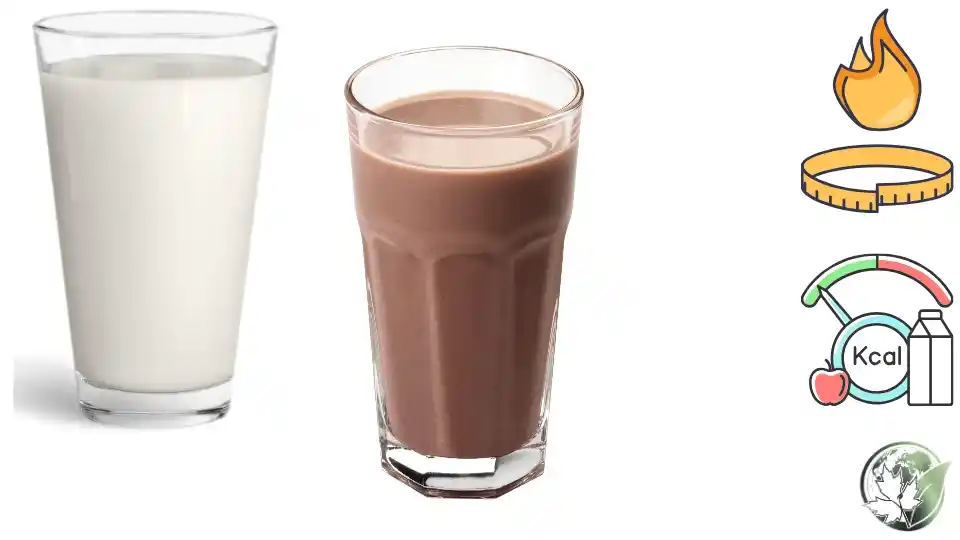
A cup (244 grams) of 2 percent milk has about 122 calories, 8 grams of protein, 5 grams of fat and 12 grams of natural sugar. A cup of low-fat chocolate milk has around 208 calories, 8 grams of protein, 2.5 grams of fat and 24 grams of sugar, about half of which is added. That means flavored milk has roughly 70 percent more calories than plain milk of the same fat level, or about 85 more calories per cup. Strawberry, banana and vanilla milk fall in between, at 180 to 200 calories per cup. Protein, calcium and vitamin D stay nearly the same, so the extra calories come almost entirely from added sugar.
The difference matters because flavored milk is a popular drink for children and a common choice in cafeterias, school lunches and ready-to-drink cartons. A small 200 milliliter carton is easy to finish, but it can contain 5 to 6 sugar cubes. This guide compares plain and flavored milk by cup, by carton and by 100 milliliters, looks at sugar, protein and calcium, explains when flavored milk is a reasonable choice, and gives tips for cutting sugar without giving up taste. Three comparison tables and an FAQ follow.
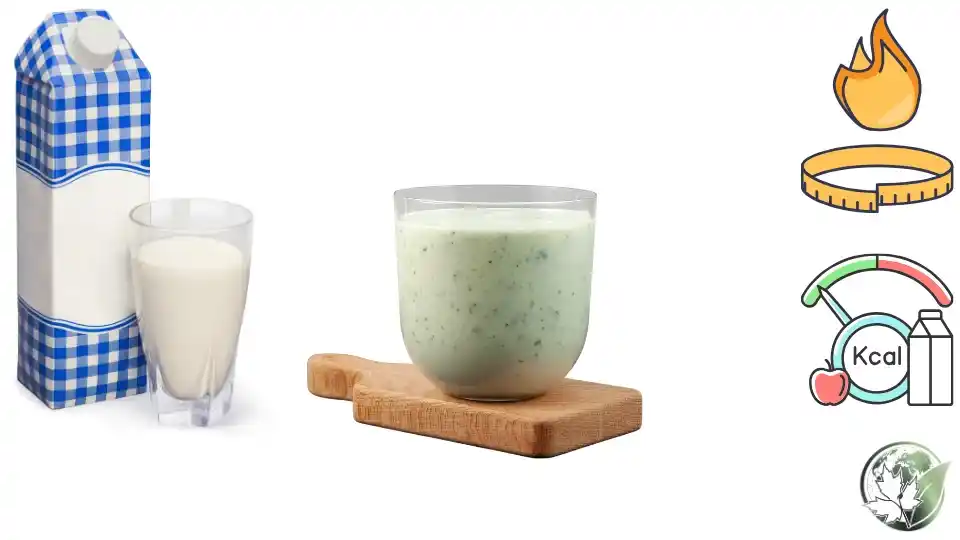
Chocolate milk has about 85 more calories per cup than plain 2 percent milk
How Many Calories Are in Plain Milk?
| Plain milk | Amount | Calories | Sugar | Protein |
|---|---|---|---|---|
| Skim (0%) | 1 cup (245 g) | 83 kcal | 12 g | 8.3 g |
| Low-fat (1%) | 1 cup (244 g) | 105 kcal | 12.7 g | 8.2 g |
| Reduced-fat (2%) | 1 cup (244 g) | 122 kcal | 12.3 g | 8.1 g |
| Whole (3.25%) | 1 cup (244 g) | 149 kcal | 12.3 g | 7.7 g |
| 2% milk | 100 ml | 50 kcal | 5 g | 3.3 g |
| 2% milk | 200 ml carton | 100 kcal | 10 g | 6.6 g |
| 2% milk | 250 ml glass | 125 kcal | 12.5 g | 8.3 g |
| 2% milk | 1 liter | 500 kcal | 50 g | 33 g |
How Many Calories Are in Flavored Milk?
| Flavored milk (low-fat) | Amount | Calories | Sugar | Protein |
|---|---|---|---|---|
| Chocolate | 1 cup | 208 kcal | 24 g | 8 g |
| Strawberry | 1 cup | 200 kcal | 25 g | 7.8 g |
| Banana | 1 cup | 190 kcal | 24 g | 7.5 g |
| Vanilla | 1 cup | 180 kcal | 22 g | 8 g |
| Coffee flavored | 1 cup | 175 kcal | 21 g | 7.5 g |
| Chocolate (whole) | 1 cup | 226 kcal | 25 g | 8 g |
| Chocolate | 200 ml carton | 170 kcal | 19.5 g | 6.5 g |
| Chocolate | 100 ml | 85 kcal | 9.8 g | 3.3 g |
Milk vs Flavored Milk: Calories Compared
| Amount | Plain 2% milk | Chocolate milk (low-fat) | Difference |
|---|---|---|---|
| 100 ml | 50 kcal | 85 kcal | +35 |
| 200 ml carton | 100 kcal | 170 kcal | +70 |
| 250 ml glass | 125 kcal | 213 kcal | +88 |
| 1 cup (244 g) | 122 kcal | 208 kcal | +86 |
| 500 ml | 250 kcal | 425 kcal | +175 |
| 1 liter | 500 kcal | 850 kcal | +350 |
| Sugar per cup | 12 g | 24 g | +12 g |
| Sugar cubes per cup | 3 | 6 | +3 |
A cup of chocolate milk equals a cup of milk plus about 3 teaspoons of added sugar, 12 grams. That is 48 extra calories from sugar and the rest from cocoa and slightly different processing. Drinking one chocolate milk a day instead of plain milk adds around 31,000 calories a year.
Milk vs Flavored Milk: Nutrition Compared
| Per cup (244 g) | Plain 2% milk | Chocolate milk (low-fat) |
|---|---|---|
| Calories | 122 kcal | 208 kcal |
| Total fat | 4.8 g | 2.5 g |
| Saturated fat | 3.1 g | 1.5 g |
| Carbohydrate | 12 g | 26 g |
| Sugar | 12 g | 24 g |
| Added sugar | 0 g | 11-12 g |
| Protein | 8 g | 8 g |
| Calcium | 309 mg | 290 mg |
| Vitamin D | 2.9 mcg | 2.5 mcg |
| Potassium | 342 mg | 420 mg |
| Cholesterol | 20 mg | 8 mg |
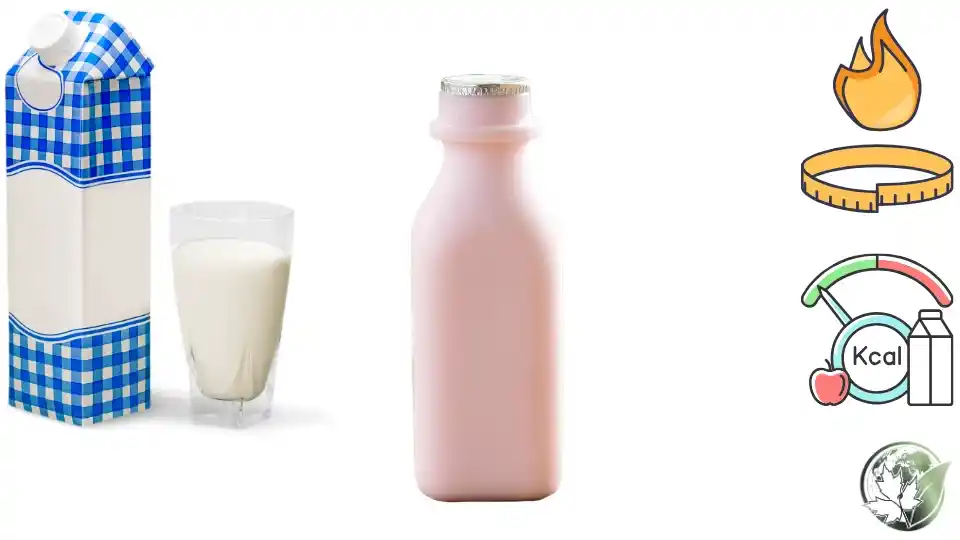
Flavored milk cartons often hold 200 milliliters, which means 170 to 190 calories for chocolate
Which Has More Calories: Milk or Flavored Milk?
Flavored milk has more calories at the same fat level, by about 55 to 90 per cup. Low-fat chocolate milk is lighter in fat than whole milk, so one cup of whole plain milk (149 calories) is still lower than one cup of low-fat chocolate milk (208). Even so, the chocolate drink has less saturated fat. For weight loss, plain skim or low-fat milk is the clear winner, because it supplies the same protein and calcium with fewer calories.
| Comparison | Plain | Flavored | Verdict |
|---|---|---|---|
| Same fat level (2%) | 122 | 190-210 | Plain lower |
| Skim vs low-fat chocolate | 83 | 208 | Plain much lower |
| Whole milk vs low-fat chocolate | 149 | 208 | Plain lower |
| Protein | 8 g | 8 g | Same |
| Calcium | 309 mg | 290 mg | Same |
| Added sugar | 0 | 11-12 g | Plain better |
| Taste appeal for kids | Lower | Higher | Flavored |
Why Does Flavored Milk Have So Many More Calories?
The difference comes from added sugar and cocoa. Manufacturers add about 2 to 3 tablespoons of sugar or syrup per liter of milk, plus cocoa powder in the chocolate version, which has about 12 calories per tablespoon. Some flavored milks use corn syrup or fruit concentrate. Fat is often reduced to offset the sugar, so labels may say low-fat, but the total calories are still higher. Fresh milk's natural lactose (12 grams per cup) is already sweet, so flavorings add on top of it.
| Ingredient | Amount per liter | Calories added |
|---|---|---|
| Sugar | 45-50 g | 175-195 kcal |
| Cocoa powder | 10 g | 25 kcal |
| Stabilizer (carrageenan) | 0.2 g | 0 kcal |
| Strawberry syrup | 60 g | 170 kcal |
| Banana flavor | 1 g | 0 kcal |
How Do the Flavors Compare With Each Other?
Chocolate is the highest in calories because it combines sugar and cocoa. Strawberry and banana milks often contain fruit puree or syrup, which can add sugar but little fat. Vanilla and coffee flavors are usually the lightest. Always check the label, as brands vary by 30 to 50 calories per carton. A 250 milliliter bottle of chocolate milk can reach 250 calories, while a vanilla one is 190.
| Flavor | Calories per 200 ml | Sugar per 200 ml | Sugar cubes |
|---|---|---|---|
| Plain 2% | 100 | 10 g | 2.5 |
| Vanilla | 150 | 18 g | 4.5 |
| Coffee | 145 | 17 g | 4.3 |
| Banana | 160 | 20 g | 5 |
| Strawberry | 165 | 21 g | 5.3 |
| Chocolate | 170 | 20 g | 5 |
| Chocolate (whole) | 185 | 21 g | 5.3 |
Plain milk gives children the same protein and calcium without the extra added sugar
Is Flavored Milk Healthy?
Flavored milk provides the same nine essential nutrients as plain milk, including calcium, protein, potassium, phosphorus and vitamin D, which is why some health organizations accept it as a way to get children to drink milk. But it also adds 11 to 12 grams of added sugar per cup, about half of the daily limit for young children. The American Academy of Pediatrics and other bodies suggest limiting flavored milk to occasional use and choosing low-fat versions. For adults, it is more of a dessert drink than a daily staple.
| Factor | Plain milk | Flavored milk |
|---|---|---|
| Calcium and protein | Full | Full |
| Added sugar | None | 11-12 g per cup |
| Calories | Lower | Higher |
| Saturated fat | Depends on fat level | Often lower (low-fat) |
| Best for | Daily drinking | Occasional treat |
| Child acceptance | Lower | Higher |
How Much Added Sugar Is in One Carton of Flavored Milk?
A 200 milliliter carton of chocolate milk has about 20 grams of total sugar, of which 10 grams are added. A 330 milliliter bottle has 33 grams of total sugar, close to a can of cola. The recommended added sugar limit is 25 grams per day for women and 36 grams for men, and under 25 grams for children aged 2 to 18. So a single large bottle of flavored milk can use up most of the day's limit for a child.
| Package | Total sugar | Added sugar | Calories |
|---|---|---|---|
| 200 ml chocolate carton | 20 g | 10 g | 170 kcal |
| 250 ml bottle | 25 g | 12.5 g | 213 kcal |
| 330 ml bottle | 33 g | 16 g | 280 kcal |
| 500 ml bottle | 50 g | 25 g | 425 kcal |
| 330 ml cola for comparison | 35 g | 35 g | 139 kcal |
When Is Flavored Milk a Reasonable Choice?
After intense exercise, chocolate milk is a popular recovery drink. Its ratio of carbohydrate to protein is about 3 to 1, which supports glycogen replacement and muscle repair, and studies show it performs as well as many sports drinks. Flavored milk may also help older adults and people with a small appetite who need extra calories. For everyday drinking, plain milk is better. If you want taste, mix half plain and half flavored.
| Situation | Better choice | Why |
|---|---|---|
| After a hard workout | Chocolate milk | Carbs plus protein |
| Daily drink | Plain milk | No added sugar |
| Weight loss | Skim or 1% plain | Fewest calories |
| Underweight or low appetite | Flavored or whole | Extra calories |
| Children who refuse milk | Half-and-half mix | Less sugar |
How Can You Cut Sugar in Flavored Milk?
Make your own by stirring one teaspoon of cocoa powder (5 calories) and one teaspoon of sugar (16 calories) into a cup of milk. This gives a chocolate milk with about 143 calories instead of 208. A drop of vanilla extract or a pinch of cinnamon adds flavor without sugar. Blend half a banana (50 calories) with milk for a naturally sweet shake. Choose brands labeled reduced sugar, which have around 120 calories per cup.
| Homemade option | Calories per cup | Sugar |
|---|---|---|
| Milk + 1 tsp cocoa + 1 tsp sugar | 143 kcal | 16 g |
| Milk + 1 tsp cocoa only | 127 kcal | 12 g |
| Milk + vanilla extract | 122 kcal | 12 g |
| Milk + 1/2 banana | 172 kcal | 18 g |
| Milk + 1 date, blended | 149 kcal | 18 g |
| Store-bought reduced-sugar chocolate | 150 kcal | 15 g |
How Many Calories Are in Milk by Type Compared With Flavored Milk?
Fat level changes the numbers for both plain and flavored milk. Skim milk is the lightest, whole milk the richest, and flavored versions add roughly 80 to 90 calories on top of whichever base they use. This means a skim-based chocolate milk (about 170 calories) can still have fewer calories than a glass of whole plain milk and a spoon of sugar, but it has more sugar than any plain version. Look at both the fat percentage and the sugar line on the label.
| Base milk | Plain (1 cup) | Chocolate version (1 cup) | Added by flavoring |
|---|---|---|---|
| Skim | 83 kcal | 160 kcal | +77 |
| 1% | 105 kcal | 178 kcal | +73 |
| 2% | 122 kcal | 208 kcal | +86 |
| Whole | 149 kcal | 226 kcal | +77 |
| Lactose-free 2% | 130 kcal | 215 kcal | +85 |
| Oat drink | 120 kcal | 190 kcal | +70 |
| Soy drink | 105 kcal | 160 kcal | +55 |
How Many Calories Are in a Daily Habit of Flavored Milk?
One carton a day seems harmless, but over weeks the calories accumulate. A child who drinks a 200 milliliter chocolate milk at school and another at home takes in 340 calories and 40 grams of sugar, about 17 percent of the calories a 7-year-old needs in a day. An adult who swaps a daily 250 milliliter flavored milk for plain milk saves 88 calories, or about 32,000 calories in a year, equivalent to roughly four kilograms of body fat if nothing else changes.
| Habit | Calories per day | Per week | Per year |
|---|---|---|---|
| 1 plain 2% glass (250 ml) | 125 kcal | 875 kcal | 45,600 kcal |
| 1 chocolate milk (250 ml) | 213 kcal | 1,491 kcal | 77,700 kcal |
| 2 chocolate cartons (200 ml) | 340 kcal | 2,380 kcal | 124,100 kcal |
| 1 chocolate milk after gym, 3 days | 213 kcal | 639 kcal | 33,300 kcal |
| Switch chocolate to plain | -88 kcal | -616 kcal | -32,000 kcal |
What Is the Difference in Protein, Calcium and Vitamins?
Flavoring does not remove the nutrients that make milk valuable. A cup of either type supplies about 8 grams of protein, 30 percent of the daily calcium, roughly 20 percent of vitamin D when fortified, and good amounts of vitamin B12 and riboflavin. A few brands reduce calcium slightly when cocoa binds some of it, but the difference is under 10 percent and is not considered meaningful. This is why flavored milk is often described as nutrient-rich even though it has more calories.
| Nutrient per cup | Plain 2% | Chocolate low-fat | Daily value |
|---|---|---|---|
| Protein | 8.1 g | 8 g | 16% |
| Calcium | 309 mg | 290 mg | 22-24% |
| Vitamin D | 2.9 mcg | 2.5 mcg | 12-15% |
| Vitamin B12 | 1.1 mcg | 1.0 mcg | 45% |
| Riboflavin | 0.45 mg | 0.45 mg | 35% |
| Phosphorus | 247 mg | 250 mg | 20% |
| Potassium | 342 mg | 420 mg | 8-9% |
Does Flavored Milk Affect Blood Sugar More Than Plain Milk?
Plain milk has a low glycemic index of about 30 because its lactose is paired with protein and fat. Chocolate milk has a glycemic index near 40 to 45 because of the added sugar, which is still in the low-to-medium range. The glycemic load of a cup rises from about 4 for plain milk to about 11 for chocolate milk. People with diabetes should favor plain milk and count the extra 12 to 14 grams of carbohydrate in flavored milk as a snack portion.
| Measure (1 cup) | Plain 2% | Chocolate low-fat |
|---|---|---|
| Glycemic index | About 30 | About 40-45 |
| Glycemic load | About 4 | About 11 |
| Carbohydrate | 12 g | 26 g |
| Added sugar | 0 g | 11-12 g |
| Insulin response | Moderate | Higher |
How Do Flavored Milk Drinks Compare With Soft Drinks and Juice?
Compared with cola or orange juice, flavored milk still brings protein and calcium, which the other drinks lack. A 250 milliliter glass of chocolate milk has 213 calories, while the same size glass of cola has 105 and orange juice 112. Calories are higher in milk, but you get 8 grams of protein and 290 milligrams of calcium. Sugar content is similar: 25 grams in chocolate milk, 26 in cola, 21 in orange juice. Nutrients are what separate them.
| Drink (250 ml) | Calories | Sugar | Protein | Calcium |
|---|---|---|---|---|
| Plain 2% milk | 125 kcal | 12.5 g | 8.3 g | 316 mg |
| Chocolate milk | 213 kcal | 25 g | 8.2 g | 297 mg |
| Strawberry milk | 205 kcal | 26 g | 8 g | 295 mg |
| Cola | 105 kcal | 26 g | 0 g | 0 mg |
| Orange juice | 112 kcal | 21 g | 1.7 g | 27 mg |
| Sweetened soy drink | 135 kcal | 15 g | 6 g | 300 mg |
What Should Parents Know About Flavored Milk in Schools?
Schools in many countries serve flavored milk because it increases overall milk consumption among children and ensures they get calcium and vitamin D. In response to concerns about sugar, manufacturers have cut the added sugar in school cartons by about a third in recent years, often to 8 to 10 grams per carton. Parents can read the label to find the carton's added sugar and choose low-fat versions. At home, offering plain milk first and flavored milk as an occasional option helps children keep a taste for less sweet drinks.
| School option | Calories | Added sugar |
|---|---|---|
| Plain low-fat carton (240 ml) | 100 kcal | 0 g |
| Chocolate fat-free carton (240 ml) | 130-160 kcal | 8-12 g |
| Strawberry fat-free carton (240 ml) | 140-150 kcal | 8-10 g |
| Traditional full-sugar carton | 180-200 kcal | 14-16 g |
Which Is Better for Weight Loss and Muscle Gain?
For weight loss, plain skim or 1 percent milk is best, giving 8 grams of protein for 83 to 105 calories. For muscle gain, flavored milk can help when you need more calories and carbohydrates, especially after training. A liter of chocolate milk has 850 calories and 33 grams of protein, making it an easy way to add calories if you struggle to eat enough. Choose the option that matches your total daily calories.
| Goal | Better milk | Reason |
|---|---|---|
| Fat loss | Skim or 1% plain | Fewest calories |
| Muscle gain | Chocolate or whole | More calories and carbs |
| Recovery after exercise | Chocolate milk | 3:1 carb to protein |
| Evening drink | Warm plain milk | No sugar before bed |
| Cooking | Plain milk | Neutral flavor |
How Should You Read a Flavored Milk Label?
Start with the serving size, as many bottles hold two servings even though they look like single-serve drinks. A 473 milliliter bottle may list a serving of 240 milliliters, so the numbers on the front apply to half the bottle. Then look at total sugar and added sugar, which US labels now list separately. Compare per 100 milliliters between brands: plain milk has about 5 grams of sugar per 100 milliliters, so anything above 8 grams means added sugar. Finally, check the ingredient order, where sugar, glucose syrup or fructose near the top signals a sweeter product.
| Label line | What to look for | Good sign |
|---|---|---|
| Serving size | Per glass or per bottle | One serving per container |
| Calories | Per 100 ml | Under 70 kcal |
| Total sugar | Per 100 ml | Under 8 g |
| Added sugar | Separate line | Under 5 g per serving |
| Ingredients | Order of sugar | Milk first, sugar lower |
| Protein | Per serving | 7-8 g per cup |
How Many Calories Are in Homemade Flavored Milk?
Making your own gives you control. A cup of 2 percent milk (122 calories) with a tablespoon of chocolate syrup (50 calories) comes to 172, while the same milk with a teaspoon of cocoa and a teaspoon of honey comes to 147. Strawberry milk made by blending four strawberries (16 calories) with milk reaches 138 and has less sugar than a store bottle. Adding a few ice cubes and blending gives a frothy, cold drink with no added syrups.
| Recipe (1 cup milk) | Add-in | Total calories | Sugar |
|---|---|---|---|
| Chocolate syrup | 1 tbsp | 172 kcal | 21 g |
| Cocoa + sugar | 1 tsp each | 143 kcal | 16 g |
| Cocoa + honey | 1 tsp each | 147 kcal | 16 g |
| Strawberry | 4 berries | 138 kcal | 14 g |
| Banana | 1/2 banana | 172 kcal | 18 g |
| Vanilla + cinnamon | Pinch | 122 kcal | 12 g |
| Date shake | 2 dates | 176 kcal | 24 g |
Can Lactose-Free or Plant-Based Options Change the Picture?
Lactose-free milk has the same calories as regular milk, around 130 per cup, but tastes sweeter because lactose is split into glucose and galactose. Flavored lactose-free versions add 80 to 90 calories. Soy, almond and oat drinks vary: unsweetened almond milk has just 30 to 40 calories per cup, while chocolate oat drink has about 190. If you choose plant-based flavored drinks, check the sugar and protein, as many have 1 to 4 grams of protein compared with 8 in cow's milk.
| Drink (1 cup) | Plain | Chocolate | Protein (plain) |
|---|---|---|---|
| Cow milk 2% | 122 kcal | 208 kcal | 8 g |
| Lactose-free 2% | 130 kcal | 215 kcal | 8 g |
| Soy drink | 105 kcal | 160 kcal | 7 g |
| Oat drink | 120 kcal | 190 kcal | 3 g |
| Almond drink (unsweetened) | 35 kcal | 120 kcal | 1 g |
| Coconut drink | 45 kcal | 140 kcal | 0.5 g |
What Is the Bottom Line on Serving Sizes?
A reasonable daily amount of milk for adults is 1 to 3 cups (250 to 750 milliliters), according to most dietary guidelines. If you include one flavored serving, make it a small one of 200 milliliters and count it as a treat rather than part of the base. Children aged 4 to 8 need 2.5 cups, and 9 to 18 years need 3 cups. Plain milk should supply most of that, with flavored milk used sparingly.
| Group | Daily milk | Plain calories | If all chocolate |
|---|---|---|---|
| Child 4-8 | 2.5 cups | 305 kcal | 520 kcal |
| Teen 9-18 | 3 cups | 366 kcal | 624 kcal |
| Adult | 3 cups | 366 kcal | 624 kcal |
| Older adult | 3 cups | 366 kcal | 624 kcal |
| Active adult after exercise | 1 chocolate cup | - | 208 kcal |
Key Takeaways: Milk vs Flavored Milk Calories
A cup of 2 percent milk has about 122 calories, while a cup of low-fat chocolate milk has about 208, mostly from 12 grams of added sugar. Protein and calcium are the same. Choose plain milk daily and keep flavored milk for treats or post-workout recovery.
Frequently Asked Questions
6 questions answered
How many calories are in a glass of chocolate milk?
About 208 per cup.
How many calories are in a glass of plain milk?
About 122 for 2 percent.
Does flavored milk have the same calcium?
Yes, almost the same.
Is chocolate milk good after exercise?
Yes, it helps recovery.
Which flavored milk has the fewest calories?
Vanilla and coffee types.
Is plain milk better for weight loss?
Yes, especially skim or 1 percent.