How Many Calories Are in Mayonnaise Sauce vs Olive Oil? The Quick Answer
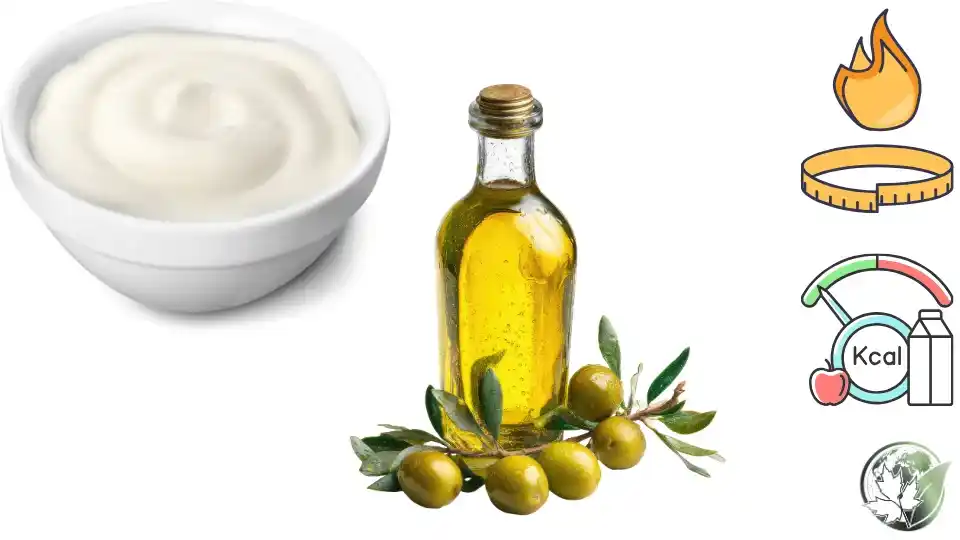
One tablespoon (14 grams) of regular mayonnaise has about 94 calories, 10.3 grams of fat and 88 milligrams of sodium. One tablespoon (13.5 grams) of olive oil has 119 calories and 13.5 grams of fat. Per 100 grams, mayonnaise has about 680 calories and olive oil 884. So mayonnaise has roughly 21 percent fewer calories per spoon and 23 percent fewer per weight than olive oil, because mayonnaise is an emulsion of oil with egg yolk, vinegar or lemon juice, mustard and a little water. Even so, it is about 75 percent oil, so it remains a very energy-dense sauce.
The two are not interchangeable in the kitchen, but people often use both: oil to cook and dress salads, mayonnaise to spread on sandwiches, bind salads and dip fries. The calories depend on how much you use. A heavy hand with mayonnaise in tuna salad (3 tablespoons, 282 calories) adds more than a drizzle of olive oil (1 tablespoon, 119). This guide compares mayonnaise sauce and olive oil per teaspoon, tablespoon and 100 grams, looks at fat types, light and vegan versions, and shows how to lower calories without losing flavor, with three comparison tables and an FAQ.
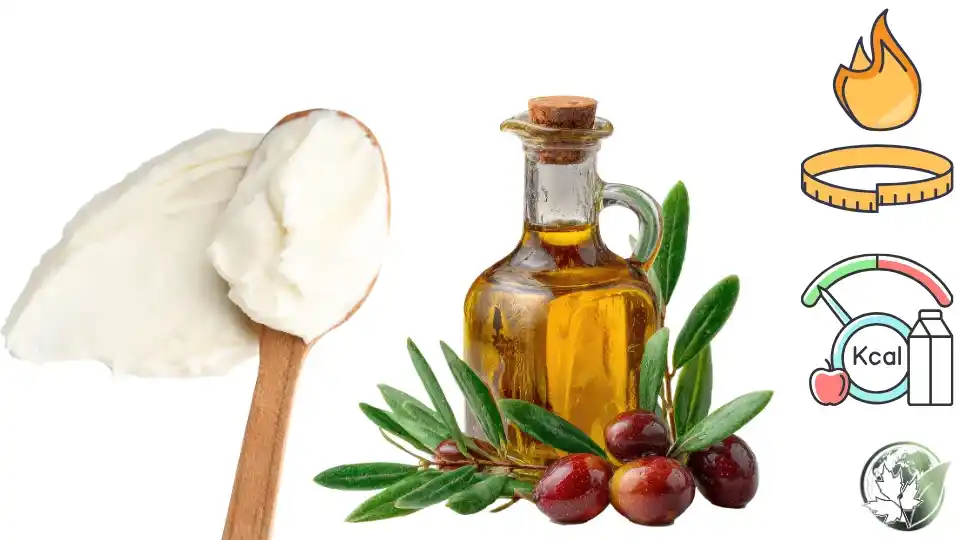
Mayonnaise is about 75 percent oil, so its calories are close to those of olive oil itself
How Many Calories Are in Mayonnaise?
| Mayonnaise | Weight | Calories | Fat | Sodium |
|---|---|---|---|---|
| 1 teaspoon | 4.7 g | 31 kcal | 3.4 g | 29 mg |
| 1 tablespoon | 14 g | 94 kcal | 10.3 g | 88 mg |
| 1 sandwich spread | 20 g | 134 kcal | 14.7 g | 126 mg |
| 2 tablespoons | 28 g | 188 kcal | 20.6 g | 176 mg |
| 3 tablespoons (tuna salad) | 42 g | 282 kcal | 31 g | 264 mg |
| 1/4 cup | 55 g | 370 kcal | 40.5 g | 346 mg |
| 1 cup | 220 g | 1,481 kcal | 162 g | 1,386 mg |
| 100 g | 100 g | 680 kcal | 75 g | 635 mg |
| Single-serve packet | 12 g | 80 kcal | 8.8 g | 75 mg |
| Light mayonnaise, 1 tbsp | 15 g | 35 kcal | 3.5 g | 110 mg |
| Fat-free mayonnaise, 1 tbsp | 16 g | 12 kcal | 0 g | 120 mg |
| Vegan mayonnaise, 1 tbsp | 14 g | 90 kcal | 10 g | 90 mg |
How Many Calories Are in Olive Oil?
| Olive oil | Weight | Calories | Fat | Saturated fat |
|---|---|---|---|---|
| 1 teaspoon | 4.5 g | 40 kcal | 4.5 g | 0.6 g |
| 1 tablespoon | 13.5 g | 119 kcal | 13.5 g | 1.9 g |
| 2 tablespoons | 27 g | 238 kcal | 27 g | 3.8 g |
| 1/4 cup | 54 g | 477 kcal | 54 g | 7.4 g |
| 1 cup | 216 g | 1,909 kcal | 216 g | 29.7 g |
| 100 ml | 92 g | 813 kcal | 92 g | 12.7 g |
| 100 g | 100 g | 884 kcal | 100 g | 13.8 g |
| Spray, 1 second | 0.25 g | 2 kcal | 0.25 g | 0.04 g |
Mayonnaise Sauce vs Olive Oil: Calories Compared
| Amount | Regular mayo | Light mayo | Olive oil |
|---|---|---|---|
| 1 teaspoon | 31 kcal | 12 kcal | 40 kcal |
| 1 tablespoon | 94 kcal | 35 kcal | 119 kcal |
| 2 tablespoons | 188 kcal | 70 kcal | 238 kcal |
| 1/4 cup | 370 kcal | 140 kcal | 477 kcal |
| 100 g | 680 kcal | 250 kcal | 884 kcal |
| 100 calories | 15 g (1.1 tbsp) | 40 g (2.8 tbsp) | 11 g (0.8 tbsp) |
| Fat per tablespoon | 10.3 g | 3.5 g | 13.5 g |
| Saturated fat per tbsp | 1.6 g | 0.5 g | 1.9 g |
Regular mayonnaise is about a fifth lower than olive oil per spoon. Light mayonnaise is about 70 percent lower, but replaces fat with water, starch and thickeners.
Mayonnaise Sauce vs Olive Oil: Nutrition Compared
| Per 100 g | Regular mayonnaise | Light mayonnaise | Olive oil |
|---|---|---|---|
| Calories | 680 kcal | 250 kcal | 884 kcal |
| Total fat | 75 g | 25 g | 100 g |
| Saturated fat | 11.2 g | 3.5 g | 13.8 g |
| Monounsaturated fat | 17 g | 6 g | 73 g |
| Polyunsaturated fat | 42 g | 14 g | 10.5 g |
| Cholesterol | 42 mg | 15 mg | 0 mg |
| Carbohydrate | 0.6 g | 16 g | 0 g |
| Protein | 1 g | 0.5 g | 0 g |
| Sodium | 635 mg | 785 mg | 2 mg |
| Vitamin E | 8 mg | 3 mg | 14 mg |
| Vitamin K | 42 mcg | 15 mcg | 60 mcg |
Mayonnaise is made by whisking oil slowly into egg yolk, vinegar and mustard to form a stable emulsion
Which Has More Calories: Mayonnaise or Olive Oil?
Olive oil has more calories than mayonnaise per spoon and per weight, 119 against 94 and 884 against 680. But mayonnaise is eaten as a sauce, so people use more than they would oil: a sandwich might have 1 to 2 tablespoons (94 to 188 calories) of mayo, and a deli salad contains a quarter to half a cup. Over a week, mayonnaise can contribute more than oil to someone's intake. Measuring is helpful with both.
| Comparison | Mayonnaise | Olive oil | Verdict |
|---|---|---|---|
| Calories per tablespoon | 94 | 119 | Mayo lower |
| Calories per 100 g | 680 | 884 | Mayo lower |
| Typical amount used | 1-3 tbsp | 1-2 tbsp | Mayo more |
| Cholesterol | 6 mg per tbsp | 0 | Oil lower |
| Sodium | 88 mg per tbsp | 0.3 mg | Oil lower |
| Healthy monounsaturated fat | 2.4 g per tbsp | 9.9 g per tbsp | Oil higher |
Why Is Mayonnaise So High in Calories?
A classic mayonnaise recipe uses one egg yolk (55 calories) for each cup of oil (1,900 calories), plus a tablespoon of vinegar or lemon juice and a teaspoon of mustard. Commercial mayonnaise by law must contain at least 65 percent oil in many countries, and typically has 70 to 80. Because oil has 9 calories per gram and the remaining ingredients are mostly water, the result is about 6.8 calories per gram. Light versions swap oil for water, starch or gum to reach 2.5 calories per gram.
| Ingredient (per 100 g mayonnaise) | Amount | Calories |
|---|---|---|
| Oil (soybean, canola or olive) | 75 g | 663 kcal |
| Egg yolk | 8 g | 31 kcal |
| Water | 12 g | 0 kcal |
| Vinegar, lemon juice | 3 g | 1 kcal |
| Salt, mustard, sugar | 2 g | 2 kcal |
| Total | 100 g | About 680 kcal |
Is Mayonnaise Healthier Than Olive Oil?
Olive oil is generally the healthier fat. It is richer in monounsaturated fat, contains polyphenols in the extra virgin grade, and has no cholesterol or sodium. Most mayonnaise is made with soybean, sunflower or canola oil, which provide polyunsaturated fat and some omega-3 (canola). It also has egg yolk, adding cholesterol and some choline. Mayonnaise made with olive oil exists, but often blends olive oil with other oils. In moderation, mayonnaise fits a healthy diet, but because it is used as a condiment, the key is portion size.
| Factor | Mayonnaise | Olive oil |
|---|---|---|
| Fat quality | Mostly polyunsaturated | Mostly monounsaturated |
| Polyphenols | Little | Yes (extra virgin) |
| Cholesterol | 6 mg per tbsp | 0 |
| Sodium | 88 mg per tbsp | None |
| Choline and protein | Small amount | None |
| Heart health evidence | Neutral | Positive |
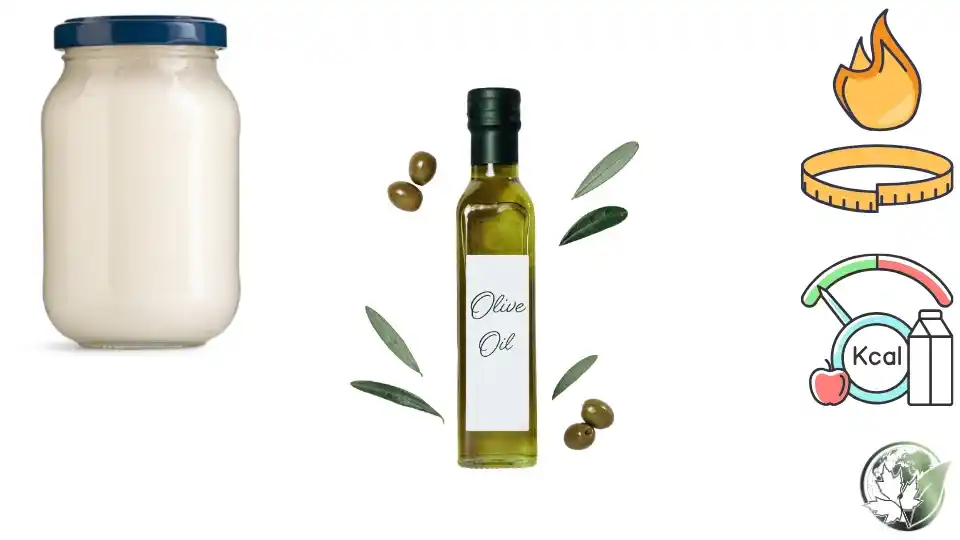
A thin spread of one teaspoon of mayonnaise adds 31 calories to a sandwich and plenty of moisture
How Do Light, Vegan and Specialty Mayonnaises Compare?
Light mayonnaise has 35 to 50 calories per tablespoon, but may contain modified starch, sugar and extra salt. Fat-free mayonnaise has only 10 to 15 calories and tastes and feels different. Vegan mayonnaise uses aquafaba, soy milk or pea protein instead of egg, with 80 to 100 calories per tablespoon. Olive oil mayonnaise has the same 90 to 100 as regular. Japanese mayonnaise has more egg yolk and about 100 calories per tablespoon. Salad dressing styles such as Miracle Whip have about 40 calories per tablespoon, with more sugar.
| Type | Calories per tbsp | Fat | Note |
|---|---|---|---|
| Regular mayonnaise | 94 kcal | 10.3 g | Standard |
| Olive oil mayonnaise | 95 kcal | 10.5 g | Often blended oils |
| Light mayonnaise | 35 kcal | 3.5 g | Starch, water |
| Fat-free mayonnaise | 12 kcal | 0 g | Different texture |
| Vegan mayonnaise | 90 kcal | 10 g | No egg |
| Japanese mayonnaise | 100 kcal | 11 g | Egg yolk, rich |
| Salad dressing (Miracle Whip type) | 40 kcal | 3.5 g | Sweeter, tangy |
| Greek yogurt mayonnaise mix | 20 kcal | 0.8 g | Homemade |
How Can You Lower the Calories of Mayonnaise-Based Dishes?
Replace half the mayonnaise in tuna, egg or chicken salad with plain Greek yogurt, which has 9 calories per tablespoon and adds protein. Use a thin layer on sandwiches, or swap for mustard (3 calories) or hummus (25). Blend mayonnaise with lemon juice and herbs to stretch the flavor. Measure the spoon level rather than heaped. A tuna salad with 1 tablespoon of mayo and 2 tablespoons of Greek yogurt has about 112 calories, against 282 with 3 tablespoons of mayo.
| Dish | Original | Calories | Lighter version | Calories |
|---|---|---|---|---|
| Tuna salad | 3 tbsp mayo | 282 kcal | 1 tbsp mayo + 2 tbsp yogurt | 112 kcal |
| Egg salad | 2 tbsp mayo | 188 kcal | 1 tbsp mayo + 1 tbsp mustard | 97 kcal |
| Coleslaw (1 cup) | 1/4 cup mayo | 370 kcal | 2 tbsp mayo + 1/4 cup yogurt | 215 kcal |
| Sandwich | 2 tbsp mayo | 188 kcal | 1 tsp mayo + mustard | 34 kcal |
| Potato salad | 1/3 cup mayo | 494 kcal | 3 tbsp mayo + yogurt | 300 kcal |
What Is the Difference Between Mayonnaise and Aioli?
Mayonnaise is egg yolk, oil, acid and mustard. Traditional aioli is garlic and olive oil pounded into an emulsion, though modern recipes add egg yolk, making it garlic mayonnaise. Calories are similar at 90 to 100 per tablespoon. If you make mayonnaise at home with olive oil, you can control quality, but the calories remain the same as any oil-based sauce. Raw egg yolk is a food safety consideration: use pasteurized eggs for homemade versions, especially for pregnant women, children and older adults.
| Sauce | Base | Calories per tbsp |
|---|---|---|
| Mayonnaise | Egg yolk, oil, vinegar | 94 kcal |
| Aioli (garlic mayo) | Egg yolk, olive oil, garlic | 95-100 kcal |
| Traditional aioli | Garlic, olive oil | 100 kcal |
| Remoulade | Mayonnaise, pickles, capers | 70 kcal |
| Tartar sauce | Mayonnaise, pickles | 60 kcal |
| Ranch dressing | Mayonnaise, buttermilk, herbs | 73 kcal |
What Is the Verdict?
If you want the healthiest fat, use olive oil, in measured amounts, for cooking and dressing. If you love creamy sauces, use mayonnaise but in small, level spoonfuls and mix with yogurt or mustard to stretch it. Neither is a low-calorie food, but both can be part of a healthy diet. One tablespoon a day of either adds between 94 and 119 calories, or 34,000 to 43,000 calories a year, so measure.
| Goal | Better choice | Reason |
|---|---|---|
| Fewest calories per tbsp | Light or fat-free mayo | 12-35 kcal |
| Heart-healthy fat | Olive oil | Monounsaturated, polyphenols |
| Creamy texture | Mayonnaise (mixed with yogurt) | Emulsion |
| Cooking | Olive oil | Heat stable |
| Sandwich spread | Mustard or thin mayo | Fewer calories |
| Vegan | Vegan mayo | No egg |
How Do You Make Mayonnaise at Home and What Does It Contain?
Whisk one egg yolk with a teaspoon of mustard and a tablespoon of lemon juice, then add 3/4 cup of oil drop by drop, whisking continuously until thick. The result is about 200 grams of mayonnaise with 1,500 calories, or 7.5 calories per gram, similar to commercial brands. Using olive oil gives a more pungent taste, so many cooks blend half olive oil and half neutral oil. Homemade mayonnaise must be refrigerated and used within four days, as it contains raw egg. Pasteurized eggs reduce the risk of salmonella.
| Ingredient | Amount | Calories |
|---|---|---|
| Egg yolk | 1 (17 g) | 55 kcal |
| Oil | 3/4 cup (160 g) | 1,413 kcal |
| Lemon juice | 1 tbsp | 3 kcal |
| Mustard | 1 tsp | 3 kcal |
| Salt | Pinch | 0 kcal |
| Total (about 200 g) | 200 g | About 1,474 kcal |
| Per tablespoon (14 g) | 14 g | About 103 kcal |
How Do Mayonnaise and Olive Oil Affect Cholesterol and Heart Health?
Replacing saturated fat with unsaturated fat lowers LDL cholesterol. Most mayonnaises use soybean or canola oil, which are mainly polyunsaturated, and contain only 1.6 grams of saturated fat per tablespoon, similar to olive oil's 1.9. The egg yolk contributes 6 milligrams of cholesterol per tablespoon, a small amount compared with the 300 milligrams daily once recommended. Dietary cholesterol has a smaller effect on blood cholesterol than saturated fat for most people. Olive oil is better supported by studies for cardiovascular benefit, but calories and amounts matter more than the choice for people in general.
| Per tablespoon | Mayonnaise | Olive oil | Butter |
|---|---|---|---|
| Saturated fat | 1.6 g | 1.9 g | 7.3 g |
| Monounsaturated fat | 2.4 g | 9.9 g | 3 g |
| Polyunsaturated fat | 5.9 g | 1.4 g | 0.4 g |
| Cholesterol | 6 mg | 0 mg | 31 mg |
| Calories | 94 kcal | 119 kcal | 102 kcal |
What Are Typical Portion Sizes for Mayonnaise?
Serving sizes on labels are 1 tablespoon, but real-world use is higher. A fast-food burger contains about 1 tablespoon, a deli sandwich 2, a tub of potato salad up to 1/4 cup per serving, and a side of fries with mayo dip 2 to 3 tablespoons. Squeeze bottles make it easy to add 30 to 40 grams in a second. Using a spoon or butter knife is a more precise way to control the amount, and spreading to the edges gives full coverage with half the quantity.
| Use | Typical amount | Calories |
|---|---|---|
| Burger | 1 tbsp | 94 kcal |
| Deli sandwich | 2 tbsp | 188 kcal |
| Fries with mayo dip | 3 tbsp | 282 kcal |
| Potato salad (1 serving) | 1/4 cup | 370 kcal |
| Coleslaw (1 serving) | 3 tbsp | 282 kcal |
| Sushi roll spicy mayo | 1 tbsp | 60 kcal |
| Sandwich thin spread | 1 tsp | 31 kcal |
Who Should Be Careful With Mayonnaise?
People who are pregnant, immunocompromised, or older should avoid homemade mayonnaise from raw eggs. Commercial mayonnaise is made with pasteurized eggs and acidified, so it is safe, but must be refrigerated after opening and discarded if left out for more than two hours at room temperature, or one hour above 32 degrees Celsius. Those with egg allergies should choose vegan versions. Anyone on a low-fat or low-sodium diet should look at light versions, though they may be higher in sodium and sugar.
| Group | Concern | Advice |
|---|---|---|
| Pregnancy | Raw egg in homemade | Pasteurized eggs only |
| Egg allergy | Egg yolk | Vegan mayo |
| Weight loss | High calories | Light, mustard, yogurt |
| Low sodium diet | 88 mg per tbsp | Check labels |
| Picnic or outdoor events | Spoilage | Keep cold, discard after 2 hours |
How Should You Store Mayonnaise and Olive Oil?
Unopened commercial mayonnaise is shelf-stable for three to four months past the printed date and should be refrigerated after opening, where it keeps for two months. Never leave it out in warm conditions. Homemade mayonnaise lasts four days in the fridge. Olive oil stays good for 18 to 24 months unopened in a dark cool cupboard, and three to six months after opening. Both lose quality when exposed to heat and light. Avoid double-dipping into jars to prevent contamination.
| Product | Unopened | Opened | Storage |
|---|---|---|---|
| Commercial mayonnaise | 3-4 months past date | 2 months | Fridge |
| Light mayonnaise | 3 months | 2 months | Fridge |
| Homemade mayonnaise | Not applicable | 4 days | Fridge, covered |
| Vegan mayonnaise | 3-4 months | 2 months | Fridge |
| Olive oil | 18-24 months | 3-6 months | Cool, dark |
Can You Substitute Mayonnaise for Olive Oil in Cooking?
In some recipes, yes. Mayonnaise can replace oil and eggs in cake mixes, giving a moist crumb: replace the oil with an equal volume of mayo and omit eggs in a simple chocolate cake. It can brush the outside of a grilled cheese sandwich or chicken before roasting, producing a golden crust. It cannot replace oil for deep frying, sauteing or dressing salads, as the egg and water would curdle or burn. For marinades, a thin film of mayonnaise helps seasonings stick and keeps lean meat moist.
| Use | With olive oil | With mayonnaise |
|---|---|---|
| Chocolate cake | 1/2 cup oil, 3 eggs: 964 + 216 kcal | 1/2 cup mayo, no eggs: 740 kcal |
| Grilled cheese | 1 tsp butter or oil: 40 kcal | 1 tsp mayo: 31 kcal |
| Roast chicken coating | 1 tbsp oil: 119 kcal | 1 tbsp mayo: 94 kcal |
| Sauteing | 1 tsp oil: 40 kcal | Not suitable |
| Salad dressing | 1 tbsp oil: 119 kcal | 1 tbsp mayo thinned with lemon: 95 kcal |
How Does Mayonnaise Compare With Other Condiments?
Among common condiments, mayonnaise sits near the top for calories. Butter has 102 calories per tablespoon, ranch dressing 73, cream cheese 50, hummus 25, mustard 3 and ketchup 15. Switching to lower-calorie condiments on sandwiches and burgers is one of the easiest ways to lower daily calories. A tablespoon of mayonnaise swapped for mustard every day saves 91 calories, or about 33,000 calories a year.
| Condiment | Calories per tbsp | Fat |
|---|---|---|
| Olive oil | 119 kcal | 13.5 g |
| Butter | 102 kcal | 11.5 g |
| Mayonnaise | 94 kcal | 10.3 g |
| Tahini | 89 kcal | 8 g |
| Ranch dressing | 73 kcal | 7.7 g |
| Cream cheese | 50 kcal | 5 g |
| Hummus | 25 kcal | 1.4 g |
| Ketchup | 15 kcal | 0 g |
| Mustard | 3 kcal | 0.2 g |
What Is the Verdict?
Both mayonnaise and olive oil are concentrated fats. Olive oil is better for cooking and for heart health, and mayonnaise is a creamy condiment whose main fault is the ease with which it is overused. Use a teaspoon or a thin layer, mix with yogurt or mustard, and save regular mayonnaise for dishes where it matters. Measure olive oil by the teaspoon. Over the course of a year, these habits can eliminate tens of thousands of calories.
| Goal | Better choice | Reason |
|---|---|---|
| Cooking | Olive oil | Heat stable |
| Heart health | Olive oil | Monounsaturated fat |
| Sandwiches | Mustard or thin mayo | Fewer calories |
| Binding salads | Mayo plus yogurt | Texture, fewer calories |
| Egg-free | Vegan mayo | No egg |
| Lowest calories | Light mayo or mustard | 3-35 kcal |
How Many Calories Does Mayonnaise Add to a Year of Eating?
A person who has one tablespoon of mayonnaise daily eats about 34,300 calories a year from it, and two tablespoons about 68,600. Olive oil at one tablespoon a day is 43,400. These figures show how a small daily habit translates into a large number, equal to roughly 10 to 20 pounds of body fat if not offset. They don't mean you must stop, but they do mean that spoon-sized decisions matter more than most people think.
| Habit | Daily | Yearly | Approximate fat equivalent |
|---|---|---|---|
| 1 tbsp mayonnaise | 94 kcal | 34,300 kcal | About 10 lb |
| 2 tbsp mayonnaise | 188 kcal | 68,600 kcal | About 20 lb |
| 1 tbsp light mayonnaise | 35 kcal | 12,800 kcal | About 3.7 lb |
| 1 tbsp olive oil | 119 kcal | 43,400 kcal | About 12.4 lb |
| 1 tsp olive oil | 40 kcal | 14,600 kcal | About 4.2 lb |
Key Takeaways: Mayonnaise Sauce vs Olive Oil Calories
Mayonnaise has about 94 calories per tablespoon and olive oil 119, so mayonnaise is a fifth lower, but it is about 75 percent oil. Use level spoonfuls, mix with Greek yogurt or mustard, and choose olive oil for cooking and dressing.
Frequently Asked Questions
6 questions answered
Does mayonnaise have fewer calories than olive oil?
Yes, 94 against 119 per tablespoon.
How many calories are in a teaspoon of mayonnaise?
About 31.
Is light mayonnaise lower in calories?
Yes, about 35 per tablespoon.
Is olive oil mayonnaise healthier?
Not much, the calories are the same.
How can I cut calories in tuna salad?
Replace half the mayonnaise with Greek yogurt.
Does mayonnaise have cholesterol?
Yes, about 6 milligrams per tablespoon.