How Many Calories Are in Ketchup Sauce vs Olive Oil? The Quick Answer
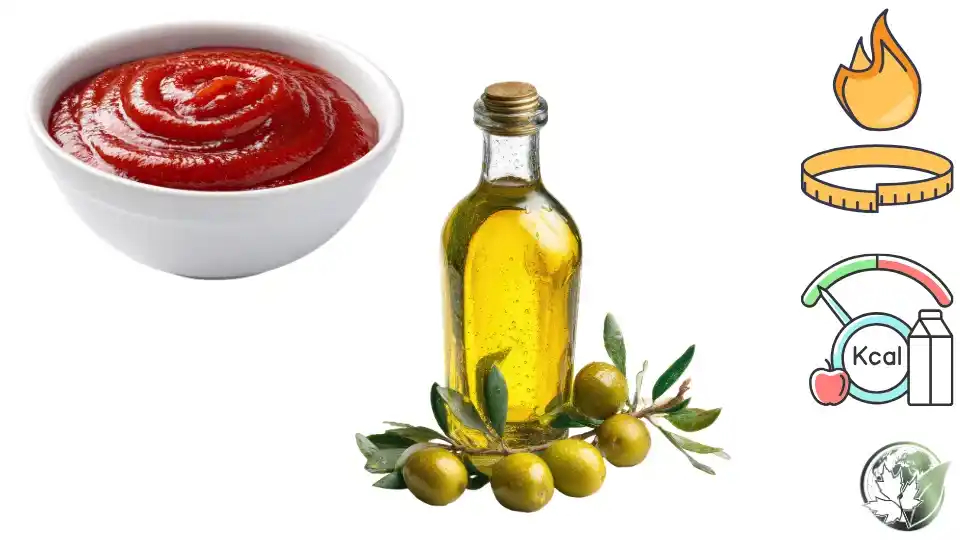
One tablespoon (17 grams) of tomato ketchup has about 15 calories, 3.7 grams of sugar and 154 milligrams of sodium. One tablespoon (13.5 grams) of olive oil has 119 calories, no sugar and almost no sodium. Per 100 grams, ketchup has about 100 calories and olive oil 884. So ketchup is about 87 percent lower in calories than olive oil per spoon, and about nine times lower per weight, because ketchup is mostly water (68 percent), tomato and sugar, while olive oil is pure fat.
The comparison is not about which is better, since the two are used differently, but about how much each adds to a meal. A packet of ketchup (9 grams) has 8 calories, while a tablespoon of oil on a salad is 119. On the other hand, ketchup contributes added sugar and salt, which oil doesn't. A generous squirt of ketchup on fries, 50 grams, has 50 calories and 12 grams of sugar. This guide compares ketchup and olive oil per teaspoon, tablespoon, packet and 100 grams, looks at sugar, sodium, fat types and other nutrients, and shows how to use both wisely, with three comparison tables and an FAQ.
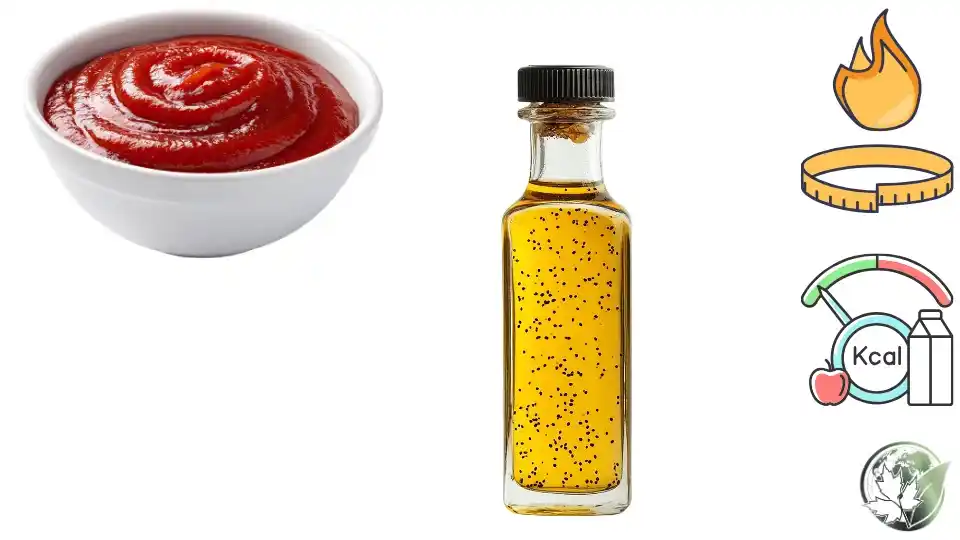
Ketchup is about two thirds water and has 15 calories per tablespoon, while olive oil is pure fat with 119
How Many Calories Are in Ketchup?
| Ketchup | Weight | Calories | Sugar | Sodium |
|---|---|---|---|---|
| 1 teaspoon | 5.7 g | 5 kcal | 1.2 g | 51 mg |
| 1 packet | 9 g | 8 kcal | 1.9 g | 82 mg |
| 1 tablespoon | 17 g | 15 kcal | 3.7 g | 154 mg |
| 2 tablespoons | 34 g | 30 kcal | 7.4 g | 308 mg |
| Small squirt on fries | 30 g | 27 kcal | 6.5 g | 270 mg |
| 1/4 cup | 68 g | 60 kcal | 15 g | 616 mg |
| 1 cup | 274 g | 245 kcal | 60 g | 2,470 mg |
| 100 g | 100 g | 100 kcal | 22 g | 907 mg |
| Reduced-sugar ketchup, 1 tbsp | 17 g | 8 kcal | 1 g | 130 mg |
| Organic ketchup, 1 tbsp | 17 g | 16 kcal | 3.8 g | 120 mg |
How Many Calories Are in Olive Oil?
| Olive oil | Weight | Calories | Fat | Saturated fat |
|---|---|---|---|---|
| 1 teaspoon | 4.5 g | 40 kcal | 4.5 g | 0.6 g |
| 1 tablespoon | 13.5 g | 119 kcal | 13.5 g | 1.9 g |
| 2 tablespoons | 27 g | 238 kcal | 27 g | 3.8 g |
| 1/4 cup | 54 g | 477 kcal | 54 g | 7.4 g |
| 1 cup | 216 g | 1,909 kcal | 216 g | 29.7 g |
| 100 ml | 92 g | 813 kcal | 92 g | 12.7 g |
| 100 g | 100 g | 884 kcal | 100 g | 13.8 g |
| Spray, 1 second | 0.25 g | 2 kcal | 0.25 g | 0.04 g |
Ketchup Sauce vs Olive Oil: Calories Compared
| Amount | Ketchup | Olive oil | Difference |
|---|---|---|---|
| 1 teaspoon | 5 kcal | 40 kcal | Ketchup -35 |
| 1 tablespoon | 15 kcal | 119 kcal | Ketchup -104 |
| 2 tablespoons | 30 kcal | 238 kcal | Ketchup -208 |
| 1/4 cup | 60 kcal | 477 kcal | Ketchup -417 |
| 100 g | 100 kcal | 884 kcal | Ketchup -784 |
| 100 calories | 100 g (6 tbsp) | 11 g (0.8 tbsp) | - |
| Sugar per tbsp | 3.7 g | 0 g | Olive oil lower |
| Sodium per tbsp | 154 mg | 0.3 mg | Olive oil lower |
You can eat about eight tablespoons of ketchup for the same calories as one tablespoon of olive oil. But those eight tablespoons would contain 30 grams of sugar and over 1,200 milligrams of sodium.
Ketchup Sauce vs Olive Oil: Nutrition Compared
| Per 100 g | Ketchup | Olive oil |
|---|---|---|
| Calories | 100 kcal | 884 kcal |
| Fat | 0.1 g | 100 g |
| Saturated fat | 0 g | 13.8 g |
| Monounsaturated fat | 0 g | 73 g |
| Carbohydrate | 25 g | 0 g |
| Sugar | 22 g | 0 g |
| Fiber | 0.3 g | 0 g |
| Protein | 1.2 g | 0 g |
| Sodium | 907 mg | 2 mg |
| Potassium | 345 mg | 1 mg |
| Lycopene | 10 mg | 0 mg |
| Vitamin E | 1.5 mg | 14 mg |
Ketchup is made from tomato paste, vinegar, sugar and spices, while olive oil is pressed from olives
Which Has More Calories: Ketchup or Olive Oil?
Olive oil, by far. A tablespoon has eight times the calories of a tablespoon of ketchup and a teaspoon of oil has more than a full tablespoon of ketchup. A full bottle of ketchup (570 grams) has about 570 calories, while a bottle of olive oil of 500 millilitres contains over 4,000. Even so, ketchup should not be treated as a free food, because the sugar adds up when used in large quantities, and most people consume it in more than one serving.
| Comparison | Ketchup | Olive oil | Verdict |
|---|---|---|---|
| Calories per tbsp | 15 | 119 | Ketchup lower |
| Calories per 100 g | 100 | 884 | Ketchup lower |
| Sugar | 3.7 g per tbsp | 0 | Oil lower |
| Sodium | 154 mg per tbsp | 0.3 mg | Oil lower |
| Healthy fats | None | High | Oil |
Why Is Ketchup So Much Lower in Calories?
Ketchup is made of tomato concentrate, vinegar, sugar or high-fructose corn syrup, salt and spices. About 68 percent of its weight is water, and the sugar makes up 22 percent. Sugar has only 4 calories per gram while fat has 9, and water has none. So even with the sugar added, a gram of ketchup supplies 1 calorie, compared to 8.84 for oil. That is why condiments like ketchup, mustard and salsa are among the lowest-calorie ways to add flavor.
| Ingredient (per 100 g ketchup) | Amount | Calories |
|---|---|---|
| Water | 68 g | 0 kcal |
| Sugar | 22 g | 88 kcal |
| Tomato solids | 7 g | 10 kcal |
| Salt, spices, vinegar | 3 g | 2 kcal |
| Total | 100 g | About 100 kcal |
Is Ketchup Healthy?
Ketchup contains lycopene, a pigment linked with prostate and heart health, and the lycopene in processed tomato is more bioavailable than in raw. But it is also a source of added sugar, about one teaspoon per tablespoon, and sodium: a tablespoon provides 7 percent of the daily value for sodium. Used in moderation, it is fine. Reduced-sugar and organic varieties have less sugar, but compare labels. The healthiest approach is to use it as a flavoring and not as a vegetable serving.
| Factor | Ketchup | Olive oil |
|---|---|---|
| Lycopene | Yes | No |
| Added sugar | Yes | No |
| Sodium | High | None |
| Healthy fats | No | Yes |
| Polyphenols | No | Yes (extra virgin) |
| Calories | Low | High |
A typical serving of fries with ketchup adds about 30 calories from the sauce and 365 from the fries
How Many Calories Does Ketchup Add to Common Foods?
Ketchup is usually the smallest part of the meal's calories. Two tablespoons on a hamburger (30 calories) are a small addition to a 500 calorie burger, and the same on 150 grams of fries adds another 30 calories to the 365 in the fries. Eggs, sausages and chips gain 15 to 45 calories. By contrast, a drizzle of olive oil on a salad or pasta can add 120 to 240. Pay attention to how much sauce you use in each case.
| Food | Ketchup amount | Calories added | Olive oil equivalent |
|---|---|---|---|
| Hamburger | 2 tbsp | 30 kcal | 2 tbsp: 238 kcal |
| French fries | 3 tbsp | 45 kcal | 3 tbsp: 357 kcal |
| Scrambled eggs | 1 tbsp | 15 kcal | 1 tbsp: 119 kcal |
| Hot dog | 1 tbsp | 15 kcal | 1 tbsp: 119 kcal |
| Meatloaf glaze | 1/4 cup | 60 kcal | 1/4 cup: 477 kcal |
| Pasta | 1/2 cup sauce | 120 kcal | 1 tbsp: 119 kcal |
Can Ketchup Replace Olive Oil in Cooking?
Not as a one-to-one substitute, but ketchup can replace some oil-based sauces or dressings. A mix of ketchup, vinegar and herbs makes a low-fat marinade or glaze for chicken and fish. Ketchup in sandwiches can replace mayonnaise, saving about 80 calories per tablespoon. It's not suitable for frying or sauteing, because the sugar burns. For cooking, use a teaspoon of oil in a non-stick pan and add tomato paste or ketchup after for flavor.
| Use | With olive oil | With ketchup-based alternative |
|---|---|---|
| Sandwich spread | 1 tbsp mayo-style, 94 kcal | 1 tbsp ketchup, 15 kcal |
| Marinade | 2 tbsp oil, 238 kcal | 2 tbsp ketchup + vinegar, 32 kcal |
| Glaze for chicken | 1 tbsp oil, 119 kcal | 2 tbsp ketchup, 30 kcal |
| Dip for fries | Oil and herbs, 119 kcal | 1 tbsp ketchup, 15 kcal |
| Sauteing | 1 tsp oil, 40 kcal | Not suitable |
What Is the Verdict?
Use ketchup for flavor with minimal calories, and watch the sugar and salt if you eat a lot. Use olive oil for cooking and dressings, where its healthy fats and polyphenols are valuable, but measure it, as it is calorie-dense. Choose reduced-sugar ketchup, and a teaspoon of oil instead of a tablespoon, when you are watching your intake. Neither food is bad; amounts and context decide.
| Goal | Better choice | Reason |
|---|---|---|
| Lowest calories | Ketchup | 15 vs 119 per tbsp |
| Heart-healthy fat | Olive oil | Monounsaturated fat |
| Low sodium | Olive oil | 0.3 mg per tbsp |
| Low sugar | Olive oil | 0 g |
| Flavor with fewest calories | Ketchup or salsa | Low energy |
| Cooking | Olive oil | Heat stable |
How Much Sugar and Salt Is in Ketchup Compared With Other Sauces?
A tablespoon of ketchup has about 3.7 grams of sugar, so a quarter-cup serving carries 15 grams, close to four sugar cubes, and over 600 milligrams of sodium. This is comparable with barbecue sauce, which has 6 grams of sugar per tablespoon, and sweet chili sauce at 5 grams. Mustard, hot sauce and salsa contain almost no sugar. Plain tomato puree or passata has no added sugar at all. If you use ketchup often, switching to a reduced-sugar version or mixing it half and half with tomato puree lowers sugar without losing flavor.
| Sauce (1 tbsp) | Calories | Sugar | Sodium |
|---|---|---|---|
| Ketchup | 15 kcal | 3.7 g | 154 mg |
| Reduced-sugar ketchup | 8 kcal | 1 g | 130 mg |
| Barbecue sauce | 29 kcal | 6 g | 175 mg |
| Sweet chili sauce | 35 kcal | 8 g | 120 mg |
| Mustard | 3 kcal | 0 g | 55 mg |
| Hot sauce | 1 kcal | 0 g | 124 mg |
| Salsa | 4 kcal | 0.5 g | 60 mg |
| Tomato puree | 6 kcal | 1 g | 5 mg |
What Types of Fat Does Olive Oil Provide and Why Does It Matter?
Olive oil is 73 percent monounsaturated fat, mainly oleic acid, with 10 percent polyunsaturated and 14 percent saturated. Extra virgin olive oil also contains polyphenols such as oleocanthal and hydroxytyrosol, and vitamin E. Large studies of the Mediterranean diet link olive oil intake with lower cardiovascular disease and mortality. Replacing butter or other saturated fats with olive oil lowers LDL cholesterol. Because of this, some people choose to use olive oil despite its calories, but the right amount is still modest: one to two tablespoons a day within a balanced diet.
| Component (per tablespoon) | Amount | Benefit |
|---|---|---|
| Monounsaturated fat | 9.9 g | Lowers LDL when replacing saturated fat |
| Polyunsaturated fat | 1.4 g | Essential fatty acids |
| Saturated fat | 1.9 g | Lower than butter |
| Vitamin E | 1.9 mg | Antioxidant |
| Vitamin K | 8.1 mcg | Blood clotting |
| Polyphenols (extra virgin) | 20-50 mg | Anti-inflammatory |
What Is Lycopene and Does Ketchup Provide Enough?
Lycopene is the red carotenoid in tomatoes and one of the most potent antioxidants. Cooking and processing tomatoes increases its absorption, and eating it with a little fat, such as olive oil, further boosts uptake. Ketchup has about 10 milligrams of lycopene per 100 grams, so a tablespoon supplies about 1.7 milligrams. Studies of tomato products associate 6 to 10 milligrams a day with lower prostate cancer and cardiovascular risk. You would have to eat 4 to 6 tablespoons of ketchup daily to reach that, along with 17 grams of sugar and 700 milligrams of sodium, so cooked tomatoes or tomato puree are better sources.
| Source | Lycopene per serving | Calories |
|---|---|---|
| 1 tbsp ketchup | 1.7 mg | 15 kcal |
| 1/2 cup tomato sauce | 17 mg | 50 kcal |
| 1 tbsp tomato paste | 4.5 mg | 13 kcal |
| 1 medium raw tomato | 3.2 mg | 22 kcal |
| 1 cup tomato juice | 22 mg | 41 kcal |
| 1/2 cup watermelon | 6.5 mg | 23 kcal |
How Can You Combine Ketchup and Olive Oil in Healthy Meals?
Use both in the right proportions: a teaspoon of olive oil to roast vegetables or fish, and a tablespoon of ketchup or tomato sauce as a light glaze. Pair tomato-based sauces with olive oil in pasta sauces, where the oil improves lycopene absorption. Make a homemade ketchup by simmering tomato puree, a splash of vinegar, a pinch of salt and one date for sweetness; it has about 40 calories per 100 grams, less than half of the store version. Avoid adding both in large amounts to the same fried food.
| Meal | Olive oil | Tomato or ketchup | Total calories added |
|---|---|---|---|
| Roasted potatoes | 1 tsp | 1 tbsp ketchup | 55 kcal |
| Baked fish | 1 tsp | 2 tbsp ketchup glaze | 70 kcal |
| Pasta | 1 tbsp | 1/2 cup tomato sauce | 169 kcal |
| Scrambled eggs | 1 tsp | 1 tbsp ketchup | 55 kcal |
| Salad | 1 tbsp | Tomato slices | 140 kcal |
| Homemade ketchup dip | 0 | 2 tbsp | 14 kcal |
What Are the Concerns for Specific Groups?
People with high blood pressure should watch the sodium in ketchup, and those with diabetes should count the sugar. People with acid reflux may find that tomato products and vinegar trigger symptoms. Olive oil rarely causes problems, though in people with gallbladder issues large doses of fat may trigger pain. For weight loss, measure olive oil carefully, since one tablespoon equals about 6 percent of a 2,000 calorie day. Children can eat both in normal quantities, but ketchup should not be the only vegetable.
| Group | Concern | Advice |
|---|---|---|
| High blood pressure | Sodium in ketchup | Reduced-salt versions |
| Diabetes | Sugar in ketchup | 1 tbsp, count carbohydrate |
| Acid reflux | Tomato, vinegar | Limit or avoid |
| Gallbladder disease | Fat load | Small amounts of oil |
| Weight loss | Oil calories | Measure with a spoon |
| Children | Sugar, salt | Use sparingly |
How Do You Make a Lower-Sugar Homemade Ketchup?
Simmer 400 grams of tomato puree with 3 tablespoons of apple cider vinegar, one grated date, a pinch of salt, half a teaspoon each of onion powder and garlic powder, and a little paprika for 15 to 20 minutes until thick. The batch makes about 350 grams, with around 140 calories in total, or 7 calories per tablespoon, and roughly 1.8 grams of sugar per tablespoon. It keeps in the fridge for two weeks, and in the freezer for three months. Season to taste with a pinch of allspice or smoked paprika.
| Ingredient | Amount | Calories |
|---|---|---|
| Tomato puree | 400 g | 120 kcal |
| Apple cider vinegar | 3 tbsp | 9 kcal |
| Date | 1 (12 g) | 33 kcal |
| Spices, salt | Small amounts | 5 kcal |
| Total (about 350 g) | 350 g | 167 kcal |
| Per tablespoon | 17 g | 8 kcal |
How Should You Store Ketchup and Olive Oil?
Unopened ketchup keeps for about a year in the pantry. After opening, it is safe at room temperature for a month, thanks to vinegar and sugar, but quality lasts longer when it is refrigerated, for up to six months. Olive oil should be kept in a dark bottle, away from heat and light, tightly closed. Unopened it lasts 18 to 24 months from bottling, and after opening, use within three to six months for best flavor. A bitter or rancid smell indicates it is past its prime.
| Product | Unopened | Opened | Storage |
|---|---|---|---|
| Ketchup | 12 months | 1 month room temp, 6 months fridge | Cool, closed |
| Homemade ketchup | Not applicable | 2 weeks fridge | Airtight jar |
| Olive oil | 18-24 months | 3-6 months | Dark, cool |
| Olive oil spray | 2 years | 1 year | Cool |
| Ketchup packets | 12 months | Single use | Cool |
What Are Low-Calorie Alternatives for Flavor?
If you want to cut calories, use mustard (3 calories per tablespoon), hot sauce (1 calorie), salsa (4), tomato puree with herbs (6), lemon juice (1) or vinegar (1). These flavors satisfy without adding sugar or fat. For fat, replace part of the olive oil in dressings with lemon juice or yogurt, and use broth to saute vegetables. Even small changes bring down the calories of a whole meal.
| Flavoring (1 tbsp) | Calories | Use |
|---|---|---|
| Mustard | 3 kcal | Sandwiches, dressings |
| Hot sauce | 1 kcal | Eggs, chicken |
| Salsa | 4 kcal | Tacos, fish |
| Lemon juice | 1 kcal | Salad, vegetables |
| Balsamic vinegar | 14 kcal | Salad, roast vegetables |
| Greek yogurt | 9 kcal | Dips, dressings |
| Olive oil | 119 kcal | Cooking, dressings |
How Does the Weekly Intake of Each Add Up?
A person who uses 3 tablespoons of ketchup a day takes in 45 calories, 11 grams of sugar and 460 milligrams of sodium, or 315 calories and 78 grams of sugar a week. A person who uses 2 tablespoons of olive oil daily consumes 238 calories and 27 grams of fat, or 1,666 calories a week. The oil is more energy-dense, but it also provides the monounsaturated fat associated with heart health, while the ketchup provides sugar. Seeing the weekly totals helps you decide where to cut back.
| Habit | Daily | Weekly | Yearly |
|---|---|---|---|
| 3 tbsp ketchup | 45 kcal, 11 g sugar | 315 kcal | 16,400 kcal |
| 1 tbsp ketchup | 15 kcal, 3.7 g sugar | 105 kcal | 5,500 kcal |
| 2 tbsp olive oil | 238 kcal | 1,666 kcal | 86,900 kcal |
| 1 tbsp olive oil | 119 kcal | 833 kcal | 43,400 kcal |
| 1 tsp olive oil | 40 kcal | 280 kcal | 14,600 kcal |
What Is the Best Way to Measure Sauces and Oils at Home?
A set of measuring spoons is the cheapest way to control portions. Squeeze ketchup into a spoon first, then onto the plate, and pour oil into a spoon over the pan rather than straight from the bottle. Use a spray bottle to mist oil. In restaurants, ask for sauces on the side and dip food lightly. Kitchen scales that measure in grams make it easier to match nutrition labels. Over a month, these small habits remove thousands of calories.
| Tool | Best for | Accuracy |
|---|---|---|
| Measuring spoons | Oil, ketchup | High |
| Kitchen scale | Both | Very high |
| Oil spray bottle | Oil | Medium, light film |
| Squeeze bottle with nozzle | Ketchup | Medium |
| Side dish and dipping | Restaurants | Reduces amount used |
Key Takeaways: Ketchup Sauce vs Olive Oil Calories
Ketchup has about 15 calories per tablespoon and olive oil 119, so ketchup is far lower, though it adds sugar and sodium. Use ketchup in small amounts for flavor, and measure olive oil as a calorie-dense fat.
Frequently Asked Questions
6 questions answered
Does ketchup have fewer calories than olive oil?
Yes, 15 against 119 per tablespoon.
How many calories are in a ketchup packet?
About 8.
How much sugar is in ketchup?
About 3.7 grams per tablespoon.
Is olive oil healthier than ketchup?
Different roles; olive oil has healthy fats, ketchup has lycopene.
How many tablespoons of ketchup equal one of oil?
About eight.
Is reduced-sugar ketchup better?
It has about half the sugar.