How Many Calories Are in Jam vs Honey? The Quick Answer
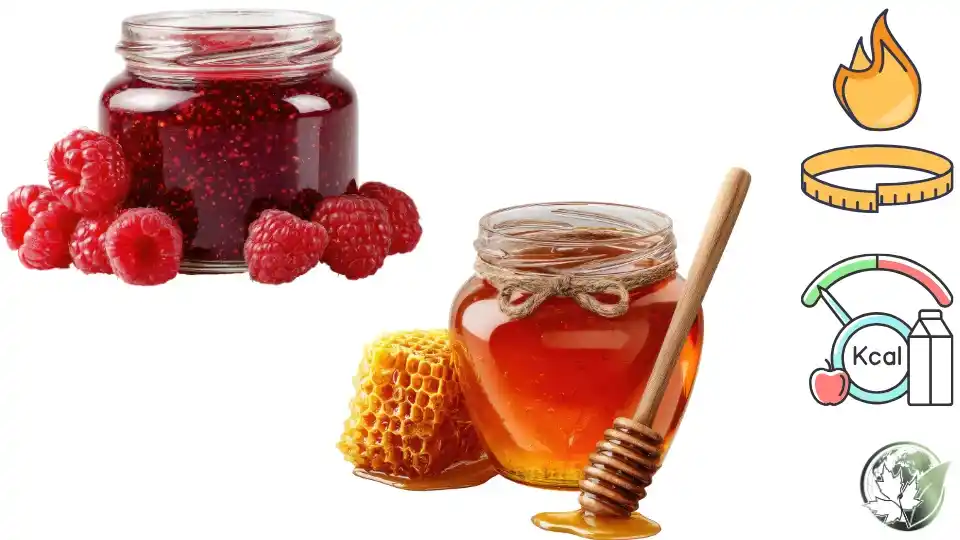
One tablespoon (20 grams) of fruit jam has about 52 calories and 12 grams of sugar. One tablespoon of honey (21 grams) has about 64 calories and 17 grams of sugar. Per 100 grams, jam has around 260 calories and honey 304. So jam is lower than honey in calories, about 18 percent per spoonful, because it contains fruit, water and pectin alongside sugar, while honey is nearly 82 percent sugar and 17 percent water. On toast, though, people often spread a thicker layer of jam, and a heavy jam layer of two tablespoons (104 calories) can exceed a thin drizzle of honey (a teaspoon, 21 calories).
The decision between jam and honey is less about calories and more about what else you get. Jam provides some fiber and fruit, but is made with added sugar, often in equal parts with the fruit. Honey is a single ingredient. Reduced-sugar jams and 100 percent fruit spreads can have only 25 to 40 calories per tablespoon. This guide compares jam and honey per teaspoon, per tablespoon and per 100 grams, looks at sugar, fruit content, glycemic index and types of jam, and offers tips for choosing a spread, with three comparison tables and an FAQ.
A thin layer of jam on toast has about 35 to 50 calories, while a drizzle of honey adds 21 to 42
How Many Calories Are in Jam?
| Jam | Weight | Calories | Sugar | Fiber |
|---|---|---|---|---|
| 1 teaspoon | 7 g | 18 kcal | 4 g | 0.1 g |
| 1 tablespoon | 20 g | 52 kcal | 12 g | 0.2 g |
| 2 tablespoons | 40 g | 104 kcal | 24 g | 0.4 g |
| 1 packet (portion pot) | 14 g | 36 kcal | 8.5 g | 0.1 g |
| Thick layer on toast | 30 g | 78 kcal | 18 g | 0.3 g |
| 1/4 cup | 80 g | 208 kcal | 48 g | 0.8 g |
| 1 cup | 320 g | 832 kcal | 192 g | 3 g |
| 100 g (standard jam) | 100 g | 260 kcal | 60 g | 1 g |
| 100 g (reduced sugar) | 100 g | 150 kcal | 33 g | 1.2 g |
| 100 g (100% fruit spread) | 100 g | 200 kcal | 45 g | 1.5 g |
How Many Calories Are in Honey?
| Honey | Weight | Calories | Sugar |
|---|---|---|---|
| 1 teaspoon | 7 g | 21 kcal | 5.7 g |
| 1 tablespoon | 21 g | 64 kcal | 17.3 g |
| 2 tablespoons | 42 g | 128 kcal | 34.6 g |
| 1/4 cup | 84 g | 255 kcal | 69 g |
| 1/2 cup | 170 g | 515 kcal | 140 g |
| 1 cup | 339 g | 1,031 kcal | 280 g |
| Honey stick | 5 g | 15 kcal | 4 g |
| 100 g | 100 g | 304 kcal | 82 g |
Jam vs Honey: Calories Compared
| Amount | Jam (standard) | Reduced-sugar jam | Honey |
|---|---|---|---|
| 1 teaspoon | 18 kcal | 10 kcal | 21 kcal |
| 1 tablespoon | 52 kcal | 30 kcal | 64 kcal |
| 2 tablespoons | 104 kcal | 60 kcal | 128 kcal |
| 10 g | 26 kcal | 15 kcal | 30 kcal |
| 100 g | 260 kcal | 150 kcal | 304 kcal |
| 100 calories | 38 g (almost 2 tbsp) | 67 g | 33 g (1.6 tbsp) |
| Sugar per tablespoon | 12 g | 6.6 g | 17.3 g |
Jam has fewer calories than honey per spoon and per 100 grams. Reduced-sugar jam is about half the calories of honey. Both are mostly sugar.
Jam vs Honey: Nutrition Compared
| Per 100 g | Standard strawberry jam | Reduced-sugar jam | Honey |
|---|---|---|---|
| Calories | 260 kcal | 150 kcal | 304 kcal |
| Carbohydrate | 65 g | 38 g | 82 g |
| Sugar | 60 g | 33 g | 82 g |
| Fiber | 1 g | 1.2 g | 0.2 g |
| Protein | 0.4 g | 0.3 g | 0.3 g |
| Fat | 0.1 g | 0.1 g | 0 g |
| Sodium | 32 mg | 30 mg | 4 mg |
| Vitamin C | 3 mg | 4 mg | 0.5 mg |
| Potassium | 50 mg | 40 mg | 52 mg |
| Glycemic index | 51 | 45 | 58 |
Traditional jam is made from fruit and sugar in roughly equal parts, cooked with pectin to set
Which Has More Calories: Jam or Honey?
Honey has more: 64 against 52 per tablespoon and 304 against 260 per 100 grams. The difference is modest, and what you eat also depends on how much you spread. Jam spreads easily in a thin layer, usually 10 to 20 grams per slice of toast (26 to 52 calories), while honey drips and tends to be drizzled in 7 to 21 grams (21 to 64 calories). In practice, the calories are close, and the difference becomes meaningful only if you use significantly different amounts.
| Comparison | Jam | Honey | Verdict |
|---|---|---|---|
| Per tablespoon | 52 kcal | 64 kcal | Jam lower |
| Per 100 g | 260 kcal | 304 kcal | Jam lower |
| Per slice of toast (typical) | 15 g, 39 kcal | 14 g, 43 kcal | About equal |
| Sugar per tablespoon | 12 g | 17.3 g | Jam lower |
| Sweetness | Medium | High | Honey sweeter |
What Is in Jam and Why Are Calories Lower Than Honey?
Traditional jam is made by cooking fruit with sugar and pectin to a set at around 65 percent soluble solids. Legal definitions often require at least 35 to 45 grams of fruit per 100 grams of jam, with "extra jam" at 45 to 50. Fruit is mostly water, and the final jam contains about 30 percent water, so it dilutes the sugar. Honey, produced by bees from nectar, loses most of its water to about 17 percent, leaving 82 percent sugar. So per gram, honey has more sugar than jam.
| Component | Jam (typical) | Honey |
|---|---|---|
| Sugar | 60% | 82% |
| Water | 32-35% | 17% |
| Fruit solids and pectin | 5-8% | 0% |
| Calories per gram | 2.6 | 3.04 |
| Ingredients | Fruit, sugar, pectin, acid | Honey |
Is Jam Healthier Than Honey?
Neither is health food. Jam contains some fruit, with small amounts of vitamin C and fiber, though cooking reduces vitamin C. It has a lower glycemic index, around 51, than honey, at 58, but the figures are close. Honey has trace antioxidants and enzymes, especially when raw. Both count as free sugars and should be limited to roughly 25 to 50 grams a day. Jam is more affordable and offers the pleasant taste of fruit, while honey can be used in smaller amounts due to its sweetness.
| Factor | Jam | Honey |
|---|---|---|
| Fruit content | 35-50% | 0% |
| Fiber | Small | Trace |
| Antioxidants | Some, from fruit | Some, from pollen |
| Added sugar | Yes | None (but free sugar) |
| Glycemic index | 51 | 58 |
| Counts as free sugar | Yes | Yes |
Reduced-sugar and 100 percent fruit spreads have fewer calories than traditional jam
How Do Different Jams Compare?
Apricot, strawberry, raspberry and plum jams are similar, 240 to 280 calories per 100 grams. Marmalade has about 250 calories and a little more fiber from the peel. Jams made with high-fiber fruit such as raspberries have slightly more fiber. Seedless jam and jelly (made from juice) are a little lower in fiber but similar in calories, at 260 to 270. Specialty jams with added honey or syrup may reach 300.
| Spread | Calories per tbsp (20 g) | Sugar | Note |
|---|---|---|---|
| Strawberry jam | 52 kcal | 12 g | Most common |
| Raspberry jam | 50 kcal | 11 g | More fiber |
| Apricot jam | 52 kcal | 12 g | Popular for baking |
| Orange marmalade | 50 kcal | 12 g | Peel adds fiber |
| Grape jelly | 50 kcal | 13 g | No pulp |
| Reduced-sugar jam | 30 kcal | 6.6 g | Pectin and sweetener |
| 100% fruit spread | 40 kcal | 9 g | Sweetened with juice |
| Honey | 64 kcal | 17.3 g | For comparison |
Which Is Better on Toast?
A slice of toast with a thin layer of jam (15 grams) adds 39 calories and 9 grams of sugar. Honey drizzled over the same slice (10 grams) adds 30 calories and 8 grams of sugar. Peanut butter with sliced banana adds more nutrients and protein but more calories. For a lighter breakfast, use a thin scrape of jam or a teaspoon of honey, and top with fresh fruit slices such as strawberries or banana for sweetness and fiber.
| Topping | Amount | Calories | Sugar | Protein |
|---|---|---|---|---|
| Jam | 15 g | 39 kcal | 9 g | 0.1 g |
| Honey | 10 g | 30 kcal | 8 g | 0 g |
| Reduced-sugar jam | 15 g | 23 kcal | 5 g | 0.1 g |
| Fresh strawberries | 50 g | 16 kcal | 2.5 g | 0.3 g |
| Peanut butter | 16 g | 94 kcal | 1.5 g | 4 g |
| Cream cheese + jam | 20 g + 10 g | 76 kcal | 6 g | 1 g |
How Can You Reduce Sugar in Jam and Honey?
Use a thin layer, spread on one side only of a sandwich and pair with a protein such as peanut butter or cheese. Choose reduced-sugar or 100 percent fruit spreads. Make your own jam with chia seeds: mash 1 cup of berries, add 1 tablespoon of chia seeds and a teaspoon of honey, and let it thicken for 15 minutes. It has about 15 calories per tablespoon. Measure honey with a spoon rather than pouring from the jar.
| Option | Calories per tbsp | Sugar per tbsp |
|---|---|---|
| Standard jam | 52 kcal | 12 g |
| Reduced-sugar jam | 30 kcal | 6.6 g |
| Chia berry jam | 18 kcal | 3 g |
| Mashed fresh berries | 10 kcal | 2 g |
| Honey (1 tsp) | 21 kcal | 5.7 g |
How Do Jam and Honey Affect Blood Sugar?
Standard jam has a glycemic index of about 51 and honey 58, both medium. A tablespoon of jam has 13 grams of carbohydrate and a glycemic load of about 6.6, and a tablespoon of honey 17 grams and a load of 10. Eating either on white bread, which has a glycemic index near 75, raises blood sugar more than eating on whole grain bread, rye or sourdough, where the fiber slows digestion. People with diabetes need to count the carbohydrates in both and might choose reduced-sugar jams made without added sugar, which sometimes use sweeteners that don't raise glucose as much.
| Food | Carbohydrate | Glycemic index | Glycemic load |
|---|---|---|---|
| 1 tbsp jam | 13 g | 51 | 6.6 |
| 1 tbsp honey | 17.3 g | 58 | 10 |
| 1 tbsp reduced-sugar jam | 7.6 g | 45 | 3.4 |
| 1 slice white toast + jam | 27 g | 70 | 19 |
| 1 slice whole grain toast + jam | 26 g | 55 | 14 |
| 1 slice rye toast + jam + cheese | 25 g | 45 | 11 |
How Do Homemade and Store-Bought Jams Differ?
Homemade jam can be made with less sugar than store-bought, but needs more care for setting and storage. A classic recipe uses equal weights of fruit and sugar, giving about 260 calories per 100 grams. A low-sugar recipe uses 500 grams of fruit and 250 grams of sugar with lemon and pectin, reaching about 190 calories per 100 grams. Commercial jams may include glucose syrup, citric acid and preservatives. Fruit spreads sweetened with grape juice concentrate replace sugar with fruit sugar, but the calories remain similar at around 200 to 220 per 100 grams.
| Type | Fruit per 100 g | Sugar per 100 g | Calories per 100 g |
|---|---|---|---|
| Traditional homemade (1:1) | 50 g | 60 g | 260 kcal |
| Low-sugar homemade (2:1) | 65 g | 40 g | 190 kcal |
| Chia seed jam | 85 g | 10 g | 70 kcal |
| Store-bought standard | 40 g | 60 g | 260 kcal |
| Extra jam | 50 g | 58 g | 250 kcal |
| Fruit spread (juice-sweetened) | 60 g | 45 g | 200 kcal |
How Does Honey Compare With Other Spreads?
Spreads vary widely. Chocolate-hazelnut spread has 80 calories per tablespoon (15 grams), peanut butter 94 per 16 grams, cream cheese 50 per 14 grams, butter 102 per 14 grams, and maple syrup 52 per 20 grams. Jam and honey are the only ones with no fat, but they are mainly sugar and hold no protein. For a meal that keeps you full, adding a protein or fat source such as peanut butter or yogurt to your toast is helpful.
| Spread | Serving | Calories | Sugar | Protein |
|---|---|---|---|---|
| Jam | 1 tbsp (20 g) | 52 kcal | 12 g | 0.1 g |
| Honey | 1 tbsp (21 g) | 64 kcal | 17.3 g | 0.1 g |
| Peanut butter | 1 tbsp (16 g) | 94 kcal | 1.5 g | 4 g |
| Chocolate-hazelnut spread | 1 tbsp (18 g) | 99 kcal | 10 g | 1 g |
| Cream cheese | 1 tbsp (14 g) | 50 kcal | 0.5 g | 1 g |
| Butter | 1 tbsp (14 g) | 102 kcal | 0 g | 0.1 g |
| Maple syrup | 1 tbsp (20 g) | 52 kcal | 13 g | 0 g |
| Mashed banana | 2 tbsp (30 g) | 27 kcal | 4 g | 0.3 g |
How Many Calories Do Jam and Honey Add to Common Foods?
Jam or honey in recipes and breakfast items quickly adds up. A jam doughnut contains about 10 grams of jam, or 26 calories, a peanut butter and jelly sandwich has 2 tablespoons of jam at 104 calories, and a bowl of oatmeal with a tablespoon of honey gains 64. Yogurt with two tablespoons of jam stirred in gains 104 calories and 24 grams of sugar. Check the amounts in drinks too: a tea with a spoon of honey adds 21 to 64 calories.
| Food | Jam or honey added | Calories added |
|---|---|---|
| Toast | 1 tbsp jam | 52 kcal |
| Peanut butter sandwich | 2 tbsp jam | 104 kcal |
| Oatmeal | 1 tbsp honey | 64 kcal |
| Plain yogurt | 2 tbsp jam | 104 kcal |
| Pancakes | 2 tbsp honey | 128 kcal |
| Scone | 1 tbsp jam | 52 kcal |
| Tea | 1 tsp honey | 21 kcal |
Who Should Be Careful With Jam and Honey?
People with diabetes should count carbohydrates and watch portions. Honey should never be given to infants under 12 months because of the risk of botulism, whereas jam is safe. Anyone with fructose malabsorption may react to both, especially to honey with high fructose. Both are sticky and sugary, which raises the risk of cavities. People allergic to strawberries or other fruits should check ingredients, and some jams contain sulfites or artificial colors.
| Group | Concern | Advice |
|---|---|---|
| Diabetes | Carbohydrate | Count, thin layer |
| Infants under 12 months | Honey botulism | No honey |
| Fructose malabsorption | Digestive upset | Small portions |
| Fruit allergy | Allergen | Read label |
| Dental decay | Sticky sugar | Rinse, brush later |
How Should You Store Jam and Honey?
Unopened jars of jam keep for about two years in a cool pantry. Once opened, jam should be refrigerated and used within one to three months; reduced-sugar jams spoil faster, in about three to four weeks, because sugar acts as a preservative. Look for mold, a fermented smell or bubbling; discard if present, and do not scrape off mold, since it can penetrate. Honey keeps indefinitely at room temperature because of its low water content, and crystallization is normal. Never store honey in the fridge, which accelerates crystals.
| Product | Unopened | Opened | Storage |
|---|---|---|---|
| Standard jam | 2 years | 1-3 months | Refrigerate |
| Reduced-sugar jam | 1 year | 3-4 weeks | Refrigerate |
| Homemade jam (canned) | 1 year | 1 month | Refrigerate |
| Chia seed jam | Not applicable | 1 week | Refrigerate |
| Honey | Indefinite | Indefinite | Room temperature |
What Are Better Ways to Add Sweetness to Breakfast?
Choose fruit first: sliced banana, fresh strawberries, grated apple or a few raisins give natural sweetness and fiber. Stir a spoon of mashed berries into plain yogurt. Spread a tablespoon of 100 percent fruit spread on whole grain toast with ricotta. When you want honey, drizzle it on yogurt or oats and measure 1 teaspoon, which provides plenty of flavor for 21 calories. Warm spices such as cinnamon and vanilla enhance perceived sweetness without added calories.
| Idea | Calories | Added sugar |
|---|---|---|
| Whole grain toast + sliced banana | 150 kcal | 0 g |
| Yogurt + mashed berries | 110 kcal | 0 g |
| Oatmeal + cinnamon + 1 tsp honey | 170 kcal | 5.7 g |
| Ricotta toast + fruit spread | 190 kcal | 9 g |
| Pancake + berries + 1 tsp syrup | 180 kcal | 5 g |
What Is the Verdict on Jam vs Honey?
Choose jam when you want a spread with a fruit taste and fewer calories per spoon, and prefer reduced-sugar versions when possible. Choose honey when you want a more intense sweetener and can use less, such as a teaspoon in tea or on yogurt. Neither is a significant source of nutrients, and both should stay within a limit of 25 to 50 grams of free sugar a day. Portion and context matter far more than which one you choose.
| Situation | Better choice | Reason |
|---|---|---|
| Sandwich spread | Jam or reduced-sugar jam | Spreads thinly |
| Tea or yogurt | Honey (1 tsp) | Strong sweetness |
| Fewest calories | Reduced-sugar jam | 30 kcal per tbsp |
| Minimal processing | Honey | Single ingredient |
| Fruit flavor | Jam | Contains fruit |
| Children under 1 year | Neither | Avoid honey; no added sugar |
Can Jam and Honey Be Part of a Weight-Loss Diet?
They can, in small amounts. A teaspoon of jam (18 calories) or honey (21 calories) is a tiny part of a day's energy. The trouble arises with large portions, such as two tablespoons on each of three slices of toast, which adds 312 calories of jam alone. Weight loss requires a deficit overall, so the key is to count the spread, use thin layers, and avoid adding sweet toppings on top of already sweet foods. Replacing a daily 2-tablespoon jam sandwich spread with a thin scrape cuts about 70 calories a day, which is equivalent to 7 pounds in a year.
| Habit | Daily calories | Yearly calories |
|---|---|---|
| 2 tbsp jam on toast | 104 kcal | 37,960 kcal |
| 1 tbsp jam on toast | 52 kcal | 18,980 kcal |
| 1 tsp honey in tea | 21 kcal | 7,665 kcal |
| 1 tbsp honey in oatmeal | 64 kcal | 23,360 kcal |
| Swap to reduced-sugar jam (1 tbsp) | 30 kcal | 10,950 kcal |
How Do Jam and Honey Fit Into a Child's Diet?
Children enjoy sweet spreads, and a thin layer of jam on whole grain bread can encourage eating breakfast. Keep servings small: a teaspoon of jam is 4 grams of sugar, while a tablespoon is 12, nearly half the daily limit for a child aged four to eight (25 grams). Give honey only to children over twelve months. Offer fresh fruit alongside, and avoid sweet toppings at every meal. For school lunches, pairing a thin layer of jam with peanut butter, if allowed, improves the nutrient balance.
| Child's snack | Calories | Sugar | Protein |
|---|---|---|---|
| Whole grain toast + 1 tsp jam | 85 kcal | 6 g | 3 g |
| Toast + 1 tbsp jam | 120 kcal | 14 g | 3 g |
| Toast + peanut butter + 1 tsp jam | 185 kcal | 7 g | 7 g |
| Yogurt + 1 tsp honey (over 1 year) | 90 kcal | 10 g | 5 g |
| Apple slices + peanut butter | 140 kcal | 12 g | 4 g |
Key Takeaways: Jam vs Honey Calories
Jam has about 52 calories per tablespoon and honey 64, so jam is slightly lower, and reduced-sugar jam is about half. Both are mostly sugar, so spread thinly, choose reduced-sugar versions, or top toast with fresh fruit.
Frequently Asked Questions
6 questions answered
Does jam have fewer calories than honey?
Yes, 52 against 64 per tablespoon.
How many calories are in a teaspoon of jam?
About 18.
Which has more sugar?
Honey, 17 grams per tablespoon against 12 for jam.
Is reduced-sugar jam lower in calories?
Yes, about 30 per tablespoon.
Is jam or honey better for toast?
Either in a thin layer; jam has fewer calories.
Does jam have fruit?
Yes, usually 35 to 50 percent.