How Many Calories Are in Honeycomb vs Liquid Honey? The Quick Answer
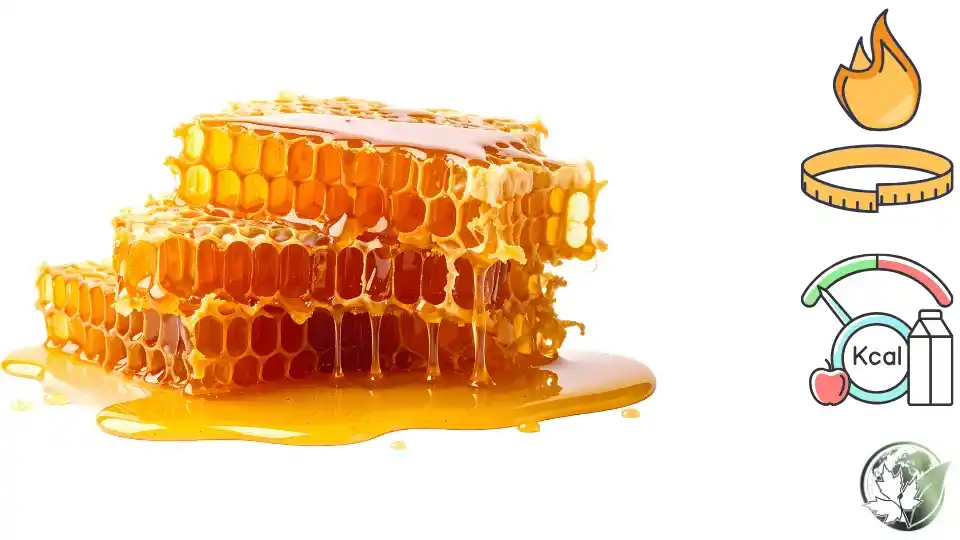
Honeycomb, the natural wax structure filled with raw honey, has about 290 calories per 100 grams. A small piece weighing 20 grams, about the size of a large sugar cube stack or a square of one inch by one inch, has around 58 calories. Liquid honey has about 304 calories per 100 grams, 64 per tablespoon (21 grams) and 21 per teaspoon (7 grams). So honeycomb is slightly lower in calories per gram, roughly 5 percent, because 5 to 10 percent of the weight is beeswax, which your body cannot digest in a meaningful way. Beyond that, the sugars are the same: about 80 percent of the weight in comb honey is glucose and fructose.
For everyday eating, a piece of honeycomb and an equal weight of liquid honey provide almost identical energy and sugar. The difference lies in texture, flavor, price and the fact that comb honey is as raw as honey gets: unheated, unfiltered and untouched. This guide compares honeycomb and liquid honey per piece, per spoon and per 100 grams, looks at wax, sugar, nutrients and safety, and gives tips on how to eat and store honeycomb, with three comparison tables and an FAQ.
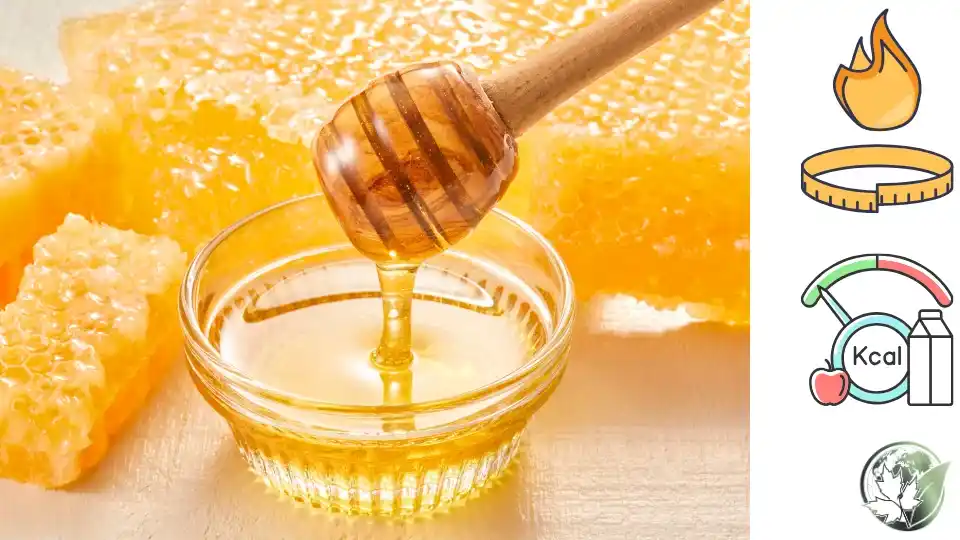
Honeycomb is raw honey sealed in beeswax cells, with about 5 to 10 percent of its weight being wax
How Many Calories Are in Honeycomb?
| Honeycomb | Weight | Calories | Sugar | Wax (approx.) |
|---|---|---|---|---|
| Small bite | 10 g | 29 kcal | 7.6 g | 0.7 g |
| 1 piece (1 inch square) | 20 g | 58 kcal | 15 g | 1.4 g |
| 1 tablespoon, chopped | 17 g | 49 kcal | 12.9 g | 1.2 g |
| Slice on toast | 30 g | 87 kcal | 23 g | 2.1 g |
| Small jar section | 50 g | 145 kcal | 38 g | 3.5 g |
| Standard comb square | 113 g | 328 kcal | 86 g | 8 g |
| Large frame section | 250 g | 725 kcal | 190 g | 17 g |
| 100 g | 100 g | 290 kcal | 76 g | 7 g |
How Many Calories Are in Liquid Honey?
| Liquid honey | Weight | Calories | Sugar |
|---|---|---|---|
| 1 teaspoon | 7 g | 21 kcal | 5.7 g |
| 1 tablespoon | 21 g | 64 kcal | 17.3 g |
| 2 tablespoons | 42 g | 128 kcal | 34.6 g |
| 1/4 cup | 84 g | 255 kcal | 69 g |
| 1/2 cup | 170 g | 515 kcal | 140 g |
| 1 cup | 339 g | 1,031 kcal | 280 g |
| 100 g | 100 g | 304 kcal | 82 g |
| Honey stick | 5 g | 15 kcal | 4 g |
Honeycomb vs Liquid Honey: Calories Compared
| Amount | Honeycomb | Liquid honey | Difference |
|---|---|---|---|
| 10 g | 29 kcal | 30 kcal | Comb -1 |
| 20 g | 58 kcal | 61 kcal | Comb -3 |
| 21 g (1 tbsp equivalent) | 61 kcal | 64 kcal | Comb -3 |
| 50 g | 145 kcal | 152 kcal | Comb -7 |
| 100 g | 290 kcal | 304 kcal | Comb -14 |
| 100 calories | 34 g | 33 g | - |
| Sugar per 100 g | 76 g | 82 g | Comb -6 g |
The difference is small and consistent: comb honey has about 5 percent fewer calories than the same weight of liquid honey because of the wax. If you eat honeycomb and chew the wax, the body treats most of it as roughage with a trivial amount of energy.
Honeycomb vs Liquid Honey: Nutrition Compared
| Per 100 g | Honeycomb | Liquid honey |
|---|---|---|
| Calories | 290 kcal | 304 kcal |
| Carbohydrate | 77 g | 82 g |
| Sugar | 76 g | 82 g |
| Fructose | 36 g | 38 g |
| Glucose | 29 g | 31 g |
| Water | 15 g | 17 g |
| Beeswax | 7 g | 0 g |
| Protein | 0.3 g | 0.3 g |
| Fiber | 0.2 g | 0.2 g |
| Potassium | 49 mg | 52 mg |
| Glycemic index | 58 | 58 |
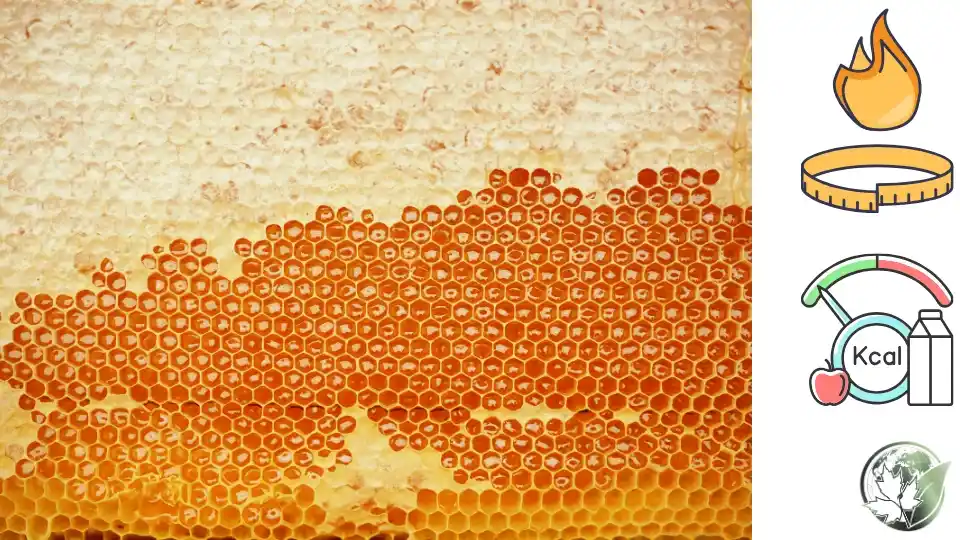
The wax cells make up a small share of the weight and are safe to chew in moderate amounts
Which Has More Calories: Honeycomb or Liquid Honey?
Liquid honey has more per gram, 304 against 290. Per typical portions, they are almost the same, because a piece of comb weighs more than a teaspoon of honey but tastes just as sweet. A common mistake is to assume a thick slab of honeycomb on toast is "just a bit of honey". A 30 gram piece has 87 calories and 23 grams of sugar, as much as more than a tablespoon of liquid honey. Count it by weight, not by appearance.
| Comparison | Honeycomb | Liquid honey | Verdict |
|---|---|---|---|
| Per 100 g | 290 kcal | 304 kcal | Comb lower |
| Per piece vs spoon | 58 (20 g) | 64 (tbsp) | About equal |
| Sugar per 100 g | 76 g | 82 g | Comb lower |
| Digestible weight | 93% | 100% | Honey higher |
| Raw and unprocessed | Yes | Sometimes | Comb |
What Is Honeycomb and What Is the Wax Made Of?
Bees build honeycomb from beeswax, secreted by glands on their abdomen, and fill the hexagonal cells with honey, then cap them with more wax when the honey is ripe. Beeswax is a mixture of esters, fatty acids and long-chain alcohols. It is edible but largely indigestible, passing through the gut like fiber. It has trace antioxidants and a waxy, chewy texture that softens as you chew. Most people chew the wax until the honey is gone and then either swallow or discard it.
| Component | Share of comb weight | Digestible? |
|---|---|---|
| Honey | 90-93% | Yes |
| Beeswax | 5-8% | Barely |
| Pollen, propolis traces | Under 1% | Yes, small amounts |
| Water | Included in honey | - |
Is Honeycomb Healthier Than Liquid Honey?
Honeycomb is the least processed form of honey, so it keeps all of its natural enzymes, pollen traces and antioxidants, which pasteurization can reduce in some liquid honeys. The wax adds a little roughage. But the main nutrient is the same: sugar. The antioxidant content of a teaspoon is small, and the health advantage is modest. The more important point is that honey, in any form, counts as a free sugar and should stay within recommended limits of about 25 to 50 grams a day for adults.
| Factor | Honeycomb | Liquid honey (raw) | Liquid honey (processed) |
|---|---|---|---|
| Enzymes | Preserved | Mostly preserved | Reduced |
| Pollen and propolis | Yes | Some | Filtered out |
| Beeswax | Yes | No | No |
| Sugar | 76 g/100 g | 82 g/100 g | 82 g/100 g |
| Counts as free sugar | Yes | Yes | Yes |
| Price | Highest | Medium | Lowest |
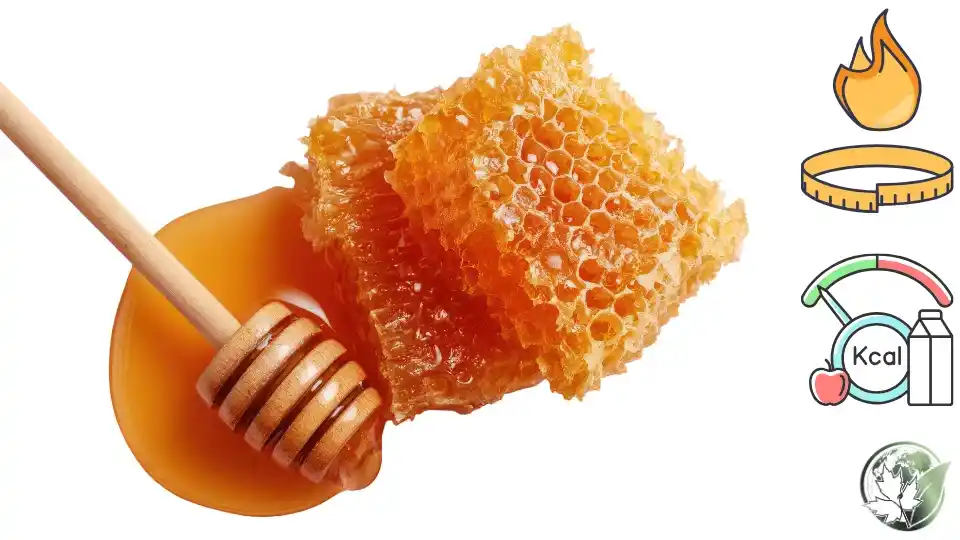
Honeycomb pairs well with cheese and bread, where a small piece goes a long way
How Many Calories Are in Common Honeycomb Servings?
A slice of honeycomb on toast is usually 15 to 25 grams, or 43 to 72 calories, plus the bread. A cheese board often includes 30 to 50 grams, which is 87 to 145 calories. Honeycomb spooned into yogurt or oatmeal, 10 to 20 grams, adds 29 to 58 calories. A jar section is typically 200 to 450 grams, sold whole, containing 580 to 1,300 calories, which is a lot to eat in one sitting but about right to last a month if used sparingly.
| Serving | Weight | Calories | Sugar |
|---|---|---|---|
| In tea or yogurt | 10 g | 29 kcal | 7.6 g |
| On a slice of toast | 20 g | 58 kcal | 15 g |
| With cheese (small) | 30 g | 87 kcal | 23 g |
| Cheese board | 50 g | 145 kcal | 38 g |
| Whole small frame | 250 g | 725 kcal | 190 g |
How Do You Eat Honeycomb?
Cut off a square and eat it with cheese, as in a charcuterie board, on warm toast with butter, in yogurt or on pancakes. Chew the wax until the honey is released and then either swallow it in small amounts or discard it. Honeycomb can be used as a topping for salads with goat cheese, in tea, spread over biscuits or drizzled over roasted vegetables. It is not meant to be eaten in large chunks, since swallowing a lot of wax can cause stomach discomfort, constipation, or in rare cases, blockage.
| Pairing | Amount | Calories added |
|---|---|---|
| Toast with butter | 20 g comb | 58 kcal |
| Yogurt and nuts | 15 g comb | 44 kcal |
| Goat cheese salad | 10 g comb | 29 kcal |
| Cheese plate | 30 g comb | 87 kcal |
| Tea | 10 g comb | 29 kcal |
How Does Honeycomb Affect Blood Sugar Compared With Liquid Honey?
Honeycomb and liquid honey have the same sugars, so they raise blood glucose in the same way, with a glycemic index of about 58. The wax and the chewing can slow the first minutes of absorption slightly, but the effect is minor. A 20 gram piece of comb contains 15 grams of sugar, the amount in 3.7 sugar cubes, and a glycemic load of about 8. People with diabetes should count honeycomb as carbohydrate, about 15 grams per 20 gram piece, and eat it with protein or fat, such as cheese or nuts, to blunt the rise. Eating it as dessert after a meal is better than on an empty stomach.
| Portion | Carbohydrate | Glycemic index | Glycemic load |
|---|---|---|---|
| 10 g honeycomb | 7.7 g | 58 | 4.5 |
| 20 g honeycomb | 15 g | 58 | 9 |
| 1 tbsp liquid honey | 17.3 g | 58 | 10 |
| 20 g comb with 30 g cheese | 15 g | 45 | 7 |
| 4 sugar cubes | 16 g | 65 | 10 |
How Does Raw Honey in the Comb Differ From Pasteurized Honey?
Most supermarket liquid honey is heated to about 70 degrees Celsius for a short time and filtered, which keeps it clear and slows crystallization. This process also reduces some enzymes, such as diastase and invertase, and removes pollen. Honeycomb is taken straight from the hive, cut into pieces and packaged without heating. Its flavor reflects the flowers visited and the season, and may be more complex. Raw liquid honey from small producers is similar to the honey in the comb, though it is often strained to remove wax particles.
| Feature | Honeycomb | Raw liquid honey | Pasteurized honey |
|---|---|---|---|
| Heat treatment | None | None or minimal | About 70 C |
| Filtration | None | Coarse strain | Fine filter |
| Pollen | Present | Present | Mostly removed |
| Enzymes | Full | High | Reduced |
| Crystallization | Slow in sealed cells | Moderate | Slow |
| Calories per 100 g | 290 kcal | 304 kcal | 304 kcal |
What Types of Honey Fill the Comb and Does It Change Calories?
The floral source changes the color, taste and ratio of fructose to glucose, but not the calories in any practical way. Clover and wildflower combs are mild and light. Orange blossom is citrusy, and thyme honey is aromatic and darker. Acacia comb is pale and stays liquid, with more fructose. Manuka comb is rare and costs many times more. Dark honeys such as buckwheat contain more antioxidants, while light honeys are sweeter to most palates. Whatever the type, count about 2.9 calories per gram of comb and 3.04 per gram of the liquid.
| Comb type | Typical taste | Calories per 100 g | Note |
|---|---|---|---|
| Clover | Mild, floral | 290 kcal | Most common |
| Wildflower | Varied | 290 kcal | Seasonal |
| Orange blossom | Citrus | 290 kcal | Light |
| Thyme | Herbal | 292 kcal | Strong aroma |
| Acacia | Delicate | 285 kcal | High fructose |
| Manuka | Earthy | 290 kcal | High price |
| Buckwheat | Malty, dark | 295 kcal | High antioxidants |
Is It Safe to Eat Beeswax?
Beeswax is approved as a food additive in many countries (E901) and is used to glaze fruit and candy. Eating a small piece of comb is safe for most adults. The wax is not absorbed, so it passes through the gut. Eating a large amount, such as an entire frame, can cause bloating or constipation. People with allergies to bee products, pollen or propolis may react to honeycomb. Children over one year can have small bites with supervision. Do not give honey or comb to infants under 12 months because of the botulism risk.
| Group | Risk | Advice |
|---|---|---|
| Healthy adults | Low | Chew and swallow small amounts of wax |
| Children over 1 year | Choking, wax | Small pieces, supervised |
| Infants under 12 months | Botulism | Avoid |
| Allergy to bee products | Allergic reaction | Avoid |
| Digestive disorders | Blockage risk | Spit out the wax |
| Pregnancy | Generally safe | Prefer pasteurized if advised |
How Should You Store Honeycomb and Honey?
Store honeycomb in a sealed container at room temperature, away from heat and light. It can last for years because honey is a natural preservative, but the texture can change as the honey crystallizes inside the cells. Do not refrigerate it, as cold speeds up crystallization. If the honey crystallizes in the comb, it is still safe, and it can be gently warmed. Keep the container tightly closed to avoid moisture and ants, and cut only the amount you need with a clean knife.
| Product | Best storage | Shelf life | Notes |
|---|---|---|---|
| Honeycomb | Sealed, 15-24 C | 2+ years | May crystallize |
| Liquid honey | Sealed, room temperature | Years | Warm to liquefy |
| Cut comb in a bag | Airtight bag | 6-12 months | Use clean knife |
| Frozen comb | Freezer | Indefinite | Reduces wax moth risk |
How Does the Price of Honeycomb Compare With Honey?
Honeycomb is typically two to four times more expensive than liquid honey by weight, because beekeepers must let the bees build fresh comb, which costs them energy and honey production, and handle the product carefully. Per 100 calories, the premium is even larger, since the comb has slightly fewer calories per gram. If you buy honeycomb for flavor and presentation on a cheese board, the cost per serving is modest because you only need 10 to 20 grams. For daily sweetening of tea or oatmeal, liquid honey is far more practical and cheaper.
| Product | Relative price per 100 g | Calories per 100 g | Relative price per 100 kcal |
|---|---|---|---|
| Supermarket liquid honey | 1x | 304 kcal | 1x |
| Raw local liquid honey | 2x | 304 kcal | 2x |
| Honeycomb | 3-4x | 290 kcal | 3-4.2x |
| Manuka honey | 8-20x | 304 kcal | 8-20x |
| Honey sticks | 3x | 304 kcal | 3x |
How Can You Use Honeycomb in Recipes?
Honeycomb adds a luxurious touch and a bit of crunch to simple dishes. Place a square on warm buttered toast, on a cheese board with blue cheese or aged cheddar, over ricotta with figs, or beside roasted nuts. Drop a small piece into hot tea to melt and release honey. Chop into granola or yogurt parfaits, or crumble over vanilla ice cream. Because it is sweet, you rarely need a full tablespoon. Use 10 grams, about 29 calories, to flavor a whole bowl.
| Dish | Honeycomb amount | Calories added | Note |
|---|---|---|---|
| Ricotta and figs | 15 g | 44 kcal | Add walnuts |
| Cheese board | 30 g | 87 kcal | Share among 4 |
| Greek yogurt | 10 g | 29 kcal | Swap for stirred honey |
| Hot tea | 10 g | 29 kcal | Melt and strain wax |
| Pancakes | 20 g | 58 kcal | Replace syrup |
| Vanilla ice cream | 15 g | 44 kcal | Crumble on top |
How Many Honeycomb Pieces Fit in a Daily Sugar Limit?
The World Health Organization suggests free sugars below 50 grams a day, and ideally below 25 grams. Honeycomb at 76 grams of sugar per 100 grams means 25 grams of sugar is about 33 grams of comb. So one generous piece of honeycomb can use up your whole ideal daily limit, leaving no room for sugar in other foods. A small bite of 10 grams uses 30 percent of that limit. Keep this in mind when honeycomb appears on a brunch plate along with jam, pastries and juice.
| Limit | Sugar allowed | Honeycomb equivalent | Pieces (20 g) |
|---|---|---|---|
| WHO ideal (5%) | 25 g | 33 g | 1.6 |
| WHO upper (10%) | 50 g | 66 g | 3.3 |
| AHA women | 25 g | 33 g | 1.6 |
| AHA men | 36 g | 47 g | 2.4 |
| Child 4-8 years | 25 g | 33 g | 1.6 |
Does Honeycomb Offer Any Special Benefits?
Compared with ordinary honey, comb honey contains traces of propolis and pollen that carry flavonoids, and beeswax contains policosanol, studied as a possible cholesterol-lowering compound, but the amounts in a typical piece are far too small to produce any reliable effect. Folk uses include soothing sore throats and coughs, and honey, in general, has some evidence for relieving cough in children over one year. Chewing wax may stimulate saliva. In summary, the benefits are small, and honeycomb is best enjoyed for taste and texture.
| Claimed benefit | Evidence level | Practical meaning |
|---|---|---|
| Soothes cough | Moderate (honey) | Use 1 tsp for children over 1 year |
| Antioxidants | Small | Not a replacement for fruit |
| Cholesterol lowering (policosanol) | Weak | Dose too small |
| Better digestion from wax | Weak | May cause discomfort |
| Antibacterial | Honey-dependent | Mainly for wound care products |
What Should You Look For When Buying Honeycomb?
Choose comb with evenly capped, pale golden cells that are mostly sealed, which indicates ripe honey with low water content. Avoid pieces with leaking or fermented smells, broken cells with watery honey, or visible mold. The package should state the origin and the beekeeper, and preferably a harvest date. Cut-comb in plastic clamshells is easy to handle; frames in a jar may be cheaper per gram. Beware of products labeled "comb honey" that are artificial, made with plastic or wax-coated substitutes, which are cheaper and have no honey inside the cells.
| Check | Good sign | Warning sign |
|---|---|---|
| Cell caps | Intact, pale | Torn, leaking |
| Smell | Floral, sweet | Sour, fermented |
| Color | Even golden | Dark spots, mold |
| Label | Origin and producer | No source |
| Packaging | Sealed, clean | Sticky, damaged |
| Weight | Matches label | Mostly wax |
How Can You Enjoy Honeycomb Without Overeating Sugar?
Serve it in small cubes of 10 grams on a shared platter, rather than a large slab. Pair it with sharp or salty foods, which satisfy the palate with less sweetener, such as blue cheese, aged Parmesan or salted almonds. Use it in place of jam or syrup rather than in addition to them. Keep the box out of reach in the kitchen and take out only what you plan to eat. A teaspoon-sized piece in warm tea can sweeten the whole cup, replacing two sugar cubes at 31 calories with 15 calories.
| Habit | Calories | Benefit |
|---|---|---|
| 10 g comb on cheese board | 29 kcal | Strong flavor, small portion |
| Comb instead of jam on toast | 58 vs 50 kcal | Same energy, more flavor |
| Small piece in tea | 15 kcal | Replaces 2 cubes (31 kcal) |
| Comb with salty cheese | 29 kcal + cheese | Satisfies sweet and salt |
| One piece twice a week | 116 kcal weekly | Easy to fit in a diet |
Key Takeaways: Honeycomb vs Honey Calories
Honeycomb has about 290 calories per 100 grams and liquid honey 304, so a piece of comb contains almost the same sugar and energy as an equal weight of honey, with a little indigestible wax. Choose by taste and texture, and keep servings to 10 to 20 grams.
Frequently Asked Questions
6 questions answered
Does honeycomb have fewer calories than honey?
Slightly, about 290 against 304 per 100 grams.
How many calories are in a piece of honeycomb?
About 58 for a 20 gram piece.
Is it safe to eat the wax?
In small amounts, yes.
Is honeycomb healthier than liquid honey?
Slightly less processed, but still sugar.
How long does honeycomb last?
Years if sealed and stored in a cool, dry place.
Can babies eat honeycomb?
No, not under 12 months.