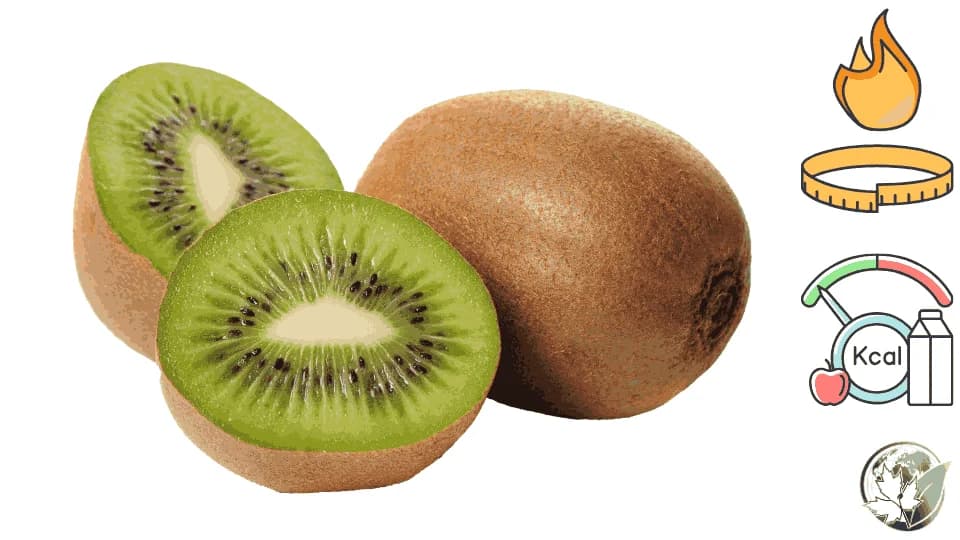
Kiwi is small enough to look like a light snack, but its calorie count can be confusing because nutrition labels and calorie trackers often use different serving sizes. One source may list calories for a single fruit, another may use 100 grams, and a recipe may measure kiwi by the cup. If you are trying to track calories, carbohydrates, sugar, fiber, or vitamin C, those different portions can make a simple question feel unnecessarily complicated.
The short answer is that raw green kiwifruit is a relatively low-calorie fruit. A typical kiwi weighing about 69 grams of edible portion provides about 42 calories. One hundred grams provides about 61 calories, while one cup of sliced kiwi, around 180 grams, provides about 110 calories. Those numbers are useful because they let you compare kiwi with other fruits on both a real-life serving basis and a standardized 100-gram basis.
Calories are only part of the story. Kiwi is particularly notable for vitamin C and also provides dietary fiber, potassium, vitamin K, vitamin E, folate, and small amounts of protein. Compared with apple, kiwi contains slightly more calories per 100 grams, but it also provides more fiber, considerably more vitamin C, and substantially more potassium. That makes the comparison more meaningful than simply asking which fruit has the lower calorie number.
This guide explains kiwi calories by portion, gives a practical nutrition breakdown, compares kiwi with apple, shows how the serving size changes the numbers, and answers common questions about kiwi in calorie-conscious eating. The values below refer mainly to raw green kiwifruit and are approximate because natural fruits vary in size, ripeness, water content, and cultivar.

Zahra Sadat AkbariFood Export Content Specialist