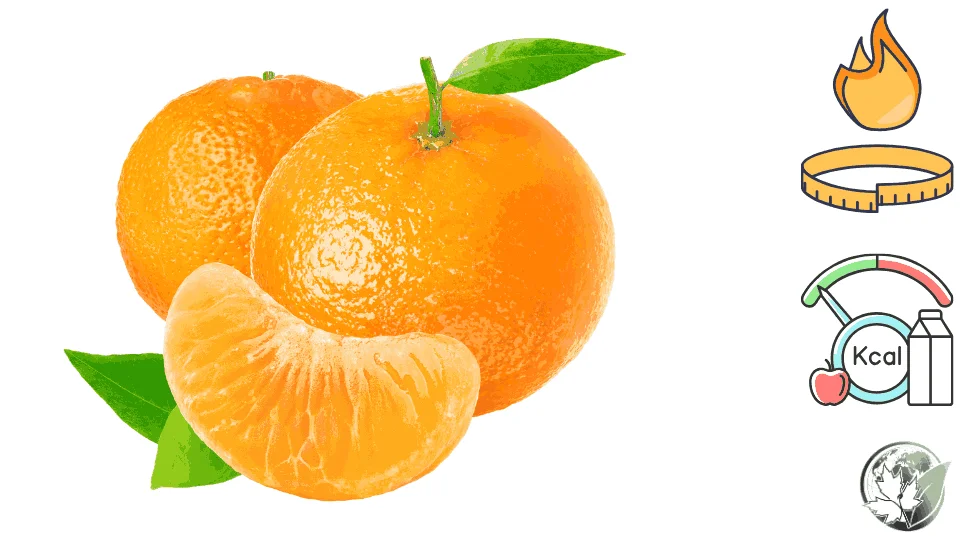
Mandarin Orange Calories at a Glance
A medium mandarin or tangerine weighing around 88 grams contains about 47 calories using a 53-calorie-per-100-gram reference. One hundred grams provides about 53 calories, and a cup of sections around 195 grams is roughly 103 calories.
The key phrase is around. Mandarins include many cultivars, and marketed names such as tangerine, clementine, satsuma, and mandarin are sometimes used differently across countries and retailers. Fruit size and database category therefore matter. A small clementine can be lower in calories than the medium tangerine reference even when the fruits are closely related.
- 1 medium mandarin (about 88 g): approximately 47 calories
- 100 g mandarin: approximately 53 calories
- 1 cup sections (about 195 g): approximately 103 calories
- 2 medium mandarins: approximately 94 calories
- 150 g peeled mandarin sections: approximately 80 calories
How Many Calories Are in One Mandarin Orange?
A medium mandarin or tangerine around 88 grams of edible fruit provides roughly 47 calories. Smaller fruit may be closer to 35 to 40 calories, while larger mandarins can exceed 50. This range is normal because citrus fruit is sold by size rather than by a standardized edible weight.
For a quick snack estimate, counting one medium mandarin as about 45 to 50 calories works well. If you eat two, the total is close to 90 to 100 calories. This simple piece-based method is one reason mandarins are popular for lunchboxes and portioned snacks.
The peel is not normally included in the edible-weight calculation. If you weigh the fruit whole, you will be including peel that you do not eat. For precise tracking, weigh peeled sections or use the standard fruit-size reference. For everyday eating, the rounded per-fruit number is sufficient.
Mandarin Orange Calories per 100g
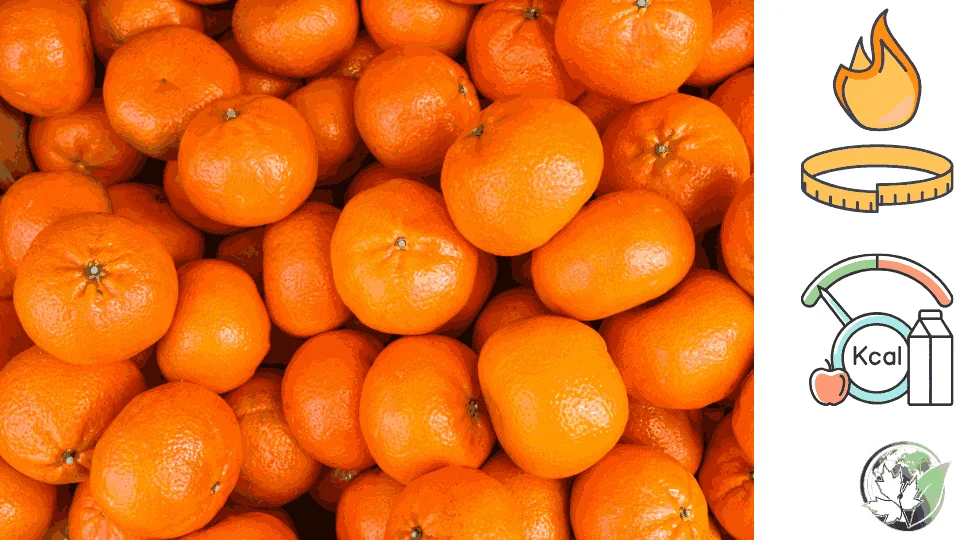
One hundred grams of raw mandarin or tangerine contains about 53 calories. That serving provides roughly 13.3 grams of carbohydrate, 10.6 grams of natural sugars, 1.8 grams of fiber, 0.8 gram of protein, and 0.3 gram of fat. Water makes up about 85 percent of the fruit.
The 100-gram value is useful because it allows a fair comparison with orange. Raw orange is about 47 calories per 100 grams, so mandarin is approximately six calories higher per 100 grams. That difference is small and is partly related to mandarin's slightly higher carbohydrate and lower water content in the reference data.
If you weigh your serving, multiply the grams by 0.53. A 120-gram serving is about 64 calories, 150 grams about 80, and 200 grams about 106. Because fruit composition varies naturally, rounding is more useful than calculating to decimal precision.
Mandarin Orange Calorie Portion Table
| Portion | Approx. edible weight | Approx. calories |
|---|---|---|
| 1 medium mandarin | 88 g | 47 kcal |
| 100 g | 100 g | 53 kcal |
| 150 g sections | 150 g | 80 kcal |
| 1 cup sections | 195 g | 103 kcal |
| 2 medium mandarins | 176 g | 93 kcal |
The table below turns the 53-calorie-per-100-gram reference into common serving sizes.
How Many Calories Are in 1 Cup of Mandarin Oranges?
One cup of fresh mandarin sections is commonly around 195 grams. At 53 calories per 100 grams, that equals about 103 calories. The exact weight depends on how tightly the sections are packed and how much membrane or juice is present.
A cup is a useful serving for fruit salads, yogurt bowls, and recipes because multiple small mandarins may be combined. It is also a good reminder that several mandarins can add up. Three or four small fruits may look like individual snacks, but together they can approach or exceed the calorie content of a full cup of sections.
Fresh sections should not be confused with canned mandarin oranges. Canned products may be packed in juice, water, light syrup, or heavy syrup. The drained fruit may have a similar base profile, but syrup can increase calories and added sugar. The label is the best source for the exact canned serving.
Mandarin Nutrition Facts: What Is in 100g?
Mandarins provide more than sweetness. Along with about 53 calories per 100 grams, they supply vitamin C, potassium, folate, small amounts of several B vitamins, and dietary fiber. Their bright orange color also reflects carotenoid pigments.
Compared with a standard orange, mandarin tends to have a little more carbohydrate and natural sugar per 100 grams, with somewhat less fiber and vitamin C in classic reference entries. These are not dramatic differences. Both fruits can contribute to daily fruit intake and both are low in fat and sodium.
Mandarins are especially practical because the peel usually comes away easily and the fruit separates into natural sections. This built-in structure can make portioning intuitive, but it can also make multiple fruits easy to eat. If you are counting carbohydrate or calories, count the number of whole fruits or weigh the peeled sections.
Mandarin Nutrition Table per 100g
| Nutrient | Approx. amount per 100 g |
|---|---|
| Calories | 53 kcal |
| Water | 85.2 g |
| Carbohydrate | 13.3 g |
| Total sugars | 10.6 g |
| Fiber | 1.8 g |
| Protein | 0.81 g |
| Fat | 0.31 g |
| Potassium | 166 mg |
| Vitamin C | ~27 mg |
| Calcium | 37 mg |
These values are rounded reference figures for raw tangerines or mandarin oranges per 100 grams.
Mandarin vs Orange: Calories, Sugar and Fiber
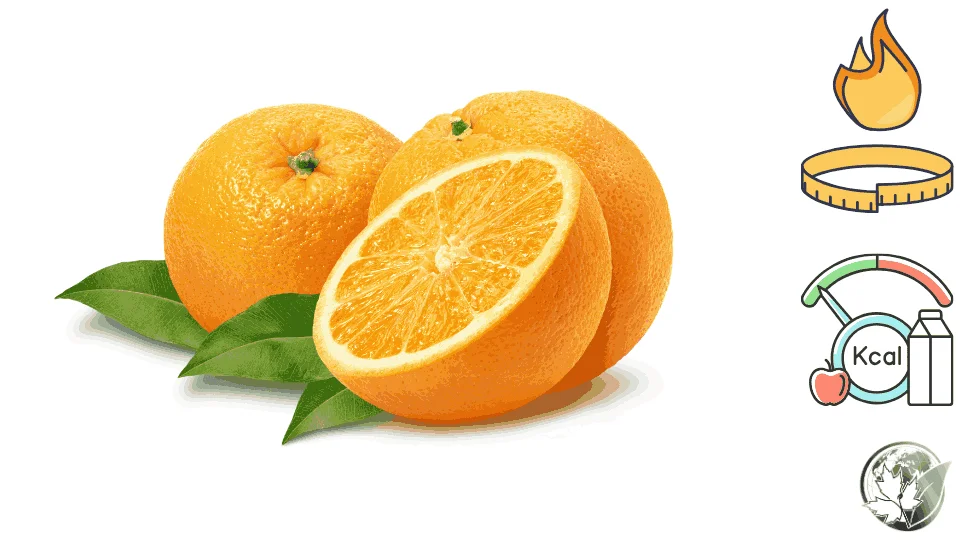
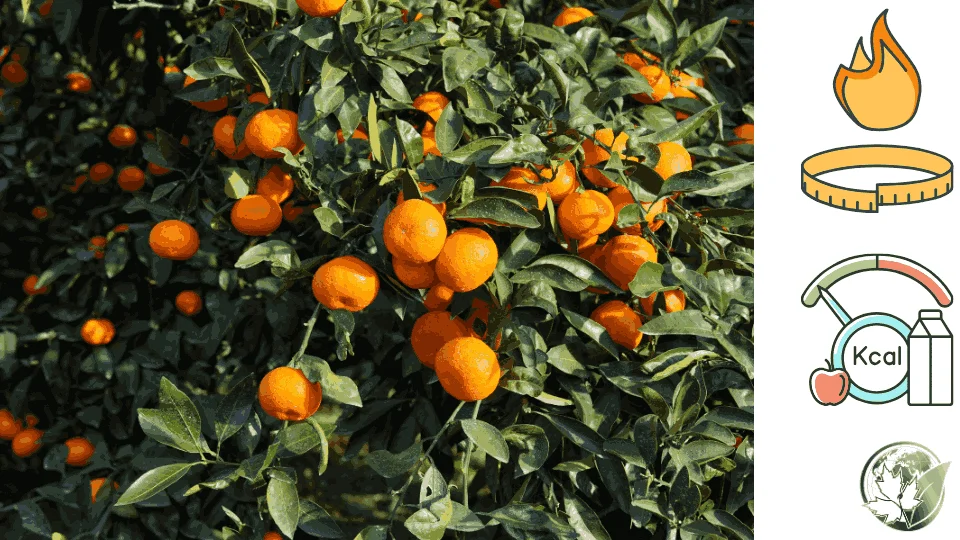
Mandarin and orange are close relatives, so their nutrition profiles overlap substantially. Per 100 grams, mandarin is around 53 calories and orange around 47. Mandarin contains roughly 10.6 grams of sugar compared with about 9.4 in orange, while orange provides more fiber in common reference data: about 2.4 grams versus 1.8.
The comparison changes when you look at one fruit. A medium mandarin at about 47 calories is smaller than a medium orange at around 62 calories. So the statement mandarin has more calories and the statement a mandarin has fewer calories than an orange can both be true, depending on whether the comparison is by weight or by piece.
For real-world choices, the six-calorie difference per 100 grams is minor. Taste, convenience, variety, price, and the rest of the meal usually matter more. If the user is searching specifically for calorie control, serving size is the strongest variable to highlight.
Mandarin vs Orange Nutrition Table
| Nutrient / 100 g | Mandarin | Orange |
|---|---|---|
| Calories | 53 kcal | 47 kcal |
| Carbohydrate | 13.3 g | 11.8 g |
| Sugars | 10.6 g | ~9.4 g |
| Fiber | 1.8 g | 2.4 g |
| Protein | 0.81 g | 0.94 g |
| Potassium | 166 mg | 181 mg |
| Typical size | Smaller | Larger |
This table uses approximate raw-fruit values per 100 grams for a direct comparison.
Mandarin, Tangerine, Clementine and Satsuma: Are They the Same?
The words mandarin, tangerine, clementine, and satsuma are often used as if they were interchangeable, but botanically and commercially they can refer to different groups or cultivars. Mandarin is the broad category. Tangerines are commonly treated as a type of mandarin, while clementines and satsumas are also mandarin-related citrus with their own characteristics.
From a calorie-tracking perspective, the most important difference is usually fruit size and the specific database entry. Clementines are often small and may be around the mid-30s in calories per fruit, while a medium tangerine or mandarin may be closer to the high 40s. A large mandarin can contain more.
If your package lists nutrition information, use that label. If not, a practical approach is to use 53 calories per 100 grams for generic mandarin or tangerine and estimate the edible weight. This method is more reliable than assuming every easy-peel citrus has the same calories per piece.
Are Mandarins High in Sugar?
Mandarins are sweet fruit and contain roughly 10.6 grams of natural sugar per 100 grams in standard data. A medium fruit therefore provides around 9 grams of sugar, depending on its weight. The sugar is naturally present in the fruit rather than added during normal fresh consumption.
This distinction matters because canned mandarins can be packed in syrup. A syrup-packed product may contain added sugars in addition to the fruit's natural sugars. Products packed in water or juice may have a different profile. Draining syrup can reduce some of the added sugar consumed, but the label remains the most accurate guide.
For someone who counts carbohydrates, focus on total carbohydrate rather than sugar alone. One medium mandarin contains roughly 12 grams of carbohydrate. Two fruits would be around 24 grams. Individual needs vary, so people with medical nutrition targets should use the serving plan given by their clinician or dietitian.
Fiber and Vitamin C in Mandarins
A 100-gram serving of mandarin provides around 1.8 grams of dietary fiber. That is less than the classic orange reference but still contributes to daily fiber intake. The membranes around each section and the pulp are part of the whole fruit and should normally be eaten unless texture is a problem.
Mandarins also provide vitamin C, though the amount can vary by cultivar and may be lower per 100 grams than orange. They contribute potassium and folate as well. The nutritional value of citrus is better represented by this overall nutrient pattern than by vitamin C alone.
Eating a variety of fruits can help diversify nutrient intake. Mandarins bring convenience and sweetness; oranges may contribute more fiber and vitamin C per 100 grams; berries can provide more fiber; bananas offer more energy and potassium in a compact serving. There is no need to make one fruit do every nutritional job.
Fresh Mandarins vs Canned Mandarins
Fresh mandarins contain only the fruit's naturally occurring sugars. Canned mandarins are more variable because the packing liquid matters. Water-packed fruit may be close to fresh in calories, juice-packed fruit can add some carbohydrate from the liquid, and syrup-packed fruit can contain added sugar.
The word drained on a nutrition label is important. Some labels give values for fruit and liquid together; others refer to the drained fruit. If you eat the syrup, its calories count. If you drain and rinse the fruit, the actual intake may differ from the label serving that includes the liquid.
Canned mandarins can still be convenient for baking, salads, and food service. The SEO takeaway is simply to avoid using fresh mandarin calorie values for every canned product. Product labels are specific; generic raw-fruit values are not.
Mandarin Juice vs Whole Mandarin
Juice concentrates the eating process. It can take several mandarins to produce a glass of juice, so the total calories in the glass can be much higher than one fruit. Juice also contains less fiber because much of the pulp and membrane is removed.
Whole mandarins are easier to portion because the number of fruits is visible. They also require peeling and chewing, which slows consumption. If someone is comparing calories for weight management or satiety, whole fruit generally provides more volume and structure per calorie.
That does not mean juice has no place in a diet. A small measured serving can fit, and commercial juices may be fortified. The correct approach is to use the beverage label and count the actual serving rather than assuming it equals one mandarin.
Mandarin Calories Compared With Grapes, Apple and Banana
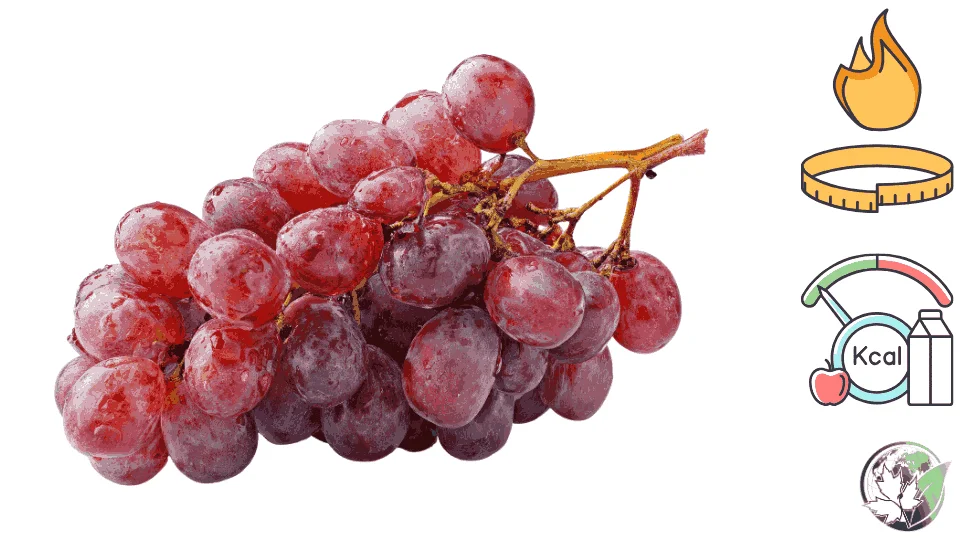
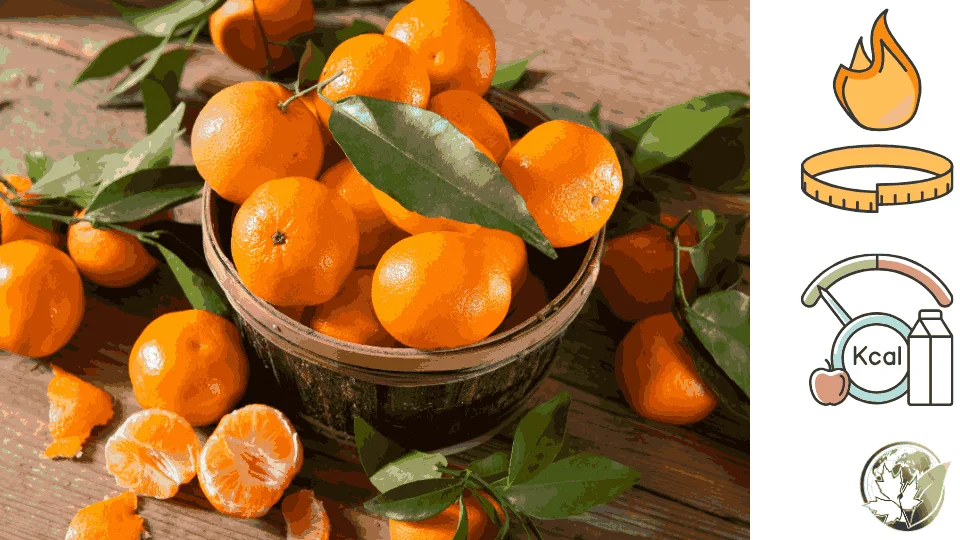
At about 53 calories per 100 grams, mandarin is close to apple and lower than grapes or banana. Grapes are around 69 calories per 100 grams in the standard red-or-green reference, while banana is higher still. Watermelon is considerably lower because it contains even more water.
Per piece, however, comparisons change. One small mandarin may contain fewer calories than an average apple or banana simply because it weighs less. Portion weight is the bridge between these different ways of reporting calories.
The practical lesson is that fruit choice should not be based only on the lowest number. A banana may be more appropriate before a long workout, a mandarin may be ideal in a lunchbox, and grapes may work well in a shared snack. Calorie density is one factor among many.
Are Mandarins Good for Weight Loss?
Mandarins can fit into a weight-management plan because they provide sweetness, water, and a visible portion for roughly 40 to 50 calories per medium fruit. Two mandarins can create a larger snack for under 100 calories in many cases.
No fruit directly causes fat loss. Weight change depends on overall energy balance and individual circumstances. The useful feature of mandarins is that they can replace more calorie-dense sweet foods while still providing a satisfying eating experience.
The easy-peel format also supports planned portions. Put one or two fruits in a bag rather than carrying an open-ended amount of snack food. If the mandarins are part of a larger snack with nuts, chocolate, yogurt, or cheese, include those foods in the total when tracking calories.
How to Calculate Mandarin Calories by Weight
The calculation is straightforward: grams of edible mandarin multiplied by 0.53 gives an approximate calorie count. If your peeled sections weigh 140 grams, the result is about 74 calories. A 220-gram bowl is about 117 calories.
This method is especially useful when fruit size varies dramatically. Rather than guessing whether a mandarin is small or medium, peel it, place a bowl on the scale, zero the scale, and add the sections. The same method works for recipes and fruit salads.
Remember that 0.53 is based on an average reference. A specific cultivar or branded produce pack may differ. The point of weighing is to improve the estimate, not to create false precision. Rounding to the nearest five calories is usually sufficient.
Practical Mandarin Serving Ideas
Mandarins are one of the most convenient whole fruits because they require no cutting and are naturally divided into sections. They can be used as a snack, dessert, salad ingredient, breakfast topping, or portable source of fresh fruit.
- Pack one medium mandarin for a roughly 45- to 50-calorie fruit serving.
- Use two mandarins with a protein-rich food for a more substantial snack.
- Add fresh sections to plain yogurt or oatmeal rather than syrup-packed canned fruit.
- Use mandarin segments in salads with measured dressing, cheese, seeds, or nuts.
- If using canned mandarins, compare products packed in water, juice, and syrup.
- Use the package nutrition panel when easy-peel citrus is sold with a specific serving size.
The search-friendly number to remember is simple: around 53 calories per 100 grams. From there, the serving-size math becomes easy, and readers can apply the same logic whether they are eating one fruit or using several in a recipe.
Mandarin Portion Planning: Real-World Examples
Mandarins work especially well for portion planning because individual fruits are small. One medium fruit is roughly 47 calories, so two are about 94. That makes two mandarins a convenient fruit portion when someone wants a snack close to 100 calories without measuring anything.
For a 50-calorie target, one medium mandarin is almost exactly the right size. For 100 calories, two medium fruit or about 190 grams of peeled sections is a close estimate. A 150-calorie portion would be unusually large for a snack and would require roughly 280 grams of edible fruit, showing how much water is present relative to energy.
Lunchbox planning is a common real-world use. A mandarin can sit beside a sandwich or yogurt without needing cutting, and the peel protects the fruit until it is eaten. If two or three small clementines are packed instead, the calorie total may still be modest, but the exact number depends on their size. Package labels on branded easy-peel citrus can be especially helpful when the fruit is sold by count.
At breakfast, mandarin sections can replace sweetened fruit toppings in yogurt or oats. The fruit contributes sweetness plus water and fiber. If granola, nuts, honey, or nut butter are also added, those ingredients may contribute more calories than the mandarins. The best way to track is to calculate the entire bowl rather than focusing on the lowest-calorie component.
In salads, fresh mandarins add acidity and sweetness. Canned mandarins are often used because they are consistent and convenient, but syrup-packed versions can add sugar. Draining or choosing juice-packed or water-packed fruit can change the final nutrition profile. The ingredient list and serving panel should guide the calculation.
For desserts, chocolate-covered mandarins, candied segments, or citrus cakes are mixed foods. The fresh fruit remains part of the recipe, but the calorie value of the finished item is driven by all ingredients. Clear separation between raw fruit and prepared dishes improves both nutritional accuracy and SEO usefulness because readers searching calories often want to know exactly which form they are eating.
Mandarin Serving Sizes, Shopping and Storage: Extra SEO Guide
Serving size can also be influenced by the way mandarins are sold. Loose fruit gives you no fixed portion, while bags of easy-peel citrus may contain fruit of a fairly consistent size. If a package includes nutrition information, that label can be useful because it reflects the seller's chosen serving and database. If the bag simply lists the product name, the 53-calorie-per-100-gram reference remains a practical default for raw edible fruit.
Ripeness affects flavor more noticeably than it affects calorie counting. A ripe mandarin may taste sweeter because acids decline and the sugar-acid balance changes, but it is not necessary to assign a dramatically different calorie number to every stage of ripeness. Natural fruit is variable, and standard databases already represent an average. For a typical serving, the error from fruit-to-fruit variation is usually smaller than the error from guessing the serving size.
Storage matters more for quality than calories. Whole mandarins can be kept at cool room temperature for a short period or refrigerated for longer storage, depending on freshness and local conditions. Once peeled, sections should be refrigerated in a covered container. Chilling does not remove or add calories. If juice leaks out and is discarded, the weight and carbohydrate consumed may be slightly lower, but this is not normally important enough to calculate.
A useful way to compare mandarins at the supermarket is by edible yield. A very loose-peeling fruit may have a relatively thick peel, so the whole-fruit weight can exaggerate how much is actually eaten. Two fruits that weigh the same before peeling can provide different edible amounts. That is another reason standard per-piece values are estimates. For precise meal preparation, weighing the peeled sections is the cleanest method.
Mandarins are also easy to use in recipes without large additions. Fresh segments can be folded into grain salads, served beside poultry or fish, added to yogurt, or used in fruit salsa. In these dishes the fruit itself remains around 53 calories per 100 grams, but dressings, oils, nuts, cheese, or sweeteners can change the finished nutrition quickly. When an article gives a calorie figure for a recipe, the full ingredient list should be calculated rather than simply multiplying the fruit weight.
Another common search is whether eating several mandarins is too much fruit. There is no universal piece limit that applies to everyone. Two medium mandarins provide roughly 94 calories and around 24 grams of carbohydrate, while three are roughly 140 calories. Whether that amount fits depends on the person's total diet, energy needs, and any medical nutrition plan. A general SEO guide should give the numbers without turning them into individualized restrictions.
Finally, calorie quality should not be confused with calorie quantity. A mandarin is low in fat and provides water, fiber, vitamin C, and carotenoids, but those nutrients do not make its calories disappear. Conversely, a slightly higher calorie count per 100 grams than orange does not make mandarin a poor choice. The useful conclusion is that both are nutrient-dense whole fruits, with serving size and preparation creating far larger differences than the small calorie gap between them.
Common Mistakes With Mandarin Calorie Counts
The most common mistake is confusing the broad mandarin category with one exact fruit size. A clementine and a large tangerine may both be called mandarins in casual language but can differ significantly in weight. Per-piece numbers therefore need a size description.
Another mistake is comparing a fresh mandarin with canned fruit in syrup. Added sugar changes the product, so raw fruit data no longer applies. Juice creates a similar issue because several fruits may be condensed into one drink.
Finally, some people compare 100 grams of mandarin with one whole orange and conclude that the numbers conflict. They are simply different units. Fair comparisons use the same basis: 100 grams versus 100 grams, cup versus cup, or piece versus piece with the sizes clearly stated.
Frequently Asked Questions
How many calories are in one mandarin orange?
A medium mandarin or tangerine around 88 grams of edible fruit contains approximately 47 calories. Smaller clementine-sized fruit can be lower, while larger mandarins can be higher.
How many calories are in 100g of mandarin?
One hundred grams of raw mandarin or tangerine contains about 53 calories, with roughly 13.3 grams of carbohydrate and 1.8 grams of fiber.
How many calories are in 1 cup of mandarin oranges?
One cup of fresh mandarin sections is commonly around 195 grams and therefore about 103 calories. Canned mandarins may differ depending on whether they are packed in water, juice, or syrup.
Are mandarins higher in calories than oranges?
Per 100 grams, mandarin is slightly higher at about 53 calories versus roughly 47 for orange. Per fruit, a mandarin is usually lower because it is smaller.
Are clementines and mandarins the same for calorie counting?
They are closely related but not always identical in size or database classification. A small clementine is often lower in calories per fruit than a medium mandarin. For accuracy, use the product label or edible weight when available.
Conclusion: Mandarin Calories Are Easy to Estimate by Serving
Mandarin oranges provide about 53 calories per 100 grams. A medium fruit around 88 grams is roughly 47 calories, and one cup of fresh sections is about 103. Those three reference points cover most everyday serving questions.
Compared with orange, mandarin is slightly higher in calories and natural sugar per 100 grams, while orange is generally higher in fiber and vitamin C in standard references. The difference is small, and mandarins are usually smaller, so one mandarin commonly contains fewer calories than one medium orange.
The larger differences come from preparation. Fresh fruit, juice, and syrup-packed canned mandarins should not share the same calorie number. Use fresh-fruit estimates for raw sections and product labels for processed forms. For daily tracking, one medium mandarin at about 45 to 50 calories is a simple and useful rule of thumb.
Nutrition Data Note
Nutrition values are rounded estimates based on standard raw tangerine/mandarin and orange reference data commonly used in USDA FoodData Central-style databases. Cultivar, size, ripeness, edible yield, and processing can change the values. Clementines and satsumas may have different per-fruit numbers because they are often smaller. This article is general nutrition information and not individualized medical advice.